

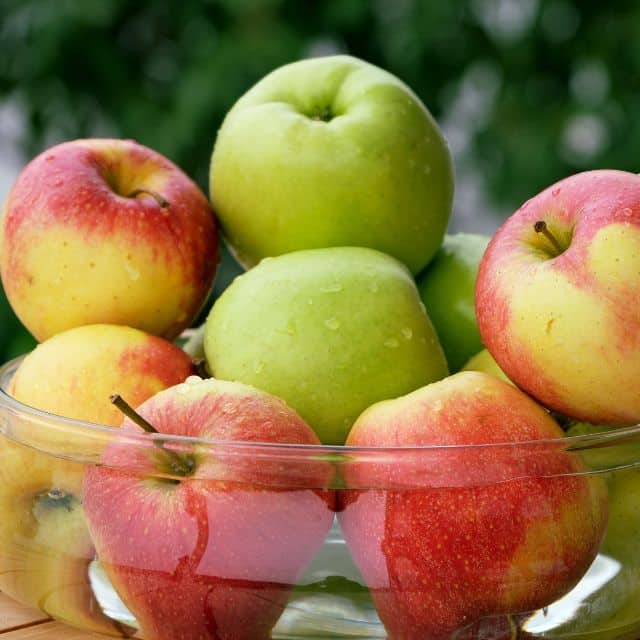
Apples are one of the most popular fruits in the world, found in countless varieties and flavours. Whether you prefer them sweet or tart, crisp or soft, apples have something to offer every taste. This versatile fruit doesn’t just hold a prominent place in our kitchen – it’s also packed with health benefits.

Advertisement: The page displays ads and contains advertising links (affiliate links). See our advertisers here.
In this entry, we explore the nutritional value of apples, their health benefits, the most popular Danish apple varieties, and how to use this fantastic fruit in the kitchen – not least in the airfryer.
Estimated reading time: 9 minutes
History and origin
The cultivated apple (Malus domestica) originally comes from Central Asia, where wild apple trees still grow in the mountains around Kazakhstan. From there, the apple spread along trade routes to Europe, and the Romans brought grafting techniques and new varieties north with them. In Denmark, apples have been grown in monastery gardens and manor gardens for centuries, and today the fruit is a firm part of Danish garden culture.
The apple holds a special status in Denmark: the Gråsten apple has been named Denmark’s national apple, and old Danish varieties such as Ingrid Marie and Filippa are still cultivated by pomologists and garden enthusiasts. Denmark’s temperate climate, with cold winters and mild summers, provides exactly the conditions apple trees need.
Taste and aroma
The taste of apples spans a wide range – from the sharp, fresh acidity of Granny Smith to the honey-like sweetness of Fuji and Gala. Most Danish varieties sit somewhere in between, with a balanced sweetness and acidity that makes them equally good for eating fresh and for cooking. The texture varies from crisp and juicy to soft and mealy, depending on variety and ripeness.
The peel contributes bitter and aromatic notes, as well as much of the fruit’s fragrance. During cooking, the flavour changes: the heat breaks down the fruit acids and brings out the sweetness, while caramelisation in the airfryer gives a deep, almost cinnamon-like aroma.
Danish apple varieties
Denmark has a proud tradition of apple growing, and many different varieties are cultivated in the country. Among the most popular Danish apple varieties are Ingrid Marie, Gråsten and Elstar, each with its own unique flavour and uses.
Ingrid Marie
Ingrid Marie is one of the best-known and best-loved apple varieties in Denmark. This apple is medium-sized with an intense red colour and a sweet, slightly tart flavour. Ingrid Marie apples are excellent for both eating and cooking, and they’re often used in desserts such as apple cake.
Gråsten
Gråsten is another popular Danish variety, which has actually been named Denmark’s national apple. It’s a large apple with a yellow-green colour and red stripes. The flavour is sweet with a fine tartness, making it ideal for eating fresh, but also for baking and juice.
Elstar and Discovery
Elstar is a newer variety that has become very popular thanks to its crisp texture and well-balanced flavour. It’s a cross between Golden Delicious and Ingrid Marie, giving a fine combination of sweetness and tartness. Elstar apples are particularly good for cooking and salads, as they keep their crispness even after cooking. Discovery, on the other hand, is an early summer apple that ripens as early as August and is known for its fresh, juicy flavour.
Culinary use
Apples are incredibly versatile in the kitchen and can be used in everything from salads and desserts to main courses. Choosing the right variety for the right dish makes a big difference to the result.
In the Danish kitchen
- Apple cake: A classic Danish dessert where apples are combined with sugar, cinnamon and breadcrumbs and topped with whipped cream.
- Æbleflæsk (fried pork and apples): A traditional dish where apples are fried together with pork and onions – perfect as a hearty meal on a cold day.
- Apple salad: Fresh apples cut into cubes and mixed with vegetables, nuts and a light dressing make a crisp, delicious salad.
In the airfryer
Apples are practically made for the airfryer. Halve them or core them, fill the middle with cinnamon, sugar and a little butter, and bake at 180 °C for 12–15 minutes until soft, caramelised baked apples. Thin apple slices can also be dried into crispy apple chips at a low temperature – a healthy snack with no added sugar at all.
Tips for cooking with apples
When using apples in cooking, it’s important to choose the right variety for the recipe. Firm, tart varieties like Granny Smith hold their shape well during baking, while sweeter varieties like Fuji and Gala are better suited to eating raw or making applesauce. Apples can also be used as a natural sweetener: add grated apple to porridge or yoghurt, and reduce the amount of added sugar when baking. It’s a good idea to leave the peel on, as it contains much of the fruit’s fibre and nutrients.
When you cut apples for salads or desserts, try sprinkling a pinch of salt over them. The salt balances the acidity in the apples and brings out their natural sweetness even more clearly.
Tips and tricks from the author: Morten Jensen
Health benefits
Apples aren’t just delicious – they’re also incredibly nutritious. An average apple contains around 95 calories and is packed with vitamins and minerals that are important for our health.
Nutritional value
Apples are a good source of vitamin C, which supports the immune system and promotes healthy skin. They also contain dietary fibre, especially pectin, which contributes to healthy digestion and can help lower cholesterol levels. In addition, apples contain a range of antioxidants such as flavonoids and polyphenols, which can protect the body against damage caused by free radicals.
- About 95 calories per medium apple
- Rich in vitamin C and dietary fibre (pectin)
- Antioxidants: flavonoids and polyphenols
- Low in fat, no sodium or cholesterol
Benefits of eating apples
Including apples in your daily diet can have many positive effects. Apples can help with weight control thanks to their high fibre content, which promotes a feeling of fullness and can reduce overeating. Studies have also shown that regular apple consumption may be associated with a lower risk of developing type 2 diabetes, partly due to apples’ ability to help regulate blood sugar levels.
Apples can also contribute to better heart health. The dietary fibre they contain can help lower cholesterol levels, while the antioxidants can reduce inflammation in the blood vessels and thereby lower the risk of heart disease. The antioxidant compounds are also thought to protect brain cells against oxidative stress.
Growing
The apple season in Denmark typically runs from late summer into the autumn, usually from August to October. Summer apples such as Discovery and Transparente Blanche ripen early, while varieties like Ingrid Marie and Belle de Boskoop are typical autumn apples. Winter apples such as Jonagold and Elstar can often be stored well into the winter months.
Growing conditions and care
If you’re considering growing your own apples, start by choosing a variety suited to your climate and soil conditions. Many Danish varieties are hardy and thrive well in Denmark’s climate. Apple trees do best in well-drained soil with plenty of sunlight, and most varieties need cross-pollination with another variety to set fruit – so plant at least two varieties near each other.
How to grow apple trees
Total time: 3–4 years to first harvest
- Choose a variety
Choose a hardy variety suited to your climate and soil conditions, with a suitable pollinator variety nearby.
- Plant the tree
Plant the tree in well-drained, sunny soil in the autumn or early spring, and plant at least two varieties for cross-pollination.
- Water and care
Water well during the first year, and keep the soil around the trunk free of weeds.
- Prune in winter
Prune the tree in winter, while it’s dormant, to give it the right shape and encourage healthy fruiting.
- Harvest
Harvest the apples when they come away easily with a gentle twist, typically from August to October depending on variety.
Storage
When choosing apples, it’s important to look for fruit that is firm and free of soft spots or damage. The colour varies a lot depending on the variety, but the surface should look clear and glossy. A sweet, fresh scent is a good sign that the apple is ripe.
How to store apples
- Apples keep best at low temperatures, ideally in the bottom drawer of the fridge with high humidity
- Avoid storing apples together with other fruits, especially bananas, as apples release ethylene, which makes other fruits ripen faster
- Large quantities can be stored in a cool, dark place such as a cellar
- Under optimal conditions, apples can stay fresh for several months
Eating apples in their natural season isn’t just better for the environment – it also ensures you get the fruit at its freshest and most flavourful. When apples are harvested and eaten in season, they tend to be juicier and fuller in flavour.
Try this recipe
The sweetness and acidity of apples really come into their own in a warm dessert, where the baked apples become soft and caramelised under a crispy topping. The airfryer makes the process quick and easy without a hot oven. Try our Apple Crumble in the Airfryer, where firm apples hold their shape and provide the perfect contrast to the crispy crumble topping.
Equipment and products
If you prefer your apples in liquid form, there are some great Danish apple products that capture the fruit’s fresh flavour. A natural apple juice with no added sugar is perfect for both children and adults and goes well with apple bakes. We recommend Naturfrisk Apple Juice Drink as a refreshing accompaniment to your apple desserts.
Frequently asked questions
Firm, tart varieties such as Granny Smith, Belle de Boskoop and Elstar hold their shape well during baking. Sweeter varieties like Fuji and Gala are better for eating raw or making applesauce.
Yes. Baked apples filled with cinnamon and sugar become tender in 12–15 minutes at 180 °C, and thin apple slices can be dried into crispy apple chips at a low temperature with no added sugar at all.
The apple season typically runs from August to October. Summer apples such as Discovery ripen first, while winter apples like Jonagold can be stored well into the winter.
Apples release ethylene gas, which makes other fruits ripen faster. Store apples separately from bananas and other ripening-sensitive fruits to prevent them from becoming overripe.
Yes. The peel contains much of the apple’s fibre, antioxidants and nutrients. It’s a good idea to leave the peel on whenever possible – just be sure to wash the apple thoroughly first.
Facts about apples
| Field | Value |
|---|---|
| English name | Apple |
| Latin name | Malus domestica |
| Family | Rosaceae (rose family) |
| Origin | Central Asia (Kazakhstan) |
| Popular Danish varieties | Ingrid Marie, Gråsten (national apple), Elstar, Discovery, Filippa |
| Season in Denmark | August–October (winter apples keep longer) |
| Calories per 100g | About 52 kcal |
| Key nutrients | Vitamin C, dietary fibre (pectin), flavonoids, polyphenols |
| Taste | From tart and fresh to honey-like sweet, depending on variety |
| Culinary use | Fresh eating, apple cake, æbleflæsk, crumble, baked apples, apple chips, applesauce, juice |
| Storage | Cool and humid; separate from bananas; several months in the fridge or a cellar |
