

Brussels sprouts are winter’s little cabbages: firm, green buds that sit close together along a tall stem. The Latin name is Brassica oleracea convar. oleracea var. gemmifera, and Brussels sprouts belong to the mustard family (Brassicaceae).
I know Brussels sprouts have a bad reputation. Many people remember them as gray, overcooked balls with a sharp cabbage smell. But prepared the right way, they are mild, nutty and a touch sweet – especially if they have been touched by frost before harvest.
In the air fryer they really come into their own: halved Brussels sprouts turn crisp and golden at the edges and tender inside. Here you get the history, the flavor, the nutrition, how to grow them and my best tips for the kitchen.
Estimated reading time: 7 minutes
History and origins
From wild cabbage to little heads on a stalk
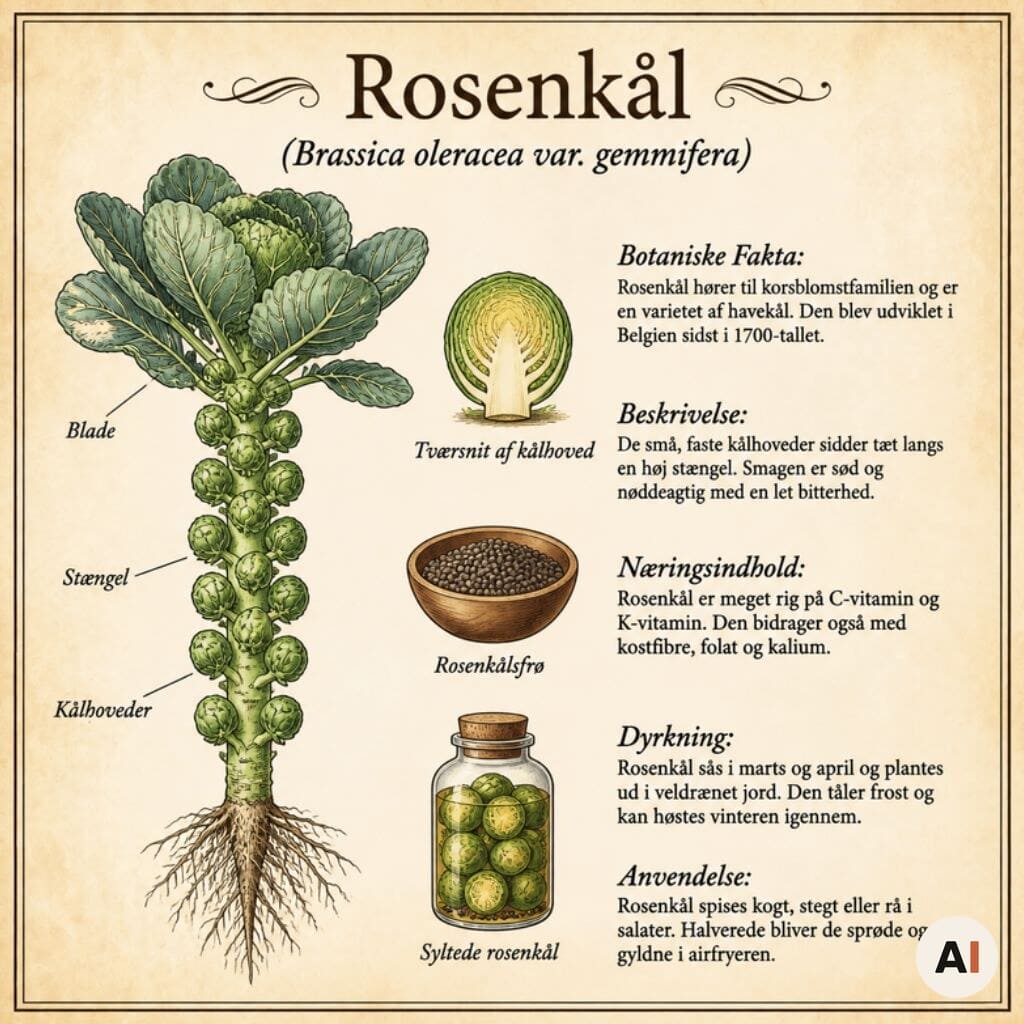
Like white cabbage, cauliflower and kale, Brussels sprouts are a variety of wild cabbage (Brassica oleracea). What makes them special is that the plant forms many small, firm heads along the stalk instead of one big head at the top. The heads are side buds that grow where the leaves meet the stem, all the way up the stem.
Brussels sprouts originated in Belgium in the 1700s, but they only came into common use about 100 years later. So it took a long time for the little cabbages to catch on – today they are among winter’s staple vegetables.
The name points to Brussels
You can still hear the Belgian origin in the name in several languages: Brussels sprouts in English and brysselkål in Swedish – both names refer to Brussels.
In Danish, it is rather the appearance people think of: the tight heads with layer upon layer of leaves look like little roses, and the Danish name rosenkål means ‘rose cabbage’. Those firm, closed heads are exactly what I look for when I buy Brussels sprouts.
Flavor and aroma
Mild, nutty and slightly bitter
Brussels sprouts have a fresh, green cabbage flavor with a nutty undertone and a slightly bitter edge. The bitterness comes from the sulfur-containing compounds that are typical of cabbage plants – the same kind of compounds that give mustard and horseradish their sharp bite.
If Brussels sprouts are boiled for too long, they turn soft and grayish and develop the sharp cabbage smell that many people remember from the cafeteria. Short cooking, on the other hand, preserves the fresh green color, and high, dry heat gives a slightly sweet, roasted flavor.
Frost makes them sweet
Brussels sprouts are among the vegetables that actually get better with frost – just like kale. When the plant is exposed to cold, it accumulates more sugar, and the sharp cabbage flavor becomes milder. That is why winter-hardy varieties only get their proper flavor after New Year.
That is why I like to save the big Brussels sprout dishes for the middle of winter. The rounder, sweeter flavor goes perfectly with the dry heat of the air fryer, where the edges turn brown and lightly caramelized.
Culinary uses
Brussels sprouts are versatile in the kitchen and pair well with butter, bacon, toasted nuts and a tangy dressing.
In the home kitchen
At home, Brussels sprouts are a classic side dish. Boiled sprouts with a knob of butter next to a roast, gravy and potatoes are winter food in the best sense of the word. Creamed Brussels sprouts – cooked in a milk-based white sauce – are another classic, and many people quickly sauté them in a pan.
Around the world
In the UK, Brussels sprouts are a fixture of the traditional Christmas dinner, and in the USA, among other places, they are often roasted in the oven with bacon. Flash-fried in a wok, they keep both their bite and their color.
In the air fryer
In my opinion, the air fryer is the best way to cook Brussels sprouts. The dry, circulating heat roasts the surface until it is crisp and golden, before the sprouts have time to turn gray and soft.
My go-to method: cut off the bottom of the stem, remove any loose or yellow outer leaves, and halve the sprouts lengthwise. Toss them in a little oil and salt, spread them out in a single layer in the basket, and shake the basket a couple of times during cooking.
Don’t throw away the loose leaves that fall off – they turn into crispy little cabbage chips. You’ll find time and temperature in the recipe further down.
Classic dishes with Brussels sprouts
- Boiled Brussels sprouts: with butter, as a side for roasts and gravy.
- Creamed Brussels sprouts: cooked in a milk-based white sauce.
- Sautéed Brussels sprouts: quickly tossed in the pan.
- Oven-roasted Brussels sprouts with bacon: a favorite in the USA, among other places.
- Stir-fried Brussels sprouts: flash-fried in a wok for bite and color.
- Crispy Brussels sprouts in the air fryer: halved and golden at the edges.
Health benefits
Brussels sprouts are a nutritious vegetable with a low calorie content: 100 g of raw Brussels sprouts provide 53 kcal. At the same time, you get dietary fiber, protein and a good dose of vitamins and minerals – especially vitamin C, vitamin K and folate.
Nutritional content per 100 g raw Brussels sprouts
- Energy: 53 kcal
- Protein: 4.5 g
- Fat: 0.5 g
- Carbohydrate (total): 9.6 g
- Dietary fiber: 4.1 g
- Vitamin C: 119 mg
- Vitamin K: 250 µg
- Folate: 130 µg
- Vitamin B6: 0.28 mg
- β-carotene: 220 µg
- Potassium: 483 mg
Good to know
Brussels sprouts contain a lot of vitamin K – 250 µg per 100 g of raw Brussels sprouts. If you take blood-thinning medication of the vitamin K antagonist type, such as warfarin, your vitamin K intake should be kept stable. Talk to your doctor if you want to eat significantly more or fewer Brussels sprouts than usual.
Like other cabbages, Brussels sprouts can cause gas in some people. Brussels sprouts are not among the allergens subject to mandatory labeling in the EU.
Growing
Brussels sprouts are a rewarding but space-hungry vegetable in the vegetable garden. The plant needs a long season, and in return you can harvest fresh sprouts in the middle of winter, when there is otherwise not much to pick in the garden.
Growing conditions
- Light: full sun – an open, sunny spot.
- Soil: good, heavy clay loam that is well fertilized, with a pH of 7–7.5.
- Plant spacing: at least 50 × 50 cm, preferably up to 65 cm.
- Height: some plants grow taller than 1 m.
- Hardiness: frost-hardy – winter-hardy varieties can stay outdoors in the open ground all winter.
Brussels sprouts are attacked by the same pests as other cabbages, so keep an eye on the plants over the summer, and consider covering them with insect netting.
How to grow Brussels sprouts
Total time: 8-11 months
- Sow under cover
In a Nordic climate, sow the seeds in pots or trays in a greenhouse or cold frame around 1 April.
- Plant out
Plant out in May and no later than 5 June in an open, sunny spot with at least 50 × 50 cm between the plants.
- Fertilize and stake
Fertilize well throughout the growing season, for example with compost, and tie tall plants to a stake so they do not topple over, for example under snow.
- Harvest from the bottom
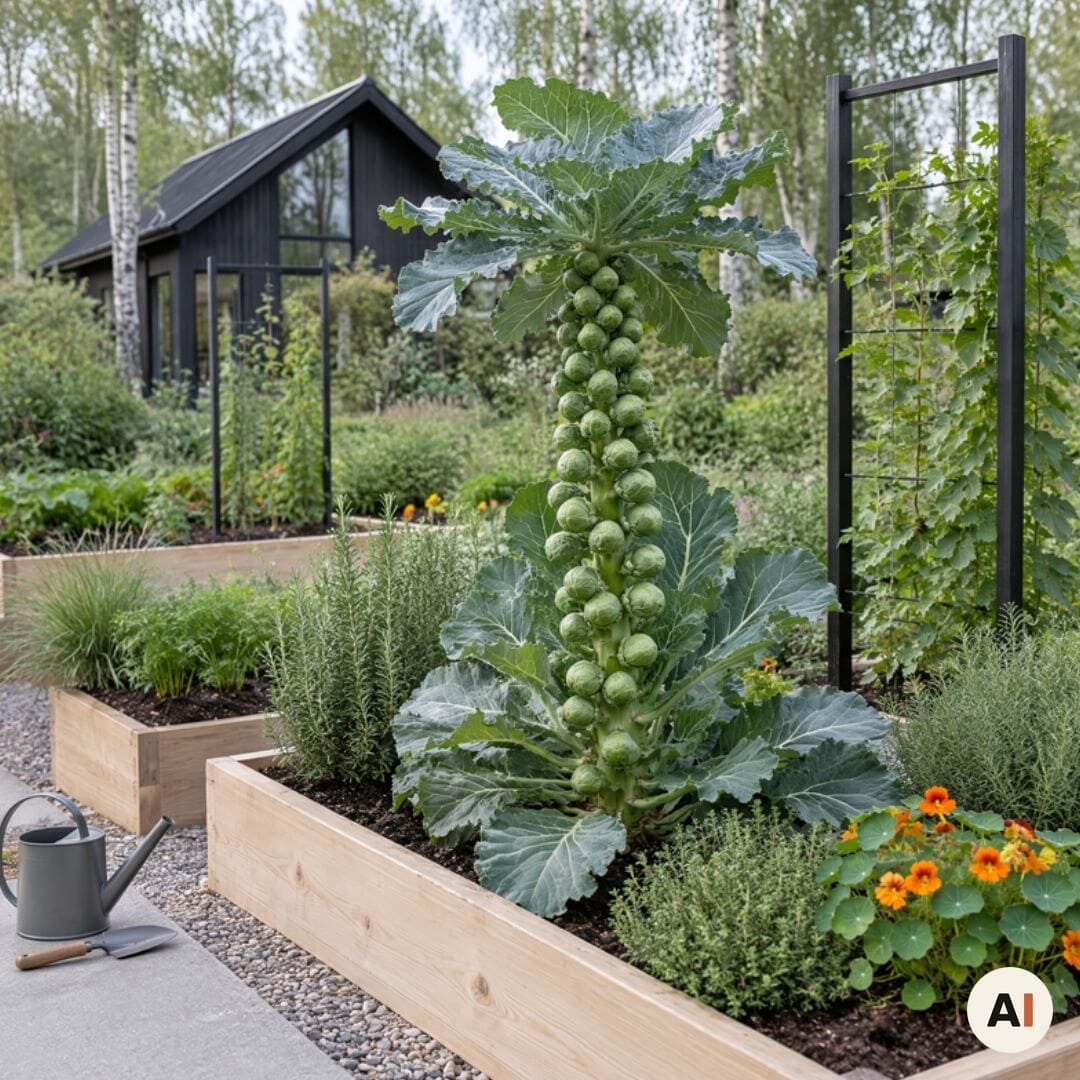
Harvest the sprouts from the bottom up, while new ones develop at the top throughout the winter and until March.
Harvesting through the winter
The lowest sprouts are ready first, and while you pick them, the plant develops new ones at the top. You can harvest until March – in cool springs even a good way into April.
Storage
The best storage for Brussels sprouts is actually the garden. They can stay on the stalk and be harvested as needed throughout the winter, so you always have fresh sprouts right outside your door.
Storage tips
- In the garden: leave the sprouts on the stalk and harvest as needed.
- Harvested in frost: pick them the day before use and let them thaw in a room that is not too warm.
- In the fridge: store Brussels sprouts cold and wait to clean them until you are going to use them.
- In the freezer: blanch, cool and freeze – then you have Brussels sprouts in stock.
How to freeze Brussels sprouts
Clean the Brussels sprouts, blanch them briefly in boiling water, and cool them quickly in cold water. Pat them dry and freeze them in bags or containers. For crispy Brussels sprouts in the air fryer, though, I prefer fresh ones.
Try this recipe
Brussels sprouts and the air fryer are a perfect match, because the dry heat gives crisp, golden edges and brings out the sweet side of the cabbage. Try our recipe for Brussels sprouts with bacon and maple syrup in the air fryer – a crispy side dish in 25 minutes, where the bacon adds salt and richness, and the maple syrup rounds off the slightly bitter cabbage flavor. I prefer winter Brussels sprouts that have been touched by frost, and I leave the loose outer leaves in the basket, because they turn into crispy little chips. It is the side dish that gets even Brussels sprout skeptics going back for a second helping.
Frequently asked questions
When the plant is exposed to frost, it accumulates more sugar, and the sharp cabbage flavor becomes milder. That is why winter-hardy varieties only get their proper flavor after New Year.
Cut off the bottom of the stem, remove any loose outer leaves, and halve the sprouts lengthwise. Toss them in a little oil and salt, spread them out in a single layer in the basket, and shake the basket during cooking.
Brussels sprouts are a winter vegetable. They tolerate frost and can be harvested outdoors throughout the winter and until March, in cool springs a good way into April.
Yes. Blanch the Brussels sprouts briefly in boiling water, cool them quickly, pat them dry, and freeze them in bags or containers.
Brussels sprouts contain a lot of vitamin K. If you take blood-thinning medication of the vitamin K antagonist type, such as warfarin, your vitamin K intake should be kept stable, so talk to your doctor if you are in doubt.
Facts about Brussels sprouts
| Field | Value |
|---|---|
| English name | Brussels sprouts |
| Latin name | Brassica oleracea convar. oleracea var. gemmifera |
| Family | Mustard family (Brassicaceae) |
| Plant type | Cabbage – a variety of wild cabbage with small heads along the stalk |
| Origin | Belgium, 1700s |
| Height | Can grow taller than 1 m |
| Hardiness | Frost-hardy |
| Light | Sun – open, sunny spot |
| Soil | Heavy clay loam, well fertilized, pH 7–7.5 |
| Sowing/planting | Sown under cover around 1 April, planted out in May (by 5 June at the latest) – Nordic climate |
| Harvest | From the bottom up, throughout the winter and until March |
| Season | Winter |
| Calories per 100 g | 53 kcal (raw) |
| Flavor | Mild and nutty with slight bitterness – sweeter after frost |
| Culinary use | Boiled, creamed, sautéed, oven-roasted, stir-fried in a wok and crispy in the air fryer |
| Storage | Cold in the fridge; can be blanched and frozen |
