

For me, butterhead lettuce is the very essence of traditional home cooking. The soft, pale green leaves, the yellowish heart and the mild flavour belong beside warm everyday dishes – and it is exactly the lettuce that many of us remember from grandma’s kitchen.
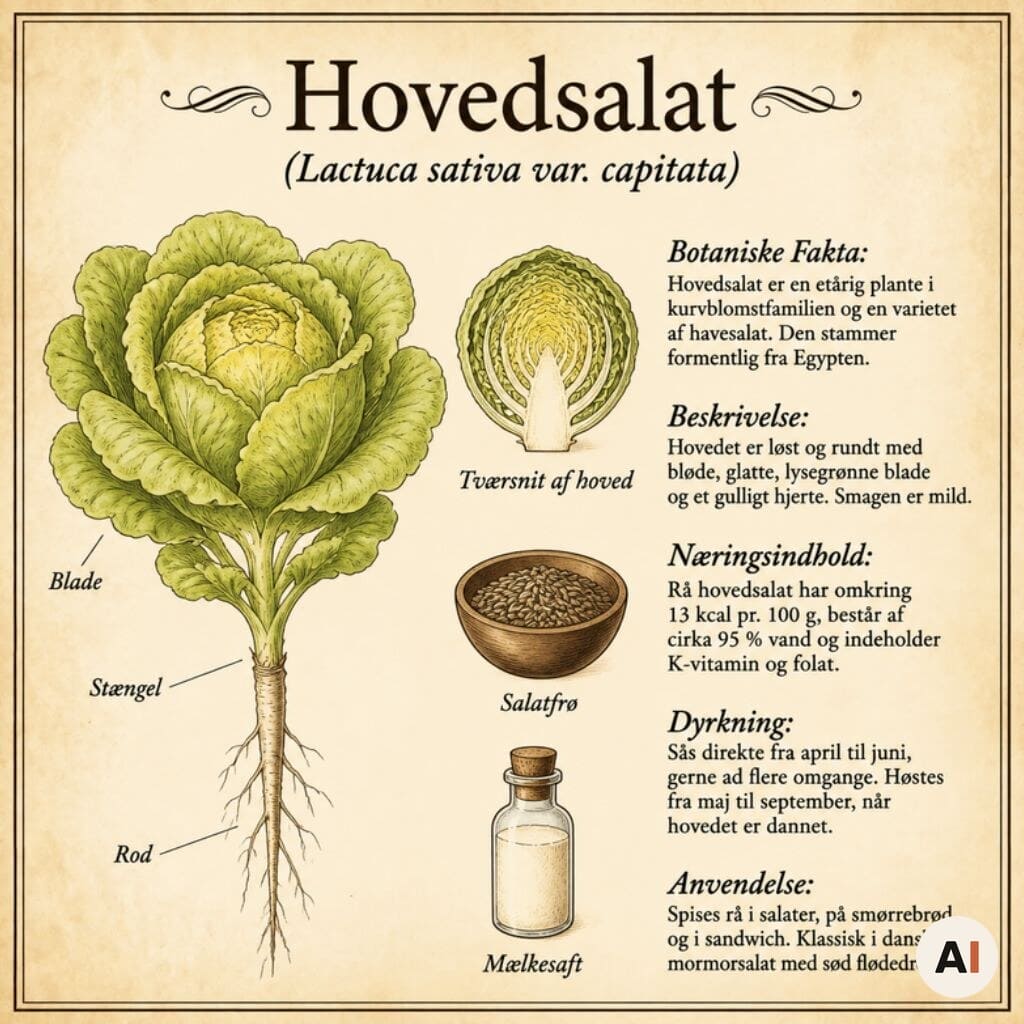
Botanically, it is called Lactuca sativa var. capitata, and it belongs to the daisy family (Asteraceae). The European type – butterhead lettuce, or hovedsalat in Danish – forms a loose head of soft leaves around a yellowish heart. That makes it the exact opposite of the crisp, dense iceberg lettuce, which has its own entry here in our Food Encyclopedia.
Here you get the history, flavour and uses of the lettuce – including in the air fryer – plus my best tips for growing and storing it.
Estimated reading time: 6 minutes
History and origins
From oil plant to leaf lettuce
The history of lettuce begins in ancient Egypt, where the plant was first cultivated. It was not the soft leaves people were after at first, though. The plant was used as an oil plant, and only through long selection was it bred into a crop with juicy, edible leaves.
From Egypt, lettuce spread on to the Greeks and the Romans. The Latin name lactuca means ‘with milky sap’ and refers to the white sap that appears when you cut into the stem.
Europe’s many varieties
In the period 1500–1700, many new varieties were developed across Europe, and from the mid-1700s there were varieties that are still grown today. In other words, butterhead lettuce has several hundred years of history in Europe’s kitchen gardens.
Well-known varieties include Hjerter Es (literally ‘ace of hearts’), the American Buttercrunch and the French Merveille des Quatre Saisons, whose name means ‘the marvel of the four seasons’. The last of these has reddish outer leaves around a pale green heart and is one of my favourites because it makes the salad bowl so beautiful.
Flavour and aroma
Mild, slightly sweet and buttery
Butterhead lettuce is one of the mildest lettuces you can buy. The leaves are thin and soft, almost silky, and the flavour is fresh and slightly sweet without the bitterness you know from, for example, endive and radicchio. The type is called butterhead for a reason – the name says it all about the texture.
The yellowish heart is the best part, I think. Here the leaves are at their most tender and sweet, while the darker outer leaves have a slightly greener, grassier flavour.
Soft rather than crisp
Compared with iceberg lettuce, butterhead has more flavour but less crispness. You won’t get the watery crunch of iceberg here. Instead you get leaves that almost melt on the tongue and soak up the dressing – and that is exactly why it is so good in a creamy mormorsalat (Danish for grandma’s salad).
How to choose good butterhead lettuce
When the plant bolts – that is, starts to send up a flower stalk – the leaves turn bitter. So choose a head with perky leaves and a neatly formed heart, and skip lettuces with slimy or brown spots.
Culinary uses
In Danish cooking
The most classic Danish dish with butterhead lettuce is without doubt mormorsalat: whole leaves tossed in a creamy dressing made with cream, typically seasoned with lemon and a touch of sugar. The soft lettuce and the cool cream make an unbeatable pair for warm dishes such as frikadeller (Danish meatballs), fried fish and new potatoes.
On smørrebrød (Danish open sandwiches), the lettuce leaves are used as a green base under the toppings, where the soft leaves fold neatly under, for example, prawns, egg and chicken salad. And of course butterhead lettuce is an obvious choice raw in a simple green salad as a side dish for dinner.
Internationally
Outside Denmark, butterhead lettuce is a staple of sandwiches and burgers, where the soft leaves form a layer between bread and filling. In some cuisines the lettuce is grilled or briefly heated, and in France petits pois à la française is a classic: peas braised together with lettuce into a mild, green dish.
In the air fryer
You may never have thought of lettuce as something you cook in the air fryer, but halved heads can actually be roasted briefly. Cut the head in half lengthways through the core so the leaves hold together, brush the cut surface with a little oil, and place the halves in the basket cut side up.
Give them a short time at high heat, until the edges take on colour while the heart is still juicy – and keep an eye on them as they cook, because the thin leaves go from golden to burnt quickly. I sprinkle them with flaky salt and a little grated Parmesan and serve them as a surprisingly good side dish for fish and chicken.
Classic dishes with butterhead lettuce
- Mormorsalat: whole leaves tossed in a creamy dressing made with cream.
- Smørrebrød: lettuce leaves as a green base under the toppings.
- Green salad: raw leaves as a fresh side for dinner.
- Burgers and sandwiches: soft leaves between bread and filling.
- Petits pois à la française: peas braised with lettuce, French style.
- Roasted halved heads: golden edges and a juicy heart from the air fryer.
Health benefits
Butterhead lettuce is a light vegetable with a very high water content, and it contributes several vitamins to the diet. It is not a miracle cure, but an easy way to get more greens onto your plate.
Nutrients in butterhead lettuce
- Vitamin K: important for the blood’s normal ability to clot.
- Vitamin A: contributes to normal vision and normal skin.
- Vitamin C: contributes to the normal function of the immune system.
- Folate: a B vitamin that plays a role in the body’s cell division.
- Water: a very high content that makes the lettuce light and fresh.
The dark green outer leaves are just as good to eat as the heart, so don’t throw them away if they are fresh and intact.
Rinse the lettuce thoroughly
Lettuce is usually eaten raw, so good kitchen hygiene is extra important. Spoiled or contaminated lettuce can cause infections with bacteria, viruses or parasites, such as E. coli and Salmonella. So rinse the leaves thoroughly in plenty of cold water, and discard leaves that are slimy, discoloured or smell off.
Growing
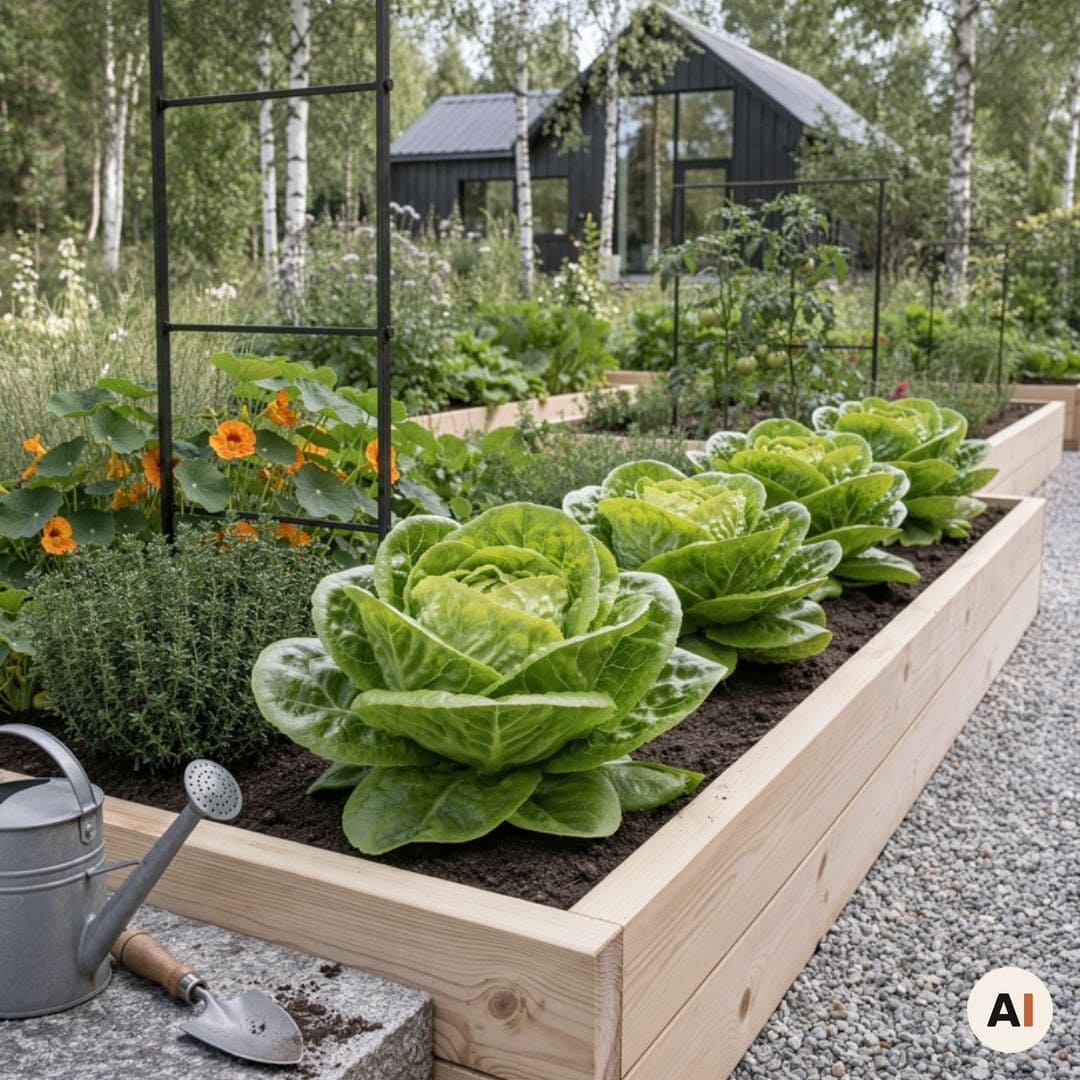
Butterhead lettuce is one of the most rewarding vegetables to grow yourself. It doesn’t take up much space, thrives in beds, raised beds and large pots alike, and there is something quite special about cutting a fresh head just before lunch.
Growing conditions
- Plant type: an annual plant that is harvested before it flowers.
- Size: 15–30 cm in height and width.
- Soil: loose, humus-rich soil that retains moisture well.
- Water: even watering, so the plant isn’t stressed by drought.
- Light: sun or light shade – a little shade in hot periods keeps the leaves mild.
Avoiding bitter leaves
The biggest challenge is bolting. When the plant starts to send up a flower stalk, the leaves turn bitter, and in garden lettuce flowering occurs 65–130 days after sowing. The key is therefore to harvest while the head is firm and the leaves are still mild.
I sow a little at a time over the season. That way there are always some heads ready, and I avoid a whole bed bolting at the same time.
How to grow butterhead lettuce
Here is the simple method I follow in my vegetable garden:
Total time: a few months
- Prepare the soil
Loosen the soil, remove weeds and mix in compost so the soil becomes humus-rich and retains moisture well.
- Sow the seeds
Sow the seeds in rows and cover them only lightly with soil. Preferably sow a little at a time over the season.
- Thin out and water
Thin out the small plants so each head has room to form a heart, and water evenly, especially in dry periods.
- Harvest
Cut the head off at ground level when the heart is firm and before the plant starts to bolt.
Storage
The soft leaves of butterhead lettuce are delicate, so it doesn’t keep as long as a dense iceberg lettuce. With a little care, though, you can easily keep it fresh and perky until you need it.
In the fridge
Store the head whole and unwashed in the fridge’s vegetable drawer, preferably loosely wrapped in a damp tea towel or placed in a bag with a piece of kitchen paper that absorbs excess moisture. Keep the lettuce away from apples, pears and bananas, which give off ethylene and make the leaves turn yellow and develop brown spots more quickly.
Good storage tips
- Whole heads keep longest: only peel off the leaves when you are about to use them.
- Rinse just before use: wet leaves quickly turn limp in the fridge.
- Dry the leaves well: use a salad spinner, and the dressing clings better.
- Give limp leaves a cold bath: a short dip in ice-cold water makes them perky again.
- Don’t freeze it: the leaves turn mushy when they thaw.
- Dressing last: toss the lettuce in the dressing just before serving.
Try this recipe
The mild, soft leaves of butterhead lettuce are the perfect counterpart to something crispy and hot from the air fryer. Try our recipe for Salmon frikadeller in the air fryer – crispy without oil in 12 minutes. I serve them with a bowl of mormorsalat and new potatoes. My trick is to toss the lettuce in the cream dressing at the very last moment, so the leaves are still perky when the frikadeller arrive at the table.
Frequently asked questions
Butterhead lettuce has soft, loose leaves around a yellowish heart and a mild, slightly sweet flavour. Iceberg lettuce is dense and crisp with a more watery taste. Both belong to the species Lactuca sativa.
Mormorsalat is a classic Danish salad in which whole leaves of butterhead lettuce are tossed in a creamy dressing made with cream, typically seasoned with lemon and a little sugar.
Butterhead lettuce turns bitter when the plant bolts and starts to send up a flower stalk. So harvest while the head is firm and the leaves are still mild.
Store the head whole and unwashed in the fridge’s vegetable drawer, preferably loosely wrapped in a damp tea towel. Rinse the leaves just before use.
Yes. Cut the head in half lengthways through the core, brush the cut surface with a little oil, and roast the halves briefly at high heat until the edges take on colour. Keep an eye on them as they cook, because the leaves burn quickly.
Facts about butterhead lettuce
| Property | Value |
|---|---|
| English name | Butterhead lettuce |
| Latin name | Lactuca sativa var. capitata |
| Family | Daisy family (Asteraceae) |
| Plant type | Annual |
| Height | 15–30 cm |
| Flowering/Harvest | Harvested before bolting; flowering 65–130 days after sowing |
| Flavour | Mild, slightly sweet and buttery |
| Culinary use | Mormorsalat, smørrebrød, green salad, burgers and petits pois à la française |
| Storage | Whole and unwashed in the fridge’s vegetable drawer |
