

Cauliflower is one of those vegetables I almost always have in the fridge. The white, compact head – in Latin Brassica oleracea var. botrytis – is mild, versatile and easy to work with. Boiled, it is soft and understated, but baked or roasted it gets crisp, golden edges and a nutty sweetness that surprises many people the first time they try it.
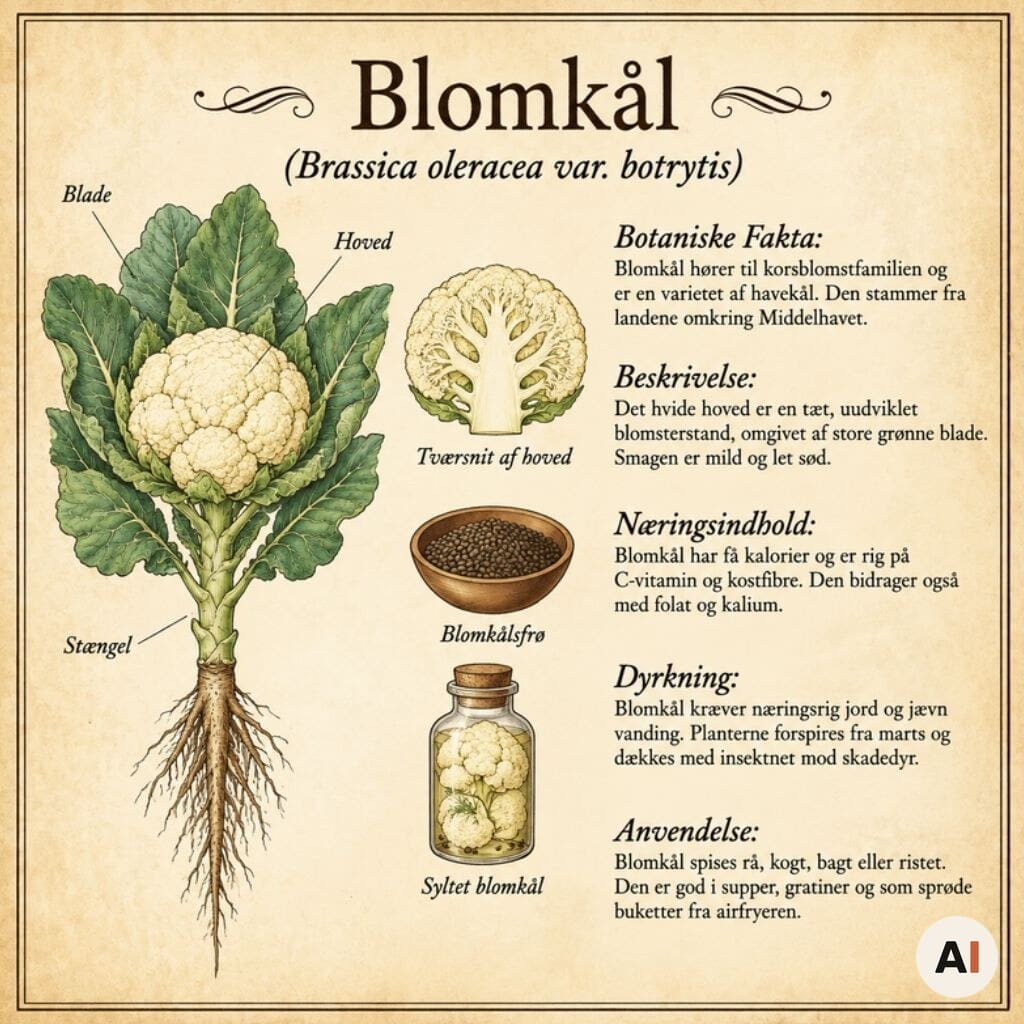
What we eat is actually the plant’s flower head. The head is a dense, undeveloped inflorescence where the small buds never get the chance to open – hence the name cauliflower, which literally means cabbage flower. Botanically, it belongs to the cruciferous family (Brassicaceae), together with the other brassicas.
In this entry you will get the history of cauliflower, its flavor, nutritional content and how to grow it – and my best tips for getting it crisp in the air fryer, whether you roast it whole, as florets or in thick slices.
Estimated reading time: 7 minutes
History and Origins
From Wild Cabbage by the Coast
The ancestor of cauliflower is wild cabbage, which originally grew along the coasts of Western and Southern Europe. Over many generations, people selected plants with particular traits, and from the same wild species came very different vegetables – from white cabbage and kale to broccoli, Brussels sprouts and cauliflower.
Cauliflower itself was developed in the eastern Mediterranean. Cyprus was an important center for seed production and the seed trade, and from there this pale vegetable slowly spread to the rest of Europe.
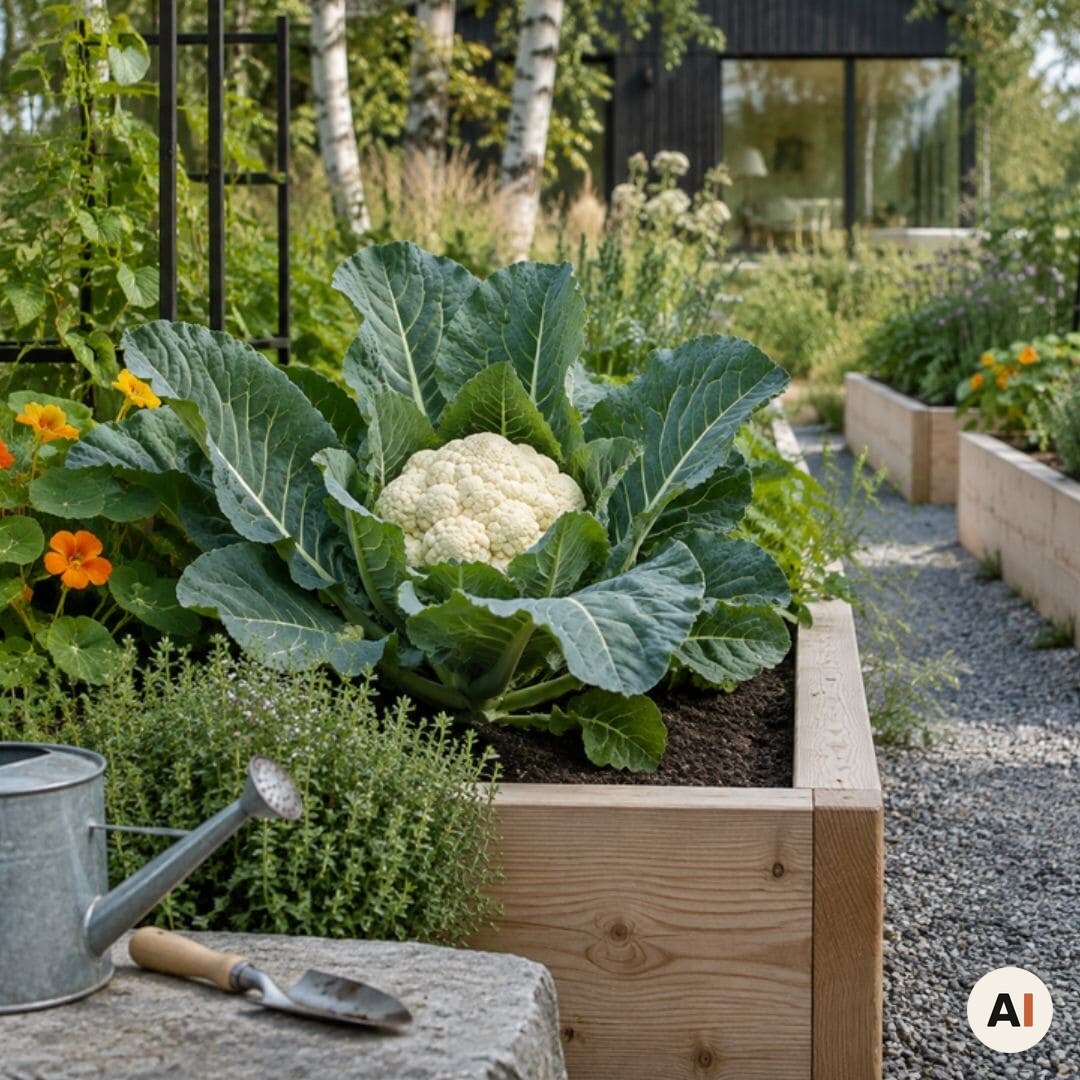
From Arab Botanists to European Kitchen Gardens
Arab botanists described cauliflower as early as the 12th and 13th centuries. By the 15th century it was known in Italy, and from around the middle of the 16th century it was grown in France. During the 17th and 18th centuries it spread further to the Netherlands, England and Germany.
Today, cauliflower is a regular in both the vegetable garden and the produce section. I find it fascinating that a vegetable that feels so everyday has such a long and international history behind it.
Flavor and Aroma
Mild, Slightly Sweet and Lightly Nutty
Raw cauliflower is crisp and fresh with a mild flavor and a faint, cabbage-like bitterness. It has a subtle sweetness that most people enjoy – children too – and a firm, crunchy texture that makes it a natural choice as a raw veggie for dips.
When cauliflower is boiled, the flavor becomes softer and more rounded. If it boils for too long, the typical cabbage smell comes out and the texture turns watery – so it is better to cook it a little too briefly than too long.
How Heat Changes the Flavor
It is with dry heat that cauliflower really comes into its own. In the oven and in the air fryer, the natural sugars on the surface caramelize, and the edges turn golden and crisp. The flavor goes from mild cabbage to something reminiscent of toasted nuts – and that is exactly why roasted cauliflower has become a classic.
Varieties and Colors
Classic cauliflower is white because the leaves shield the head from the sunlight while it grows. There are also colored varieties, though, which bring life to the plate. Here are some of the varieties you may come across:
- Classic varieties: e.g. Autumn Giant, Sapporo F1, Boris F1 and Nuage.
- Romanesco: light green with pointed, spiral-shaped peaks.
- Orange cauliflower: a warm orange head that brightens up the platter.
- Green cauliflower (broccoflower): a light green head.
- Purple cauliflower: a deep purple head that looks great in a raw salad.
Culinary Uses
In Everyday Cooking
Cauliflower has long been a staple of home cooking. It ends up in soup, in gratin or whole on the platter with shrimp and white sauce – dishes that are still made in many homes when local cauliflower is in season.
Around the World
In many other places, cauliflower picks up more spices along the way. Here are the classic cauliflower dishes, from Danish favorites to international ones:
- Cauliflower soup: creamy, mild and easy to make in large batches.
- Cauliflower gratin: a classic oven dish that many people know from childhood.
- Whole boiled cauliflower with shrimp in white sauce: an old-fashioned Danish meal with the whole head on the platter.
- Aloo gobi (India): cauliflower and potatoes with spices.
- Cauliflower cheese (UK): cauliflower baked in cheese sauce.
- Gobi Manchurian (Indo-Chinese): deep-fried cauliflower florets in a spicy sauce.
In the Air Fryer
In the air fryer, cauliflower has truly been given a new lease on life. The hot air circulates around the cauliflower so that it becomes crisp on the outside and tender inside – without you needing much oil. I cut it in different ways, depending on what it is going to be used for:
- Whole cauliflower: brush the whole head with oil and spices and roast it in one piece – impressive as a centerpiece on the table, but it needs a basket with plenty of room.
- Florets: the quickest route to crispy cauliflower. Toss them in a little oil, salt and spices, and shake the basket during cooking.
- Slices: cut thick slices vertically through the stem so they hold together – that gives you cauliflower steaks with large, roasted surfaces.
My best tip: Dry the cauliflower thoroughly after rinsing, and don’t overfill the basket. Moisture and crowding create steam instead of crispness. If a whole cauliflower needs to be tender all the way to the center, you can parboil it briefly before it goes into the air fryer.
Health Benefits
A Light Vegetable
Cauliflower is a light vegetable. Raw cauliflower contains 19 kcal per 100 g, and a full 95 g of those 100 g is water. That makes it easy to fill the plate generously with vegetables, and cauliflower is also popular as a light alternative to rice and potatoes.
Nutrients in Cauliflower
Here are the key figures for raw cauliflower per 100 g:
- Energy: 19 kcal (80 kJ)
- Water: 95 g
- Protein: 1.7 g
- Fat: 0 g
- Carbohydrates: 2.4 g, of which sugars 2.4 g
- Dietary fiber: 1 g
- Vitamin C: 24 mg
- Folate: 100 µg
Vitamin C and folate are the nutrients cauliflower contributes in particular. Vitamin C does not tolerate long boiling very well, so brief cooking – or raw cauliflower in a salad – preserves the most of it.
Good to Know
Cauliflower is not one of the EU’s allergens subject to mandatory labeling. Like other brassicas, however, it can cause gas in some people, so if you are not used to eating much cabbage, you can start with a smaller portion.
Growing
Growing Conditions
Cauliflower is a little more demanding than many other brassicas, but with the right conditions you can easily harvest beautiful heads in a home vegetable garden. It thrives best in somewhat cooler weather without big temperature swings, ideally 14–18 °C after germination.
- Light: at least six hours of full sun; the plant tolerates a little shade during the day.
- Soil: somewhat firm and rich in humus with a pH of around 7 – at least 7 to prevent clubroot.
- Nutrients: well-fertilized soil with available nitrogen.
- Water: about 25 mm of water per week.
- Temperature: cool, stable weather – night frost can damage the plants.
From Seed to Head
Autumn varieties are sown from mid-April to early summer. The seeds are preferably started indoors in a plug tray or small pots, where they germinate best at 20–25 °C. Germination takes 6–10 days, and once the small plants have become strong, they are planted out in the bed.
Harvest the cauliflower when the heads are firm, compact and about 15–20 cm in diameter – and before they begin to split into smaller florets. Autumn varieties are mainly harvested from September to November.
Total time: 4-6 months
- Start the seeds
Sow the seeds indoors in a plug tray or small pots from mid-April to early summer. They germinate in 6–10 days at 20–25 °C.
- Prepare the bed
Choose a sunny spot with somewhat firm, humus-rich soil with a pH of around 7, and fertilize generously with nitrogen.
- Plant out
Plant the young plants out in the bed once they have become strong.
- Water and care
Give about 25 mm of water per week. The plant thrives best in cool, stable weather.
- Harvest
Cut the head off when it is firm, compact and about 15–20 cm in diameter, before it splits into smaller florets.
Storage
In the Fridge
Cauliflower should be stored cold. I put it in the vegetable drawer of the fridge and use it while the head is still firm and fresh. If the florets start to go soft or get dark spots, it is time to use it right away.
In the Freezer
Cauliflower freezes perfectly well, but it keeps its texture best if you blanch the florets briefly first. You can also buy cauliflower frozen – it is handy for soup, gratin and mash, where it doesn’t need to be crisp.
My Best Storage Tips
- Whole and with leaves: break the head into florets only when you are going to use it, and leave the outer leaves on until then.
- Dry: rinse the cauliflower right before cooking – not before it goes into the fridge.
- Blanch before freezing: boil the florets briefly, cool them quickly in cold water, and freeze them in bags.
- Straight from frozen: frozen florets can go straight into the air fryer, but they won’t get quite as crisp as fresh ones.
Try This Recipe
The mild sweetness of cauliflower is enhanced by the dry heat of the air fryer, and the edges turn crisp and golden without getting greasy. Try our recipe for Baked Cauliflower in the Air Fryer – it shows beautifully why baked cauliflower has become an air fryer classic. My own trick is to toss the cauliflower in a little smoked paprika and garlic before it goes into the basket, so the surface gets extra flavor. At the end it gets a sprinkle of flaky salt and a little grated lemon zest, just before serving.
Frequently Asked Questions
Because what we eat is the plant’s flower head. The head is a dense, undeveloped inflorescence where the small buds never get the chance to open.
Raw cauliflower contains 19 kcal per 100 g. It consists mostly of water – 95 g per 100 g – and is therefore a light vegetable.
Yes. Brush the head with oil and spices, and roast it in a basket with plenty of room around it. Parboil the cauliflower briefly first if it needs to be tender all the way to the center.
Yes. Blanch the florets briefly, cool them quickly, and freeze them in bags. You can also buy cauliflower frozen.
Locally grown outdoor cauliflower is available in summer and autumn, and the autumn varieties are mainly harvested from September to November. You can buy imported cauliflower all year round.
Cauliflower Facts
| Fact | Details |
|---|---|
| English name | Cauliflower |
| Latin name | Brassica oleracea var. botrytis |
| Family | Cruciferous family (Brassicaceae) |
| Plant type | Brassica vegetable – the head is a dense, undeveloped inflorescence |
| Origin | The eastern Mediterranean, developed from wild cabbage |
| Light | At least six hours of full sun |
| Soil | Somewhat firm, humus-rich, well-fertilized soil with a pH of around 7 |
| Sowing/planting | Autumn varieties are sown from mid-April to early summer |
| Harvest | Autumn varieties mainly September–November |
| Season | Locally grown outdoors in summer and autumn; imported all year round |
| Calories per 100 g | 19 kcal (raw) |
| Flavor | Mild, fresh and slightly sweet – nutty when roasted |
| Culinary use | Soup, gratin, whole boiled with shrimp, aloo gobi and roasted in the air fryer |
| Storage | Cold in the fridge; can be blanched and frozen |
