

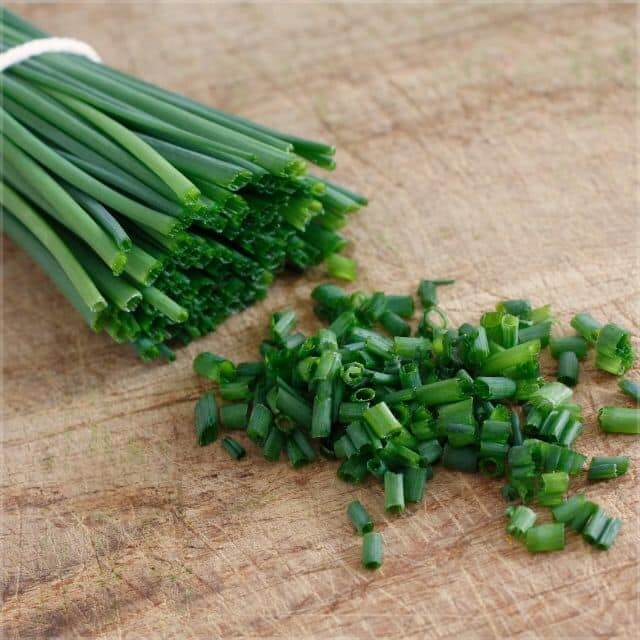
Chives, with their delicate flavor and versatility, are an indispensable herb in many households. The small, hollow green stalks, often used as a garnish or seasoning, add a mild onion flavor to a wide range of dishes. Chives are a perennial plant that’s easy to grow, making them a favorite among both experienced gardeners and beginners.

Advertisement: The page displays ads and contains advertising links (affiliate links). See our advertisers here.
Besides being a popular culinary ingredient, chives also offer several health benefits, making them a valuable addition to both the garden and the diet. In this article, we’ll look at everything you need to know about chives – from history and flavor to growing, harvesting, and use in delicious dishes.
Estimated reading time: 8 minutes
History and origin
Chives (Allium schoenoprasum) belong to the onion family and are the mildest of the cultivated onions. They grow wild across the northern hemisphere, over large parts of Europe, Asia, and North America, making them one of the few onion species native to multiple continents. In Europe, chives have been used in the kitchen for centuries and have long been a staple of monastery gardens and kitchen gardens.
In Danish garden tradition, chives are a classic, precisely because they’re hardy, perennial, and come back year after year. The purple flowers are not only edible but also popular with bees, which has made chives a favorite plant both in the herb bed and as a border plant.
Flavor and aroma
Chives have a mild, fresh onion flavor without the sharpness known from raw onions and garlic. The aroma is delicate and slightly grassy, and it’s precisely this mildness that makes chives well suited for dishes where the onion flavor should be present without dominating. When the stalks are used fresh, they retain their crisp texture and bright green color, giving both a visual and a flavor boost.
Chives are a good substitute for green onions or shallots, especially where a milder flavor is wanted. Their ability to add flavor without overpowering makes them ideal for dishes where balance is key. Heat quickly reduces the aroma, so chives are best enjoyed raw or added right at the very end.
Culinary use
Chives are a versatile ingredient that can be used in a wealth of recipes. Their mild flavor makes them perfect for sprinkling over finished dishes, where they add a light onion flavor and a touch of color.
In the Danish kitchen
In the Danish kitchen, chives are inseparable from potato dishes. Chopped chives sprinkled over new potatoes, mashed potatoes, or baked potatoes is a classic that lifts the dish with its fresh, green flavor. Chives are also a staple in dips and dressings – a simple sour cream dip with chopped chives is perfect alongside chips or vegetable sticks. They’re also used in egg dishes, on smørrebrød (Danish open sandwiches), and as a topping on soups.
- Sprinkled over mashed potatoes and baked potatoes
- In egg salad and scrambled eggs
- In sour cream dips and dressings
- As a fresh topping on soups and stews
Internationally
Internationally, chives are used in, among other things, the French herb blend “fines herbes” together with parsley, tarragon, and chervil, used in omelets and sauces. In American cuisine, chives and sour cream are a classic pairing with baked potatoes, and in many European cuisines they’re used as a fresh garnish for everything from fish to soups. Chive blossoms are used decoratively in salads, where they add both color and a mild onion flavor.
Substitution and preparation
If you’re out of chives, green onions are the most obvious substitute, as they have a similar flavor and texture and can be used in the same amount. Shallots are an alternative, but with a slightly stronger flavor, so use a smaller amount. When using chives in cooking, it’s best to add them at the last moment to preserve their freshness and color.
Try using chives to make chive oil. This aromatic oil is a fantastic way to add a subtle onion flavor to your dishes without using the stalks themselves. It can be used for everything from salad dressings to drizzling over soups or grilled vegetables. Add a large handful of freshly chopped chives (about 50 grams) to 1 dl of neutral oil, such as sunflower or rapeseed oil. Chive oil can be stored in the refrigerator for up to a week.
Tips and tricks from the author: Morten Jensen
Health benefits
Vitamins and minerals
Chives are not just a flavor enhancer but also a source of several important nutrients. They’re rich in vitamins A and C, both of which are important for immune system function. Vitamin A supports healthy vision, while vitamin C strengthens the immune system and improves skin health. In addition, the plant contains antioxidants that can help protect the body from damage caused by free radicals.
- Vitamin A: important for vision and skin
- Vitamin C: strengthens the immune system
- Vitamin K: contributes to blood and bones
- Antioxidants and sulfur compounds from the onion family
Onion family compounds
Like other members of the onion family, chives contain sulfur compounds, including allicin, which is traditionally associated with antibacterial properties. Chives also contribute dietary fiber and a low calorie content, making them a flavorful addition to a varied diet. As with all herbs, the amount in a single serving is modest, so it’s primarily the flavor that makes the case for using them liberally.
Growing
Growing chives is a relatively simple task that even beginners can handle. They thrive best in well-drained soil and full sun but can also grow in partial shade. The plant can be grown both in the garden and in pots, making it a flexible choice, even if you don’t have much outdoor space. Choose a spot with good air circulation to prevent fungal diseases, and keep the soil lightly moist with regular watering.
How to grow chives
Total time: 2-3 weeks
- Choose a location
Choose a sunny spot with well-drained, nutrient-rich soil. For indoor growing, use a wide pot with a drainage hole on a bright windowsill.
- Sow or divide
Sow the seeds directly in the soil in spring once the frost is over, or divide an existing plant. Keep the soil moist while the seeds germinate.
- Water and feed
Water regularly and fertilize occasionally with organic fertilizer. The seeds usually germinate within about two weeks.
- Harvest
Cut the desired stalks near the base once the plant is well developed. Regular harvesting encourages new shoots.
If you’re growing chives indoors, the pot should be placed somewhere with at least six hours of light a day, and you should fertilize occasionally with organic fertilizer for a slow release of nutrients. A major advantage of growing indoors is that you can harvest fresh chives year-round.
Storage and harvesting
Harvesting
Harvesting chives is an ongoing process that can begin as soon as the plants are well developed. Cut the desired stalks near the base of the plant, and avoid removing too many at once, as this can weaken the plant. Harvesting regularly encourages the plant to produce new shoots. Chives can be harvested almost year-round, but they’re at their best in spring and summer, when growth is most active.
In the fridge and freezer
- Store fresh chives in the refrigerator in a plastic bag for up to a week
- Freeze chopped chives for longer storage – the texture changes, but the flavor is preserved
- Frozen chives can be used straight from the freezer in hot dishes
Try this recipe
Chives and baked potatoes are an unbeatable combination: the fresh stalks cut through the creamy richness of cheese and bacon and add a green pop of flavor. Try our Bloomin’ Potato in the Airfryer and sprinkle generously with chopped chives before serving. Chives also work great in classic mashed potatoes with butter and milk.
Equipment and products
Chives cut nicely through creamy dips, and if you want to build a quick dip around them, a ready-made dip base is an easy shortcut. Waikiki Dip Vestjyske Delikatesser provides a sweet-and-spicy base that freshly chopped chives can round off with their mild onion flavor – perfect for vegetable sticks or crispy potatoes from the airfryer.
Frequently asked questions
Green onions are the best substitute, as they have a similar flavor and texture and can be used in the same amount. Shallots also work, but have a stronger flavor, so use a bit less.
Yes. Chop the chives and freeze them. The texture becomes a little softer, but the flavor is preserved, and they can be used straight from the freezer in hot dishes like soups and sauces.
Chives are best enjoyed raw or added right at the end, as heat quickly reduces their mild aroma. Sprinkle them over the dish just before serving.
Yes, chives are a hardy perennial plant that comes back year after year. They die back in winter and sprout fresh stalks in spring.
Yes, the purple flowers are edible and have a mild onion flavor. They look beautiful in salads and can be pulled apart and sprinkled over dishes.
Chive facts
| Field | Value |
|---|---|
| Latin name | Allium schoenoprasum |
| Family | Onion family (Amaryllidaceae) |
| Origin | Northern hemisphere (Europe, Asia, North America) |
| Plant type | Perennial, hardy herb |
| Parts used | Stalks and edible flowers |
| Flavor | Mild, fresh onion flavor |
| Sowing/harvest in Denmark | Sown in spring; harvested continuously from spring to autumn |
| Key nutrients | Vitamins A, C, and K plus antioxidants |
| Storage | Refrigerated 1 week; can be frozen chopped |
