

Great Northern beans are a white bean variety from the common bean family, Phaseolus vulgaris. They are closely related to kidney, pinto and cannellini beans, but have a delicate, nutty flavor and a creamy texture. As a legume, Great Northern beans are a staple ingredient that provides protein, complex carbohydrates and dietary fiber. This article gives you an in-depth look at the bean’s history, flavor, uses and growing conditions – along with practical advice on soaking and cooking.

Advertisement: The page displays ads and contains advertising links (affiliate links). See our advertisers here.
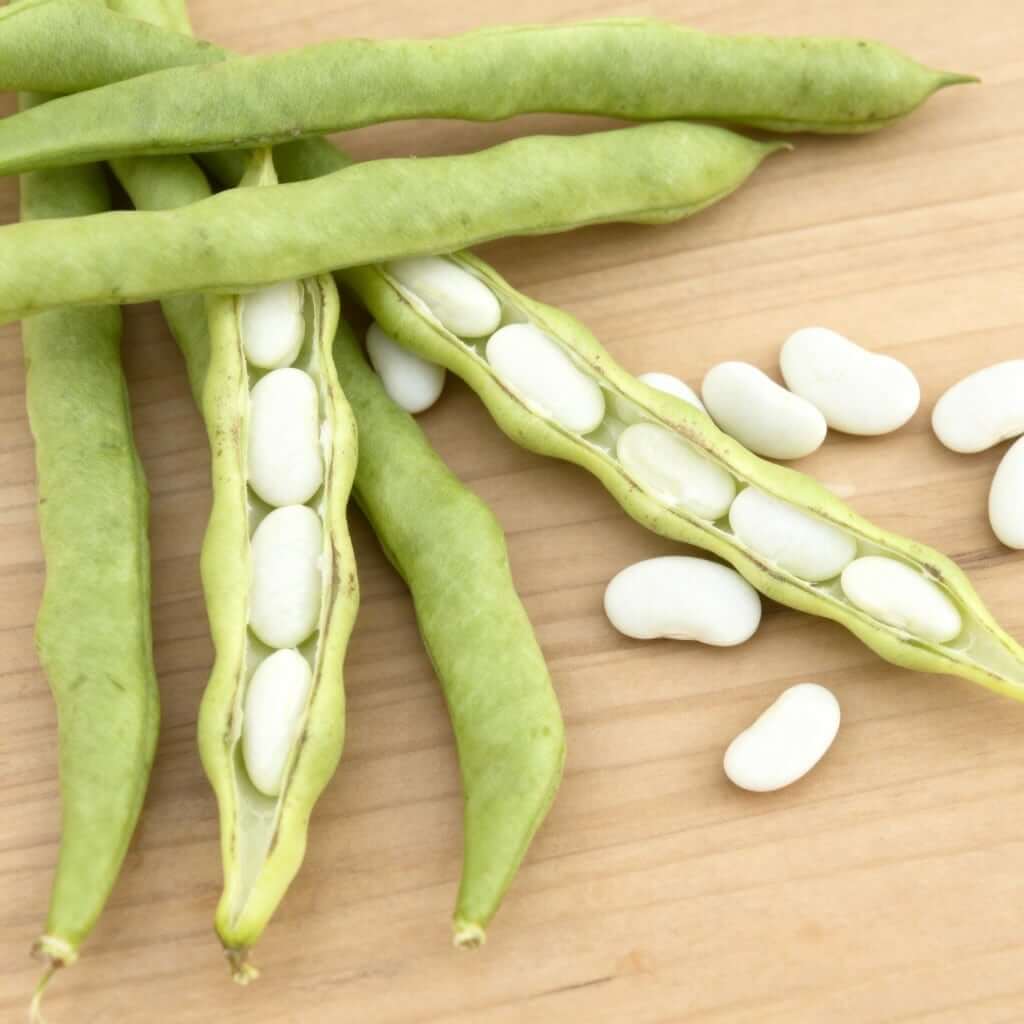
Great Northern beans are a type of dry bean (bush or pole variety) grown for their mature seeds. They are medium-sized and oval with an ivory-white color, and the flavor is mild, nutty and slightly creamy. The beans hold their shape after cooking, which makes them well suited for soups, stews, salads and as a filling in vegetarian dishes. The plant can grow as a bush form (40-60 cm) or a climbing pole form (up to 2 m), and like other legumes, it fixes nitrogen from the air via bacteria in its root nodules.
Estimated reading time: 8 minutes
History and Origin
From South America to North America
Beans have been cultivated for thousands of years. The first domesticated varieties emerged in the Andes Mountains and in Central America, where local cultures developed different variants of Phaseolus vulgaris. Great Northern beans are believed to have their roots in northern South America, where they were selected for their pale color and mild flavor. The variety was later brought to North America by European settlers and became popular in the northern United States and Canada – hence the name “Great Northern”.
White Beans in the Danish Kitchen
In Denmark, dried beans have been used in cooking since the 1600s, when they were imported via the Hanseatic cities. White beans, including Great Northern, became especially popular in the 1800s as a cheap source of protein in soups and stews. Today they are found both as dried beans in bags and as pre-cooked canned beans in supermarkets. Danish home gardeners also grow them in kitchen gardens and on balconies to enjoy the nutrient-rich seeds and the beautiful white flowers, which attract pollinators.
Flavor and Aroma
Great Northern beans have a round, mild flavor reminiscent of cannellini beans, but less mealy. This character makes them a perfect base for both mild and bold flavors. They easily absorb flavor from spices and sauces, while still retaining their firm structure after cooking. Fats such as olive oil or butter help bring out the nutty note.
The beans pair well with aromatic vegetables and herbs. Good pairings include:
- Tomatoes, smoked paprika and garlic
- Herbs such as oregano, thyme and bay leaf
- Grains such as barley and pearled spelt
- Vegetables such as cabbage, spinach and eggplant
- Acidic elements such as lemon, vinegar or vinaigrette
Culinary Uses
Great Northern beans are versatile in the kitchen and suited for dishes where you want a balanced texture and a neutral starting point. They hold their shape after cooking, so they can be used both hot and cold.
In the Danish Kitchen
In the Danish kitchen, Great Northern beans fit right into the modern interest in legumes as a sustainable protein source. They work well in bean soup, in vegetarian stews and as a protein boost in cold pasta salads or sandwich-topping salads, where they increase satiety without significantly changing the flavor. Blend them into a creamy purée with garlic, olive oil and lemon, and use it as a dip.
Internationally
In North American recipes, Great Northern beans are often used in baked beans with tomato, in chili and in vegetarian patties. They are mashed and mixed with vegetables and spices for vegetarian and vegan burgers, and in recent years they have also been used in desserts as a substitute for flour or butter in bean-based cakes, where they lend a creamy texture without affecting the flavor.
Classic Dishes
- Serve the beans in a hearty minestrone or vegetable soup for protein and heartiness.
- Blend them into a creamy purée or hummus with garlic, olive oil and lemon.
- Toss cooked beans into salads with tomato, cucumber, red onion and a light vinaigrette.
- Add them to bean stews with mushrooms, paprika and smoked spices as a meat alternative.
- Mix them into sandwich-topping salads or cold pasta salads to boost the protein content.
Health Benefits
Legumes such as Great Northern beans are rich in nutrients and an important part of a plant-based diet. They provide protein, complex carbohydrates, dietary fiber and a range of minerals.
Protein, Carbohydrates and Fiber
- Protein and carbohydrates: Cooked Great Northern beans contain about 8.3 grams of protein and 21 grams of complex carbohydrates per 100 grams. The protein makes them a good alternative to meat, while the complex carbohydrates provide long-lasting satiety.
- Dietary fiber: With around 7 grams of dietary fiber per 100 grams, the beans contribute to healthy digestion and stable blood sugar. The soluble fiber can help lower cholesterol levels.
- Micronutrients: The beans are a good source of iron, magnesium, potassium and zinc as well as folate, which is important for blood formation, and small amounts of B vitamins such as thiamine and B6.
Safety and Phytohaemagglutinin
Raw or undercooked beans can contain lectins and other natural toxins. Like other Phaseolus vulgaris beans, Great Northern beans contain the lectin phytohaemagglutinin – kidney beans have the highest content, but white beans also contain small amounts. Soaking the beans and cooking them thoroughly neutralizes these substances. Therefore, never eat raw or undercooked dried beans. People with G6PD deficiency or fava bean allergy should take note; if in doubt, consult a healthcare professional.
Soaking and Cooking
Preparing dried Great Northern beans requires a bit of planning, but the result is delicious and economical. Soaking and cooking reduce anti-nutrients, shorten cooking time and improve digestibility. Follow the steps below.
Total time: 8-12 hours + 60-90 minutes
- Rinse and Sort
Pour the dried beans onto a tray, remove any small stones and discolored beans, and rinse the beans in cold water.
- Soak
Place the beans in plenty of cold water (at least three times their volume) and let them sit for 8-12 hours or overnight. Drain the soaking water and rinse. Quick method: cover with water, boil for 2 minutes, remove the pot from the heat and let stand for 1 hour.
- Prepare the Pot
Place the rinsed beans in a pot with fresh water, covering them by 3-4 cm. Feel free to add a bay leaf or onion for flavor. Wait to add salt and acid until the beans are almost tender.
- Simmer Until Tender
Bring to a boil, reduce the heat and let the beans simmer gently, uncovered, for 60-90 minutes, until tender all the way through. In a pressure cooker, this takes 25-30 minutes. Skim the surface occasionally if needed.
Avoid cooking the beans in salted or acidic water from the start – this can make the skins tough. Also keep the water at a gentle simmer, since a hard boil can cause the skins to split and make the beans cook unevenly.
Growing in Denmark
Choose a sunny, warm spot with well-drained soil, and avoid soil that is cold or waterlogged. Beans love warmth and cannot tolerate frost, so they are grown as annuals.
Growing Conditions
Beans thrive in full sun with at least 6-8 hours of sunlight daily and prefer neutral to slightly acidic soil with a pH around 6-7. The soil should be porous and well-drained; heavy clay soil is improved with sand or compost. Work in compost in spring, but avoid heavy nitrogen fertilizer – the beans fix their own nitrogen via rhizobium bacteria in their root nodules. Don’t plant until the soil is warm, typically from mid-May to early June depending on the region.
Sowing and Care
- Sow the seeds: Make furrows about 3 cm deep. Sow bush beans 7-10 cm apart; pole beans about 15 cm apart, and set up poles or a trellis for climbing.
- Hardening off and support: If starting seeds indoors, gradually harden off the plants outdoors for about a week before transplanting. Pole beans need a trellis or strings from the start.
- Watering and fertilizing: Water regularly, especially during dry spells – 2-3 cm of water per week. Let the top centimeter dry out between waterings to prevent rot.
- Pests: Watch for slugs, aphids and bean leaf beetles. Remove affected leaves, and avoid overwatering, which can cause root rot.
Harvest
Great Northern beans can be harvested in two ways. If you want to eat them as fresh snap beans, pick the pods when plump but before the seeds are fully mature. If you want dried beans, leave the pods on the plant until they turn yellow and dry – the pods rattle when the seeds are dry. Harvest before the first frost, cut the plants and let them dry for a few days in a dry, airy spot.
Storage
Dried Beans
Once the beans are dry, they are shelled and sorted. The dried seeds are stored in airtight jars or containers in a dark, dry place, where they will keep for up to a year. Do not freeze dried beans, as they can crack.
Cooked Beans and Freezing
- Cooked beans keep for 3-5 days in the refrigerator in a sealed container.
- For longer storage, cooked beans can be frozen in smaller portions in freezer bags or plastic containers.
- In the freezer, they keep for up to 3 months.
Look-Alikes and Quality
Possible Mix-Ups
Great Northern beans are often confused with other white beans. Cannellini beans (also called white kidney beans) are larger and more elongated with a mealier texture and stronger flavor. Navy beans (small white beans) are smaller and rounder and break down more when cooked, making them ideal for baked beans. In Danish stores, Great Northern beans are sometimes sold as “large white beans” – check the label to make sure you’re getting Phaseolus vulgaris.
Buying and Quality
Buy dried beans in small portions from a reliable retailer to ensure freshness. The beans should be uniform in size and free of holes or discoloration. Organic beans are often grown without pesticides and can have more flavor. If buying canned beans, choose products without added preservatives and rinse them before use to reduce the sodium content.
Sustainability and Biodiversity
Growing your own beans reduces the need for imports and results in a smaller CO2 footprint. Beans are also nitrogen-fixing, which improves soil fertility and reduces the need for artificial fertilizer. Planting flowering legumes such as Great Northern beans contributes to biodiversity by providing nectar for bees and other insects. Choose organic seeds, and let a few plants go to seed for your own seed saving next year.
Try This Recipe
Great Northern beans’ mild, creamy character makes them a natural protein booster in fresh salads. Their neutral flavor lets the other ingredients shine, and they hold their shape even when tossed with dressing. Get inspired by the method in our recipe for Air Fryer Tofu – Crispy Asian Salad with Marinated Tofu, and feel free to swap some of the tofu for cooked white beans for extra heartiness.
Equipment and Products
For Great Northern beans, the most important piece of equipment is a roomy, thick-bottomed pot that provides an even, gentle simmer without the beans breaking apart. A fine-mesh sieve makes rinsing and draining easy, and a pressure cooker can cut the cooking time down to 25-30 minutes if you’re in a hurry. If you have pre-cooked canned beans on hand, you skip the soaking entirely – just rinse the beans thoroughly before use to reduce the salt content.
Frequently Asked Questions
Yes. Soaking for 8-12 hours, or using a quick-soak method, shortens the cooking time and removes some anti-nutrients. Always discard the soaking water.
Yes. Plant the seeds when the soil is warm in May-June, and make sure they get full sun and well-drained soil. They can be grown as both bush and pole varieties.
After soaking, Great Northern beans need to simmer for 60-90 minutes, until tender. In a pressure cooker, the time can be reduced to 25-30 minutes.
Yes, beans are nutrient-dense and can be part of a daily diet. Make sure to cook them thoroughly to inactivate lectins, and vary your diet with other protein sources.
Salt and acid can toughen the bean skins. So add salt and acidic ingredients such as tomato, lemon juice or vinegar only once the beans are almost tender.
Facts About Great Northern Beans
| Field | Value |
|---|---|
| English name | Great Northern Beans |
| Latin name | Phaseolus vulgaris (Great Northern) |
| Family | Legume family (Fabaceae) |
| Plant type | Bush or pole bean (annual) |
| Height | Bush beans: 40-60 cm; pole beans: up to 2 m |
| Hardiness | Sensitive to frost; grown as an annual |
| Light | Full sun (min. 6-8 hours daily) |
| Soil | Light to medium, well-drained soil, pH 6-7 |
| Sow/Plant | Sow in May-June, once the soil is warm; 3 cm deep |
| Flowering/Harvest | Flowering June-August; dried beans August-September |
| Flavor | Mild, creamy, nutty |
| Culinary use | Soups, stews, purées, salads, vegetarian patties |
| Soaking time | 8-12 hours (quick method: 1 hour after boiling) |
| Cooking time | 60-90 minutes; 25-30 minutes in a pressure cooker |
| Storage | Dried beans in an airtight container; cooked beans in the fridge/freezer |
