

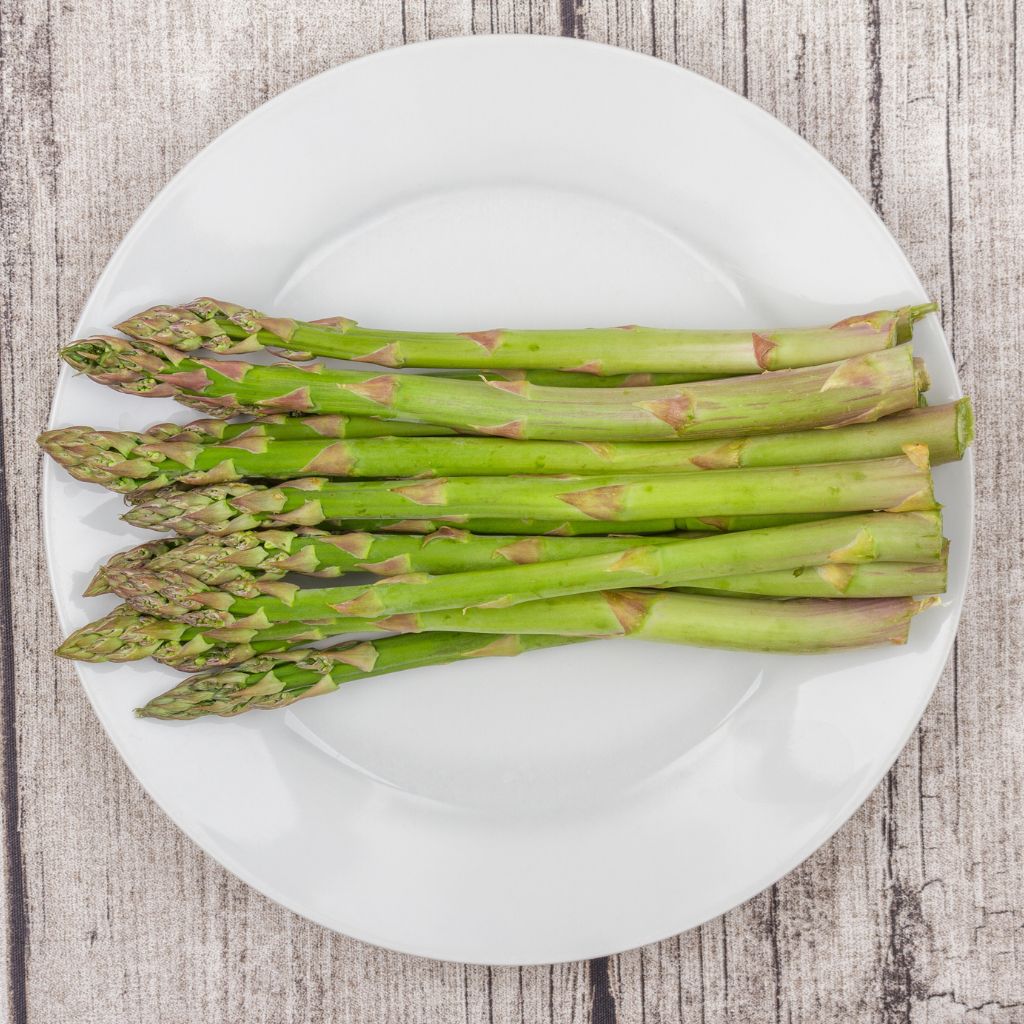
Green asparagus refers to the slender, spear-like shoots of the perennial plant Asparagus officinalis. As they grow up above the soil, they develop chlorophyll and take on their characteristic green color – unlike white asparagus, which is covered with soil and therefore stays pale. Green asparagus is crisp and juicy with a light nutty flavor and a bittersweet note, and it’s one of spring’s first fresh green arrivals.

Advertisement: The page displays ads and contains advertising links (affiliate links). See our advertisers here.
As one of the few perennial vegetables in the kitchen garden, a well-tended asparagus bed can yield a harvest for up to 15 years or more. In the airfryer, the green shoots are especially rewarding: toss them in a little oil, sprinkle with flaky salt, and they become tender with lightly charred tips in just a few minutes – with no peeling required.
Estimated reading time: 11 minutes
History and Origin
What Is Green Asparagus?
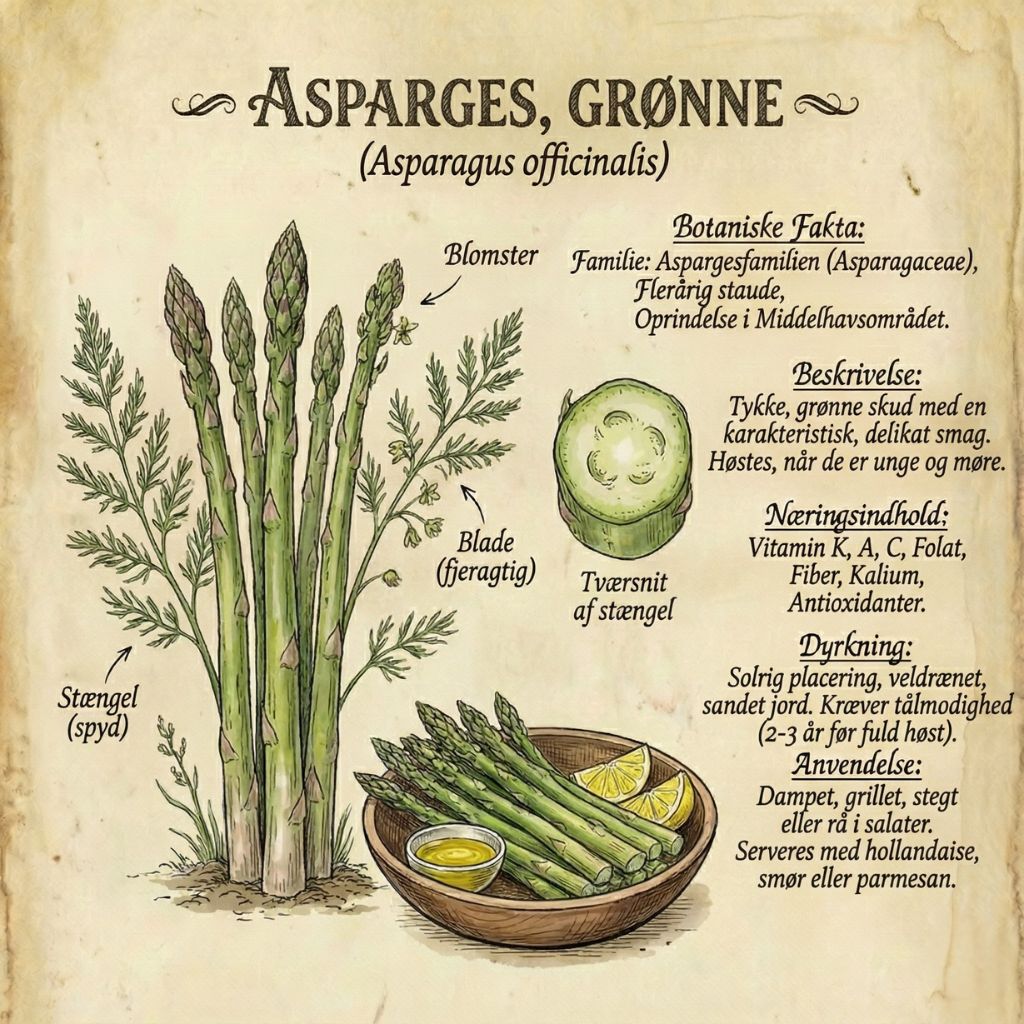
Botanically, asparagus consists of young stems from a perennial herb in the asparagus family (Asparagaceae). The edible spears emerge from underground buds on the plant’s root system (called crowns). If the shoots are allowed to grow, they turn into tall, feathery plants (“ferns”) that produce energy for next year’s harvest. Green asparagus is grown by letting the shoots get light and thereby form chlorophyll, while white asparagus is covered with soil to block out light. Purple asparagus is grown from special varieties that contain the pigment anthocyanin. All are variations of the same species, but green asparagus typically has more flavor and more vitamins than white.
Early History and Spread
Asparagus has a long culinary history. The name comes through Latin from the Greek word asparagos, possibly of Persian origin, and was corrupted in English folk speech to “sparrow grass”. It was already being cultivated 2000 years ago in the eastern Mediterranean, in Egypt and large parts of Africa. In ancient Greece, asparagus was considered a sacred plant with aphrodisiac properties, and the physician Hippocrates used it against diarrhea and urinary complaints. Caesar’s legions brought the plant to Rome, where it was served as a starter and accompaniment to fish.
Later it was forgotten in Europe during the Middle Ages, but rediscovered and cultivated at royal courts during the Renaissance, including for the French king Louis XIV. Today, asparagus is grown in large quantities in Europe, the Americas, and China, and in Germany, “Spargelzeit” (asparagus season) is celebrated every spring with fresh asparagus on the menu.
Flavor and Aroma
Green asparagus has a fresh, lightly sweet, and nutty flavor with a subtle bitterness at the end of the stalk. Many describe the aroma as “green” and grassy, with a hint of peas and freshly cut grass. The crisp texture comes from the high water content; when cooked correctly, the spears retain a firm bite and a juicy core.
The thin spring shoots are more delicate and can be eaten almost whole, while thick, late-season shoots may need the lower part peeled to remove tougher fibers. Unlike white asparagus, green asparagus rarely needs peeling – it has a thinner skin and a more robust flavor.
Culinary Uses
Green asparagus is versatile and can be served raw, blanched, steamed, fried, or grilled. It absorbs flavor from dressings and sauces and suits both rich and light dishes. It’s important not to overcook asparagus – it should only be cooked until it turns light green and just becomes tender.
In the Danish Kitchen
In Denmark, green asparagus belongs to spring. It’s served as a crisp accompaniment to fish and meat, tossed into salads with new potatoes and radishes, or used in tarts and omelets together with smoked salmon. A quick turn in the airfryer with oil and flaky salt has become a modern Danish favorite, because the method produces tender shoots with crisp, lightly charred tips without using much fat.
Internationally
In Italy, the green shoots are used in risotto and frittata, in France they’re traditionally served with hollandaise or beurre blanc, and in the US and the Nordics, grilled asparagus is popular as an accompaniment to meat and fish. In Asian cuisine, they feature in stir-fries with garlic, ginger, and soy sauce. Modern dishes also use raw asparagus in salads, as pickles, puréed in soups, or blended into green smoothies.
Ideas for Using Green Asparagus
- Elegant starter: Serve blanched or grilled asparagus with hollandaise or a sauce made from butter, lemon, and freshly chopped dill.
- Pasta dishes and risotto: Slice asparagus and add it to risotto, pasta primavera, or pasta salads together with peas, bacon, and parmesan.
- Quiche and omelet: Use asparagus in tarts, quiches, or omelets together with cheese, ham, or smoked salmon.
- Stir-fry and wok: Sauté asparagus in a little oil together with garlic, ginger, and soy sauce, ideally combined with chicken, tofu, or shrimp.
- Salads: Cut raw asparagus into thin ribbons with a peeler and use them raw in salads with citrus dressing, nuts, and cheese.
- Tapas and antipasti: Wrap small bundles of asparagus in Parma ham and bake them, or marinate asparagus in oil, lemon juice, and herbs for a cold tapas spread.
Cooking Methods
A little preparation ensures perfect asparagus. Start by rinsing the shoots under cold water and patting them dry gently. Snap or cut off the woody ends – they usually break naturally at the point where the stalk turns from tough to tender. Thicker stalks may have a tougher outer skin; if so, peel the lower third with a vegetable peeler.
- In the airfryer: Toss the shoots in a little oil, salt, and pepper and cook them at 200 °C for 6-8 minutes. Shake the basket along the way so they turn evenly crisp with lightly charred tips.
- Blanching or steaming: Boil asparagus in lightly salted water for 2-4 minutes or steam it until light green and still crisp. Plunge it immediately into ice water to stop the cooking if it’s to be served cold.
- Boiling: Boil asparagus for 3-5 minutes in a wide pot so it can lie in a single layer. Be careful not to overcook – it should keep its color and firmness.
- Grill and oven: Toss asparagus in oil, salt, and pepper and grill it over high heat or bake it in the oven at 200 °C for about 8-10 minutes, until lightly browned.
- Raw in salads: Cut thin ribbons with a mandoline or vegetable peeler and use them raw in salads for a fresh, crisp texture.
Health Benefits
Green asparagus is low in calories but rich in fiber, vitamins, minerals, and antioxidants. Half a cup (about 90 g) of cooked asparagus contains around 20 kcal, 2.2 g protein, 3.7 g carbohydrates, 0.2 g fat, 1.8 g dietary fiber, and 1.2 g natural sugars, as well as 45.5 µg vitamin K.
Vitamins and Minerals
One cup of raw asparagus contains about 27 kcal, 2.8 g fiber, and 3.0 g protein. The same portion is a good source of several important nutrients:
- Vitamin K: 56 µg (about 46% of daily reference intake)
- Folate: 70 µg
- Iron: 2.89 mg
- Copper: 0.26 mg
- Thiamin and riboflavin: 0.19 mg each
- Vitamin E: 1.52 µg
Asparagus is also a good source of vitamin C, A, and magnesium, manganese, and potassium, as well as phytochemicals such as glutathione, quercetin, and anthocyanins.
Digestion and Heart Health
The soluble and insoluble dietary fiber in asparagus promotes healthy digestion and provides satiety. The fiber acts as a prebiotic, as it contains inulin, which promotes the growth of beneficial gut bacteria. The potassium content helps lower blood pressure by removing excess sodium and reducing tension in blood vessels. Folate (about 70 µg per cup of raw asparagus) is important for DNA synthesis and especially for pregnant women, as half a cup of asparagus provides roughly a quarter of the daily folate requirement.
Antioxidants such as rutin, quercetin, and glutathione protect cells against free radicals, and some laboratory studies suggest that asparagus may have blood pressure- and cholesterol-lowering effects. A few studies also suggest that asparagus may protect the liver against toxins.
Safety and Nutritional Considerations
Asparagus contains asparagusic acid, which breaks down into sulfur-containing compounds – this is harmless but can give urine a distinctive smell. Some individuals may experience contact allergy or hives from handling or eating asparagus. Asparagus naturally has a high vitamin K content, which means people on warfarin or other blood thinners should avoid large, sudden changes in their asparagus intake. Asparagus also has a diuretic effect; people on lithium treatment should consult their doctor about the amount of asparagus in their diet.
Growing and Harvesting in Denmark
Green asparagus thrives in Danish gardens if given the right location and care. Asparagus is a perennial plant with deep roots, and the bed must be established somewhere it can stand undisturbed for many years. Choose a sunny spot with deep, well-drained soil and a pH around 6.5-7. The soil should be loose and rich in organic matter; mix in compost or well-rotted manure in the top 20-30 cm.
Growing Conditions
- Light: Asparagus needs full sun – at least 8 hours of direct sunlight a day – to produce robust ferns and strong shoots.
- Soil and pH: Deep, well-drained sandy or clay soil enriched with organic matter, pH 6.5-7; avoid waterlogged or very stony sites.
- Watering: Water regularly so the soil stays moist but not wet – about 2.5 cm of water per week; increase frequency during drought and on sandy soil.
- Temperature: Asparagus can tolerate cold and starts growing at soil temperatures around 10 °C, but established plants send up shoots once the soil temperature reaches 15-18 °C. Late night frost can damage new shoots, so cover with garden fleece if needed.
- Fertilizing: Take a soil sample; apply 1-1.5 kg of fertilizer with equal parts nitrogen, phosphorus, and potassium (10-10-10) per 10 m² before planting. After establishment, feed with compost or a suitable mineral fertilizer in early spring and after harvest.
How to Grow Green Asparagus
Total time: 3 years to full harvest
- Prepare the bed
Choose a sunny spot without late night frost. Asparagus prefers deep, well-drained soil with a pH of 6.5-7. Remove perennial weeds, loosen the soil to 25-30 cm, and work in generous amounts of compost or well-rotted manure.
- Plant the crowns
Dig a trench 15-30 cm deep and about 25 cm wide. Lay the one-year-old crowns (root pieces) about 30 cm apart, cover them with 5-7 cm of soil, and water well.
- Fill the trench
As the shoots grow, gradually fill the trench with the remaining soil without burying the new shoots. Eventually, the crowns should sit about 15 cm below the soil surface.
- Water and tend
Give the plants about 2.5 cm of water per week and keep the bed weed-free by hand weeding or light hoeing. Let all shoots grow freely for the first two years so the crowns can store energy.
- Harvest
From the third growing season, harvest shoots when they are 15-20 cm tall and before the tip loosens. Snap or cut them at the soil surface. Stop harvesting around midsummer so the plants can grow ferns and store energy for next year.
After harvest, the shoots should keep growing into ferns. Wait to cut back the withered ferns until they’re completely dead in the fall, so the nutrients can return to the crown. Apply a layer of compost or well-rotted manure late in the season or in early spring, and cover the bed with a layer of straw to protect against frost.
Storage
Green asparagus should be harvested or bought young and firm. The tip should be tightly closed, and the stalk firm and crisp. Fresh asparagus is best stored in the refrigerator standing in a little water, or wrapped in a damp paper towel and placed in a plastic bag.
In the Fridge
Store the shoots standing up so they stay crisp; they’ll keep for 3-7 days before quality declines. If you like, trim a thin slice off the bottom and change the water daily, as if it were a bouquet of flowers.
Freezing
- Blanch the shoots for 2-3 minutes and cool them quickly in ice water before freezing.
- Dry them thoroughly and freeze them in a single layer on a tray before transferring them to a bag – this keeps them from clumping together.
- Frozen asparagus should be used within a year and cooked directly from frozen.
Great Pairings
The delicate, green flavor of asparagus pairs well with a range of ingredients. Lemon juice or zest, olive oil or butter, and a sprinkle of flaky salt highlight the clean vegetable flavor. Asparagus goes well with herbs such as dill, tarragon, parsley, chives, and basil, as well as seasonings like garlic, chili, and lemongrass.
Combinations with eggs (fried eggs, hollandaise, frittata), cheese (parmesan, feta, goat cheese), smoked fish and salmon, ham, bacon, or prosciutto are classics. Asparagus also pairs well with other spring vegetables like new potatoes, peas, radishes, and spinach, and can add texture to salads together with nuts and seeds.
Mix-Ups and Quality
When buying asparagus, choose stalks that are firm, straight, and green with tightly closed tips. Avoid limp stalks or ones with open, withered tips. Thicker stalks can be just as tender as thin ones; the difference often comes down to the variety’s character and growing conditions. Green asparagus should not be confused with white asparagus (grown without light) or ornamental plants such as asparagus fern (Asparagus setaceus), which are not edible.
Sustainability and Biodiversity
The asparagus bed is a long-term project: once the plants are established, they produce edible shoots for many years without needing to be replanted. The perennial life cycle means less soil disturbance and therefore less erosion. The deep roots loosen the soil and improve its structure, and the tall ferns create habitats for beneficial insects.
Asparagus needs fertilizer and water for a good yield, but once the bed is up and running, it’s relatively low-maintenance. Growing several different varieties (green, white, and purple) can boost biodiversity in the garden.
Try This Recipe
Green asparagus and Parma ham are a classic spring duo, and together with a soft egg, they turn into a luxurious brunch. The salty, crisp meat balances the fresh bite of the asparagus, while the egg yolk ties the dish together. Get inspired by our Egg Benedict in the Airfryer – Crispy Parma Ham and Poached Egg in 15 Minutes and serve blanched asparagus on the side.
Equipment and Products
If you want to elevate grilled green asparagus for a tapas spread, air-dried ham is the obvious companion. The salty, nutty ham wrapped around a bundle of asparagus adds both flavor and a beautiful presentation. We recommend Iberico Ham Cebo de Campo – 100g Sliced, which has a deep, marbled flavor and pairs perfectly with spring asparagus.
Frequently Asked Questions
No, it’s rarely necessary. Only the lower third of very thick stalks needs peeling. Thin spring shoots just need to have their woody ends snapped off.
Toss the shoots in a little oil, salt, and pepper and cook them at 200 °C for 6-8 minutes. Shake the basket along the way. They turn tender with crisp, lightly charred tips – perfect with a sprinkle of flaky salt.
Both types are the same species. White asparagus is grown by covering the shoots with soil so they don’t get light and therefore don’t form green chlorophyll. It has a milder flavor, while green asparagus is stronger in flavor and contains more vitamins.
Yes. A serving of half a cup of cooked asparagus contains only about 3.7 g of carbohydrates, of which 1.8 g is fiber. This makes it well suited to carb-restricted and keto-friendly meal plans.
Asparagus contains asparagusic acid, which during digestion breaks down into sulfur-containing compounds that give urine a characteristic smell. Some people can’t smell it due to genetic variations.
Facts About Green Asparagus
| Field | Value |
|---|---|
| English name | Green asparagus |
| Latin name | Asparagus officinalis |
| Family | Asparagaceae (the asparagus family) |
| Plant type | Perennial herbaceous plant |
| Height | The ferns can grow 1-2 m tall; spears for harvest 15-25 cm |
| Hardiness | Tolerates frost once established; grown as a perennial in Denmark |
| Light | Full sun (min. 8 hours daily) |
| Soil | Deep, well-drained, humus-rich soil, pH 6.5-7 |
| Sow/plant | Plant crowns or seeds in April-May, about 30 cm between plants |
| Flowering/harvest | Harvest shoots in May-June; let the ferns grow for the rest of the season |
| Flavor | Fresh, mild, and lightly nutty with a subtle bitter note |
| Culinary use | Side dish, salads, pasta dishes, risotto, soups, quiche, grilling, stir-fries, airfryer |
| Storage | Standing in a little water in the fridge, or wrapped in a damp cloth; 3-7 days |
| Cooking time | 2-5 minutes (blanching/boiling), 6-10 minutes (airfryer/grill/oven) |
