

Onions are the one vegetable I must never run out of. Almost every dinner in my kitchen starts with an onion that gets chopped and sautéed, whether it’s a quick meat sauce or a stew that is left to simmer all afternoon. The common cooking onion, Allium cepa, comes with yellow, red or white skin and is one of the oldest cultivated plants we know of.
Here I take a closer look at the long history of the onion, explain why it makes you cry, and share my best advice on growing and storing it. Spring onions, chives and wild garlic are close relatives with their own entries in the Food Encyclopedia – this one is about the classic onion that you will find in almost every kitchen.
And the onion is also a little star in the air fryer, where onion rings and baked onions turn golden, crispy and sweet in the hot air.
Estimated reading time: 6 minutes
History and origins
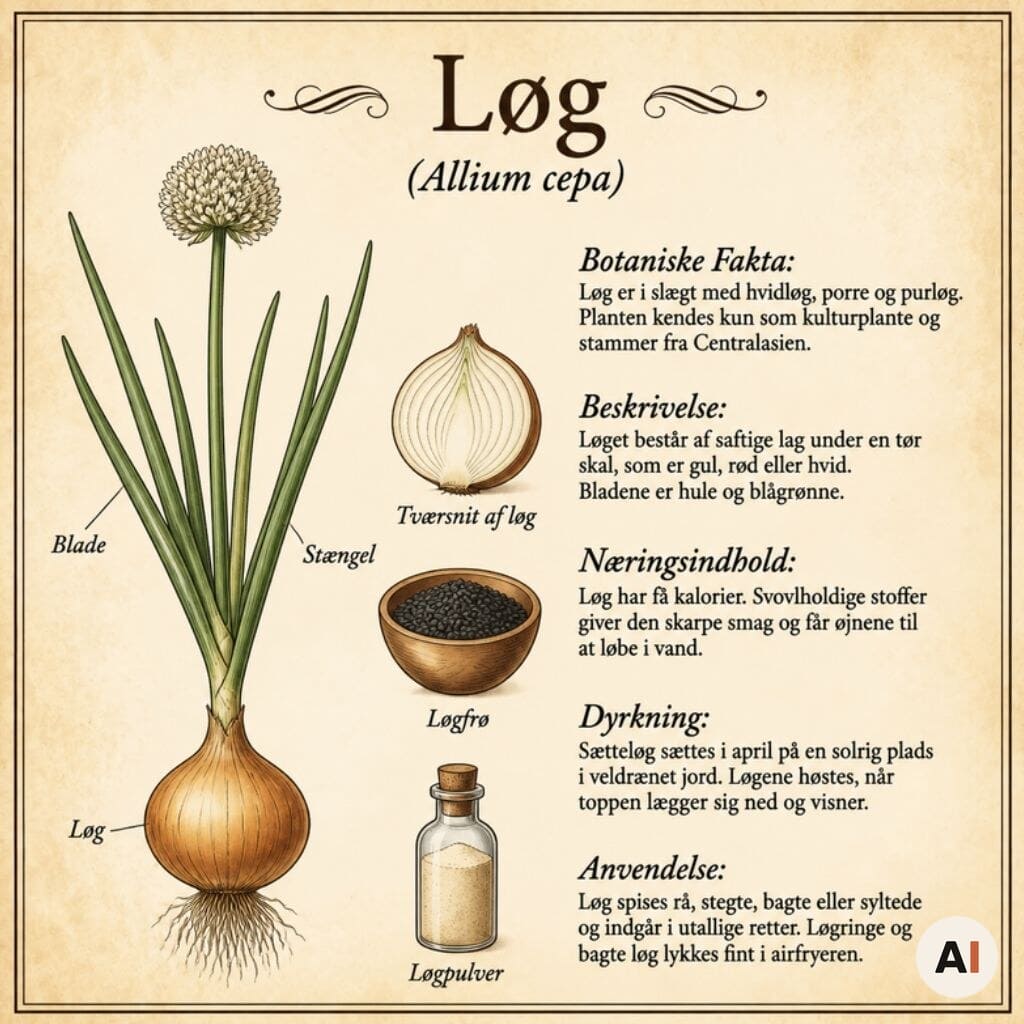
The onion is known only as a cultivated plant and does not grow wild anywhere in the world. Its closest wild relatives grow in Central Asia and Iran, and the cradle of the onion is thought to lie in Western or Central Asia. People have grown and bred onions for at least 7,000 years.
Onions have been in the kitchen for as long as we have been writing recipes down. They already appear in Mesopotamian recipes on the cuneiform tablets known today as the Yale culinary tablets, which are among the oldest written recipes we know of.

Revered in ancient Egypt
In ancient Egypt the onion was revered. Its round shape, with rings inside rings, was seen as a symbol of eternal life, and onions were given a place in burials. Among other things, traces of onion have been found in the eye sockets of Pharaoh Ramesses IV’s mummy.
The common onion and the allium genus
Botanically, the onion belongs to the amaryllis family (Amaryllidaceae), in the subfamily Allioideae, where you also find garlic, leeks and chives. In Danish the species is also called kepaløg, and the Latin cepa is the old Roman word for onion. Shallots are part of the same species – they grow in small clusters and have a milder, more elegant flavor than the large cooking onions.
Flavor and aroma
A raw onion is sharp, strong and crunchy, while an onion that has been allowed to fry slowly turns soft, sweet and almost caramel-like. The sweetness comes from the onion’s natural sugars, which come forward when the heat takes away the sharpness. That transformation is why onions are the cornerstone of so many dishes.
Why you cry when you cut onions
When you cut into an onion, you break its cells, which releases the volatile sulfur compound syn-propanethial-S-oxide. It rises toward your eyes and irritates them, so the tears begin to flow. I always use a sharp knife because it crushes fewer cells than a dull one, and an onion that has been kept cold also gives fewer tears.
Yellow, red and white onions
Yellow onions are the workhorse of the kitchen: sharp when raw and wonderfully sweet when fried. Red onions are milder and slightly sweet, and with their beautiful color they are ideal raw in salads or pickled. White onions are crisp and juicy with a fresh flavor and are often used raw, including in Mexican cooking.
Culinary uses
Onions can be the star, as in onion soup and onion rings, but most often they work in the background, adding depth and sweetness to sauces, stews, soups and ground-meat mixtures.
In Danish cooking
Many Danish classics would not be the same at all without onions:
- Hakkebøf (Danish beef patties) with soft onions and brown gravy: the onions are fried slowly until they are soft and sweet.
- Biksemad (Danish hash): fried meat, potatoes and onions in small cubes.
- Hot dog: the classic from the Danish hot dog stand, with both raw and crispy fried onions.
- Frikadeller (Danish meatballs): grated or finely chopped onion adds juiciness and flavor to the meat mixture.
Internationally
Outside Denmark, French onion soup, soupe à l’oignon, is the classic example of onions in the leading role: plenty of slow-cooked onions, rich broth and bread gratinéed with cheese. In Britain, pickled onions in vinegar are part of pub food, for example a ploughman’s lunch, and onion chutney is a popular accompaniment to cheese.
In the air fryer
Onions are made for the air fryer. The hot air makes breaded onion rings crispy without deep-frying, and halved onions turn soft and sweet when baked with a little oil and salt. Thin slices can also be toasted into crunchy onions that you can sprinkle over hot dogs and salads. My best tips:
- Even thickness: Cut the onions into rings or slices of equal thickness so they finish at the same time.
- One layer: Spread the onions in a single layer in the basket so the hot air can circulate around them.
- A little oil and a shake: Brush or spray with a little oil, and shake the basket during cooking so the onions turn evenly golden.
Health benefits
Onions are easy to love, even when you look at the nutritional content. Raw yellow onions provide only 30 kcal per 100 g and consist mostly of water, while also contributing dietary fiber and small amounts of vitamins.
Nutrition per 100 g
The figures apply to raw yellow onions:
- Energy: 30 kcal (124 kJ)
- Water: 91 g
- Protein: 1 g
- Fat: 0 g
- Carbohydrates: 4.4 g, of which sugars 4.4 g
- Dietary fiber: 4 g
- Vitamin C: 3 mg
- Folate: 30 µg
Plant compounds and fructans
Onions also contain plant compounds such as the flavonoid quercetin, and red onions get their color from anthocyanins. There are also fructans, a type of dietary fiber that most people tolerate well. However, fructans are among the so-called FODMAPs and can cause stomach problems in people with irritable bowel syndrome.
Watch out for pets
Onions are toxic to animals, including dogs and cats. So never give leftovers containing onion to your pet – this also applies to fried onions and dishes where the onion has been cooked in.
Growing
Onions are one of the easiest vegetables to grow yourself, and there is something truly special about laying your own onions out to dry in the sun after the harvest. Botanically the onion is a biennial plant, but in the vegetable garden it is grown as an annual. Onions thrive in cool weather and can be grown in USDA zones 3-9, so cool northern climates such as the Nordic countries suit them well.
Growing conditions
- Light: A sunny spot. Bulb formation is sensitive to day length, so the onion only starts to grow once the number of daylight hours has exceeded a certain minimum.
- Soil: Fertile, well-drained and well-fertilized soil, preferably somewhat clayey.
- Water and nutrients: Regular watering plus liquid fertilizer and a little lime promote growth.
- Height: Modern varieties typically grow 15-45 cm tall.
How to grow onions from sets
The easiest way to your own onions is through onion sets – small onions grown from seed the year before. Choose heat-treated sets if you can, as they are less likely to bolt and go to flower. Popular varieties are the yellow Stuttgarter Riesen and the white Snowball. Onions can also be grown from seed that is started indoors, but sets are the safe choice if you are new to the vegetable garden.
Total time: 3-4 months
- Prepare the soil
Choose a sunny spot with fertile, well-drained soil, and dig compost or fertilizer in well. Add a little lime.
- Plant the sets
Plant the sets shallowly in the soil, about 10 cm apart, as soon as the risk of frost is over in spring. The tip should just poke up above the soil.
- Water and feed
Water regularly and give liquid fertilizer during the growing season. Keep the bed free of weeds so the onions do not have to compete for nutrients.
- Harvest and dry
Harvest when the tops fall over and turn yellow. Lift the onions on a dry, sunny day and let them dry in the sun for a couple of days before you bring them indoors.
Storage
Onions can keep for a long time if they get the right conditions: dry, cool and dark – and with air around them.
Whole onions
Whole onions are best stored at room temperature in a dry, cool, dark and well-ventilated place, preferably in a single layer or in large mesh bags. In the kitchen, ordinary cooking onions typically keep for 3-4 weeks, while sweet onions keep for 1-2 weeks. Home-harvested onions that have been properly dried in the sun can keep for several months at room temperature – and even longer when they are stored dry and cool.
Cut onions
I put half an onion in an airtight container in the fridge so the smell does not spread, and use it within a couple of days. Chopped onions can also be frozen in portions – they lose their crunch but are perfect for stews and sauces.
My best storage tips
- Avoid plastic bags: Onions need to be able to breathe, otherwise they turn soft and can get moldy.
- Keep them away from the potatoes: Potatoes give off moisture, so onions and potatoes keep best separately.
- Check regularly: Remove soft or rotten onions right away so they do not spoil the rest.
Try this recipe
The natural sweetness of the onion really comes out when the rings turn crispy in the hot air of the air fryer. Try our recipe for Air fryer onion rings – crispy, homemade onion rings without deep-frying, which turn golden and crunchy without a pot full of oil. I choose large yellow onions because they give wide rings and turn wonderfully sweet, and I separate the rings completely so the breading can cover the whole surface. They are perfect as a snack or as a side for a homemade burger.
Frequently asked questions
Yellow onions are sharp when raw and turn sweet when fried, so they can be used for almost anything. Red onions are milder and slightly sweet and are ideal raw in salads or pickled. White onions are crisp and juicy with a fresh flavor and are often used raw.
When an onion is cut, the volatile compound syn-propanethial-S-oxide is released, which irritates the eyes and causes tears. A sharp knife crushes fewer cells, and a cold onion releases less of the compound, so both give fewer tears.
Raw yellow onions contain 30 kcal per 100 g. They consist mostly of water and also contribute dietary fiber and small amounts of vitamin C and folate.
Whole onions keep best at room temperature in a dry, cool, dark and airy place, preferably in a mesh bag and not in a plastic bag. Ordinary cooking onions typically keep for 3-4 weeks in the kitchen. A cut onion should go in an airtight container in the fridge and be used within a couple of days.
Yes, onion rings turn crispy in the air fryer without deep-frying. Bread the rings, brush or spray them with a little oil, and spread them in a single layer in the basket. Shake the basket during cooking so they turn golden on all sides.
Facts about onions
| Field | Value |
|---|---|
| English name | Onion (bulb onion, common onion) |
| Latin name | Allium cepa |
| Family | Amaryllis family (Amaryllidaceae), subfamily Allioideae |
| Origin | Known only from cultivation; wild relatives grow in Central Asia and Iran |
| Plant type | Biennial plant grown as an annual |
| Height | 15-45 cm (modern varieties) |
| Hardiness | Thrives in cool weather, USDA zones 3-9 |
| Light | Sunny spot; bulb formation is sensitive to day length |
| Soil | Fertile, well-drained and well-fertilized, preferably somewhat clayey |
| Sow/plant | Onion sets about 10 cm apart once the risk of frost is over in spring |
| Harvest | When the tops fall over and turn yellow |
| Calories per 100 g | 30 kcal (raw) |
| Flavor | Raw: sharp and strong. Fried: sweet and mild. |
| Varieties | Yellow, red and white onions, shallots, Stuttgarter Riesen and Snowball |
| Culinary use | Soft fried onions, biksemad (Danish hash), onion soup, onion rings, chutney and pickled onions |
| Storage | Dry, cool, dark and airy at room temperature |
