

The orange is one of the world’s most beloved fruits – juicy, sweet and full of sunshine even in the depths of winter. The round, orange fruit with its distinctively aromatic peel has become a staple in Danish kitchens, where it turns up in everything from breakfast juice to festive desserts and glazed roasts.

Advertisement: The page displays ads and contains advertising links (affiliate links). See our advertisers here.
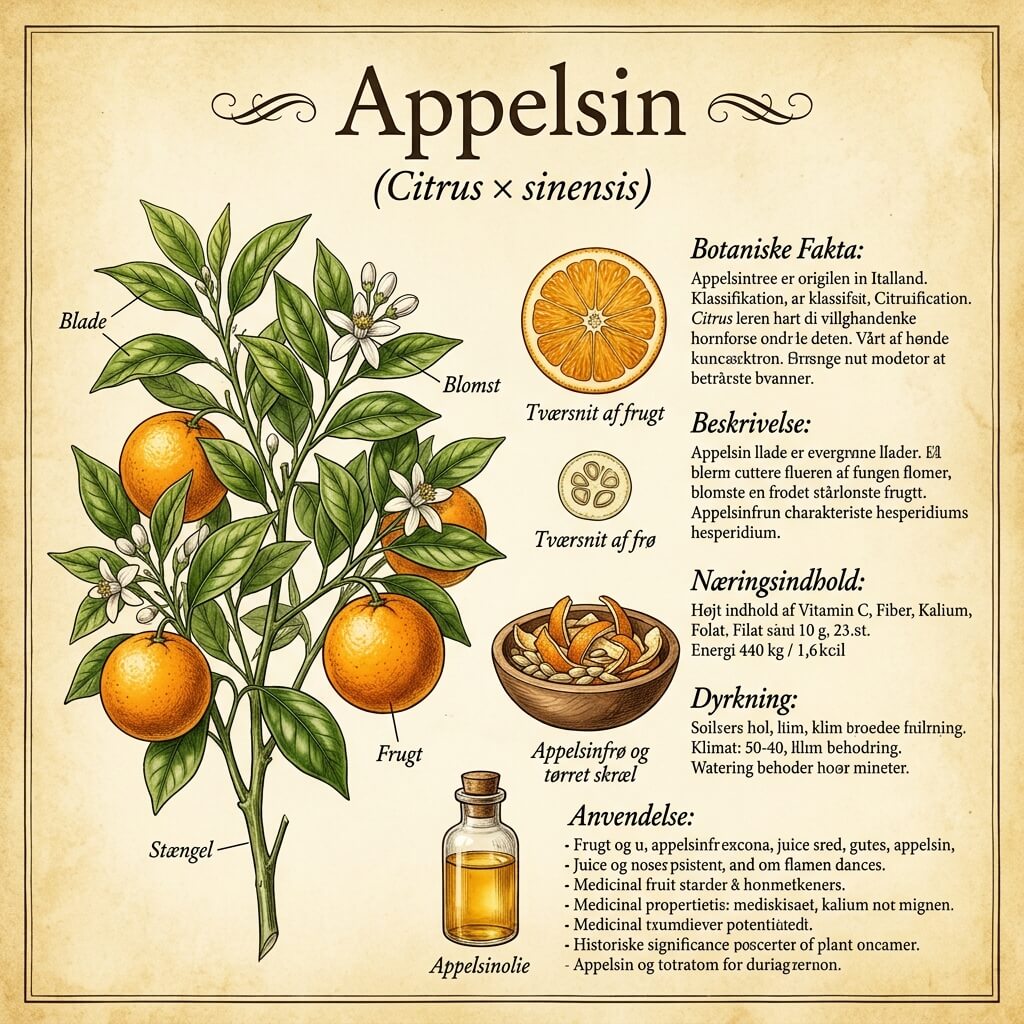
Behind this familiar fruit lies a fascinating history that stretches from ancient China to today’s Brazilian plantations. The orange (Citrus × sinensis) belongs to the citrus family and is today one of the most widely cultivated fruits on the planet. In this entry in our Food Encyclopedia, we dive into the orange’s origins, flavor, health benefits, and all the ways you can use it in the kitchen.
Estimated reading time: 9 minutes
History and Origin
The orange has a long and rich history that begins thousands of kilometres from Danish fruit stalls. In fact, the name itself tells part of the story: in German, the orange is called Apfelsine, meaning “apple from China”.
Early History in Asia
The sweet orange originates from southern China and Southeast Asia, where it has been cultivated for millennia. From there, cultivation gradually spread westward through India and onward along the trade routes. The orange is not a wild fruit in the traditional sense, but the result of a cross between the pomelo and the mandarin – a refinement that took place over a very long time.
Spread to Europe
In the 15th and 16th centuries, seafarers brought the orange to Europe, where it quickly became a sought-after luxury good. In the cooler northern regions – including Denmark – special orangeries were built, where orange trees could be grown protected from the frost. Here, it was less about eating the fruit and more about the evergreen trees with their fragrant blossoms serving as a status symbol. Today, Brazil is the world’s largest producer of oranges, followed by the likes of the USA, China, India and the countries around the Mediterranean.
Flavor and Aroma
The orange’s flavor is a perfect balance of sweetness and acidity, combined with a fresh, aromatic citrus scent. It is precisely this interplay that makes the fruit so versatile in the kitchen.
Sweetness and Acidity
A ripe orange has a round, honey-like sweetness carried by a pleasant tartness. The degree of ripeness matters a great deal: oranges picked too early can taste bitter and sour, while fully ripe fruit is juicy and sweet. Blood oranges also have a deeper, almost berry-like flavor with notes of raspberry.
Peel and Aroma
A large part of the orange’s aroma sits in the peel, which is filled with essential oils. Grated orange peel – zest – is therefore a fantastic flavor booster in both sweet and savory dishes. Remember to use only the outermost orange layer and avoid the white pith, which tastes bitter.
Culinary Uses
The orange is incredibly versatile and is used in everything from refreshing juice to complex sauces. Its fresh acidity cuts through fat and sweetness, making it a natural pairing for poultry, desserts and baked goods alike.
In the Danish Kitchen
In Denmark, we especially associate the orange with the Christmas season, where it appears in everything from the sauce served with risalamande (a Danish rice pudding dessert) to æbleskiver (Danish pancake puffs) and gløgg (mulled wine). Orange zest is used liberally in Christmas cookies, and fresh juice is a permanent fixture on the breakfast table all year round. Orange and chocolate is a classic Danish combination in cakes and confectionery.
Internationally
Around the world, the orange plays a central role in the kitchen. In France, the classic canard à l’orange (duck in orange sauce) is well known, in Mediterranean cuisine oranges appear in fresh salads with fennel and olives, and in the Middle East, orange blossom water is used as an aromatic ingredient in desserts. Marmalade made from bitter Seville oranges is a British breakfast classic.
Preparation in the Airfryer
In the airfryer, orange can be used to give dishes a fresh lift. Try brushing chicken thighs or duck breast with a glaze of orange juice, honey and a splash of soy sauce – the high heat caramelizes the sugar and gives a glossy, aromatic finish. Orange slices can also be briefly baked in the airfryer and used as a garnish on cakes and desserts.
Health Benefits
The orange is not just delicious – it is also a nutritional powerhouse with a low calorie content and a high content of vitamins and antioxidants.
Vitamins and Minerals
The orange is best known for its high vitamin C content, which strengthens the immune system and helps the body absorb iron. In addition, it contributes several other important nutrients.
- Vitamin C: covers a large part of the daily requirement in just one fruit
- Folate (B9): important for cell division and blood formation
- Potassium: helps regulate blood pressure
- Dietary fiber: promotes good digestion and satiety
- Antioxidants: especially flavonoids, which protect the cells
Digestion and Immune System
With its dietary fiber content, the orange supports healthy digestion and provides a pleasant feeling of fullness. Its high vitamin C content plays a central role in the immune system and may help shorten the duration of common colds. The antioxidants in the fruit help protect the body’s cells against harmful free radicals.
Cultivation
The orange tree is an evergreen citrus tree that can grow up to 10 meters tall. It thrives best in subtropical and tropical climates with plenty of sun and warmth – conditions that, unfortunately, are not found naturally in Denmark.
Growing Conditions
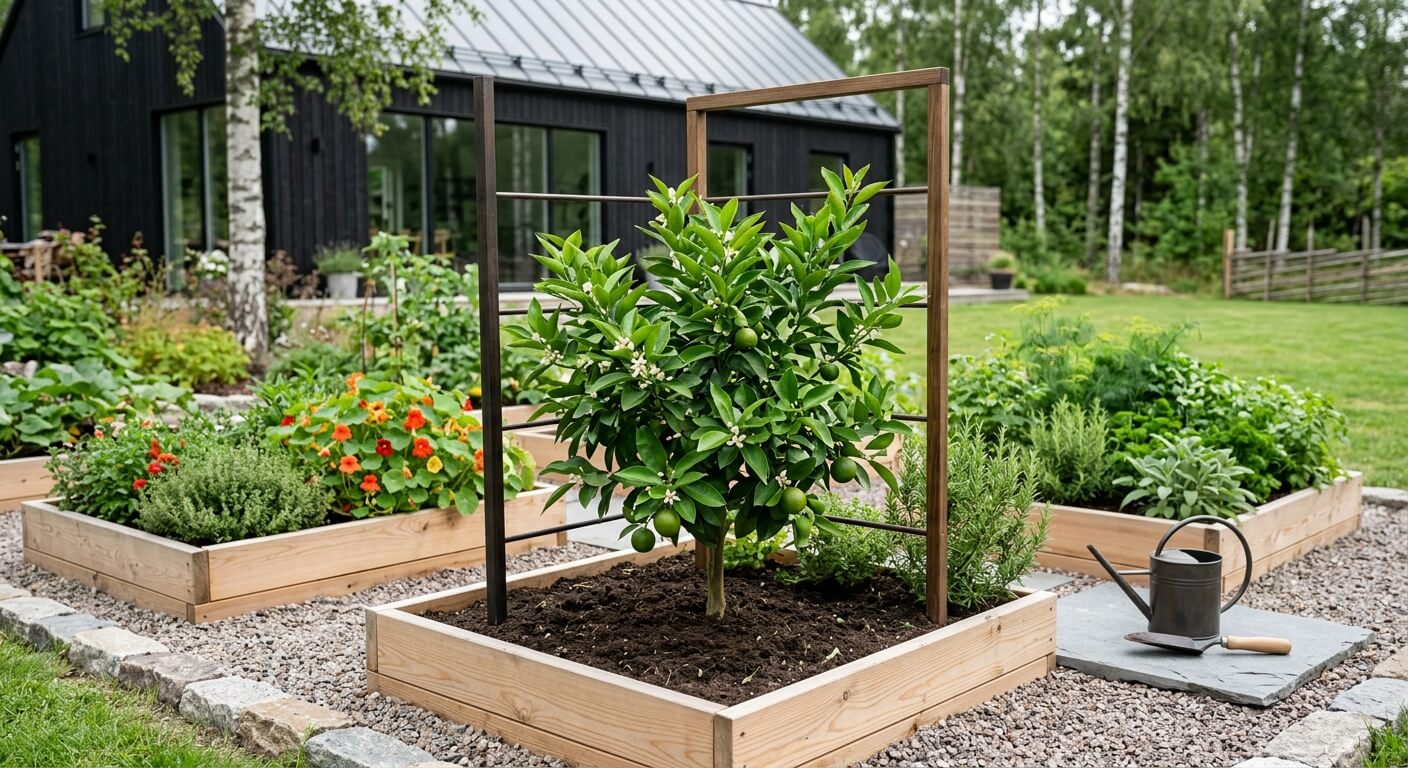
Orange trees require a warm climate with temperatures around 25 degrees and plenty of sunlight. They need well-drained soil and regular watering. In Denmark, orange trees can be grown in pots if given a bright, frost-free place to overwinter – for example in an unheated greenhouse or a conservatory.
How to Grow an Orange Tree in a Pot
Total time: 3-4 years
- Choose a pot and soil
Plant your orange tree in a well-drained pot with special citrus soil, and make sure it has good drainage holes.
- Find the right spot
Place the tree in the brightest and warmest spot you have – ideally on a sunny terrace during the summer months.
- Water and fertilize
Water regularly, but let the soil dry out slightly between waterings, and apply citrus fertilizer during the growing season.
- Overwinter frost-free
Move the tree indoors to a bright, frost-free room before the first night frost arrives in autumn.
Storage
Oranges keep well if stored correctly. Here are a few simple tips for keeping your oranges fresh for as long as possible.
In the Fridge and at Room Temperature
Oranges can be stored at room temperature for about a week, where they’re easy to grab from the fruit bowl. If you want them to last longer, the fridge is the best place – there they can stay fresh for several weeks. Store them loosely so air can circulate around them.
Good Storage Tips
- Store oranges loosely rather than in a sealed plastic bag
- Keep them separate from fruits that release a lot of ethylene, such as apples
- Freeze grated orange zest in small portions for baking
- Juice any surplus oranges and freeze the juice in ice cube bags
Try This Recipe
The orange’s fresh citrus aroma is excellent in crisp baked goods, where a little grated zest lifts the flavor to new heights. Norwegian serinakager are a perfect example – their buttery, crisp texture gets extra character from a hint of citrus. Try our recipe for Serinakager in the Airfryer – Crispy Norwegian Cookies with Pearl Sugar, and feel free to add a little grated orange zest to the dough.
Equipment and Products
To get the most out of the orange’s aromatic peel, a fine grater is indispensable, so you can easily add zest to dough, marinades and desserts. A good citrus juicer helps you extract every last drop of juice from the fruit. Find inspiration for kitchen equipment and delicious ingredients in our webshop Airfryer Delikatesser.
Frequently Asked Questions
A single medium-sized orange covers a large part of the daily recommended intake of vitamin C. This makes the orange one of the best natural sources of this important vitamin, which strengthens the immune system.
Yes, the orange part of the peel (zest) can certainly be eaten and is full of aroma. Avoid the white pith beneath the peel, as it tastes bitter. Choose organic oranges if you want to use the peel.
Oranges keep for about a week at room temperature and several weeks in the fridge. Store them loosely so air can circulate, and keep them separate from apples, which can make them ripen faster.
Blood oranges have red to deep red flesh due to the antioxidant anthocyanin. They have a slightly more complex flavor with notes of berries, while regular oranges have a purer sweet-tart flavor.
Not outdoors year-round, since orange trees can’t tolerate frost. However, they can be grown in pots if given a bright, frost-free place to overwinter indoors or in an unheated greenhouse.
Facts About Orange
| Field | Value |
|---|---|
| Latin name | Citrus × sinensis |
| Family | Rutaceae (Citrus family) |
| Origin | Southern China and Southeast Asia |
| Season in Denmark | November to April (imported) |
| Calories per 100g | About 50 kcal |
| Key nutrients | Vitamin C, folate, potassium, dietary fiber |
| Flavor | Sweet with a fresh tartness |
| Storage | 1 week at room temperature, several weeks in the fridge |
