

To me, red cabbage is the very taste of a Danish Christmas. When the pot of sweet-and-sour red cabbage is simmering and the scent of vinegar and red currant juice spreads through the kitchen, Christmas has moved in. But red cabbage is much more than a side for the roast duck – it is crisp and fresh in raw salads, and in the air fryer it turns into roasted wedges with caramelized edges.
Red cabbage is a cultivated form of wild cabbage and a close relative of white cabbage. The most fascinating thing about it is the color, which shifts with the level of acidity – and there is a completely chemical explanation for why we add vinegar or tart fruit to the pot.
Estimated reading time: 6 minutes
History and origins
A cultivated form of wild cabbage
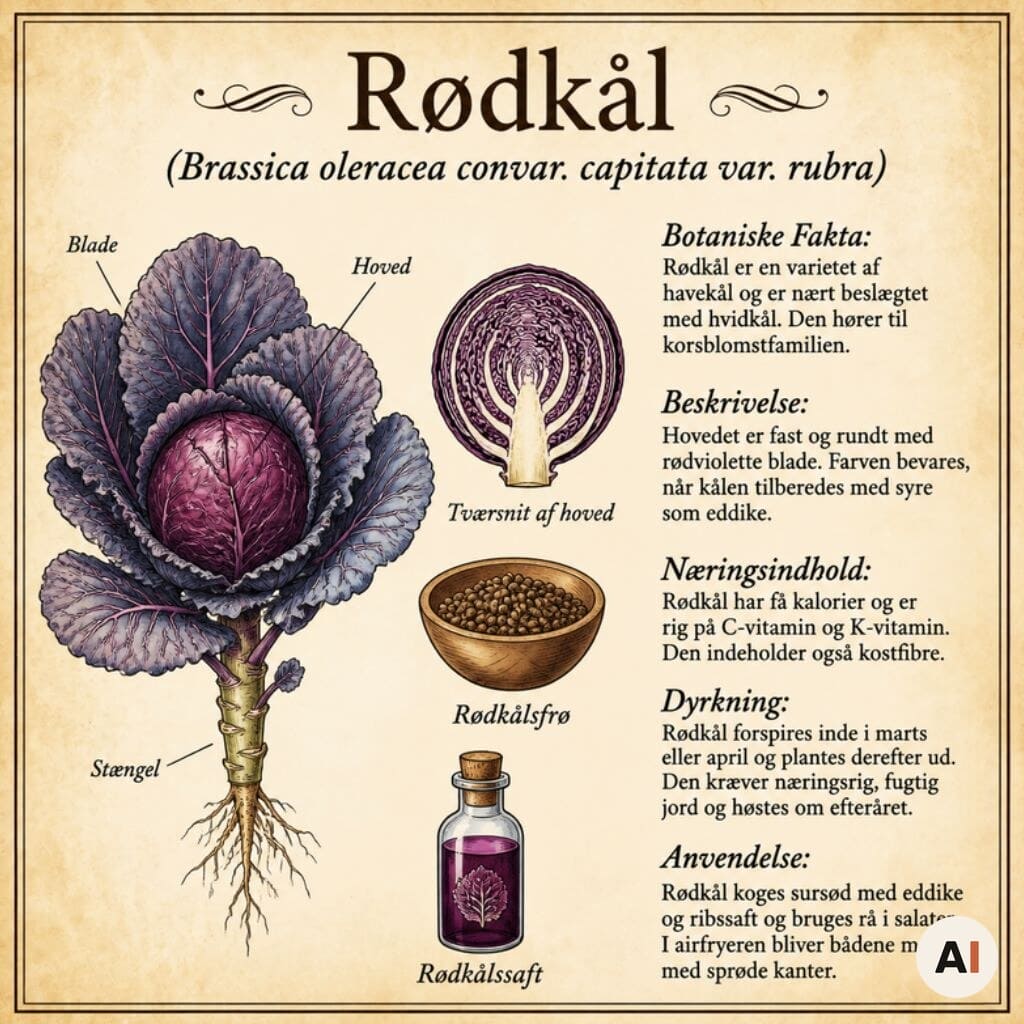
Red cabbage – Brassica oleracea var. capitata f. rubra in Latin – belongs to the mustard family (Brassicaceae). It is a cultivated form of wild cabbage (Brassica oleracea), the same species that has also given us white cabbage, kale and Brussels sprouts. In some reference works it is written Brassica oleracea convar. capitata var. rubra.
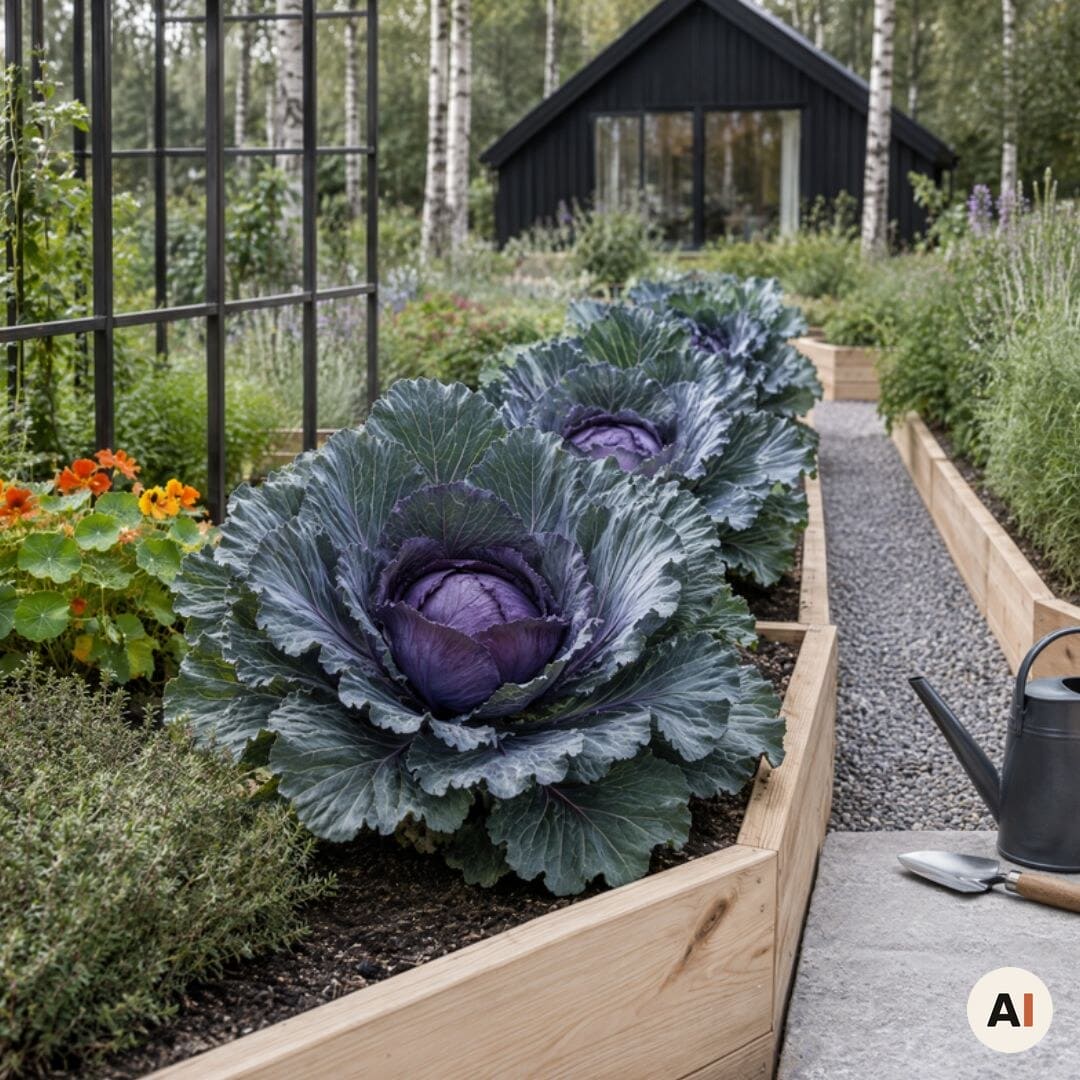
Botanically speaking, red cabbage is a head cabbage. The head cabbages – the Capitata group – form a firm head of tightly packed leaves, and red cabbage is one of four types, along with white cabbage, pointed cabbage and savoy cabbage. Red cabbage stands out from the others with its red-purple leaves, which gave it its name.
Distribution and tradition
Today red cabbage is found throughout Europe, in the Americas, in China and especially in Africa. It is sown in spring, harvested late in autumn and stores well through the winter, which makes it an obvious winter vegetable in a Nordic climate.
In Denmark, most people associate red cabbage with Christmas, when the sweet-and-sour version is the standard side dish for roast duck and roast pork. White cabbage, kale and Brussels sprouts, by the way, have their own entries here in the Food Encyclopedia.
Flavor and aroma
Raw red cabbage
Raw red cabbage is crisp and juicy with a fresh, slightly sweet flavor and a mild, cabbage-like bitterness. The leaves are firm, so the cabbage needs to be sliced finely for salad. I like to toss it with a little acid – for example orange or vinegar – so the flavor becomes rounder and the color brightens up.
Braised and sweet-and-sour
When red cabbage is braised for a long time, the leaves become tender and the natural sweetness comes through. Cooked red cabbage contains 3.32 g of sugars per 100 g, and that sweetness goes perfectly with vinegar and red currant juice. Many people also season it with cinnamon, cloves or bay leaf.
The color and the acid
The color comes from natural pigments called anthocyanins, which also give blueberries, for example, their color. They react to acidity: with acid, the cabbage keeps its red color, but without acid it normally turns blue when cooked. That is why we put vinegar, tart fruit or wine in the pot – it is as much about the color as about the flavor.
Culinary uses
In Danish cooking
Sweet-and-sour braised red cabbage is the best-known Danish red cabbage dish. It is typically made with vinegar, sugar and, for example, red currant juice, and is served with the Christmas roast duck and roast pork. But red cabbage also belongs on the everyday dinner table – as a side for frikadeller (Danish meatballs) and as the indispensable layer in a roast pork sandwich (flæskestegssandwich).
Internationally
In Germany, red cabbage is a traditional side for many dishes, especially meat dishes such as Sauerbraten and döner kebab. In southern Germany and Austria it is often called Blaukraut (“blue cabbage”) – a name that suits the color the cabbage takes on without acid. Elsewhere it is served spiced and braised with apple and a little vinegar alongside Christmas roast goose or turkey.
Classic dishes with red cabbage
- Sweet-and-sour red cabbage: braised with vinegar, sugar and red currant juice, served with roast duck and roast pork.
- Red cabbage salad with orange: raw, finely sliced cabbage with fresh tartness.
- Roast pork sandwich (flæskestegssandwich): the red cabbage is the sweet-and-sour layer that ties it all together.
- Frikadeller with red cabbage: a classic Danish everyday combination.
- Sauerbraten: the German marinated roast is traditionally served with red cabbage.
- Coleslaw: raw red cabbage adds color and crunch.
In the air fryer
My favorite way to use red cabbage in the air fryer is roasted red cabbage wedges. Cut the cabbage into wedges through the core so the leaves stay together, brush with oil, and season with salt and pepper. Roast the wedges until the edges are crisp and dark and the center is tender – turn them halfway through.
The dry, circulating heat gives the edges a deep, nutty sweetness. At the end I give the wedges a splash of balsamic or apple cider vinegar so the color brightens up again. They make a beautiful side for everything from frikadeller to duck breast.
Health benefits
Nutritional content
Red cabbage is a light vegetable. Cooked red cabbage contains 29 kcal per 100 g and consists mostly of water, but it contributes dietary fiber and vitamins – especially vitamin C and vitamin K. The figures apply per 100 g of cooked red cabbage:
- Energy: 29 kcal (122 kJ)
- Protein: 1.51 g
- Carbohydrates: 6.94 g, of which sugars 3.32 g
- Dietary fiber: 2.6 g
- Fat: 0.09 g
- Water: 91 g
- Vitamin C: 34.4 mg
- Vitamin K: 47.6 µg
Raw or cooked?
Vitamin C does not handle heat particularly well, so if you want to get the most out of the vitamins in red cabbage, a raw red cabbage salad is a good choice. Red cabbage is practically fat-free on its own, but classic sweet-and-sour red cabbage has sugar and juice added and therefore contains more calories than plain cooked cabbage.
Growing
Growing conditions
Red cabbage is the most demanding of the head cabbages, so it deserves a little extra attention in the vegetable garden. In return, it rewards you with firm, beautiful heads that can last through the winter.
- Soil: good clay loam with a pH of 6.5–7.5.
- Fertilizer: well-rotted compost and dolomite lime at planting – never fresh manure.
- Water: even moisture, especially in July, when the head forms – lack of water gives a smaller yield.
How to grow red cabbage
Red cabbage occupies its spot in the bed for most of the season. Here are the steps from seed to finished head of cabbage, with timings for a Nordic climate:
Total time: 6-7 months
- Prepare the soil
Choose a bed with good clay loam with a pH of 6.5–7.5, and mix well-rotted compost and dolomite lime into the soil when you plant. Never use fresh manure.
- Sow the seeds
Start the seeds indoors from late March to early April, or sow directly outdoors from mid-April with 3–4 seeds per spot.
- Plant out
Set the plants out when they have 3–4 true leaves. With direct sowing, thin out so that only the strongest plant is left standing.
- Watering and care
Keep the soil evenly moist, especially in July, when the head forms. Lack of water during that period gives a smaller yield.
- Harvest
Harvest the red cabbage late in autumn, when the heads are firm, and cut them free with a sharp knife.
Storage
Whole heads of cabbage
Red cabbage is an excellent storage vegetable. It keeps better than white cabbage and can last through the winter without having to be fermented into sauerkraut. A whole, firm head keeps best cool and dark – in the vegetable drawer of the fridge or in a cool cellar.
Cut and cooked red cabbage
Once the head of cabbage has been cut, it keeps for a shorter time, so use the rest quickly. Homemade sweet-and-sour red cabbage can easily be made well in advance, because it keeps in an airtight container in the fridge.
- Outer leaves: leave them on until you are ready to use the cabbage – they protect the head.
- Cut surfaces: wrap them tightly in plastic wrap, or put the cabbage in a closed container.
- Sweet-and-sour red cabbage: freeze it in portions, so you always have a side dish ready.
Try this recipe
The firm leaves and natural sweetness of red cabbage make it perfect for sweet-and-sour red cabbage, where the acid adds flavor and also keeps the color. Try our recipe for Homemade red cabbage – it gives you the classic sweet-and-sour balance that belongs to Christmas. I always make it well in advance, because red cabbage often tastes even better after it has had time to sit and let the flavors meld. Right before serving, I taste and adjust with an extra splash of vinegar so the color comes out bright and clear.
Frequently asked questions
The color comes from natural pigments called anthocyanins, which change color depending on acidity. Without acid, red cabbage normally turns blue when cooked. If you add vinegar, tart fruit or a little wine, it keeps its red color.
Yes. Raw red cabbage is crisp and fresh and is used in salads, for example with orange, and in coleslaw. Slice it finely and toss it with a tangy dressing so the flavor becomes rounder and the color brighter.
Both are head cabbages and cultivated forms of wild cabbage. Red cabbage has red-purple leaves and is the most demanding of the head cabbages to grow, but it keeps better than white cabbage and can last through the winter without being fermented into sauerkraut.
Cooked red cabbage contains 29 kcal per 100 g. It consists mostly of water and has almost no fat, but it contributes dietary fiber, vitamin C and vitamin K. Sweet-and-sour red cabbage with sugar and juice contains more calories.
Yes. Cut the red cabbage into wedges through the core so the leaves stay together, brush them with oil, and season with salt and pepper. Roast the wedges until the edges are crisp and caramelized, and turn them halfway through.
Facts about red cabbage
| Field | Value |
|---|---|
| English name | Red cabbage |
| Latin name | Brassica oleracea var. capitata f. rubra |
| Family | Mustard family (Brassicaceae) |
| Plant type | Head cabbage, cultivated form of wild cabbage |
| Soil | Good clay loam with a pH of 6.5–7.5 |
| Sowing/planting | Start indoors from late March to early April, direct sowing from mid-April |
| Harvest | Late autumn |
| Calories per 100 g | 29 kcal (cooked) |
| Flavor | Crisp and slightly sweet when raw, mild and sweet when braised |
| Culinary use | Sweet-and-sour red cabbage for Christmas, raw salads and roasted wedges in the air fryer |
| Storage | Keeps better than white cabbage and can last through the winter |
