

White pepper is a spice often used in Asian and European cuisine, but its uses and health benefits aren’t always well known. While black pepper is more common in most kitchens, white pepper is a discreet yet powerful alternative that offers a subtle but distinct flavor.

Advertisement: The page displays ads and contains advertising links (affiliate links). See our advertisers here.
This article dives into the origin of white pepper, how it’s grown and processed, its culinary uses as well as the health benefits that can be gained by including it in your diet.
Estimated reading time: 5 minutes
The origin of white pepper
Historical significance
White pepper, like its black counterpart, comes from the berries of the pepper plant Piper nigrum, which originally grew in Southeast Asia, particularly in regions like India and Indonesia. These two countries have been central to the history of the pepper trade, which goes back several thousand years. In ancient Greece and the Roman Empire, pepper was considered a highly valuable spice and was often used as a form of currency.
In the Middle Ages, pepper, including white pepper, became a trade commodity so valuable that it was called “black diamonds”. The pepper trade was a key factor in the discovery of new trade routes to Asia, which in turn led to the European colonization of many parts of the world. White pepper earned its own place in history due to its unique properties and flavor, which differ from black pepper, even though they come from the same plant.
Cultivation and processing
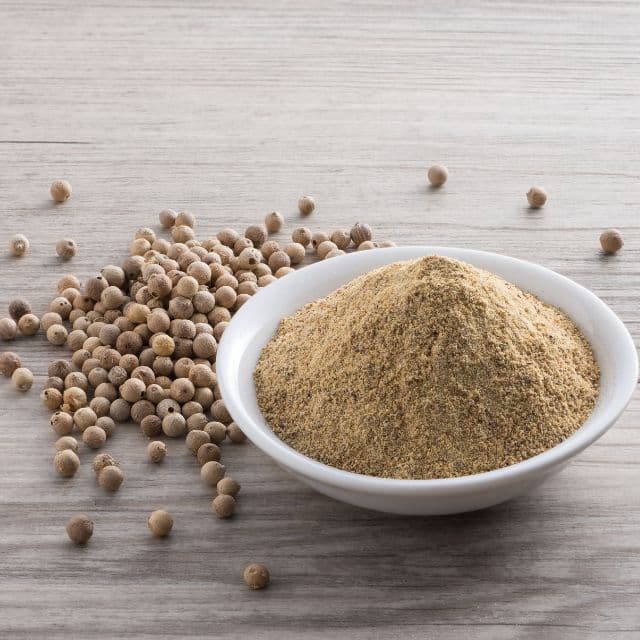
Cultivating white pepper is a meticulous process. The pepper berries are harvested when fully ripe, unlike black pepper, which is harvested while the berries are still green. After harvesting, the skin is removed from the berries through a fermentation process, where the berries are soaked in water for up to ten days. After this process, they are dried, and the resulting product is the white core we know as white pepper. This processing method gives white pepper its characteristic mild flavor, which is less sharp than black pepper but still complex and aromatic.
Flavor and aroma
Because the aromatic skin is removed during processing, white pepper tastes milder and less fragrant than black pepper. In return, a more earthy, lightly fermented heat comes through, stemming from the fermentation process and the piperine in the core.
This discreet flavor makes white pepper ideal where the pepper should support rather than dominate – and where dark specks would spoil the appearance of the dish. As with black pepper, whole white peppercorns retain their aroma far better than the pre-ground version.
Culinary uses of white pepper
In light sauces and soups
White pepper is an indispensable spice in many kitchens around the world, especially in dishes where a clean, subtle flavor is desired without the visible dark specks that black pepper leaves behind. In French cuisine, white pepper is often preferred in light sauces, such as béchamel sauce and cream sauces, where an even color is important. Its mild heat also makes it ideal for soups and potato dishes, where it adds flavor without overpowering the other ingredients.
In Asian cuisine
White pepper is equally popular in Asian cooking. It’s often used in Chinese soups, marinades and stir-fry dishes, where it provides a subtle yet lingering heat that complements the complex flavors in many Asian dishes. It’s also used in Vietnamese pho, where it adds a distinct flavor that’s characteristic of this popular soup.
White pepper is also an important ingredient in Thai cuisine, where it’s used in curry dishes and spicy salads. Its ability to blend harmoniously with other spices makes it an indispensable element in many spice blends.
In Danish cuisine
In Denmark, white pepper has a long tradition in classic home cooking. It belongs in light dishes such as fish cakes and meatball mixtures, chicken fricassee, stews and cream sauces, where it adds warmth without leaving visible specks. Many Danish recipes for these dishes call for white pepper specifically, because its mild, earthy flavor suits both fish and light meats.
- Fish cakes and fish balls
- Meatballs in light sauce
- Chicken fricassee and stews
- Potato dishes and light soups
Spice blends, sausages and cheese
Another important use of white pepper is in spice blends for sausages and other meat products, where its mild flavor and light color make it ideal for these purposes. It’s also used in some cheeses, such as gouda with white pepper, where its flavor complements the cheese’s rich texture and taste.
White pepper has a more subtle flavor than black pepper, which makes it ideal for egg dishes, since it doesn’t overwhelm the delicate flavor nuances. Try adding a pinch of white pepper next time you make scrambled eggs or a soufflé – it gives a gentle warmth without dominating the dish.
Tips and tricks from the author: Morten Jensen
Health benefits of white pepper
Digestion
White pepper isn’t just a spice that enhances the flavor of your dishes; it also has a range of health benefits. One of the best known is its ability to aid digestion. Piperine, the active component in pepper, stimulates gastric acid production, which helps digest food more efficiently. This can reduce digestive discomfort and bloating.
Anti-inflammatory and antioxidant
In addition, piperine has anti-inflammatory properties, which can be useful in treating inflammatory conditions such as arthritis. Piperine is also known to have antioxidant properties that help protect the body’s cells from damage caused by free radicals. This can potentially reduce the risk of chronic diseases such as heart disease and cancer.
Other possible benefits
White pepper (Piper nigrum) also has antibacterial properties, making it a natural ingredient in the fight against infections. It can be used as a remedy to combat colds and coughs, and some studies suggest it may also help lower blood pressure.
Finally, there are also some indications that white pepper may help with weight loss. Piperine is believed to boost metabolism and thereby increase the body’s ability to burn calories. This, combined with its ability to improve digestion, makes white pepper a valuable addition to a healthy diet.
Storage
White pepper is best stored as whole peppercorns in an airtight container, in a dark and dry place. The ground version quickly loses its aroma and can, over time, develop a dull, flat taste, so buy small amounts at a time if you prefer ground white pepper.
- Whole peppercorns in an airtight container keep their flavor for several years
- Ground white pepper should be used within a few months
- Keep the grinder and container away from moisture and steam from the stove
Final thoughts
White pepper is a versatile spice with a rich history and a range of culinary uses. Whether you use it for its subtle flavor in delicate dishes or for its health benefits, it’s clear that white pepper is more than just a spice. It’s an important ingredient that has been valued for thousands of years and continues to have its place in modern cooking.
Try this recipe
White pepper is the classic choice in light fish cakes, where it seasons without leaving dark specks. Try it in our recipe for Salmon patties in the airfryer – crispy without oil in 12 minutes, where a pinch of white pepper elevates the mild salmon flavor.
Equipment and products
White pepper and potatoes are a classic combination in Danish cuisine. A well-seasoned potato salt makes it easy to season light potato dishes – try, for example, Kartoffelsalt Vestjyske Delikatesser from our shop together with a pinch of freshly ground white pepper.
Frequently asked questions
Yes, both come from the pepper plant Piper nigrum. The difference lies in the harvesting and processing: black pepper is made from unripe berries that are dried with the skin on, while white pepper is made from ripe berries with the skin removed.
White pepper leaves no visible dark specks and has a mild flavor that doesn’t dominate. That’s why it’s classic in béchamel, cream sauces, stews and other light dishes.
Yes. White pepper is milder and more earthy because the aromatic skin has been removed, while black pepper is sharper and more fragrant. Both contain piperine, which provides the heat.
The pepper berries are harvested fully ripe and soaked in water for up to ten days, so the skin can be removed through a fermentation process. The white kernels are then dried, which is the white pepper we know.
Store whole white peppercorns in an airtight container, in a dark and dry place – this keeps the flavor for several years. Ground white pepper quickly loses its aroma and should be used within a few months.
Facts about white pepper
| Field | Value |
|---|---|
| English name | White pepper |
| Latin name | Piper nigrum |
| Family | Piperaceae (the pepper family) |
| Origin | India and Indonesia |
| Production | Ripe berries are soaked, peeled and dried |
| Flavor | Mild, earthy and warm – without black pepper’s fragrance |
| Culinary use | Light sauces, fish cakes, soups and Asian dishes |
| Storage | Whole peppercorns, airtight, dark and dry |
