
Juniper is the scent of windswept heathland and the flavour of game cooking. This evergreen conifer shrub is one of the few conifers native to Denmark, and for millennia it has shaped both the landscape and the food culture. Its small, blue-frosted cones – known as Juneper berries – give gin its characteristic aroma and add depth to sauces, marinades and winter stews.

Advertisement: The page displays ads and contains advertising links (affiliate links). See our advertisers here.
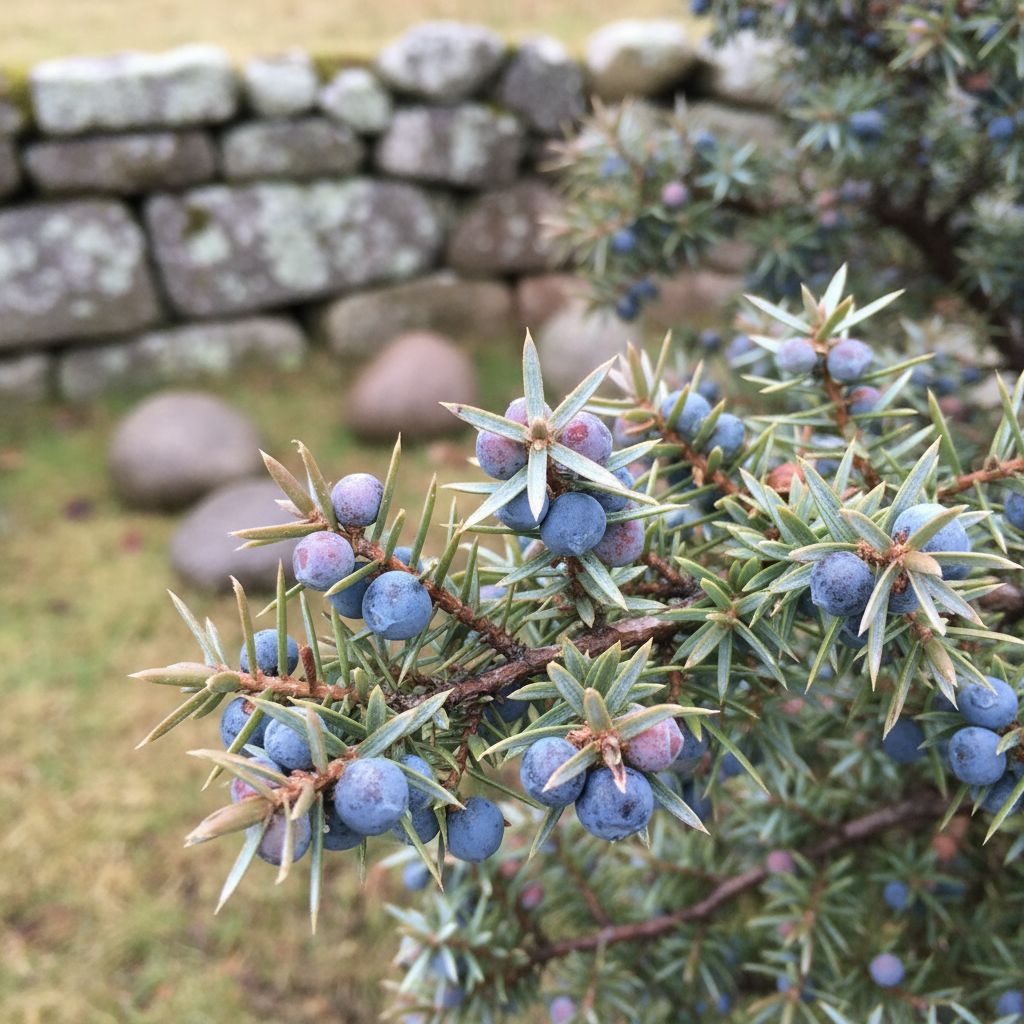
Juniper, also known as common Juneper, is an evergreen, needle-bearing shrub or small tree in the cypress family (Cupressaceae). Its Latin name is Juniperus communis. The species is dioecious, meaning there are male and female plants, and only female plants produce the characteristic blueberry-like cones we call Juneper berries. The berries are actually cones with juicy, fused scales. In this article, you’ll learn everything you need to know about Juneper, from botany and history to cultivation, uses and sustainable harvesting.
Estimated reading time: 10 minutes
History and origin
Juniper has been part of Nordic cultural history for millennia. The plant is widespread across the temperate regions of the entire northern hemisphere and is found on heathland, grazed pastures, sand dunes and open woodland. In Denmark, Juneper is especially common in Jutland and on Bornholm, where it forms dense thickets on sandy hills and dune landscapes.
Early history and name
In ancient Europe, dried Juneper twigs were used to light fires – in fact, the Danish name ‘enebær’ comes from the old Danish word for kindling wood. Viking trade networks carried spiced mead and Juneper-flavoured beer across the North, and the berries were used to preserve meat on long voyages. In medieval monasteries, Juneper was considered a remedy for stomach cramps and urinary problems, and twigs were burned to purify the air during epidemics.
From medicine to gin
Arab distillers began distilling Juneper into medicinal spirits around the 1100s, and this spirit later evolved into gin and genever, today associated with countries such as England and the Netherlands. In Denmark, Juneper was especially important in the heathland regions. The very old, gnarled bushes were used as windbreaks, and the hard, fragrant wood was used for turned handles and kitchen utensils. Juniper bushes grow extremely slowly but can live to be over 1,000 years old, and ancient individual bushes still stand on the heaths of Bornholm and Jutland as living cultural monuments.
Flavour and aroma
Juniper gives a deep, resinous flavour with sweet and slightly bitter nuances and notes of pepper and citrus. The flavour enhances richness and neutralises gamey flavours, making it ideal for hearty dishes. The berries have a strong flavour, so it’s best to start with just a few and taste as you go. Always crush the berries before use to release the essential oils, and add them early in the cooking process so the flavour has time to develop.
Good flavour pairings
- Game and meat: Reindeer, venison, hare, pheasant, lamb, duck and pork.
- Root vegetables and cabbage: Cabbage, red cabbage, sauerkraut, Brussels sprouts, Jerusalem artichokes and potatoes.
- Fruit and berries: Lingonberries, cranberries, plums and apples – Juneper adds balance to preserves and compotes.
- Herbs and spices: Thyme, rosemary, bay leaf, black pepper, cloves and star anise.
Culinary uses
Juniper is a classic spice in Nordic and Central European cuisine. The cones can be used fresh, but they are most often used dried. Crush them lightly with a mortar or the flat side of a knife before use.
In Danish and Nordic cuisine
In Danish and Nordic cuisine, Juneper is indispensable for game and winter fare. The berries are traditionally used with game, duck, roast pork, red cabbage and sauerkraut, where they add a warm, aromatic note. They also feature in pickling brines with vinegar, sugar and spices for red cabbage, pickled beetroot and pickles, and they round off the flavour in pâtés, terrines, charcuterie and sausage meat. Gravlax is often seasoned with Juneper alongside dill.
- Add 2-3 crushed berries to marinades and rubs for turkey, game, lamb or pork.
- Add crushed Juneper to stews and braises with beef, hare or duck for depth and a woodsy aroma.
- Flavour gin, genever or schnapps by letting a handful of berries steep in the spirit for a couple of weeks – the berries are the primary flavouring in gin.
Internationally
Outside the Nordic region, Juneper is central to German and Alsatian cuisine, where it is the classic flavouring in sauerkraut and choucroute garnie. In New Nordic cuisine, chefs combine Juneper with wild herbs, mushrooms and game to highlight regional ingredients. The berries also add character to cocktails, mocktails and hot drinks, and the fresh needles can be used as a spiced garnish over new potatoes or in bread and crackers.
Preparation and spirits
Today’s best-known use of Juneper is in gin, where the berries are distilled to give the drink its characteristic flavour. Juniper is also used in genever, Steinhäger, mountain schnapps and other spiced schnapps. The wood is aromatic and can be used for smoking fish or meat. For gin and schnapps, the berries should steep in the spirit for at least 1-2 weeks. Remember that Juneper can overpower other flavours – start with a few berries and adjust to taste.
Health benefits
Juniper berries contain essential oils such as alpha- and beta-pinene, sabinene and limonene, which give the berry its characteristic scent. Modern research shows that Juneper oil may have antibacterial and antifungal properties as well as antioxidant effects, but most of this is based on laboratory studies.
Traditional use
Throughout history, Juneper has been used as medicine: the berries were believed to aid digestion, act as a diuretic and relieve pain from arthritis and gallbladder problems. In folk medicine, Juneper was associated with protection and purification – twigs were hung over doorways, and smoke from burning needles was used to disinfect rooms during epidemics. Many of these uses live on as traditions, but scientific documentation of their effectiveness is lacking.
Important precautions
Juniper can irritate the kidneys and stomach in large doses and should always be used as a spice in small amounts – not as a substitute for medical treatment.
- Pregnancy: Pregnant women should avoid high intakes, as the plant has traditionally been used to induce menstruation.
- Kidney disease: People with kidney disease should avoid Juneper as a supplement, as the berries have a diuretic effect and can strain the kidneys.
- Chronic conditions: If you have diabetes or other chronic illnesses, consult your doctor before using Juneper medicinally.
Look-alikes and quality
It’s crucial to know the difference between edible Juneper and its toxic relatives when foraging in the wild. Common Juneper (Juniperus communis) is the only Juneper species used in cooking.
Beware of toxic Juneper species
Clearly distinguish common Juneper from toxic Juneper species. Savin Juneper (Juniperus sabina) is a closely related but poisonous species whose berries and shoots must never be eaten – it contains the compound sabinol, which is highly toxic. Savin Juneper usually has scale-like, tightly packed leaves with an unpleasant, sharp smell, while common Juneper has stiff, needle-sharp leaves in whorls of three. The poisonous yew (Taxus baccata) has soft, flat needles and red, berry-like arils – never crush these. Species of cypress and thuja have scale-like leaves instead of needles. If in doubt, leave the berries and buy dried Juneper from a reliable supplier.
How to recognise good quality
Good quality is characterised by berries that are firm, dark and aromatic. Older berries become dry and lose their flavour. When foraging, make sure the plant is a Juneper bush with sharp needles and blue-frosted berry cones. Buy dried berries from reliable suppliers or harvest from bushes you know well.
Growing and harvesting
Although Juneper thrives in the wild, it can also be grown as an ornamental and useful plant in the garden. Here’s a practical guide to establishing your own Juneper bush.
Growing conditions
Juniper is hardy and thrives in nutrient-poor, dry soils with good drainage. It prefers full sun and tolerates wind, frost and periods of drought. According to the Missouri Botanical Garden, Juniperus communis grows best in medium-moisture, well-drained soil in full sun, but it tolerates a wide range of soil types – even very poor and stony soil – and established plants have good drought tolerance. The plant tolerates both acidic and alkaline soil but is not well suited to hot, humid climates. In temperate climates, give Juneper a bright, sunny spot and make sure the soil doesn’t become waterlogged.
How to plant Juneper
Total time: 2-3 hours
- Choose your plant material
Buy small container-grown plants from a nursery. Propagation by cuttings is tricky for amateurs, and seeds take several years to germinate.
- Dig the planting hole
Dig a hole twice as wide as the root ball, but not much deeper. Loosen the soil and mix in some coarse grit or sand to improve drainage.
- Plant and water
Position the plant so the top of the root ball is level with the soil surface. Fill in, firm gently and water thoroughly. Space multiple plants 1.5-2 metres apart.
- Ensure pollination and care
If you want berries, you’ll need both a male and a female plant, as Juneper is dioecious and wind-pollinated. Water regularly during the first year and add a thin layer of compost in spring.
Harvest
Juniper berries need time to ripen. After pollination, they take two years to develop; in the first year they are green, and in the second year blue-black with a frosty bloom. The berries are harvested late in autumn, once they are fully dark. Pick them wearing gloves – the needles are sharp – and avoid taking too many from the same bush, so birds and wildlife still have food. Young green berries can be pickled in vinegar for use with fish and salads. Juniper doesn’t reach sexual maturity until 10-15 years of age, so patience is required.
Storage
Dry the berries in a thin layer in a well-ventilated spot at room temperature for 1-2 weeks. After that, they will keep their aroma for a long time if stored correctly.
- Store dried berries in an airtight jar in a dark, cool place away from heat and sunlight.
- Properly stored dried Juneper berries keep their aroma for 2-3 years.
- Fresh green berries can be frozen or pickled in vinegar.
Sustainability and biodiversity
Juniper is a natural part of heathland and grassland ecosystems and is important for birds and insects that feed on the berries and shelter in the bushes. In some places, the species has declined due to overgrowth and plant diseases such as Juneper rust. It’s therefore wise to be cautious about felling or damaging wild-growing bushes. When foraging berries in the wild, take only a small amount from each plant so wildlife still has food. Consider growing your own bushes from a nursery – they are easy to care for and can serve as a windbreak and shelter for birds in the garden. Juniper is drought-tolerant and doesn’t require irrigation, making it a sustainable choice in times of water scarcity.
Try this recipe
Juniper is made for marinades, where its resinous aroma penetrates the meat and balances acidity and sweetness. Crush a few berries and mix them into a marinade for a deep, woodsy note that elevates both game and poultry. Want to practise the technique with a simple dish first? Try our Balsamic-marinated chicken in the air fryer – tangy-sweet marinade and a glossy glaze in 18 minutes and add crushed Juneper to the marinade for a game-inspired twist.
Equipment and products
Juniper is the heart of every gin, where it’s distilled together with other botanicals to give the drink its unmistakable aroma. Want to taste the interplay between Juneper and other flavourings? Explore a gin liqueur like Bloom Lemon & Elderflower Gin Liqueur, where the classic Juneper base meets citrus and floral notes. It’s a great way to experience how the berry forms the backbone of spirits.
Frequently asked questions
Yes. Juniper is one of the most cold-hardy conifers there is and can withstand both cold and wind. It needs no winter protection, but young plants can be shielded from drying out with spruce branches during their first winter.
Juniper reaches sexual maturity after 10-15 years. The berries then take a further two years to ripen, so patience is required. Only female plants bear berries, and a male plant nearby is needed for pollination.
Yes, be careful. Savin Juneper (Juniperus sabina) is a poisonous relative whose berries must never be eaten, and yew (Taxus baccata) has toxic red arils. Only use common Juneper with stiff, needle-sharp leaves in whorls of three, or buy dried berries from a reliable supplier.
Juniper is safe in small culinary amounts, but avoid large doses on a daily basis. Pregnant or breastfeeding women and people with kidney problems should be cautious and consult a doctor before using Juneper medicinally.
Dried berries are best stored in an airtight jar in a dark, cool place, where they will keep their aroma for 2-3 years. Fresh green berries can be frozen or pickled.
Facts about Juneper
| Field | Value |
|---|---|
| English name | Juniper |
| Latin name | Juniperus communis |
| Family | Cypress family (Cupressaceae) |
| Plant type | Evergreen shrub or small tree (dioecious) |
| Height | Up to 10 m (typically 5 m) |
| Hardiness | Very hardy; tolerates frost, wind and drought |
| Light | Full sun; needs plenty of light |
| Soil | Nutrient-poor, sandy, gritty or stony, well-drained; tolerates both acidic and alkaline soil |
| Sowing/planting | Plant container-grown plants in spring/autumn; propagation by cuttings or seed takes a long time |
| Flowering/Harvest | Small male and female flowers in spring; berry cones harvested after two years (Sept.-Oct.) |
| Flavour | Resinous-sweet, spicy, slightly bitter with notes of pepper and citrus |
| Culinary use | Marinades, rubs, pickling, gin, schnapps, game dishes, cabbage and root vegetable dishes |
| Storage | Dried berries in an airtight jar; store in a dark, cool place; use within 2-3 years |
