

Adzuki beans are small, red beans with a mild, nutty sweetness. In East Asia, they’re known as azuki or aduki and are often used in sweet fillings and desserts – not least the Japanese anko, a sweet red bean paste that fills wagashi and baked goods. While most Danes are familiar with kidney beans and lentils, the adzuki bean is an exciting alternative that combines protein, fiber, and versatility. It belongs to the legume family, but its mild sweetness makes it unique among dried beans. This article gives you an in-depth overview of adzuki beans’ history, uses, nutritional content, cultivation, and preparation in Danish kitchens.

Advertisement: The page displays ads and contains advertising links (affiliate links). See our advertisers here.
Estimated reading time: 10 minutes
- What Are Adzuki Beans?
- History and Origin
- Nutritional Content
- Taste and Aroma
- Culinary Uses
- How to Prepare Adzuki Beans
- Health Benefits
- Growing and Harvesting in Denmark
- Storage
- Confusions and Quality
- Sustainability and Biodiversity
- Try This Recipe
- Equipment and Products
- Frequently Asked Questions
- Facts About Adzuki Beans
What Are Adzuki Beans?
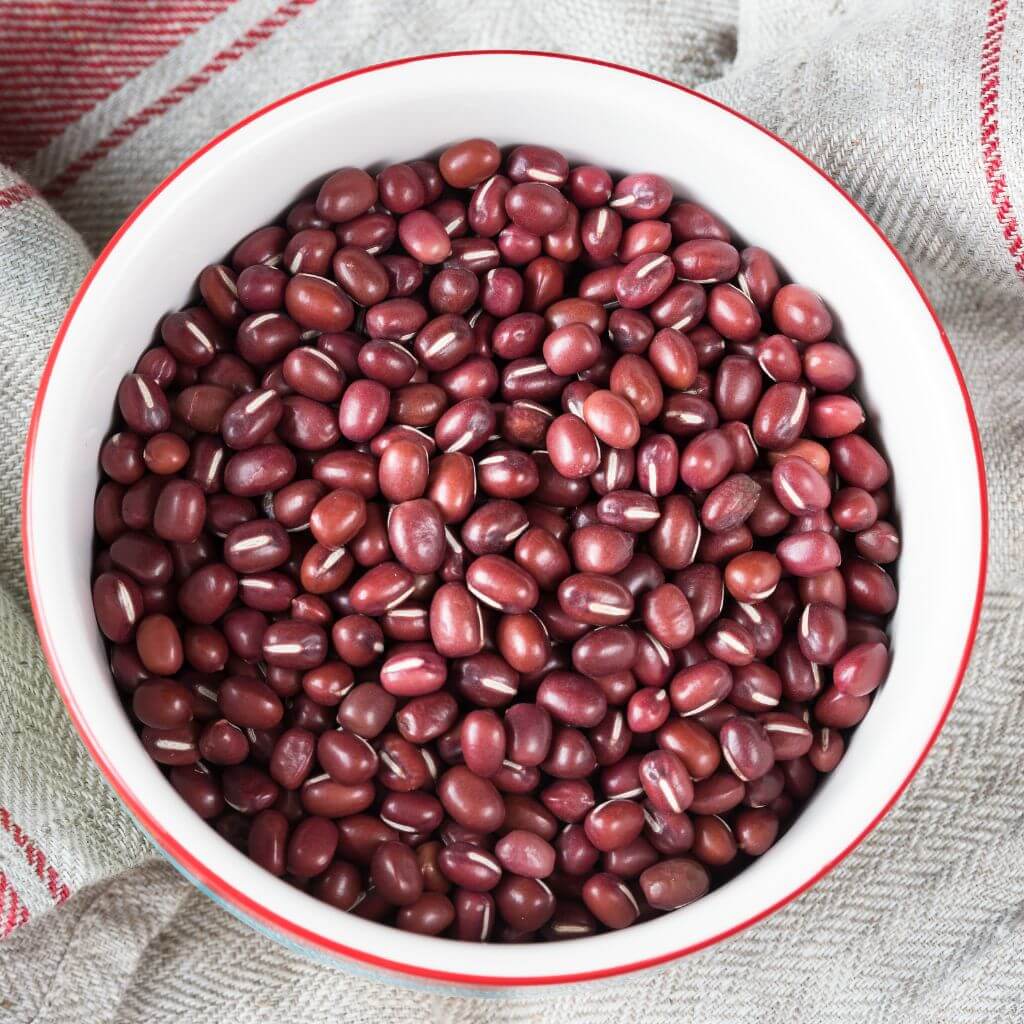
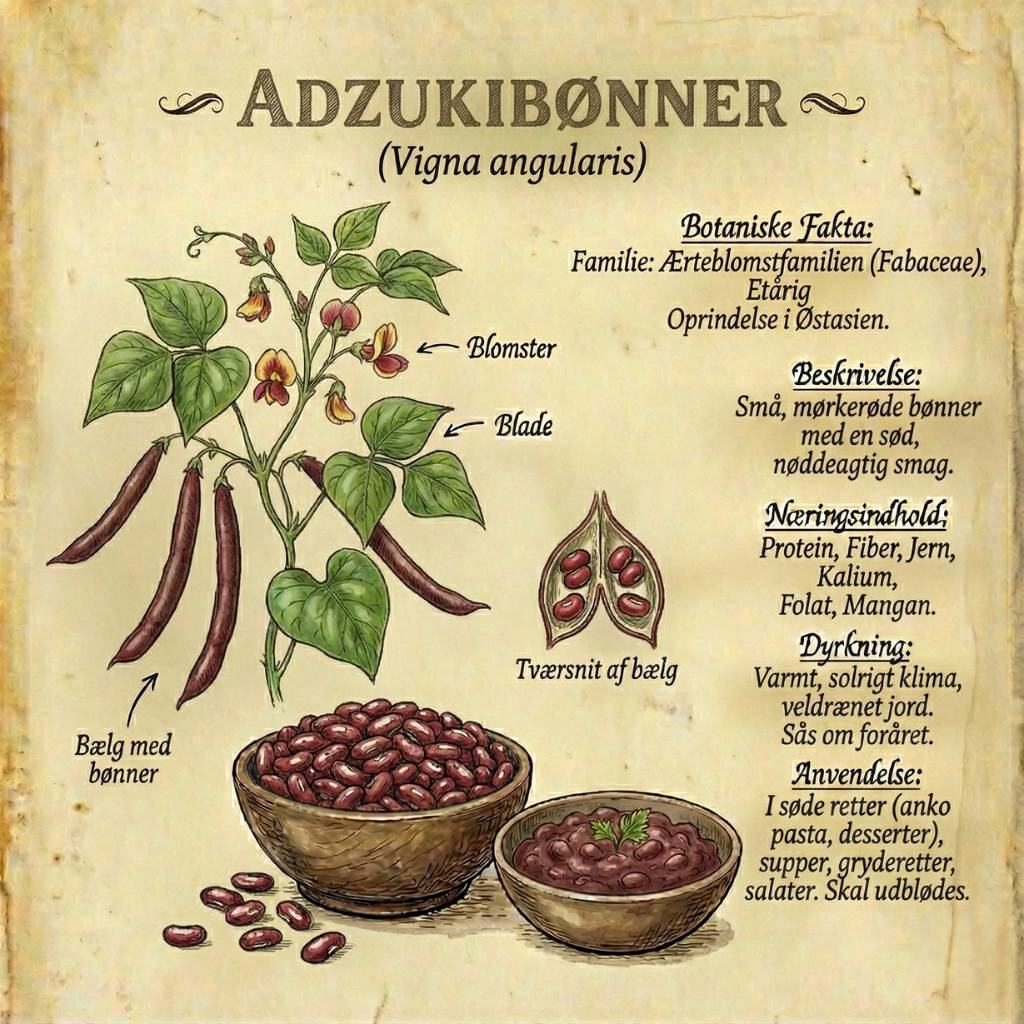
The adzuki bean is the seed of the plant Vigna angularis. The plant is an annual and belongs to the pea family (Fabaceae). Unlike other beans, it is relatively low-growing and compact; wild and cultivated forms typically reach between 30 and 90 cm in height, with both bush and climbing types. The leaves are trifoliate and borne on long stalks, and the plant produces yellow pea-like flowers during summer. After flowering, slender pods develop, typically 5-13 cm long, containing 2-14 seeds. The seeds are small (5-9 mm long) and oval; the most common varieties are reddish-brown, though white, black, and mottled variants also exist. These small seeds are called “azuki” in Japanese (小豆, meaning “small bean”), while the term “adzuki” is used in English.
The plants are self-pollinating and develop slowly in the early growth phase. It typically takes 80-120 days from germination to maturity, depending on variety and climate. Adzuki beans thrive in warm summers, ideally between 15°C and 30°C. They cannot tolerate frost, and the soil must be at least 6-10°C for the seeds to germinate. The plants can withstand drought, but yield is significantly reduced without consistent moisture. They fix nitrogen with the help of root nodule bacteria, though inoculation can increase yield.
History and Origin
Domestication in East Asia
Archaeological finds show that wild adzuki beans were being gathered in East Asia as early as 10,000 years ago, and domestication took place in China and Japan around 3000 BC. The name “adzuki” is a transliteration from Japanese and refers to the red variety. Today, adzuki beans are grown worldwide, but Asia remains the main producer. China has the largest cultivation area, while Japan, North Korea, South Korea, Australia, Thailand, and the USA also produce significant quantities. In Japan, the adzuki bean is the second most important legume after the soybean.
Symbolism and Food Culture
Adzuki beans hold a special place in East Asian food culture. In China, the red beans are used to make hong dou sha – a sweet bean paste that fills cakes, mooncakes (yuebing), zongzi, and tangyuan. In Japan, the beans are cooked with glutinous rice to make sekihan and are used in desserts such as dorayaki, daifuku, monaka, and anpan. The bean paste is also a classic ingredient in Korean and Vietnamese desserts. Traditionally, the red beans symbolize luck and happiness and are served on festive occasions, especially New Year and weddings.
Nutritional Content
Adzuki beans are nutritionally dense and low in fat. A 100 g serving of cooked beans contains only around 128 kcal and less than 1 g of fat, while still providing a solid contribution of plant-based protein, dietary fiber, and minerals.
- Energy: approx. 128 kcal per 100 g (cooked)
- Protein: approx. 7.5 g per 100 g
- Carbohydrates: approx. 25 g per 100 g
- Dietary fiber: approx. 7.3 g per 100 g
- Fat: under 1 g per 100 g
- Minerals and vitamins: rich in folate, manganese, phosphorus, potassium, copper, magnesium, zinc, and iron
The combination of high protein and fiber content and abundant minerals makes adzuki beans a valuable ingredient in plant-based cooking. The fiber and low fat content also mean they’re satisfying without contributing many calories.
Taste and Aroma
Adzuki beans have a sweetish, lightly nutty flavor with a soft texture. They pair naturally with sweet and spiced ingredients. Classic pairings include chestnuts, cane sugar, coconut, ginger, citrus, vanilla, and sesame. In savory dishes, they go well with rice, squash, sweet potatoes, eggplant, and kimchi.
A couple of kitchen tips: try cooking the beans with a piece of kombu seaweed to boost the mineral content and improve digestibility. Avoid cooking the beans for too long in acidic liquids like tomato or citrus sauce, as acid can toughen the bean skin – instead, add acid and salt toward the end of cooking.
Culinary Uses
Adzuki beans have a mild, sweetish, and slightly nutty flavor that makes them especially well-suited for desserts, though they also work well in savory dishes. They can be eaten as whole cooked beans, mashed into a purée, or sprouted into crisp shoots, and the young green pods can be used as a crunchy vegetable much like snap peas.
In Danish Kitchens
In Danish kitchens, adzuki beans are a protein-rich addition to soups, chili, and salads. Cook the beans until tender and toss them with sesame oil, soy sauce, and ginger for an Asian-inspired salad, or add whole cooked beans to soups and stews to boost the protein content. The beans’ sweetness also makes them a fun alternative in healthy baking – for example, blended with dates and cocoa into a brownie-style cream.
Internationally
Internationally, the adzuki bean is best known from East Asia, where it’s cooked with sugar to make anko – a thick, sweet red bean paste that fills wagashi like dorayaki, daifuku, and mochi. In Japan, sekihan (rice cooked with adzuki beans) is served on festive occasions, in Korea the beans feature in the cold summer dessert patbingsu, and in Vietnam they’re used in sweet bean soups.
Kitchen Ideas
- Cook the beans until tender, toss them with sesame oil, soy sauce, and ginger, and use them in an Asian-inspired salad.
- Blend adzuki beans with dates and cocoa into a healthy brownie-style cream.
- Cook the beans with coconut milk and cardamom into a warm porridge.
- Make a “red bean hummus” by puréeing cooked beans with tahini, garlic, and lemon.
- Add whole cooked beans to soups and stews to boost the protein content.
How to Prepare Adzuki Beans
Dried adzuki beans require soaking and cooking before use. The beans contain anti-nutrients such as phytates and lectins, which can inhibit mineral absorption – these are significantly reduced through soaking, sprouting, or cooking. Raw beans should therefore never be eaten.
Total time: 8-13 hours
- Rinsing
Pour the beans into a sieve and rinse them under cold water. Remove any stones, damaged beans, and debris.
- Soaking
Place the beans in a large pot, cover with plenty of cold water, and let them soak for 8-12 hours. Soaking reduces the cooking time, makes the beans easier to digest, and deactivates anti-nutrients.
- Changing the water
Discard the soaking water and rinse the beans again. Fill the pot with fresh water, at least three times as much as the beans.
- Cooking
Bring the water to a boil and let the beans simmer covered for 45-60 minutes, until tender. Add salt only at the end, as early salting can prevent the beans from softening. Skim off any foam as needed.
- Pressure cooker (alternative)
Alternatively, the beans can be cooked in a pressure cooker. After soaking and rinsing, cook them at high pressure for about 20 minutes, then let the pressure release naturally.
- Storing after cooking
Cooked beans keep in the refrigerator for 3-5 days or can be frozen for up to eight months. Frozen beans can be thawed directly in dishes.
If you’d rather sprout the beans, soak them for 8 hours and transfer them to a jar covered with cheesecloth. Tilt the jar at an angle so the water can drain, and rinse the sprouts twice a day. After 3-4 days, the sprouts are ready for salads and sandwiches.
Health Benefits
Antioxidants and Gut Health
In addition to their nutrients, adzuki beans contain numerous antioxidants, and studies have identified up to 29 different antioxidant compounds in the beans. The high levels of soluble fiber and resistant starch act as prebiotics and can improve gut flora health, as they’re fermented into short-chain fatty acids such as butyrate. Research also suggests that the beans may improve blood sugar control, as fiber and certain proteins slow down carbohydrate breakdown.
Satiety and Minerals
Some studies suggest that adzuki beans can contribute to weight control by increasing feelings of fullness. The beans are rich in folate, which is important during pregnancy, and they contain iron, which contributes to the formation of red blood cells. At the same time, adzuki beans are often gentler on the stomach than many other beans. This section is not medical advice.
Anti-Nutrients
Like all beans, adzuki beans contain anti-nutrients such as phytates, trypsin inhibitors, and alpha-galactosides, which can reduce mineral absorption and cause gas. Soaking, sprouting, or fermenting the beans before cooking significantly breaks down these compounds. People at risk of kidney stones should also be aware that the beans contain moderate amounts of oxalates.
Growing and Harvesting in Denmark
Adzuki beans can be grown in Denmark with certain caveats. It requires a warm growing season and protection from frost. Start indoors in spring and choose a sunny, sheltered spot.
How to Grow Adzuki Beans
Total time: 80-120 days
- Pre-sprouting
Start pre-sprouting 3-4 weeks before the last expected frost (typically mid-April). Soak the seeds in lukewarm water for 8-12 hours, and plant them 2.5 cm deep in small compostable pots with nutrient-rich, well-drained soil. Feel free to inoculate the soil with nitrogen-fixing bacteria.
- Hardening off
After germination (7-20 days), once the plants have 2-3 leaves, harden them off gradually. Set the pots outside in a sheltered spot during the day for a week, and bring them in at night.
- Transplanting
Once the risk of night frost has passed (usually late May) and the soil is above 15 degrees, plant the pots out in a sunny, sheltered spot. Thin to about 45 cm apart, and support climbing varieties with a trellis or netting.
- Watering and fertilizing
Keep the soil evenly moist, but never waterlogged, and water at the soil surface to avoid fungal problems. Since the beans fix nitrogen, they only need light fertilizing; avoid too much nitrogen.
- Care
Remove weeds by hand or cover the soil with organic mulch, as growth is slow at first. Watch out for slugs and aphids, and ensure good air circulation.
- Harvest
Harvest green pods about 70-90 days after sowing for fresh use. If you want dried beans, leave the pods on the plant until they’re beige and dry (about 120 days), and harvest in dry weather.
Growing Conditions
Adzuki beans thrive best at temperatures between 15°C and 30°C and cannot tolerate frost. In Denmark, this means they should be grown as a summer crop and are best started under protected conditions. The soil should be well-drained and light, with a pH of 5-7.5 and rich in organic matter. Water is necessary during the growing season, but waterlogging should be avoided; the plants can withstand moderate drought periods. Many varieties are self-pollinating, but bees and other insects promote good pod formation. The plants tolerate partial shade, but full sun gives the best yield.
Storage
Dried Beans
For dried beans, the pods must dry completely on the plant until they turn beige and brittle. Harvest the pods, crack them open gently so the seeds don’t scatter, and let the beans finish drying in a ventilated room. Store them in airtight jars or fabric bags in a dark, cool, dry place, where properly dried adzuki beans can keep for up to a year.
Cooked Beans
- Cool cooked beans quickly and store them in an airtight container in the refrigerator for 3-5 days.
- Freeze cooked beans in portions for up to eight months – they can be thawed directly in dishes.
- Young, green pods are harvested tender and can be steamed like snap peas or sliced into salads.
Confusions and Quality
Possible Confusions
Adzuki beans are often confused with red kidney beans, but they’re botanically different. The kidney bean (Phaseolus vulgaris) is larger and more toxic raw, as it contains high levels of the lectin phytohaemagglutinin, which requires long cooking to neutralize. Adzuki beans are smaller (5-9 mm) and have a white stripe (hilum) on one side. Another possible mix-up is mung beans (Vigna radiata), which are green and used for sprouting. Always choose beans by species, especially when cooking them from dried, to avoid improper preparation.
Buying and Quality
Adzuki beans can be bought as dried beans in health food stores, Asian supermarkets, and online. Choose beans that are uniform in color and size, with no cracks or signs of mold. Organic beans may be more expensive but are grown without synthetic pesticides. Before buying ready-made bean paste, you should check the ingredient list – some products contain large amounts of sugar or additives. Canned or vacuum-packed cooked beans are also available and are convenient for quick meals.
Sustainability and Biodiversity
Legumes like adzuki beans are an important part of sustainable food systems. They fix nitrogen and reduce the need for synthetic fertilizer, which lowers agriculture’s climate footprint. In organic crop rotations, beans are used to improve soil fertility, and the beans’ flowers attract pollinators. The plants can be grown in intercropping with corn or sorghum, which increases biodiversity. Growing your own beans reduces the need for imports and saves transport energy, and dried beans can be stored for a long time, which reduces food waste.
Try This Recipe
The adzuki beans’ nutty sweetness works well in an Asian-inspired salad, where sesame, soy, and ginger tossed through the beans add depth and body. Serve them alongside marinated, crispy tofu in our Tofu in the Air Fryer – Crispy Asian Salad with Marinated Tofu for a filling, plant-based dish packed with protein.
If you’d rather keep the Asian style crisp and festive, the beans also pair well alongside crispy tempura shrimp.
Equipment and Products
For dried adzuki beans, having the right equipment makes the job easier. A pressure cooker cuts the cooking time from 45-60 minutes down to around 20 minutes, which is handy when making bean paste or large batches. For storage, airtight jars are the best choice: they keep the dried beans dry and dark for up to a year and make it easy to keep track of your stock. A fine-mesh colander or sieve is also essential for rinsing and for catching stones and debris before soaking.
Frequently Asked Questions
Yes, but they require a warm summer and a frost-free period of at least 100 days. Start pre-sprouting indoors and transplant once the soil is above 15°C.
It’s recommended to soak the beans for 8-12 hours to reduce cooking time and anti-nutrients. Shorter or no soaking is possible, but requires a longer cooking time.
No. Raw beans contain anti-nutrients and lectins. They must always be thoroughly cooked or sprouted before eating.
Adzuki beans are smaller, sweeter, and belong to the species Vigna angularis, while kidney beans are larger, kidney-shaped, and belong to Phaseolus vulgaris. Kidney beans require longer cooking to neutralize toxins.
Store cooked beans in an airtight container in the refrigerator for 3-5 days, or freeze them in portions for up to eight months.
Facts About Adzuki Beans
| Field | Value |
|---|---|
| English Name | Adzuki Beans |
| Latin Name | Vigna angularis |
| Family | Legume family (Fabaceae) |
| Plant Type | Annual bush or climbing plant |
| Height | 30-90 cm |
| Hardiness | Heat-loving; cannot tolerate frost |
| Light | Full sun |
| Soil | Light, well-drained soil with pH 5-7.5 |
| Sow/Plant | Pre-sprout in April; transplant when soil temp. > 15°C, 2.5 cm depth |
| Flowering | 30-40 days after germination |
| Harvest | 80-120 days after sowing; green or dry stage |
| Taste | Mild, nutty, and sweetish |
| Nutritional Content (100 g cooked) | 128 kcal, 7.5 g protein, 7.3 g fiber, under 1 g fat |
| Culinary Use | Desserts, bean paste (anko), porridge, salads, soups |
| Soaking Time | 8-12 hours |
| Cooking Time | 45-60 minutes (approx. 20 min in a pressure cooker) |
| Storage | Dried beans up to 1 year; cooked 3-5 days refrigerated, 8 months frozen |
