

Bell pepper (Capsicum annuum) is one of those vegetables I almost always have in the fridge. It is crisp and juicy as a raw snack, sweet and soft when baked, and it adds color to everything from salads to stews. Botanically, the bell pepper is actually a berry, but in the kitchen we use it as a vegetable.
Many people don’t realize that the color tells you how ripe the fruit is. Green bell peppers are unripe, while red, yellow and orange ones are ripe and therefore sweeter. The bell pepper belongs to the nightshade family along with the tomato and the potato, and it is closely related to the chili pepper – it just has no heat.
In this entry in the Food Encyclopedia, I go through the bell pepper’s history, flavor, nutritional content, growing and storage. You’ll also get my best tips for using it in the air fryer, where stuffed and grilled bell peppers are a particularly good fit.
Estimated reading time: 6 minutes
History and Origin
From the Americas to Europe
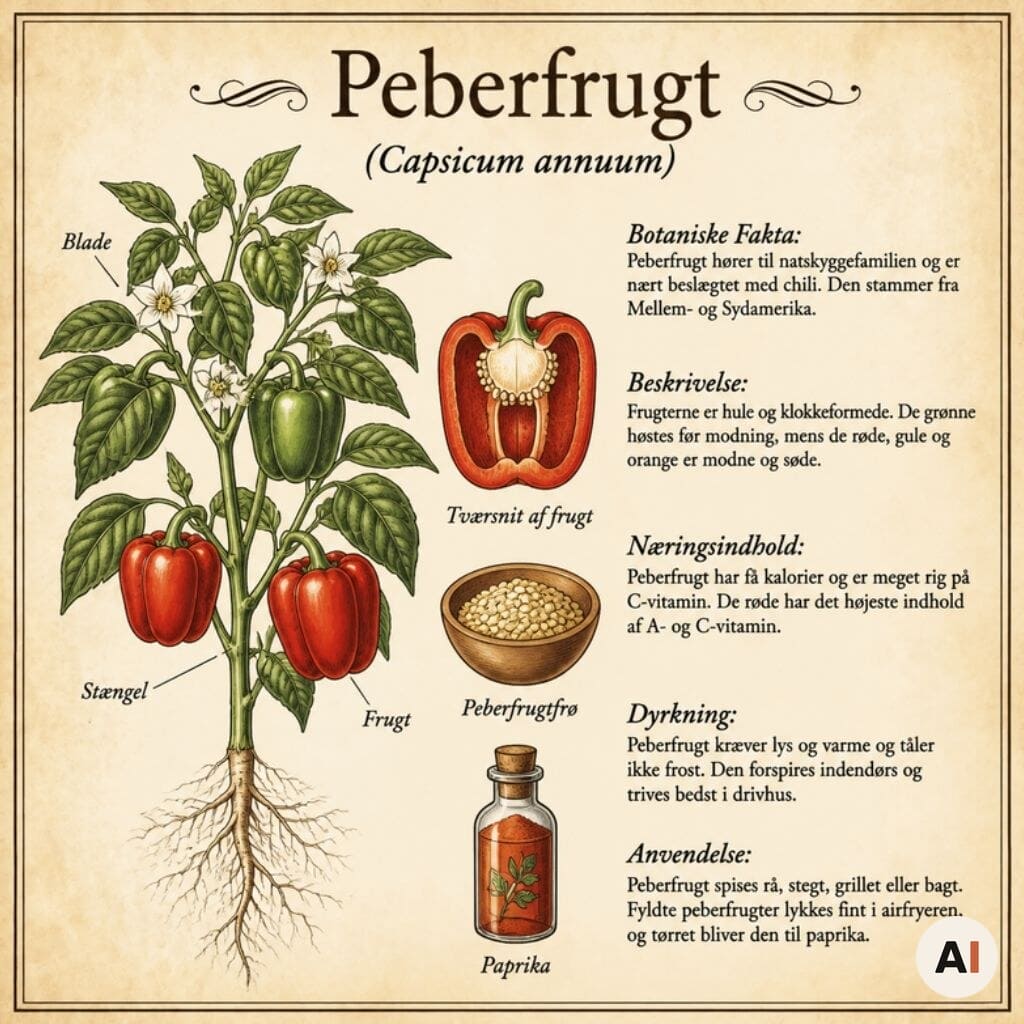
Like the tomato and the potato, the bell pepper originates from the Americas. Capsicum plants were used there long before they reached Europe. The genus includes both mild bell peppers and hot chili peppers, and many chili peppers even belong to the same species as the bell pepper.
The large, mild bell pepper we know from the produce aisle today came to Europe in the 1700s. Botanically, it belongs to the nightshade family (Solanaceae) – just like the tomato, potato and eggplant.
The Bell Pepper in Denmark
In Denmark, the bell pepper only became truly popular from the 1960s onward. Today it is available all year round, because it is grown in greenhouses or imported, and it has become a completely natural part of everyday Danish food – from pepper stew and stuffed bell peppers to vegetable sticks in the lunch box.
Flavor and Aroma
Green, Yellow, Orange or Red
The flavor depends first and foremost on ripeness. The green bell pepper is harvested before it is ripe and has a fresh, green and slightly bitter taste. If the fruit is allowed to hang on the plant, it changes color to yellow, orange or red – depending on the variety – and becomes sweeter and fruitier.
Personally, I think the red ones are the sweetest, while the yellow and orange ones have a mild, round sweetness. The green one still has its place – it adds freshness and bite to a stir-fry, a stew or a crisp salad.
No Heat – Despite the Family Ties
Even though the bell pepper is closely related to the chili pepper, it has no heat. The heat of chili peppers comes from a compound called capsaicin, and the bell pepper does not produce it. That makes it perfect for children and everyone else who prefers mild food.
When Heat Transforms the Flavor
When you bake or grill the bell pepper, the sweetness becomes concentrated and lightly caramelized, and the skin gets dark, roasted spots. The flavor turns deep and almost smoky – and that is exactly the effect the air fryer’s dry, circulating heat is good at creating.
Culinary Uses
In Everyday Cooking
Stuffed bell peppers are a classic in many home kitchens, and in Denmark the pepper stew known as pebergryde has long been everyday food in many households. Raw bell pepper strips are also a regular feature in salads and on the vegetable platter.
- Stuffed bell peppers: filled with, for example, ground meat, rice or cheese and baked until tender.
- Pebergryde (Danish pepper stew): a stew where the bell pepper adds both sweetness and color.
- Salad: raw bell pepper in cubes or strips adds crunch and sweetness.
- Baked, grilled or pickled: as a side dish, on pizza, in sandwiches or on the tapas table.
Around the World
Elsewhere in the world, the bell pepper takes the leading role in several well-known dishes, including in France, the Balkans and Hungary.
- Ratatouille (France): Provençal vegetable dish with bell pepper, eggplant, zucchini and tomato.
- Ajvar (the Balkans): a relish of roasted red bell peppers – great with grilled food and bread.
- Lecsó (Hungary): a stew of bell pepper and tomato.
In the Air Fryer
The air fryer is made for bell peppers. Its dry, powerful heat gives roasted edges and a concentrated sweetness without the fruit becoming watery. Stuffed bell peppers turn tender, and halved or quartered bell peppers become soft and lightly grilled in no time.
My best tip is to cut the bell pepper into evenly sized pieces, remove the seeds and white membranes, and toss the pieces in a little oil and salt. Place them in a single layer in the basket so the air can circulate, and shake the basket once during cooking.
Health Benefits
Bell pepper is a light vegetable with a high water content and a low energy content. The figures below apply to raw red bell pepper per 100 g.
Nutritional Content per 100 g
- Energy: 30 kcal
- Water: 91.6 g
- Protein: 1.3 g
- Fat: 0.4 g
- Carbohydrate: 6.2 g
- Dietary fiber: 1.7 g
- Vitamin C: 191 mg
- Beta-carotene: 1270 µg
- Vitamin E: 2.9 α-TE
- Vitamin B6: 0.305 mg
Rich in Vitamin C
The most remarkable thing is the vitamin C content: 191 mg per 100 g of raw red bell pepper. Vitamin C is sensitive to heat, so if you want to get as much of it as possible, raw bell pepper in a salad or as a snack is the best choice.
Beta-Carotene and Other Vitamins
Red bell pepper also contains beta-carotene, which the body can convert into vitamin A, as well as vitamin E and vitamin B6. Beta-carotene is fat-soluble, so a splash of oil on the baked bell peppers is a good idea – for the flavor’s sake, too.
Growing Bell Peppers
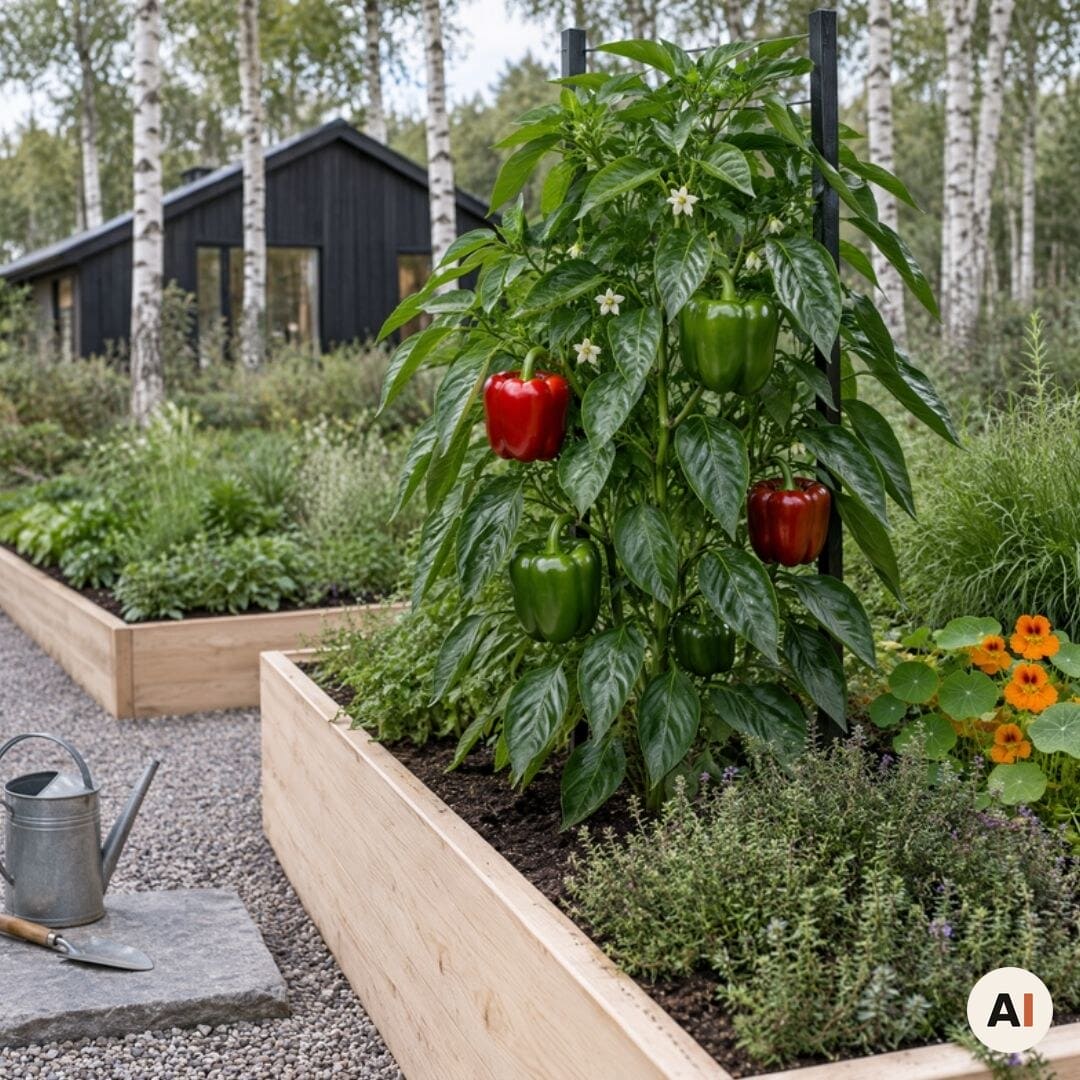
Bell peppers can easily be grown in cool climates such as the Nordic countries, but they require warmth, light and patience. The plant is not hardy and cannot tolerate frost or cold soil at all, so it needs a good start indoors.
Growing Conditions
- Light: a sunny, warm and sheltered spot.
- Soil: the soil must be above 15 °C before the plants go outdoors.
- Hardiness: not hardy – tolerates neither frost nor cold soil.
- Starting indoors: grow lights 14–16 hours a day, 20–30 cm above the plants.
- Transplanting: plants raised on the windowsill can be 40–50 cm tall when they are moved outdoors.
- Varieties: e.g. the yellow Golden California Wonder.
How to Grow Bell Peppers Step by Step
Total time: 5-6 months
- Sow the seeds indoors
Sow the seeds in late January under grow lights or in late February, no later than 1 March, on a bright windowsill. They germinate at 22–26 °C, normally within 7–14 days.
- Give plenty of light
Hang the grow light 20–30 cm above the plants and give them 14–16 hours of light a day so they grow strong.
- Plant out in warm soil
Only plant out when the soil is above 15 °C, and choose a sunny spot. The plant tolerates neither frost nor cold soil.
- Harvest the ripe fruits
Harvest the first yellow, orange or red fruits in July/August and again in the autumn until the first frost in October. Green fruits can be harvested before the frost and will ripen further afterwards.
Storage
Bell peppers are easy to store, but they keep best when cool – not ice-cold.
In the Fridge
The ideal temperature is about 7–10 °C. In practice, that means the vegetable drawer in the fridge, where the bell peppers keep best in a bag so they don’t dry out. The fresher and firmer they are when you buy them, the longer they will keep.
In the Freezer
Bell pepper can be frozen, but it becomes softer after thawing. That is why I use frozen bell peppers for hot dishes such as stews, soups and stir-fries, while the fresh ones are best for salads and fillings.
Good Storage Tips
- Cool, not ice-cold: ideally about 7–10 °C – in practice the vegetable drawer.
- Whole fruits keep longest: cut the bell pepper only when you are going to use it.
- Freeze in strips: deseed and cut them before freezing, so they can go straight into the pan or the pot.
Try This Recipe
Stuffed bell peppers are the dish where the bell pepper truly takes center stage – it is both the bowl and the source of flavor at once. In the air fryer, the bell pepper turns tender with lightly roasted edges, while the filling gets heated through and stays juicy. Try our recipe for Stuffed Bell Peppers in the Air Fryer – I always choose red or yellow bell peppers, because their sweetness balances a heavily seasoned filling. If they wobble in the basket, I slice a very thin piece off the bottom so they stand steady.
Frequently Asked Questions
Green bell peppers are unripe and harvested before they have changed color. Red, yellow and orange bell peppers are ripe and therefore sweeter and fruitier, while the green ones have a fresher and slightly bitter taste.
No. Bell peppers and chili peppers are closely related and both belong to the genus Capsicum in the nightshade family, but the bell pepper has no heat. The heat of chili peppers comes from the compound capsaicin, which the bell pepper does not produce.
Raw red bell pepper contains 30 kcal per 100 g. It consists mostly of water, 91.6 g per 100 g, and also contains a full 191 mg of vitamin C per 100 g.
Bell peppers keep best cool, at about 7–10 °C, in practice in the vegetable drawer of the fridge, preferably in a bag so they don’t dry out. They can be frozen, but they become softer and are afterwards best suited for hot dishes.
Yes, the air fryer is perfect for bell peppers. Stuffed bell peppers turn tender with lightly roasted edges, and strips or halved bell peppers get a sweet, grilled flavor in no time. Toss them in a little oil and salt, and place them in a single layer in the basket.
Bell Pepper Facts
| Property | Value |
|---|---|
| English name | Bell pepper |
| Latin name | Capsicum annuum |
| Family | Nightshade family (Solanaceae) |
| Plant type | Fruiting vegetable, grown as an annual in the Nordic countries |
| Hardiness | Not hardy – tolerates neither frost nor cold soil |
| Light | Sunny spot; 14–16 hours of grow light daily when starting indoors |
| Soil | Soil temperature above 15 °C when transplanting outdoors |
| Sow/plant | Sow indoors in late January under grow lights or in late February, no later than 1 March, on a bright windowsill |
| Harvest | July/August and again in the autumn until the first frost in October |
| Season | Available all year round from greenhouses and imports |
| Calories per 100 g | 30 kcal (raw red bell pepper) |
| Flavor | Sweet and fruity when ripe – fresh and slightly bitter when green; no heat |
| Culinary use | Stuffed bell peppers, pebergryde (Danish pepper stew), salad, ratatouille, ajvar and lecsó |
| Storage | Ideally about 7–10 °C, in practice the vegetable drawer in a bag; can be frozen for hot dishes |
