

Black pepper is one of the most widely used spices in the world and has been a cornerstone of cooking for millennia. The small, dark fruit of the pepper plant (Piper nigrum) has a strong, sharp flavor that can elevate any dish – from the simplest to the most complex.

Advertisement: The page displays ads and contains advertising links (affiliate links). See our advertisers here.
But black pepper is more than just a spice. It has a rich history, extensive health benefits, and many culinary uses that make it an indispensable part of both professional chefs’ and home cooks’ arsenals. In this guide, we dive into everything worth knowing about black pepper – from its origin and history to its health benefits and various uses in the kitchen.
Estimated reading time: 6 minutes
History and origin
The ancient roots of black pepper
Black pepper has a long and fascinating history stretching back thousands of years. Its origin can be traced to the tropical forests of southwestern India, especially the Malabar Coast, which is still known for producing some of the finest pepper in the world. In ancient times, black pepper was regarded as a valuable spice and was often used as currency and as part of tribute gifts to rulers and emperors. In ancient Egypt, black pepper was found in the tomb of Pharaoh Ramesses II, indicating that it already held significant cultural and economic value at that time.
As a trade commodity
Over time, black pepper became an important trade commodity on the world market. The Romans valued black pepper so highly that it became one of the most important goods imported from India to the Roman Empire. Roman soldiers were often paid in pepper, and it was so valuable that it became known as “black gold”. During the Middle Ages, trade in black pepper continued to grow, and the spice found its way to Europe through trade routes, where it became a luxury item for the wealthy. After Vasco da Gama’s discovery of the sea route to India in 1498, black pepper became even more accessible in Europe, paving the way for its widespread use today.
Flavor and aroma
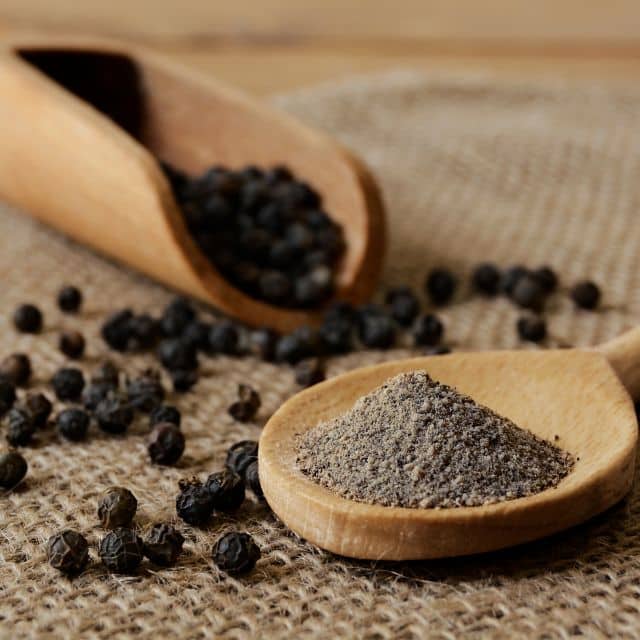
Black pepper is made from the unripe berries of the pepper plant, which are dried until they wrinkle and turn dark brown or black. The sharpness comes from the compound piperine, concentrated in the core, while the essential oils in the wrinkled skin give off aromas of wood, citrus, and warm spices.
These volatile aromatic compounds evaporate quickly once the pepper is ground. That’s why freshly ground black pepper tastes markedly rounder and more nuanced than pre-ground pepper, which over time mostly retains its sharpness while losing its aroma. This is also why many chefs only grind the pepper over the dish right before serving.
Culinary uses of black pepper
In the Danish kitchen
In Denmark, black pepper together with salt is the basic seasoning. The freshly ground version is a staple in classics like hakkebøf med bløde løg (fried beef patties with soft onions), frikadeller (Danish meatballs), æggekage (a Danish baked egg dish), and stegt flæsk (fried pork belly), where it rounds off the richness and saltiness with its warmth.
- Hakkebøf and frikadeller (Danish meat patties) – ground into the mince and over the top when serving
- Pepper sauce for steaks – crushed peppercorns give the sauce its character
- Egg dishes and smørrebrød (Danish open sandwiches) – a simple sprinkle lifts the flavor
In traditional cuisines
Black pepper has long been an indispensable ingredient in many traditional cuisines around the world. In Indian cooking, black pepper is used in curries and marinades, where its warmth and deep flavor add a special depth. In European cuisine, especially Mediterranean dishes, black pepper is often used together with salt to season meat, fish, and vegetables. In Chinese cuisine, it’s a key ingredient in dishes like black pepper beef, where the spice’s strong flavor is balanced with soy sauce and sweet elements.
Modern uses in cooking
In modern cooking, black pepper is as versatile as ever. It’s used in everything from simple dishes like scrambled eggs to complex gourmet dishes, where its sharpness can add an extra dimension. A popular modern use is in peppercorn sauce, served over steaks, where the pepper’s warmth complements the meat’s rich flavor. Black pepper is also used in many types of marinades, salad dressings, and even desserts, where it can provide a surprising contrast to sweet flavors.
Try lightly toasting whole peppercorns in a dry pan before grinding them. This process brings out the pepper’s natural oils and intensifies the flavor, giving a deeper and more complex flavor profile to your dishes.
Tips and tricks from the author: Morten Jensen
How to toast and grind black pepper
Total time: 10 minutes
- Heat the pan
Heat a dry pan over medium heat without any fat.
- Toast the peppercorns
Toast the whole peppercorns for 2-3 minutes, until fragrant – shake the pan occasionally so they don’t burn.
- Let them cool
Pour the peppercorns onto a plate and let them cool completely before putting them in the grinder.
- Grind fresh
Coarsely grind the pepper in a pepper mill or mortar right before use for maximum aroma.
Health benefits of black pepper
Antioxidant properties
Black pepper isn’t just a culinary wonder; it also has many health benefits. One of the most notable is its antioxidant properties. Antioxidants are compounds that help fight harmful free radicals in the body, which can lead to cell damage and chronic diseases such as cancer and heart disease.
Black pepper contains an active compound called piperine, which is responsible for both the sharp flavor and many of the health benefits. Piperine has been shown to improve the absorption of certain nutrients and help fight inflammation, further supporting the body’s defenses against disease.
Digestive aid and other benefits
In addition to its antioxidant properties, black pepper is also known for promoting digestion. Piperine stimulates the secretion of gastric acid, which helps break down food and supports an efficient digestive process. This can be particularly useful for people suffering from digestive issues such as bloating or slow digestion.
In addition, black pepper is believed to have antibacterial properties that can help protect against infections. Some studies also suggest that black pepper may have the potential to improve cognitive function and support weight loss by boosting the body’s metabolism.
- Piperine improves the absorption of certain nutrients
- Antioxidant and anti-inflammatory properties
- Stimulates digestion by increasing gastric acid production
Varieties and forms
Black pepper comes in several different varieties and forms, making it a highly versatile spice. The most common form is whole peppercorns, which can be freshly ground in a pepper mill for maximum flavor. Freshly ground black pepper is generally considered more aromatic and intense in flavor compared to pre-ground pepper, as ground pepper can lose some of its strength over time.
In addition to whole peppercorns and ground pepper, there are also different types of black pepper, including Tellicherry and Malabar pepper, known for their distinctive flavor profiles. Tellicherry peppercorns are larger and more aromatic, while Malabar pepper is known for its deep, smoky flavor.
Tips for buying and storing black pepper
When it comes to buying and storing black pepper, there are some important things to keep in mind to ensure you get the best flavor and quality. First and foremost, you should always choose whole peppercorns over pre-ground pepper whenever possible. Whole peppercorns retain their flavor much longer, and you can grind them as needed for the freshest taste. When buying black pepper, look for corns that are firm, round, and have a deep black color.
- Store the pepper in an airtight container away from light and heat
- Protect the pepper mill from moisture – moisture can cause the peppercorns to lose their flavor
- Grind only the amount you need – freshly ground tastes best
Conclusion
Black pepper is more than just an everyday spice; it’s an ingredient with a rich history, extensive health benefits, and a wide range of culinary uses. From its origins in the tropical forests of India to its role as a trade commodity that shaped world history, black pepper has had a significant impact on food cultures across the globe. Its strong, sharp flavor has made it a favorite in kitchens worldwide, where it’s used in everything from simple everyday dishes to gourmet meals. Beyond its culinary value, black pepper also offers a range of health benefits – from improving digestion to fighting inflammation.
By understanding the different types of black pepper and how best to store it, you can maximize its flavor and health benefits. Whether you’re an experienced chef or a beginner in the kitchen, black pepper is an indispensable ingredient that deserves its place on every spice shelf.
With its versatility and many benefits, it’s no surprise that this spice has held its position as one of the world’s most popular for millennia. No matter how you choose to use it, there’s no doubt that black pepper will continue to play a central role in kitchens around the world for many years to come.
Try this recipe
If you want to experience black pepper in the starring role, a classic pepper steak is the obvious choice. Here, the steak is rolled in crushed peppercorns, which toast along with it and give both sharpness and deep aroma to the creamy sauce. Try our recipe for Pepper Steak in the Air Fryer – Creamy, Spicy, and Ready in Under 20 Minutes.
Equipment and products
A good pepper blend makes it easy to hit the right seasoning every time. Steak pepper is coarsely crushed black pepper mixed with salt and spices – perfect for steaks, burgers, and grilled food, where the pepper needs to really stand out. Check out, for example, Steakpeber Vestjyske Delikatesser in our shop.
Frequently asked questions
Both come from the same plant, Piper nigrum. Black pepper is made from unripe berries that are dried with the skin on, while white pepper is made from ripe berries with the skin removed. Black pepper is sharper and more aromatic, white pepper milder and earthier.
The pepper’s aromatic oils evaporate quickly once the corns are ground. Freshly ground pepper therefore has both sharpness and aroma, while pre-ground pepper mostly retains only its sharpness over time.
Piperine is the compound in the peppercorn’s core that gives black pepper its sharp flavor. Piperine is also believed to improve the absorption of certain nutrients and have anti-inflammatory properties.
Whole peppercorns retain their flavor for several years if stored airtight, dark, and dry. Ground pepper, on the other hand, quickly loses its aroma and should be used within a few months.
It’s best to grind the pepper over the dish at the end or right before serving. With very long cooking at high heat, the pepper can lose its aroma and become slightly bitter.
Facts about black pepper
| Field | Value |
|---|---|
| English name | Black pepper |
| Latin name | Piper nigrum |
| Family | Piperaceae (the pepper family) |
| Origin | The Malabar Coast in southwestern India |
| Production | Unripe berries are dried whole with the skin on |
| Sharpness | Comes from the compound piperine |
| Known varieties | Tellicherry and Malabar |
| Culinary use | Basic seasoning for meat, fish, vegetables, and sauces |
| Storage | Airtight, dark, and dry – whole corns keep longest |
