

Carrots are among the world’s most widely grown and best-loved vegetables – sweet, crisp and easy to work with in the kitchen. The orange taproot we know from the supermarket shelf is just one of many colors, and behind its simple appearance lies a long cultural history and one of the highest beta-carotene contents in the vegetable world.

Advertisement: The page displays ads and contains advertising links (affiliate links). See our advertisers here.
The plant belongs to the umbellifer family Apiaceae and is grown mainly for its edible root. Carrots thrive in deep, loose, stone-free soil and work equally well raw in salads, roasted in the air fryer, or grated into a classic carrot cake.
Estimated reading time: 5 minutes
- What are carrots?
- History and origin
- Flavor and texture
- Culinary uses
- Preparation and cooking
- Health benefits
- Growing in Denmark
- How to roast carrots in an air fryer
- Harvesting and storage
- Flavor and pairings
- Look-alikes and quality
- Sustainability
- Conclusion
- Try this recipe
- Equipment and products
- Frequently asked questions
- Facts about carrots
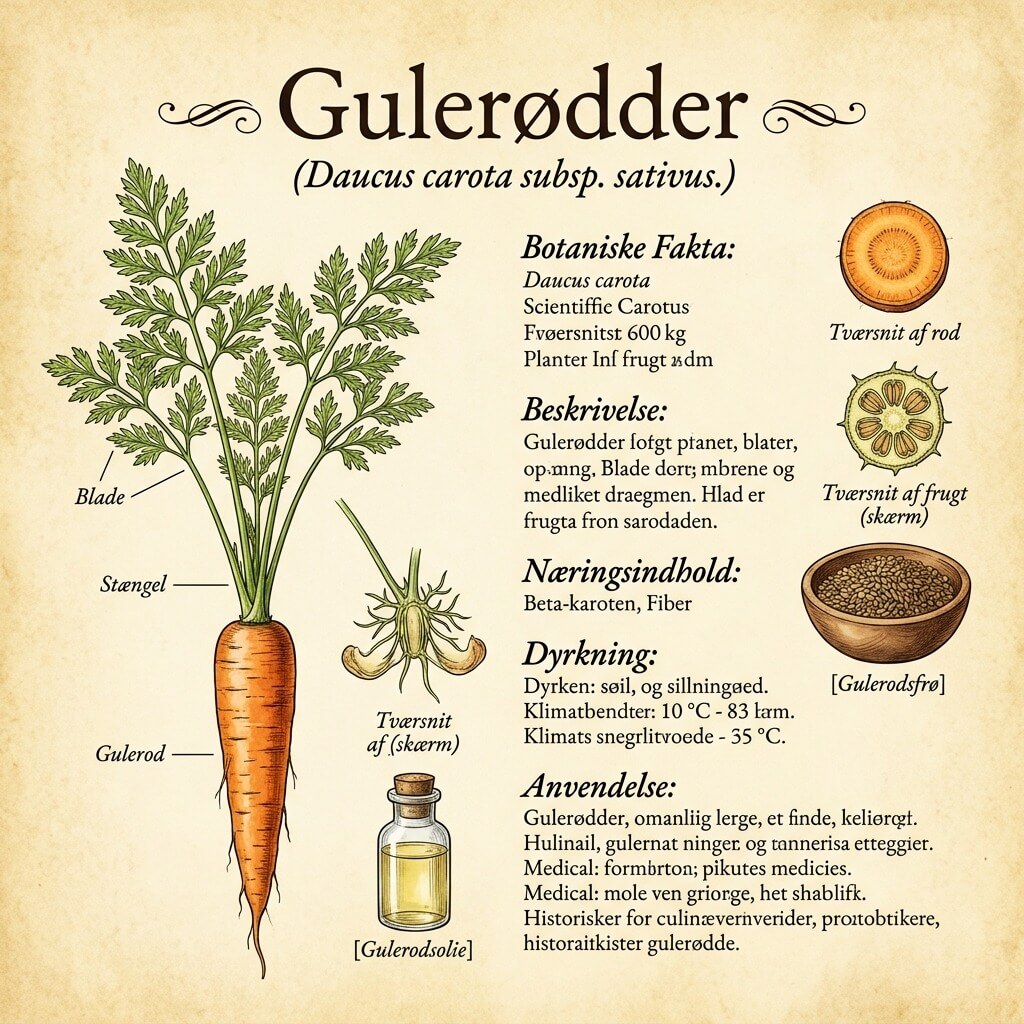
What are carrots?
The carrot (Daucus carota subsp. sativus) is a biennial plant grown as an annual vegetable. In its first year, it forms a rosette of feathery, deeply cut leaves while the root develops into a long, tapering storage root. If left to overwinter, it sends up a tall flower stalk in its second year, bearing small white flowers in umbels. The root itself stores carbohydrates and carotenoids – especially beta-carotene, which gives it its orange color and is converted into vitamin A in the body.
The cultivated carrot comes in many more colors than the supermarket lets on:
- Orange – the classic type, sweet and rich in beta-carotene
- Yellow and white – milder in flavor, often used in soups
- Red and purple – with a higher content of anthocyanins
History and origin
The wild carrot originated in Eurasia and was domesticated in Central Asia around the year 1000. The first cultivated carrots appeared in Persia and were purple, red or yellow – far from the orange root we know today. Via the trade routes, the plant spread both east and west.
It wasn’t until the 17th century that orange varieties were bred, most likely in the Netherlands. The myth that carrots improve night vision stems from British propaganda during World War II, meant to conceal the fact that pilots were actually using radar. Today, carrots are grown across much of the temperate zones and are among the most widely cultivated root vegetables in the world.
Flavor and texture
Carrots are known for their characteristic sweetness and firm, crisp bite. The flavor depends on variety, soil and harvest time:
- Sweet, earthy base flavor with a fresh, green undertone
- Firm, crisp and juicy texture when raw, tender and velvety when cooked
- Roasting caramelizes the sugars and brings out the sweetness
Culinary uses
Raw and fresh
Raw carrots are a classic snack and a staple in coleslaw and raw vegetable salads. Grated or cut into sticks, they add sweetness, color and crunch to salads and lunch boxes.
Hot dishes
- Boiled or steamed as a classic side dish
- Roasted in the oven or air fryer, where the sweetness caramelizes
- In stews, soups and as a base in mirepoix along with onion and celery
- Blended into creamy soups and purées
Desserts and juice
The natural sugar in carrots makes them perfect for sweet dishes. Grated carrot is the main ingredient in carrot cake, and it can also be pressed into juice or blended into fresh smoothies.
Beta-carotene is fat-soluble – so toss the carrots in a little oil to help your body absorb more of the vitamin A.
Tips and tricks from the author
Preparation and cooking
- Clean: Scrub the carrots clean under water – organic ones rarely need peeling
- Cut: Cut evenly into sticks, slices or cubes so they cook through at the same time
- Toss in oil: A little oil promotes both caramelization and absorption of beta-carotene
- Cooking: Bake, steam or sauté – avoid long cooking times, which wash out flavor and nutrients
Health benefits
Carrots are low in calories, with only about 40 calories per 100 grams, but they are nutrient-dense and packed with beneficial compounds:
- Beta-carotene – converted into vitamin A, benefiting eyesight, skin and the immune system
- Vitamins C, K and B6 – support blood, bones and metabolism
- Potassium – important for fluid balance and blood pressure
- Dietary fiber – both soluble and insoluble, supporting digestion
The fiber can help stabilize blood sugar and promote satiety, which, combined with the low calorie content, makes carrots well suited to a weight-conscious diet. The antioxidants in the colored varieties can also help protect cells from damage caused by free radicals.

Growing in Denmark
Carrots are among the most rewarding root vegetables to grow in the Danish kitchen garden, as long as the soil is deep and free of stones. The plant belongs to the umbellifer family and thrives best in a sunny spot.
How to grow carrots
- Prepare deep, loose, stone-free soil
- Sow the seeds thinly from April to July at a depth of about 1 cm
- Thin the plants to 5–7 cm apart
- Water moderately and evenly – avoid drying out, which causes cracked roots
- Protect against carrot flies with insect netting
- Harvest after 12–16 weeks, once the roots have reached full size
Growing conditions
- Light: Full sun
- Soil: Deep, loose and well-drained, free of stones
- Water: Even, moderate moisture
- Sowing: April to July
How to roast carrots in an air fryer
Total time: 20 minutes
- Prepare the carrots
Scrub the carrots clean and cut them into evenly sized sticks or slices so they cook through at the same time.
- Toss in oil and seasoning
Toss them with a tablespoon of oil and season with salt, pepper and, if you like, a little honey or thyme.
- Preheat and arrange
Preheat the air fryer to 180°C and arrange the carrots in a single layer in the basket.
- Roast until tender
Roast the carrots for 15-18 minutes, shaking the basket halfway through, until they are tender and caramelized at the edges.
Harvesting and storage
- Remove the tops before storing – they draw moisture and nutrients out of the root
- Store the carrots cool and dark, ideally in the refrigerator’s vegetable drawer
- They can also stay in the ground and be harvested gradually throughout the autumn
- Freezing is possible after a brief blanching
Flavor and pairings
- Herbs: thyme, parsley and ginger
- Vegetables: potatoes, onion and cabbage
- Protein: chicken, lamb and lentils
- Sweet: orange, cinnamon, honey and nuts
Look-alikes and quality
Carrots can be mistaken for parsnips, which resemble a pale carrot but have a sweeter, more peppery flavor. Always choose firm, crisp roots with a smooth surface and a fresh green top, if still attached – limp or cracked roots are a sign that they have been sitting around too long.
Sustainability
Carrots have a low climate footprint and require relatively little water compared with many other crops. As a Danish field-grown vegetable with a long shelf life, they are an environmentally friendly choice – and by using the whole root, saving the tops for pesto and accepting oddly shaped ones, you can significantly reduce food waste.
Conclusion
Carrots are a versatile, nutrient-rich and easy-to-grow vegetable that fits equally well into classic and modern cooking. With their sweet flavor, high beta-carotene content and low climate footprint, they are both a healthy and sustainable choice – whether eaten raw, roasted crisp in the air fryer, or grated into a moist carrot cake.
Try this recipe
If you want to taste the sweetness of carrots as it caramelizes, try our Roasted Carrots in the Air Fryer – Sweet, Caramelized and Ready in 18 Minutes – a simple side dish that elevates any dinner.
Equipment and products
A good oil is the key to crisp, caramelized carrots. Try our Olyfberg Virgin Olive Oil in a 100 cl Box with Tap – a full-bodied oil that delivers both flavor and the right sear.
Frequently asked questions
No, it’s often enough to scrub them clean, especially if they’re organic. Much of the nutrition sits just beneath the skin.
Yes, they can be used in salads and pesto and have a mildly peppery, herbal flavor.
Yes, carrots come in orange, yellow, white, red and purple – the original cultivated varieties were actually not orange.
They contribute to normal vision via vitamin A, but don’t give better night vision beyond the normal range. The myth originated from wartime propaganda.
Beta-carotene is fat-soluble, so a little oil increases the absorption of vitamin A – and the oil also helps the carrots caramelize.
Facts about carrots
| Field | Description |
|---|---|
| English name | Carrot |
| Latin name | Daucus carota subsp. sativus |
| Family | Apiaceae |
| Plant type | Biennial root vegetable |
| Height | 30–60 cm |
| Light | Full sun |
| Soil | Deep, loose, well-drained |
| Sowing | April–July |
| Harvest | After 12–16 weeks |
| Flavor | Sweet and earthy |
| Calories | Approx. 40 kcal per 100 g |
| Nutrients | Beta-carotene, vitamins A, C, K, potassium |
| Uses | Salads, soups, roasting, cake |
| Storage | Cool, can be frozen |
