

Chili peppers are the fruits of several species in the Capsicum genus in the nightshade family. The colorful pods resemble small bell peppers, but they contain capsaicin, a bioactive compound that gives them their characteristic heat. Chili is grown in thousands of varieties with varying colors, shapes and strengths, from mild snacking peppers to extreme super-hots. As a spice, chili gives food a fresh, peppery flavor and color. In this article, you’ll learn about chili’s history, flavor, preparation, heat classification, nutrition, cultivation and much more.

Advertisement: The page displays ads and contains advertising links (affiliate links). See our advertisers here.
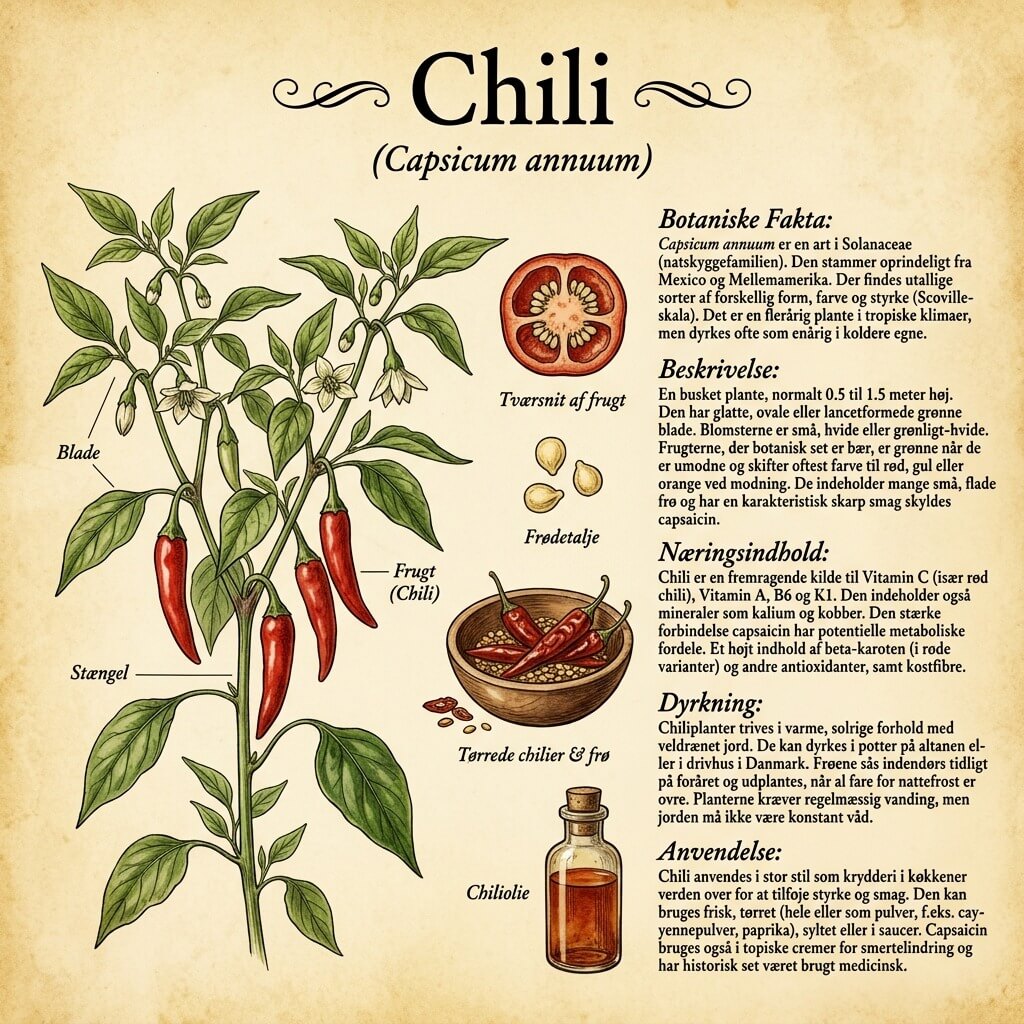
Chili peppers are berries that develop on shrub-like plants in the genera Capsicum annuum, C. frutescens, C. chinense, C. baccatum and C. pubescens. The fruits are hollow, with an edible layer of flesh and a white membrane holding the seeds. It’s the membrane and seeds that contain most of the capsaicin, so removing them reduces the heat. Chili peppers come in green, yellow, orange, red or purple, depending on variety and ripeness.
Estimated reading time: 11 minutes
- History and origin
- Flavor and texture
- Culinary uses
- How to prepare chili in the air fryer
- Heat classification – The Scoville scale
- Safety and nutritional value
- Growing and harvesting in Denmark
- Harvesting and storage
- Flavor and great pairings
- Try this recipe
- Equipment and products
- Frequently asked questions
- Facts about chili
History and origin
Chilies originate from Central and South America, where they were domesticated at least 6,000 years ago. Archaeological finds show that Mesoamerican cultures grew chili long before corn and beans. After Europeans arrived in the Americas in the 15th century, chili peppers spread to the rest of the world via trade routes. Portuguese traders brought chilies to Africa and Asia, where they were quickly integrated into local cuisines. Today, chili peppers are found in almost every culture worldwide — from Mexican salsas and Indian curries to Thai som tam and Korean kimchi.
Flavor and texture
The flavor of chili ranges from mild, fruity and slightly sweet to extremely fiery. The sensation of heat is caused by capsaicin, which activates heat and pain receptors on the tongue. Some chilies have a complex aroma with notes of smoke, citrus, chocolate or flowers. The texture can be crisp and juicy in thick-walled varieties, or thin and dry in the small, hot chilies. The color changes from green to yellow, orange, red or brown as the chili ripens.
Culinary uses
- Salsas and sauces: Fresh chilies are chopped and mixed into salsas, relishes, moles and marinades to add heat and tang.
- Dried and ground: Chilies are dried and ground into powder or flakes, used in rubs, spice blends and as a topping.
- Pickling and fermenting: Sliced chilies can be pickled in vinegar or fermented into hot sauce.
- Stuffed chilies: Large, mild varieties like poblano and Anaheim are stuffed with meat, cheese or vegetables and baked or grilled.
- Wok and curry dishes: Asian dishes use chilies in curry paste, stir-fries and soups to add heat and aroma.
- Drying and smoking: Chilies like guajillo and ancho are dried, while varieties like chipotle are smoked and dried for a smoky flavor.
If you want a milder flavor, remove the seeds and membranes before cooking. Rinse chilies under cold water and pat them dry. Then you can prepare them in several ways:
- Roasting: Place whole chilies on a hot pan or grill, turning them until the skin is charred black. Let them steam in a bag, then peel off the skin — ideal for salsas.
- Frying: Cut chilies into rings and sauté them quickly in oil with onion and garlic for use in stir-fries and stews.
- Boiling: Add whole chilies to soups and sauces to bring heat — remove them before serving for a milder dish.
- Drying: Tie chilies into a wreath and hang them to dry in a warm, dry spot. Once crisp, they can be blended into powder or flakes.
- Fermenting: Blend chilies with salt and let the mixture ferment for a couple of weeks in a sterile jar. Then blend into a tangy hot sauce.
How to prepare chili in the air fryer
The air fryer is excellent for roasting chilies and making stuffed chilies with crispy edges. The high, circulating heat gets the job done quickly without much oil.
Total time: 15 minutes
- Prepare the chilies
Rinse the chilies and pat them dry. For stuffed chilies: slice them lengthwise and scrape out the seeds and membrane for a milder dish. Use gloves for hot varieties if needed.
- Oil or filling
Toss whole chilies in a little oil, or fill the split chilies with cheese, meat or vegetables.
- Air fry
Place the chilies in a single layer in the basket and cook at 190 degrees for 8–12 minutes. Turn whole chilies halfway through so the skin blisters evenly.
- Finish and serve
Roasted chilies can steam in a bag for a couple of minutes, after which the skin is peeled off. Stuffed chilies are served hot, once the cheese has melted and the edges are golden.
Heat classification – The Scoville scale
The heat of chilies is measured on the so-called Scoville scale, which indicates the capsaicin content in Scoville Heat Units (SHU). In 1912, Wilbur Scoville developed an organoleptic test in which a panel tasted sugar solutions containing chili extract, diluted until the heat sensation disappeared. Today, the heat level is determined by measuring the capsaicinoid content in a laboratory. Generally speaking: the higher the SHU, the hotter the chili.
Chilies are typically classified into heat categories:
- Mild (0–1,000 SHU): Includes sweet bell peppers, pepperoncini, paprika and poblano types. These add color and mild heat.
- Mildly hot (1,000–2,500 SHU): This category includes mildly pungent varieties like Anaheim and Ancho (dried poblano), which give a fruity heat without being overpowering.
- Medium hot (2,500–5,000 SHU): Varieties like serrano and yellow wax chili give a noticeable kick and are used in salsa and pickles.
- Medium to hot (15,000–50,000 SHU): Chile de Árbol, Manzano and cayenne belong here. Cayenne is often used in powder form.
- Hot (50,000–100,000 SHU): Thai chili and chiltepin deliver intense heat and should be used with caution.
- Very hot (100,000–350,000 SHU): Habanero and Scotch Bonnet give a tropical, fruity flavor and strong heat.
- Super-hot (over 350,000 SHU): Varieties like Ghost pepper (bhut jolokia), Carolina Reaper and Pepper X are among the hottest in the world and should be handled with great caution.
Keep in mind that heat levels can vary within the same variety depending on growing conditions like sun, water and soil. Remove the seeds and white membranes to reduce the heat.
Safety and nutritional value
Red chili pepper contains about 40 kcal per 100 g, 8.8 g carbohydrates, 1.5 g dietary fiber, 1.9 g protein and only 0.4 g fat. Chilies are rich in vitamin C and vitamin B6, as well as beta-carotene, vitamin K1 and minerals like potassium, magnesium and iron. They’re usually eaten in small amounts, but still contribute powerful antioxidants.
Capsaicin is the plant compound that gives chilies their burning flavor and many of their health effects. Research suggests that capsaicin may relieve pain by desensitizing pain receptors, and regular consumption may possibly boost fat burning and curb appetite. Chilies also contain carotenoids like capsanthin and lutein, as well as phenols like sinapic acid and ferulic acid, which act as antioxidants.
Despite their benefits, chili peppers can cause discomfort in some people. Larger amounts can cause a burning sensation in the mouth and stomach, irritate mucous membranes and cause diarrhea, especially in people with irritable bowel syndrome. People with a sensitive stomach should therefore eat chili in moderate amounts and listen to their body’s signals.
Growing and harvesting in Denmark
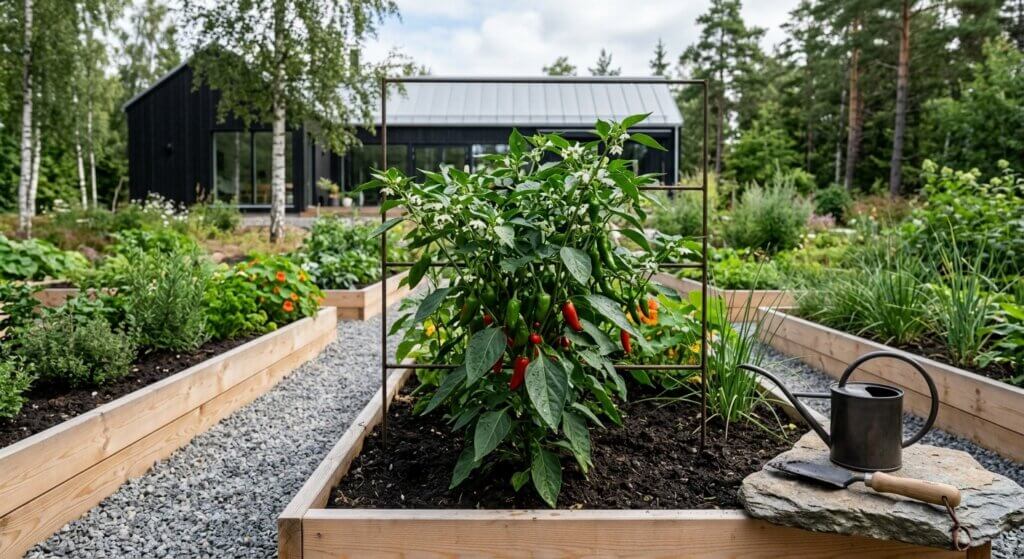
Chili peppers are heat-loving plants. To succeed in the Danish climate, chilies are usually grown in a greenhouse, conservatory or on a sunny, sheltered patio in large pots. Here’s a step-by-step guide:
- Planning: Choose varieties that ripen early and suit the Danish climate. Small-fruited varieties ripen faster than large ones.
- Start seeds indoors: Sow seeds 6–8 weeks before the last frost. Use seed compost and cover the seeds with 0.5 cm of soil. Keep the soil moist and warm (about 25–28 degrees) with a heat mat. Seeds germinate in 1–3 weeks.
- Transplant into pots: Once the seedlings have 2–4 true leaves, prick them out into small pots. Provide plenty of light, ideally with a grow light, to prevent leggy plants. Harden off the plants gradually by taking them outside for a few hours a day once the temperature reaches 10–12 degrees.
- Soil and planting out: Chili plants need nutrient-rich, well-drained soil with a pH of 6–7. Mix compost into the planting hole. Plant out in a greenhouse or outdoors once the soil temperature is above 15 degrees and nights are frost-free. Space the plants 40–60 cm apart, with 60–80 cm between rows.
- Watering and feeding: Water regularly so the soil stays evenly moist, but never waterlogged. Avoid cold water, which can shock the roots. Apply a balanced, low-nitrogen fertilizer every 14 days. Too much nitrogen produces large leaves but fewer fruits.
- Support and care: Stake the plants as they grow, since the branches can break under the weight of the fruit. Remove the first flower buds to encourage bushy growth. Ensure good ventilation in the greenhouse to prevent fungal diseases.
- Harvest: Harvest chilies once they’ve reached the desired color and size. Mild varieties can be harvested green, while hotter chilies often turn red, orange or yellow. Cut the fruit off with scissors to avoid damaging the plant.
Growing conditions
- Light: Chili plants love full sun and need at least 6 hours of direct light daily.
- Temperature: Optimal growth is between 20–30 degrees. The temperature should not drop below 10 degrees, as the plant stops growing and can be damaged.
- Soil: Well-drained, humus-rich soil with a pH of 6.0–7.0. Add compost and avoid fresh manure.
- Watering: Keep the soil moist, but let the surface dry out slightly between waterings. Watering in the morning helps prevent fungal diseases.
- Fertilizing: Fertilize moderately with a balanced NPK fertilizer. Too much nitrogen produces a leafy plant with fewer fruits, while potassium and phosphorus promote flowering and fruit set.
Harvesting and storage
Chilies can be harvested from midsummer through autumn. The fruits change color as they ripen — from green to yellow, orange, red or brown. Unripe green chilies taste fresher and less sweet than fully ripe red ones. Store fresh chilies whole in a perforated plastic bag or paper bag in the crisper drawer of the fridge for up to two weeks. For longer storage, chilies can be dried, frozen (whole or sliced), pickled in vinegar, or fermented into hot sauce. Dried chilies keep for several months in an airtight container.
Flavor and great pairings
Handle chilies with care — the heat level varies, and capsaicin can irritate skin and eyes. Consider using gloves when cutting hot chilies, and avoid touching your face. Cut off the stems, slice the chilies lengthwise and scrape out the seeds and membrane to reduce the heat.
- Tomatoes, onion, garlic and coriander in salsas and Mexican dishes.
- Carrots, squash and beans in chili con carne and stews.
- Fruits like mango, pineapple and peach add a sweet contrast to hot varieties.
- Dairy products like yogurt, sour cream and cheese tame the heat.
- Spices like cumin, coriander seed, cinnamon and cocoa in mole sauce.
- Acidity from lime, lemon and tamarind brings out the flavor of chili.
Try this recipe
The heat and fruitiness of chili are the very backbone of Mexican cuisine. Freshly chopped chili lifts the flavor of everything from salsa to a topping on our Air Fryer Nachos — adjust the amount to your own tolerance, and serve with a cool dip to balance the heat.
Equipment and products
If you don’t have fresh chilies on hand, a good chili sauce is an easy shortcut to the same heat and tang. Yeo’s Sweet Chili Sauce 365 g gives a sweet-and-spicy balance that’s perfect as a dip for air fryer snacks or as a glaze for chicken.
Frequently asked questions
Yes, the seeds are edible, but they can be bitter and contain a lot of capsaicin. Remove them if you want a milder dish.
Green chilies are unripe fruits of the same variety. They’re usually milder and more herbaceous than the ripe red ones, which develop a deeper, sweeter flavor.
Remove the seeds and membranes before cooking. Add fat like oil, butter or coconut milk, dairy products, or something sweet like sugar, honey or fruit. Boiling and longer cooking times can also mellow the heat.
Yes, many chilies can be eaten raw in salads and salsas. Hot chilies should be tasted in small bites, though, and people with a sensitive stomach should start with mild varieties.
No, there are also completely mild varieties like bell peppers and sweet banana peppers. The heat varies greatly between varieties and is measured in Scoville Heat Units.
Facts about chili
| Field | Value |
|---|---|
| Danish name | Chilipeber |
| Latin name | Capsicum annuum (and others) |
| Family | Nightshade family (Solanaceae) |
| Plant type | Perennial in the tropics, usually grown as an annual in Denmark |
| Height | 30–90 cm depending on variety |
| Hardiness | Not frost-tolerant; needs heat and light |
| Light | Full sun (at least 6 hours a day) |
| Soil | Well-drained, nutrient-rich soil, pH 6.0–7.0 |
| Sow/plant | Start indoors 6–8 weeks before the last frost; plant out once temperatures are stable above 15 °C |
| Flowering/Harvest | Flowers from June; harvest from July to October |
| Calories per 100g | About 40 kcal (red chili) |
| Flavor | Ranging from mildly sweet to extremely fiery |
| Culinary use | Salsa, sauces, spice, pickles, dried and fermented |
| Storage | Fridge 1–2 weeks; can be dried, frozen, pickled or fermented |
