

Edamame beans are one of the most popular legumes in modern kitchens. The small green beans are harvested while the soybean plant is still young, and they’re often eaten as a snack or light side dish. In Denmark, they’re especially known from restaurants and sushi bars, where they’re served steamed with a sprinkle of salt. Their sweet, nutty flavor and high nutritional content make them an exciting alternative to other protein sources.

Advertisement: The page displays ads and contains advertising links (affiliate links). See our advertisers here.
Botanically, edamame are immature soybeans (Glycine max) from the pea family (Fabaceae) — so they’re not actually related to most other garden beans. Raw soybeans must always be boiled or steamed before eating, but in return, edamame has a rich cultural history and great potential in Danish kitchen gardens.
Estimated reading time: 6 minutes
History and Origin
Edamame has been cultivated in Asia for thousands of years. Soybeans were first domesticated in China around 7,000 years ago, and the earliest known reference to the word edamame dates back to 1275, when a Japanese monk gave thanks for a gift of edamame beans. In Japanese, edamame means “stem beans” or “beans on a branch,” because the pods were often sold with the stems still attached.
Early History in East Asia
In China, both beans and leaves were eaten as early as the Ming dynasty in the 1400s, and during famines, the beans were ground and added to flour to stretch grain supplies. In Japan, during the Edo period (1603–1868), edamame was mentioned in poetry and served as a snack with sake. Historically, street vendors sold whole soybean plants with the beans still on the branches, hence the name stem beans.
Spread to the West
Edamame came to the West in the early 20th century. In the US, the beans were first described in 1923 in the book “The Soybean,” but it wasn’t until the 1990s and 2000s that they truly became popular, as Asian cuisines gained wider appeal. In Europe, edamame is relatively new; the first commercial sale took place in 2008. Although the name sounds exotic, the plant is identical to the soybean — the difference lies solely in the time of harvest.
Flavor and Aroma
Edamame has a mild, sweet flavor with a slightly nutty, buttery character and a creamy texture. The beans pair well with sea salt, lemon juice, soy sauce, sesame, ginger and chili. In salads, they complement crunchy vegetables like cucumber, radish and sugar snap peas, and they’re also excellent with whole grains like quinoa and barley or with pasta and rice noodles.
Avoid overcooking the beans; they lose color and become bland. Always add salt or seasoning after cooking to bring out the flavor.
Culinary Uses
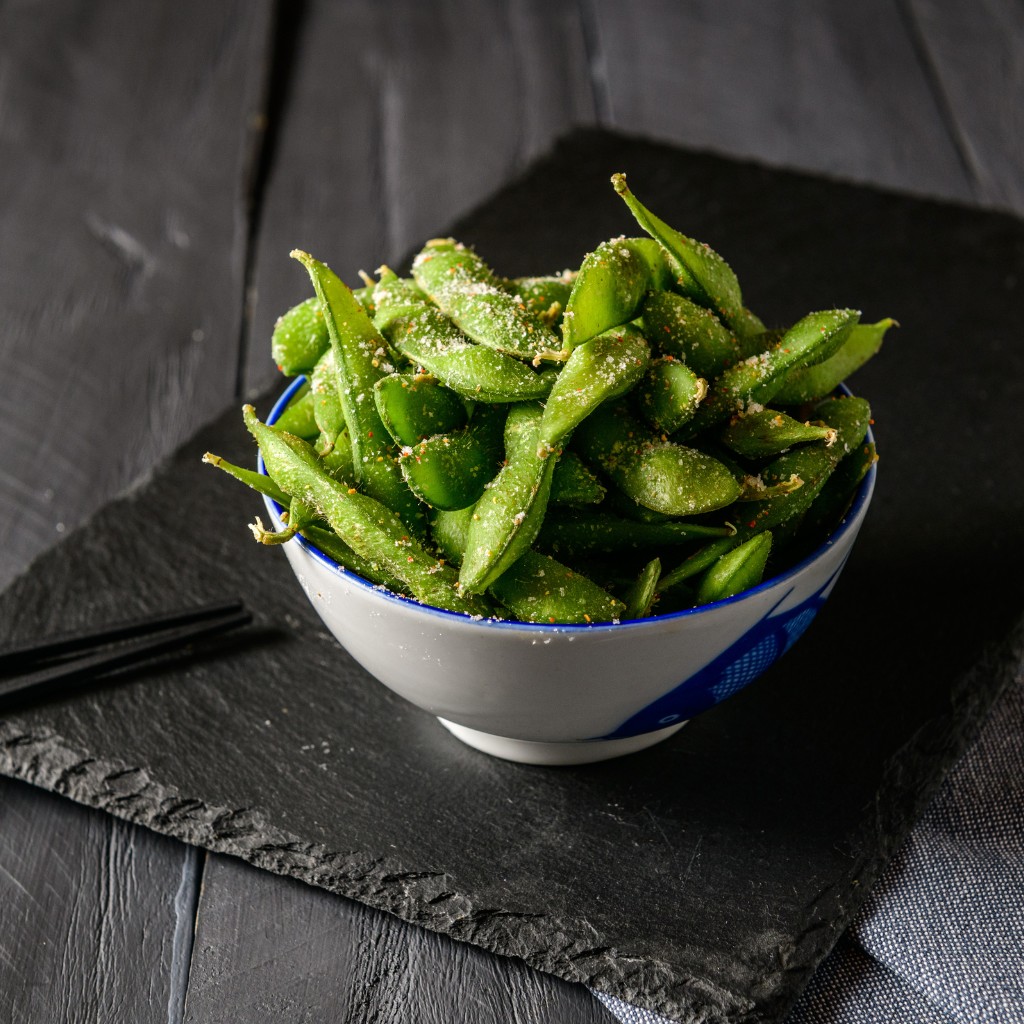
Edamame is most often eaten as a snack: the pods are boiled in lightly salted water for a few minutes, after which the beans are squeezed out and eaten hot or warm with a pinch of salt. The beans can also be added to salads, soups, rice and noodle dishes, or pureed into dips.
In the Danish Kitchen
In Denmark, edamame appears especially as a starter at sushi restaurants, but it has also found its way into home kitchens as a protein-rich topping for bowls and salads. Try some of these ideas:
- Steam the beans and sprinkle with coarse sea salt as a snack.
- Mix shelled edamame into a quinoa or barley salad with fresh herbs.
- Mash the beans with avocado, garlic and lemon juice for a green dip.
- Add edamame to soups or ramen for extra protein and bite.
- Make a meat-free “pesto” by blending edamame with basil, olive oil and parmesan.
Around the World
In Japanese cuisine, edamame is used in dishes like takikomi gohan (rice cooked with vegetables), tempura and zunda-mochi — a sweet paste of mashed beans spread on rice cakes. In Korea, boiled beans or bean sprouts are seasoned with sesame oil and garlic. In Western cuisines, edamame is used in smoothies, hummus-like dips and as a topping on poke bowls, while the food industry is developing edamame pasta and noodles for gluten-free diets.
Preparation
Edamame is often bought frozen, with or without the pod. If you buy fresh pods, they should be rinsed under running water and drained. The pods themselves aren’t eaten — they’re only used to protect the beans during cooking. Feel free to season the finished beans with toasted sesame, chili or lemon zest.
Total time: 7 minutes
- Rinse the beans
Rinse the pods thoroughly in a colander, and discard any damaged pods.
- Bring the water to a boil
Bring a pot of water to a boil and add 1-2 tablespoons of salt.
- Cook the edamame
Cook fresh pods for 5-7 minutes (frozen 3-5 minutes), until they’re bright green and the beans are tender with a bite.
- Salt and serve
Drain, sprinkle with sea salt and serve. Squeeze the beans out of the pods with your fingers or teeth.
Health Benefits
Edamame is known for its high nutritional content and stands out especially as a plant-based protein source containing all the essential amino acids. This makes its protein quality comparable to milk and eggs.
Nutritional Content per 100 g
Cooked edamame contains approximately the following per 100 grams:
- Energy: approx. 120 kcal
- Protein: approx. 11 g
- Dietary fiber: approx. 5 g
- Carbohydrate: approx. 9 g
- Fat: approx. 5 g
- Rich in folate, iron, magnesium, phosphorus, potassium and vitamin K
Fiber, Isoflavones and the Heart
The beans contain soluble fiber, antioxidants and isoflavones, which may help lower LDL cholesterol. Their low glycemic index makes them a good choice for people with diabetes. Fiber and antioxidants can also support gut flora. Note, however, that people with a soy allergy should avoid the beans, and that large amounts of soy may affect digestion. A 2019 meta-analysis found no significant effect of soy on the thyroid gland. This is not medical advice.
Growing and Harvesting in Denmark
Edamame beans need warmth, but it’s possible to grow them in Denmark if they get enough heat and shelter. Choose early varieties like ‘Chiba Green’ or ‘Tohya’, which mature faster. Sowing or pre-sprouting should happen after the last frost, when the soil temperature is at least 15 °C.
Growing Conditions
Edamame thrives best in full sun (at least 6-8 hours daily) and shelter from wind. The plants prefer loose, humus-rich, well-drained soil with a slightly acidic to neutral pH (6.0-7.0). They can’t tolerate frost or cold soil, so wait to sow until the soil is warm. The temperature should be between 20 and 30 °C during the growing season. In cool summers, growing in a greenhouse or raised bed with fleece cover can increase warmth and speed up ripening.
How to Grow Edamame
Total time: 10-12 weeks
- Sow the seeds
Sow directly outdoors in May-June, when the soil is warm (at least 15 °C). Plant seeds 2.5-4 cm deep and 5-10 cm apart in rows.
- Pre-sprout (optional)
In cooler areas, you can pre-sprout in pots indoors 2-3 weeks before transplanting and move them outside once the risk of frost has passed.
- Water and support
Keep the soil evenly moist, especially during flowering and pod formation. Give the 45-60 cm tall plants support with bamboo stakes or netting.
- Harvest and blanch
Harvest 10-12 weeks after sowing, when the pods are plump and green. Blanch immediately for 2-3 minutes and cool in ice water to preserve color and shelf life.
Storage
Edamame loses quality quickly after harvest, so it should either be used fresh or frozen immediately.
- Fresh pods: store in the refrigerator in an airtight container for up to a week.
- Cooked beans: keep for 3-5 days in the refrigerator in an airtight container.
- Freezing: blanch the pods for 2-3 minutes, cool quickly in ice water and freeze. They keep for 6-8 months.
- Dried soybeans: if the pods ripen fully and turn yellow, the beans can be dried and used like regular soybeans.
Common Mix-Ups and Quality
Edamame is sometimes confused with sugar snap peas or green beans. Snap peas have a flatter pod and sweeter flavor, while edamame pods are plumper and fuzzy. Choose pods that are fresh, light green and free of spots, and preferably buy frozen pods with unbroken shells. If the beans are old, they may have a bitter taste and a chewy texture.
Sustainability and Biodiversity
Like other legumes, edamame can fix nitrogen in the soil through symbiosis with rhizobium bacteria. This improves soil fertility and reduces the need for artificial fertilizer. By growing edamame in rotation with other crops, you can build up soil structure and attract beneficial insects. If you let a few plants go to seed, you can save the beans for next season and thereby support local seeds adapted to Danish conditions.
Try This Recipe
Edamame’s nutty bite and fresh green color make it a natural addition to an Asian salad. Toss shelled, steamed beans with crunchy greens and a soy-based dressing — it adds extra protein and texture. Get inspired by our Tofu in the Air Fryer – Crispy Asian Salad with Marinated Tofu, where edamame fits perfectly into the bowl alongside the tofu.
Equipment and Products
For edamame, you really only need a pot with good heat distribution and a steamer insert or colander, so the pods can be boiled or steamed quickly without becoming waterlogged. A bowl with a lid is handy for storing and serving the salted beans, and a fine-mesh sieve makes it easy to rinse frozen pods right before cooking.
Frequently Asked Questions
Yes, but they require warmth and a long growing season. Only sow once the soil is warm, choose early varieties, and preferably grow in a greenhouse or a sheltered spot to ensure enough warmth.
No. Edamame is harvested as fresh green beans and only needs brief boiling or steaming. Dried soybeans, on the other hand, need to be soaked for 8-12 hours.
No. The pods are tough and fibrous and aren’t eaten. Squeeze the beans out and discard the pods.
Most people can safely eat edamame, but people with a soy allergy should avoid them. Raw soybeans must always be boiled or steamed before eating.
Cooked beans can be stored in the refrigerator for 3-5 days in an airtight container. For longer storage, blanched beans can be frozen for up to 6 months.
Facts About Edamame Beans
| Field | Value |
|---|---|
| English name | Edamame Beans |
| Latin name | Glycine max (immature soybean) |
| Family | Pea family (Fabaceae) |
| Plant type | Annual legume |
| Height | 45-60 cm |
| Hardiness | Heat-loving; doesn’t tolerate frost |
| Light | Full sun (6-8 hours daily) |
| Soil | Light, well-drained, humus-rich; pH 6.0-7.0 |
| Sow/plant | May-June outdoors; seeds 2.5-4 cm deep |
| Flowering/Harvest | Flowering June-July; harvest July-September |
| Protein per 100 g | approx. 11 g |
| Fiber per 100 g | approx. 5 g |
| Key minerals | Folate, iron, magnesium, potassium, vitamin K |
| Flavor | Sweet, mild, nutty and creamy |
| Culinary use | Steamed snack, salads, soups, dips, stir-fries |
| Soaking time | None (fresh/frozen); dried soybeans 8-12 hours |
| Cooking time | Fresh/frozen in pod: 5-7 min; dried soybeans 60-90 min |
| Storage | Fresh refrigerated 3-5 days; blanched/frozen 6-8 months |
