

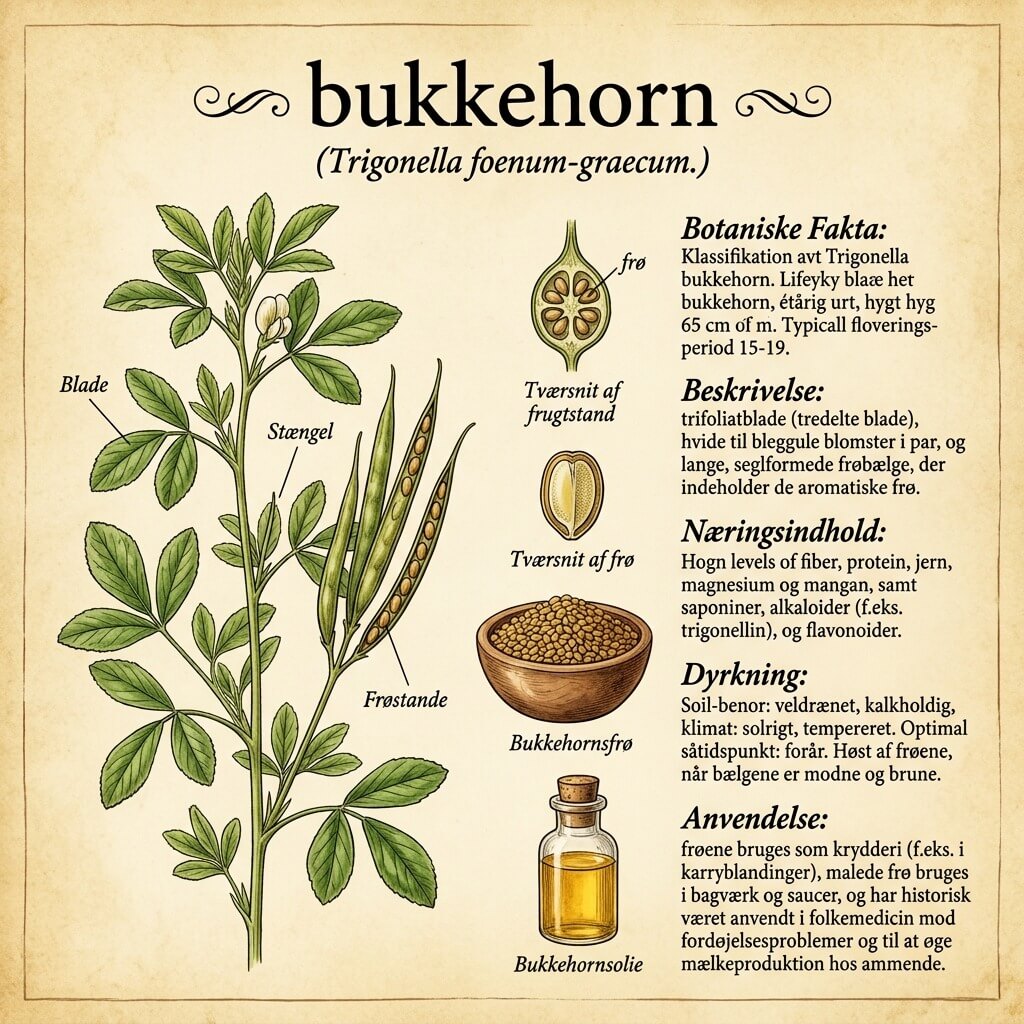
Fenugreek, known as Trigonella foenum-graecum in Latin, is a herbaceous plant belonging to the pea family. The plant is known for its characteristic small, golden seeds, which have a slightly bitter taste with a nutty undertone. Fenugreek is grown primarily in Asia and the Mediterranean region, but can also be found in other parts of the world.

Advertisement: The page displays ads and contains advertising links (affiliate links). See our advertisers here.
In Denmark, fenugreek is not yet widely used in cooking, but it is gaining popularity as a health-boosting supplement. The seeds are often used in powder form in various dishes and supplements.

Estimated reading time: 8 minutes
History and cultivation
Fenugreek has a long history stretching back thousands of years. It was first documented in ancient Egypt, where it was used in embalming processes and as a spice. In India and China, the herb has been an integral part of traditional medicine and culinary practices.
In Denmark, growing fenugreek is not common, but interest in the plant is increasing. Some Danish farmers are experimenting with growing fenugreek because of its hardiness and soil-improving properties. The plant thrives in temperate climates and can be grown during the summer months.
Taste and aroma
Fenugreek seeds have a characteristic taste that is slightly bitter with a distinct nutty and faintly sweet undertone. The aroma is reminiscent of a blend of celery and brown sugar, and it’s precisely fenugreek that gives many commercial curry powders and “maple”-like flavourings their character.
Raw seeds can taste quite bitter, but toasting mellows the bitterness and brings out the warm, nutty notes. The leaves — known as methi in Indian cooking — have a milder, greener flavour and are used as a herb. If fenugreek is used in too large a quantity, the flavour can quickly become overpowering, so a light hand is recommended.
Nutritional content
Fenugreek is rich in a range of nutrients that contribute to its health benefits. The seeds contain:
- Protein: Helps with muscle building and tissue repair.
- Dietary fibre: Supports digestion and promotes healthy gut flora.
- Iron: Important for oxygen transport in the blood.
- Magnesium and manganese: Supports bone health and metabolism.
- Vitamin B6: Contributes to nervous system function.
The plant also contains antioxidants such as flavonoids and saponins, which can protect the body against oxidative stress.
Health benefits of fenugreek
Improved digestion
Fenugreek is known for promoting healthy digestion. Its high fibre content helps regulate bowel movements and can relieve symptoms of constipation. The fibres act as prebiotics, nourishing the beneficial bacteria in the gut. In traditional medicine, this herb is used to treat digestive issues such as bloating and stomach cramps.
Blood sugar control
One of the most studied benefits of fenugreek is its potential to help regulate blood sugar. Studies have shown that it can improve insulin resistance and lower blood sugar levels in people with type 2 diabetes.
- Galactomannan: A soluble fibre in fenugreek that slows the absorption of sugar into the blood.
- Amino acids: Can stimulate insulin production.
For those struggling with blood sugar control, fenugreek can be a valuable supplement. However, it’s important to consult a doctor before adding it to your diet, especially if you’re on medication.
Increased breast milk production
Fenugreek has traditionally been used to increase milk production in breastfeeding mothers. The plant contains phytoestrogens that can stimulate the mammary glands, acting as a natural galactagogue. However, it should always be taken under the guidance of a healthcare professional.
Practical uses of fenugreek
Culinary uses
Fenugreek seeds and leaves are used in various cuisines around the world. They add a unique flavour to dishes and can be used in several ways.
- Spice: The seeds can be toasted and ground into a powder that’s added to curry dishes.
- Tea: The seeds can be brewed as a tea for a health boost.
- Sweets: In the Middle East, fenugreek is used in traditional sweets.
In Denmark, you can experiment with it in home baking or as part of spice blends for meat and vegetables.
Supplement forms
Fenugreek is available in various supplement forms: capsules, which are easy to dose; powder, which can be mixed into smoothies or food; and liquid extract, a concentrated form that can be added to drinks. When choosing a supplement, it’s important to ensure the product is of high quality and free from unnecessary additives.
Beauty and skincare
The herb also has uses in beauty and skincare. Powdered seeds mixed with honey can moisturise and nourish the skin in a face mask, fenugreek can strengthen hair and reduce dandruff, and the antioxidants can fight signs of ageing. These natural treatments are part of a growing trend in Denmark towards more sustainable and chemical-free beauty products.
Try toasting the seeds before use to intensify their flavour. Lightly toast the fenugreek seeds in a dry pan over medium heat until they start to smell aromatic and turn a golden colour. This brings out their nutty and slightly bitter flavour notes. After toasting, you can grind the seeds into a powder and add them to spice blends, soups or stews to give your dishes an extra depth of flavour.
Tips and tricks from the author: Morten Jensen
How to toast fenugreek seeds
Toasting is the best way to get the most out of fenugreek seeds. It mellows the bitterness and brings out the warm, nutty tones that make the seeds so well-suited to curry blends.
Total time: 5 minutes
- Prepare the pan
Place the fenugreek seeds in a dry pan without oil. Use a single layer so they toast evenly.
- Toast over medium heat
Toast over medium heat, stirring or shaking constantly so the seeds don’t burn. Burnt seeds become unpleasantly bitter.
- Remove in time
Remove the seeds from the pan as soon as they smell aromatic and have turned a golden, lightly toasted colour — typically after 2–3 minutes.
- Grind and use
Let the seeds cool, then grind them into a powder using a mortar or spice grinder. Use the powder in curry blends, soups or stews.
Potential side effects and precautions
Although this herb is completely natural, it can cause side effects in some people. The most common are digestive issues such as diarrhoea or stomach cramps, allergic reactions (especially among those allergic to other legumes), and a sweetish change in the body’s secretions. It’s important to start with a low dose and observe how your body reacts.
Precautions and considerations
Certain groups should exercise caution:
- Pregnant women: Fenugreek can stimulate the uterus and should be avoided in medicinal doses.
- Children: Should only take fenugreek under medical supervision.
- People with hormone-sensitive conditions: Fenugreek’s phytoestrogens can affect these conditions.
Interactions with medication
Fenugreek can interact with certain medications. Blood sugar-lowering medication can have an enhanced effect and lead to low blood sugar, blood-thinning medication can increase the risk of bleeding, and hormone therapy can have its effectiveness affected. If you’re taking medication, it’s essential to discuss the use of fenugreek with your doctor.
Try this recipe
Fenugreek belongs in Indian cuisine, where both the seeds and leaves give dishes their characteristic depth. Toast a little fenugreek and mix it into the spice filling for our Aloo Paratha in the air fryer – crispy Indian flatbread with spiced potato filling — it lifts the flatbread’s spiced potato filling with a warm, nutty note.
Equipment and products
Fenugreek is often a hidden key ingredient in ready-made spice blends, where it gives the characteristic, sweetish curry tone. If you’d rather reach for a ready-made spice mix, Hawaii Krydderimix Vestjyske Delikatesser is an easy starting point you can build on with your own toasted seeds.
Frequently asked questions
Fenugreek has a slightly bitter taste with a nutty, faintly sweet undertone reminiscent of a blend of celery and brown sugar. Toasting mellows the bitterness and brings out the warm tones.
The seeds are toasted and ground into a powder and used in curry dishes, spice blends, soups and stews. The leaves (methi) are used as a herb, and the seeds can also be brewed as tea.
Fenugreek is rich in fibre, protein, iron and antioxidants, and is traditionally used to support digestion and blood sugar regulation. Talk to a doctor if you want to use it as a supplement, especially alongside medication.
Toasting mellows fenugreek seeds’ natural bitterness and brings out a warm, nutty aroma. Take care not to burn them, as burnt seeds become unpleasantly bitter.
Pregnant women should avoid medicinal doses, as fenugreek can stimulate the uterus. People with hormone-sensitive conditions or on blood sugar-lowering or blood-thinning medication should consult a doctor.
Conclusion
Fenugreek is a plant with many facets, offering a range of health benefits and practical uses. From supporting digestion and blood sugar control to improving skin and hair, fenugreek can be a valuable addition to your daily routine. However, it’s important to use it thoughtfully and be aware of potential side effects and interactions with medication. Always consult a healthcare professional if you’re in doubt.
Facts about fenugreek
| Field | Value |
|---|---|
| English name | Fenugreek |
| Latin name | Trigonella foenum-graecum |
| Family | Pea family (Fabaceae) |
| Plant type | Annual herb |
| Origin | Asia and the Mediterranean region |
| Parts used | Seeds and leaves (methi) |
| Taste | Slightly bitter, nutty, faintly sweet curry tone |
| Key nutrients | Protein, fibre, iron, magnesium, manganese, vitamin B6 |
| Culinary use | Curry blends, soups, stews, tea, Indian baked goods |
| Storage | Store whole dried seeds airtight, in a dark, cool place; grind before use |
