

Garlic is the ingredient I reach for most often when a dish is missing that final touch. A single clove can lift a marinade, a dressing or a bowl of roasted vegetables, and a whole roasted head of garlic from the air fryer, spread on a piece of warm bread, is one of the best things I know.
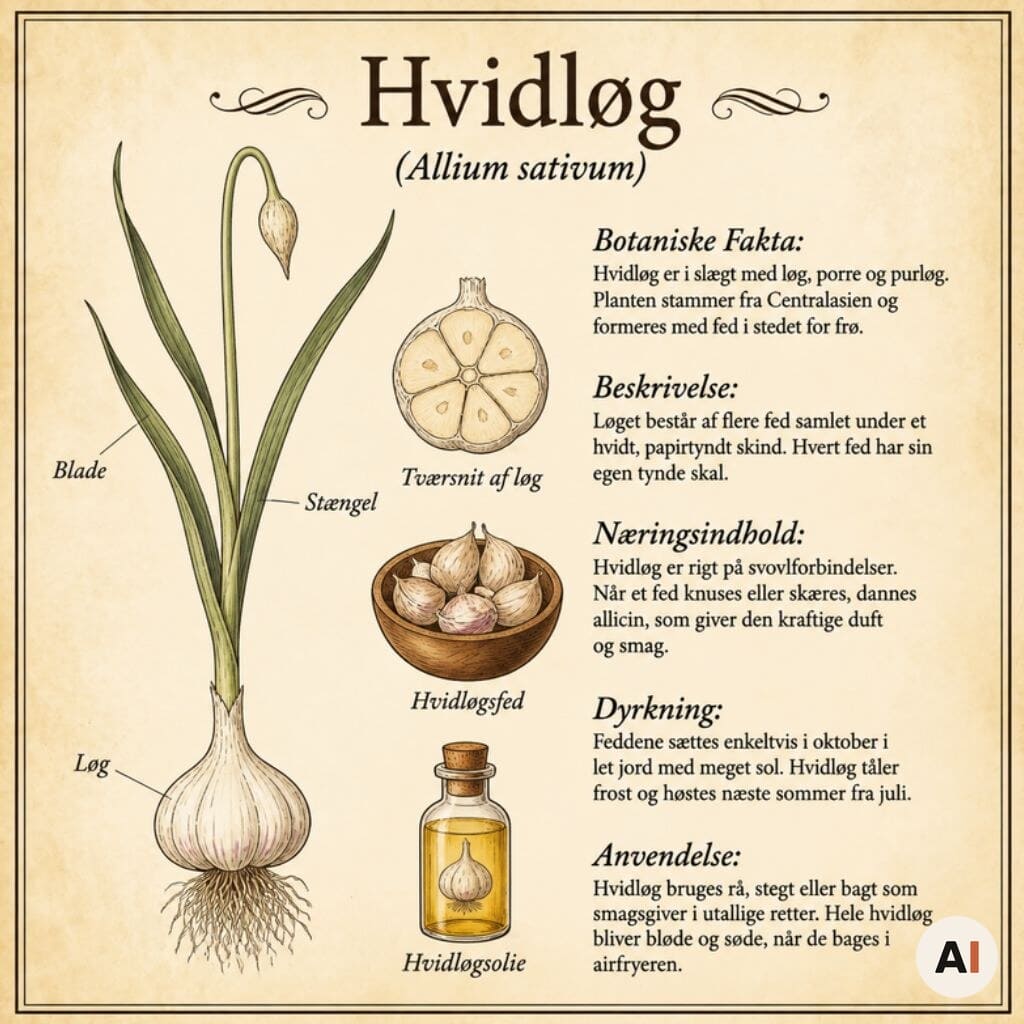
Botanically, garlic is called Allium sativum. It belongs to the onion genus Allium in the amaryllis family (Amaryllidaceae) and is therefore a close relative of onions, spring onions, chives and wild garlic, all of which have their own entry here in the Food Encyclopedia. Garlic is built up of small cloves that sit together in a head – and it is precisely the cloves that you both eat and plant in the ground when you want new plants.
Here you will find the history, the flavor and the nutritional content – and my best tips for using garlic in the air fryer, growing it and storing it, so you have garlic ready all year round.
Estimated reading time: 7 minutes
History and origin
From Central Asia to the Nordic countries
Garlic originally comes from Central Asia, but it is not known to grow wild. In other words, it is a purely cultivated plant that has accompanied humans for thousands of years. In Asia, garlic has been grown for more than 5,000 years, and it reached Europe early on.
Nor is garlic a newcomer in our part of the world. In Norway, garlic has been known since the Viking Age – long before garlic bread and garlic dressing became everyday fare in our kitchens.
Sailors and folk medicine
Garlic has not only been used for the sake of flavor. Sailors took it on board against scurvy, and in folk medicine it was used against things like indigestion, hardening of the arteries and colds – and even as a remedy for worms.
These are historical uses and not medical advice, but they show how highly people have prized the little cloves.
Flavor and aroma
Raw garlic: sharp and strong
A raw clove of garlic is sharp, pungent and almost burning on the tongue. The distinctive flavor comes mainly from allicin, which is only formed when the clove is crushed or cut. That is why a pressed or finely grated clove tastes far stronger than a clove that has only been sliced or added whole.
You can put that to active use in the kitchen. If I want a mild hint of garlic in a stew, the cloves go in whole or in coarse slices. If the garlic butter or the dressing needs a bite, I press them.
Roasted garlic: soft and sweet
Heat transforms garlic. When a whole head of garlic is roasted in the air fryer, the cloves turn soft and sweet, so you can squeeze them out of their skins like a soft, creamy paste. The sharp edge disappears, and what is left is a rounded, mellow flavor.
On the other hand, garlic turns bitter if it gets too much heat and goes dark – chopped and pressed garlic in particular burns quickly.
Types of garlic
In stores you will usually find regular garlic with many cloves per head, but there are several types:
- Serpent garlic (hardneck): forms bulbils – small bulbs at the top of the flower stalk.
- Chinese solo garlic: a single-clove form where the whole bulb consists of one large clove.
- Elephant garlic: looks like a giant head of garlic, but is not botanically true garlic. It is a variety of wild leek.
Culinary uses
Garlic turns up in almost every cuisine in the world. It can be the star of a dish or a quiet background flavor in marinades, soups, sauces and vegetable dishes.
In everyday home cooking
We use garlic in everything from meat sauces to marinades, but a few classics stand entirely on their own:
- Garlic butter: butter blended with garlic and, ideally, fresh herbs – for example with steak and anything grilled.
- Garlic bread and garlic baguette: crusty bread with garlic butter – a regular side for barbecue evenings and stews.
- Garlic dressing: a creamy dressing, for example for pita bread and kebab.
Around the world
Out in the wider world, garlic is the cornerstone of several of my own favorite dishes:
- Aioli: a cold sauce of garlic and oil from Provence and Catalonia.
- Tzatziki: a Greek dip of yogurt, cucumber and garlic.
- Spaghetti aglio, olio e peperoncino: Italian pasta with garlic, olive oil and chili.
In the air fryer
The air fryer is made for garlic. My favorite is a whole roasted head of garlic: I cut the top off the head so the cloves are exposed, drizzle with a little oil, wrap it loosely in foil and roast it until the cloves are completely soft and golden.
The roasted cloves can be stirred into butter, mayonnaise or dressing – or spread directly on bread. This gives a softer, sweeter garlic flavor, and it is perfect for anyone who finds raw garlic too harsh.
If you use chopped or pressed garlic, toss it in oil, butter or marinade together with the rest of the food. That way it doesn’t burn as easily, it doesn’t blow around in the basket, and the flavor spreads evenly. For long cooking times you can also use whole, unpeeled cloves, which turn soft inside the skin.
Health benefits
We usually eat garlic in small amounts, so it is the flavor more than the nutrition that we buy it for. Even so, it is interesting to see what is hiding in those small cloves.
Nutritional content per 100 g
Raw garlic provides 106 kcal (450 kJ) per 100 g and also contains:
- Water: 73 g
- Protein: 7.9 g
- Carbohydrates: 16.3 g, of which 14.7 g is starch and 1.6 g is sugars
- Dietary fiber: 2 g
- Fat: 0.6 g
- Potassium: 620 mg
- Phosphorus: 170 mg
These figures apply per 100 g, and since a single clove weighs only a few grams, garlic is first and foremost a flavoring – not an important source of nutrition in itself.
What to be aware of
Garlic contains fructans (FODMAPs), which can cause digestive problems in people with IBS. Garlic is not on the EU’s list of allergens that must be declared by law, but allergy and contact dermatitis do occur – so take it seriously if you react when you peel or eat garlic.
Remember our four-legged friends too: garlic is toxic to dogs and cats, so leftovers with garlic butter or marinade do not belong in the food bowl.
Growing
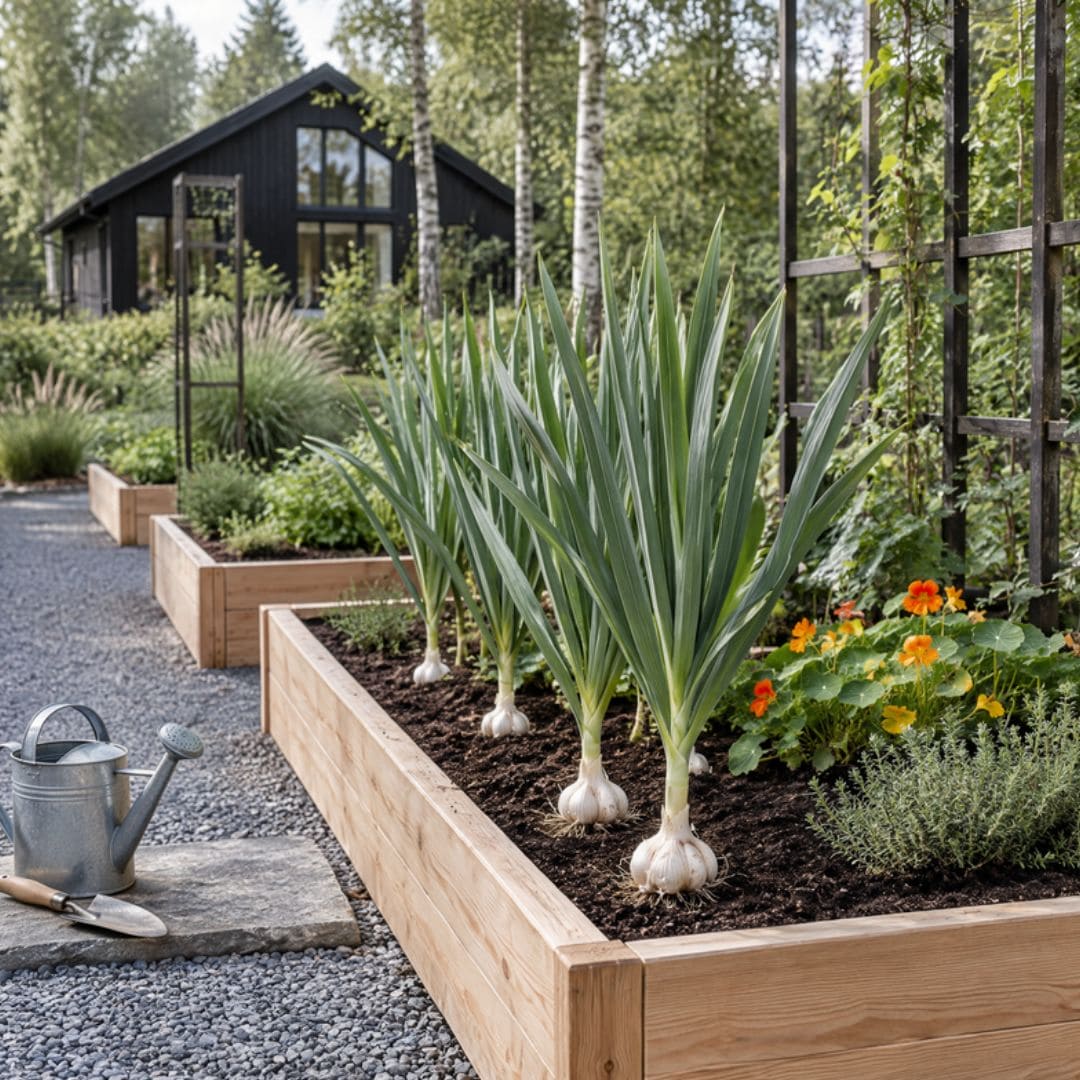
Garlic is one of the most rewarding crops in the vegetable garden because you don’t have to sow seeds. Garlic is propagated by cloves: you divide a head and plant the individual cloves in the ground in autumn. The plants overwinter outdoors and are ready for harvest the following summer.
Growing conditions
Garlic thrives best under these conditions:
- Light: plenty of sun.
- Soil: light, porous soil – avoid clayey and damp soil.
- Fertilizer: compost between the plants, 2-3 cm in April and about 1 cm in May, or organic fertilizer.
- Water: water during dry spells.
- Height: up to 30 cm.
- Hardiness: overwinters outdoors and can be grown as far north as Norway.
Garlic in a pot
If you don’t have a vegetable garden, you can easily grow garlic in a pot on the balcony. Allow a pot at least 20 cm in diameter per clove, place it in a sunny spot, and make sure the water can drain away.
How to plant and harvest garlic
Here is my method, from clove to fully dried garlic:
Total time: 9-10 months
- Prepare the soil
Choose a sunny bed with light, porous soil, and avoid clayey and damp soil. Divide the head of garlic into individual cloves just before you plant them.
- Plant the cloves
Plant the cloves pointed end up in October-November, in furrows 5-7 cm deep, with 25 cm between the rows and 12-15 cm between the cloves.
- Fertilize and water
Spread compost between the plants, 2-3 cm in April and about 1 cm in May, or use organic fertilizer. Water the plants during dry spells.
- Harvest
Harvest the garlic from mid-July, when about half of the leaves have withered.
- Dry the garlic
Dry the garlic for 3-4 weeks in an airy, dry place before putting it into storage.
Storage
Drying after harvest
Freshly harvested garlic must dry before it can keep for a long time. Let it dry for 3-4 weeks in an airy, dry place where the rain can’t reach it.
How to store garlic
Once the garlic is dry, it keeps for several months under the right conditions. My go-to rules are:
- Temperature: store dried garlic at 10-15 °C.
- Airflow: put it in wooden crates, or braid it into strings, so that air can circulate.
- Dry: keep it dry so it doesn’t get moldy.
- Garlic in oil: homemade garlic in oil must be kept in the refrigerator and used quickly because of the risk of botulism.
Season
In northern Europe, garlic is harvested from mid-July, so summer is the time for freshly harvested garlic. Dried garlic keeps for several months, and thanks to imports you can buy garlic all year round.
Try this recipe
Garlic bread is, for me, the most classic way to celebrate garlic, and in the air fryer the crust turns crisp while the garlic butter melts into the bread. Try our recipe for Quick garlic bread recipe in the air fryer – crispy baguette in 18 minutes. My own trick is to mix a couple of cloves of roasted garlic into the butter together with the raw garlic – that way you get both bite and a rounded, sweetish depth. It is also a great way to use up what is left of a whole roasted head of garlic.
Frequently asked questions
Allicin is the compound that gives fresh garlic its sharp flavor and aroma. It is only formed when the clove is crushed or cut, which is why pressed garlic tastes stronger than whole cloves.
Cut the top off the head of garlic so the cloves are exposed, drizzle with a little oil, and wrap it loosely in foil. Roast it in the air fryer until the cloves are completely soft and golden. Then they can be squeezed out of their skins and spread on bread or stirred into butter and dressing.
In northern Europe, garlic is planted in October-November, pointed end up, in furrows 5-7 cm deep. The cloves overwinter in the ground, and the garlic is harvested from mid-July, when about half of the leaves have withered.
Dried garlic keeps for several months at 10-15 °C in a dry, airy place, for example in a wooden crate or braided into strings. Homemade garlic in oil must be kept in the refrigerator and used quickly because of the risk of botulism.
Yes, garlic is toxic to both dogs and cats. So never give your pet leftovers containing garlic, such as garlic butter, garlic bread or marinated meat.
Garlic facts
| Field | Value |
|---|---|
| English name | Garlic |
| Latin name | Allium sativum L. |
| Family | Amaryllidaceae (amaryllis family) |
| Genus | Allium (onion genus) |
| Plant type | Bulb plant, propagated by cloves |
| Origin | Central Asia |
| Types | Serpent (hardneck) garlic and Chinese solo (single-clove) garlic |
| Height | Up to 30 cm |
| Hardiness | Overwinters outdoors |
| Light | Plenty of sun |
| Soil | Light and porous; avoid clayey and damp soil |
| Planting | Cloves are planted in October-November in furrows 5-7 cm deep |
| Harvest | From mid-July, when about half of the leaves have withered |
| Calories per 100 g | 106 kcal (raw) |
| Flavor | Raw: sharp and strong. Roasted: soft and sweet |
| Culinary use | Garlic butter, garlic bread, garlic dressing, aioli, tzatziki and pasta with garlic and oil |
| Storage | Dry and airy at 10-15 °C – keeps for several months |
