

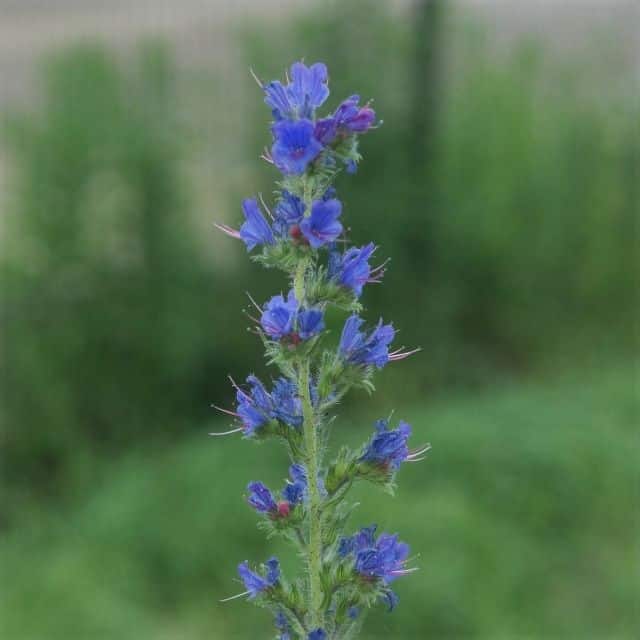
Hyssop (Hyssopus officinalis) is a perennial, aromatic herb in the mint family. It’s known for its beautiful blue-purple flowers and fragrant leaves, and originally hails from the Mediterranean region, but also thrives in Northern Europe thanks to its hardy nature.

Advertisement: The page displays ads and contains advertising links (affiliate links). See our advertisers here.
Hyssop typically grows to 30–60 cm and has narrow, lance-shaped leaves. It flowers from June to September and attracts bees and butterflies, making it an excellent plant for garden biodiversity. Beyond its aesthetic value, hyssop is both a classic monastery herb and a spice that adds a unique, slightly bitter flavor to food — an herb that particularly suits rich meat dishes.
Estimated reading time: 7 minutes
History and Origin
Hyssop has a long and rich history dating back to antiquity. The Bible mentions Hyssopus officinalis several times as a plant used in purification rituals, and the Greek physician Hippocrates recommended it for inflammatory conditions of the respiratory tract.
A Monastery Herb Through the Middle Ages
During the Middle Ages, hyssop was cultivated in monastery gardens across Europe, including Denmark. Monks and nuns used the plant for medicinal purposes and as a flavoring in liqueurs and wines, and it was attributed spiritual properties in ceremonies. In Danish folk medicine, hyssop was used to treat everything from wounds and infections to digestive issues, and it was often planted near the house to ward off illness and bring luck to the home.
Taste and Aroma
Hyssop’s flavor is distinct and slightly bitter, with an aromatic, spicy character. It’s often described as a blend of mint and sage with a hint of camphor and anise. This bitterness is precisely the herb’s strength in the kitchen: it cuts through fat, making it especially good with rich, fatty meat dishes.
Because the flavor is strong, hyssop should be used sparingly — a small amount can quickly dominate a dish. Start with a little and adjust to taste. The aroma is present both in the fresh leaves and in the blue-purple flowers, which can also be used as an edible garnish.
Culinary Use
Hyssop is a versatile herb that can enrich many dishes with its unique flavor. It works best where its bitterness is balanced by fat, acidity, or sweetness.
In Northern European Cooking
Here in Northern Europe, hyssop works well in soups and stews, where fresh or dried leaves add depth of flavor. It’s also used in marinades for meat — especially lamb and poultry — and finely chopped leaves can add a fresh, spicy touch to green salads. Hyssop tea was traditionally drunk as a natural remedy for colds.
Internationally
In Mediterranean cuisine, hyssop is used in spiced meat dishes, and it’s a classic ingredient in herbal liqueurs, where its bitter note contributes to the complex flavor. Historically, hyssop has therefore been just as much at home in the liqueur cellar as in the kitchen.
How to Use Hyssop
- Soups and stews: add fresh or dried leaves for depth
- Marinades: use hyssop for lamb, duck, goose, and other rich meats
- Salads: finely chopped leaves add a spicy touch
- Herb oils and vinegars: infuse hyssop for aromatic dressings
- Baked goods: in some traditional recipes, hyssop flavors bread and cakes
Health Benefits
Beyond its culinary value, hyssop has traditionally been used for its properties. The plant contains, among other things, tannins, flavonoids, and essential oils. The following is general knowledge about the herb’s traditional use and not health advice.
Traditional Use
- Respiratory tract: hyssop was used as an expectorant for coughs and bronchitis
- Digestion: the bitter herb was used to stimulate digestion and relieve bloating
- Antioxidants: hyssop contains antioxidants that fight free radicals
- Aromatherapy: hyssop oil is traditionally used to relieve stress
Safety and Precautions
Leaves and flowers are used in small culinary amounts without issue. However, larger amounts of essential oil or concentrated extracts should be avoided. Pregnant women and people with seizure or epilepsy conditions should exercise particular caution and consult a healthcare professional before use as a supplement.
Growing
Hyssop is a rewarding and relatively easy plant to grow in a Northern European garden. It’s a perennial, semi-hardy herb that thrives in full sun and well-drained, preferably chalky soil. It tolerates drought well and rewards you with blue flowers that bees love.
Growing Conditions
- Light: prefers full sun, but tolerates light shade
- Soil: well-drained, preferably sandy or chalky; does not tolerate waterlogged soil
- pH: thrives best in neutral to slightly alkaline soil (pH 7–8)
- Watering: moderate — hyssop is drought-tolerant and doesn’t need frequent watering
How to Grow Hyssop
Total time: The whole growing season
- Starting Seeds Indoors
Start indoors in March–April at around 18–22°C. Cover the seeds very lightly, as they’re small. Germination time is 14–21 days. Keep the soil evenly, lightly moist — not wet.
- Pricking Out
When the seedlings have 2–3 leaves, prick them out into small pots with airy, well-drained soil. Give plenty of light and moderate watering.
- Hardening Off
Harden off the plants over 5–7 days: place them in a sheltered spot during the day, gradually increasing the time outdoors.
- Planting Out
Plant out after the last night frost (typically mid/late May) in full sun. Soil: light, well-drained and preferably chalky or sandy. Spacing 30–40 cm.
- Watering and Feeding
Water evenly during the establishment phase, then sparingly — overwatering results in leggy plants. Apply only light organic fertilizer, as overly nutrient-rich soil weakens flavor and winter hardiness.
- Pruning and Maintenance
Trim lightly after the first flowering to encourage new growth and a dense mound. Hard pruning is best done in early spring. Remove dead, spent wood.
Hyssop can also be grown in pots, making it well-suited for balconies and terraces. The seeds can be sown indoors in early spring or directly in the ground after the last frost.
Storage
To get the most out of hyssop, it’s important to harvest and store it properly. Harvest just before or during flowering for maximum flavor and aroma, and cut the top 15–20 cm of the plant — this also encourages new growth. You can harvest several times throughout the season, as the plant regenerates quickly.
Drying and Freezing
- Drying: tie small bunches and hang them upside down in a dry, dark place with good ventilation
- Storage: keep the fully dried leaves in airtight containers away from direct sunlight
- Freezing: fresh leaves can be frozen — finely chop them and freeze in small portions, optionally in ice cube trays with water
Dried hyssop retains its properties for up to a year and gives you access to the herb all year round.
Try This Recipe
Hyssop’s warm, slightly bitter, mint-/sage-like note is made for marinated meat, where it cuts through and lifts the flavor. Try a pinch of finely chopped hyssop in the marinade for our Souvlaki in the Air Fryer – Juicy Greek Chicken Skewers with Crispy Edges, where the herb pairs beautifully with garlic, lemon, and oregano in this classic Mediterranean skewer.
Equipment and Products
For centuries, hyssop has been a classic monastery herb in herbal liqueurs, and its bitter-spicy character pairs beautifully with honey. Our Bornholmer Honningsyp 32% – 35 cl captures that same sweet-spicy balance and makes cozy company for an evening of rich meat dishes where hyssop takes center stage.
Frequently Asked Questions
Yes, hyssop is typically hardy outdoors in well-drained soil. It handles winter best in dry, sunny locations. In heavy, wet soils, it can die off.
Trim lightly for shape after flowering and again in early spring for compact growth. Avoid cutting all the way into old, hard wood — always leave some green growth.
Easiest from seed (pre-sprouting) or by dividing older clumps in spring or autumn. Semi-ripe cuttings taken during summer also root well in airy soil.
Leaves and flowers are used in small culinary amounts (herbal tea, seasoning). Avoid larger amounts of essential oil or extracts; pregnant women and people with seizure or epilepsy conditions should exercise caution and consult a healthcare professional.
Hyssop’s bitter, slightly minty and sage-like flavor particularly suits rich meat dishes like lamb, duck, and goose, as well as hearty soups and stews. Use it sparingly so it doesn’t dominate, and add it early enough for the aroma to come through.
Facts About Hyssop
| Field | Value |
|---|---|
| English name | Hyssop |
| Latin name | Hyssopus officinalis |
| Family | Mint family (Lamiaceae) |
| Plant type | Perennial semi-shrub (dwarf shrub) |
| Height | 40–60 cm (up to approx. 80 cm) |
| Hardiness | Usually hardy in Northern Europe in well-drained soil |
| Light | Full sun |
| Soil | Light, chalky and well-drained (drought-tolerant) |
| Sowing/planting | Pre-sprouting March–April; planting out after frost |
| Flowering | June–September |
| Harvest | Top shoots/leaves from June; cut before full bloom for strong aroma |
| Flavor | Aromatic, slightly bitter, spicy with notes of mint, sage and camphor |
| Culinary use | Herbal tea, rich meat dishes, soups, liqueur; use sparingly |
| Storage | Dry small bundles in a dark, airy place; freeze finely chopped in small portions |
