

Kale is one of the oldest cultivated leafy vegetables and belongs to the cabbage family Brassicaceae. It doesn’t form a head like other cabbage types, but consists of long stems with curly or flat leaves. The flavor is slightly bitter and earthy, but becomes noticeably sweeter after frost.

Advertisement: The page displays ads and contains advertising links (affiliate links). See our advertisers here.
In Denmark, kale is the very embodiment of winter greens – from the classic grønlangkål (Danish creamed kale) to modern salads and crispy kale chips. The hardy plant withstands both cold and snow and can be harvested fresh from the garden all winter.
Estimated reading time: 5 minutes
- What is kale?
- History and origin
- Flavor and texture
- Culinary uses
- Preparation and cooking
- Health benefits
- Growing in Denmark
- How to make kale chips in the air fryer
- Harvesting and storage
- Flavor and pairings
- Look-alikes and quality
- Sustainability
- Conclusion
- Try this recipe
- Equipment and products
- Frequently asked questions
- Facts about kale
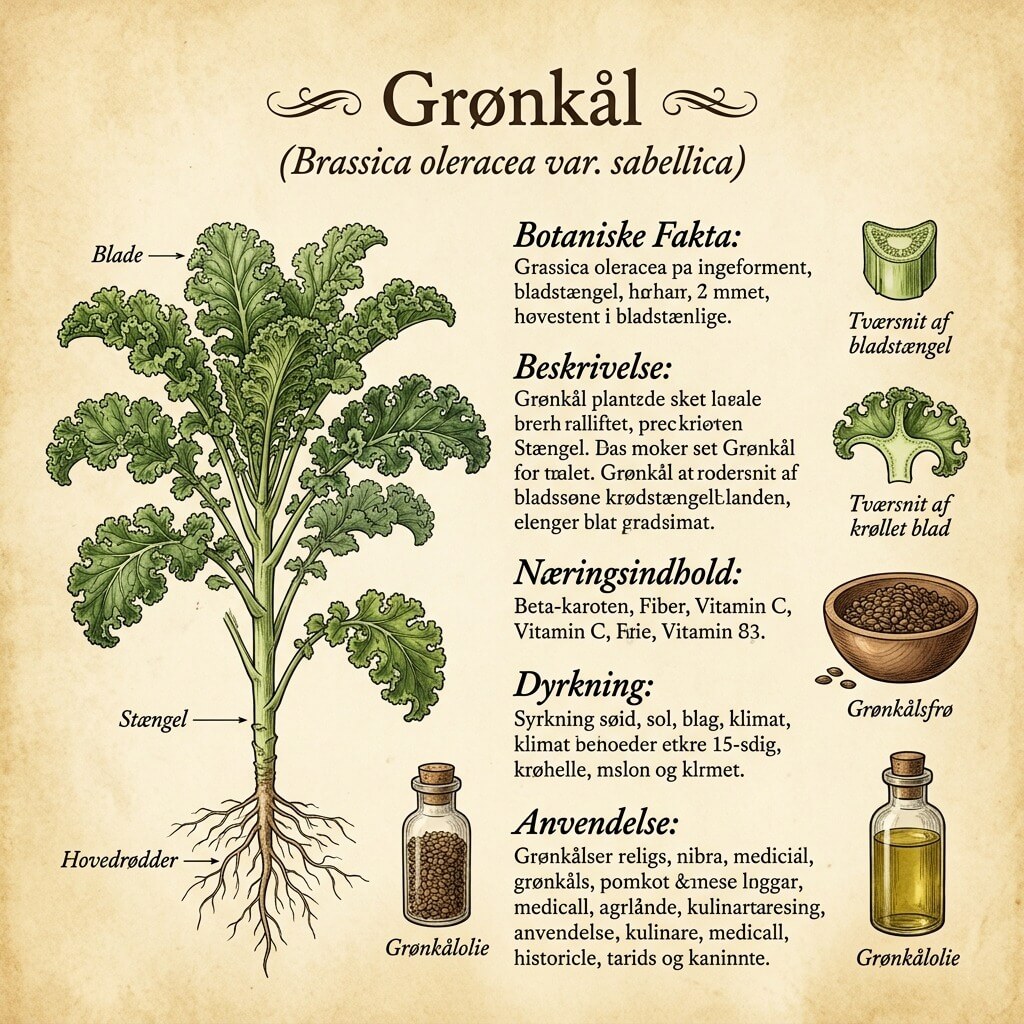
What is kale?
Kale (Brassica oleracea var. sabellica) belongs to the acephala group – cabbage without a head – and is grown exclusively for its leaves. The plant is actually biennial, but is used as an annual vegetable. It is hardy, frost-tolerant and can produce fresh leaves over a long period:
- Curly leaves (curly kale) – the classic Danish type
- Smooth, dark leaves (lacinato or Tuscan kale)
- Red and purple varieties with a milder flavor
History and origin
Kale has been cultivated for over 2,000 years and originates from the Mediterranean region, where both the Greeks and Romans knew it. It spread throughout Europe in the Middle Ages and was, for centuries, one of the most important winter vegetables in Northern Europe because it could be harvested fresh when everything else had frozen solid.
In the Danish kitchen, kale holds a special place during the Christmas season, where grønlangkål (creamed kale) with hamburgerryg (a Danish smoked, cured pork loin) or roast pork belongs to the enduring classics. In recent years, kale has experienced a renaissance as a superfood in salads, smoothies and crispy chips.
Flavor and texture
Kale has a robust structure and a slightly bitter flavor that becomes milder and sweeter after frost, because the cold converts the starch in the leaves into sugar:
- Earthy and slightly nutty flavor
- Tough and fibrous texture that withstands both heat and massaging
- Becomes sweeter and more delicate after cold
Culinary uses
Salads and raw preparations
Young, fresh leaves can be eaten raw. Massage the leaves with oil and lemon for a couple of minutes – this breaks down the tough fibers and makes the salad tender and delicate. Kale salad with pomegranate, apple and toasted nuts is a modern winter classic.
Hot dishes
- Grønlangkål (creamed kale): The Danish Christmas classic with hamburgerryg
- Soups: E.g. Portuguese caldo verde and Italian ribollita
- Sautéing: With garlic, chili and good olive oil
- Egg dishes: Omelet, frittata and quiches
Chips, smoothies and fermentation
Crispy kale chips from the air fryer are a healthy snack that’s ready in just a few minutes. The leaves can also be blended into green smoothies with fruit or fermented like kimchi and sauerkraut.
Preparation and cooking
- Wash: Rinse the leaves thoroughly – curly leaves easily trap soil
- Remove the ribs: The thick center ribs are tough and bitter
- Cut: Tear or cut the leaves into bite-sized pieces
- Cooking: Steam, sauté or blanch briefly – long cooking times ruin both flavor and nutrients
Health benefits
Kale is among the most nutrient-dense vegetables of all and contains only around 40 calories per 100 grams:
- Vitamin C – more than in oranges, weight for weight
- Vitamin K – important for blood and bones
- Beta-carotene – converted into vitamin A
- Calcium and iron – bones and blood
- Fiber and plant-based omega-3
It supports the immune system, bones and digestion. However, people on blood-thinning medication should be aware of the high vitamin K content and keep their intake consistent.
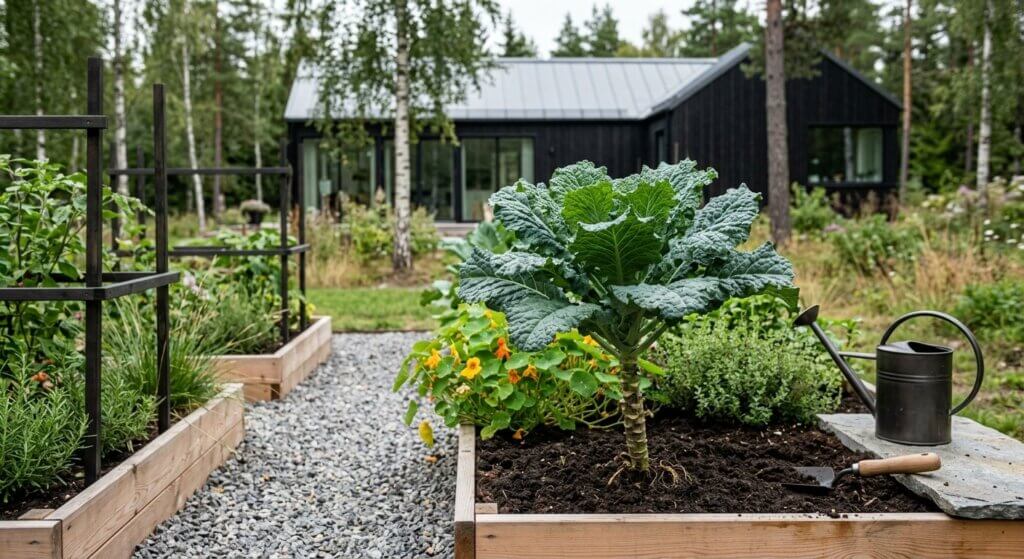
Growing in Denmark
How to grow kale
- Choose a variety (curly, lacinato, red)
- Sow seeds from April or July
- Plant with 45–60 cm spacing
- Water and fertilize regularly
- Use insect netting against cabbage white butterflies and other pests
- Harvest the outer leaves continuously
Growing conditions
- Light: Full sun to partial shade
- Temperature: 10–20 degrees – tolerates frost down to minus 15
- Soil: Nutrient-rich and well-drained
- Water: Evenly moist soil
How to make kale chips in the air fryer
Total time: 15 minutes
- Prepare the leaves
Rinse the leaves, dry them COMPLETELY, remove the tough center ribs and tear the leaves into bite-sized pieces.
- Toss with oil
Toss the leaves with a tablespoon of olive oil and massage the oil in so all the leaves are lightly coated.
- Bake in the air fryer
Bake the chips at 150-160 degrees for 5-7 minutes, shaking the basket occasionally so they crisp up evenly.
- Season and serve
Sprinkle with flaky salt immediately after, and serve right away – the chips lose their crispness after a few hours.
Harvesting and storage
- Harvest the outer leaves first – this way the plant continues to produce
- Store the leaves in the refrigerator for 5–7 days in a loose bag
- Freeze kale after a brief blanching – it will then keep for a year
Flavor and pairings
- Citrus: lemon and orange
- Fat: bacon, cheese and good olive oil
- Nuts: almonds and walnuts
- Fruit: apples and pomegranate
- Spices: garlic, chili and nutmeg
Look-alikes and quality
Kale can be confused with Tuscan kale and savoy cabbage, both close relatives. Choose fresh, crisp leaves with a deep green color, free of yellow edges or discoloration – limp leaves are a sign the kale has been sitting too long.
Sustainability
Kale is a hardy and eco-friendly crop that requires relatively little water and can be grown in cold climates without heated greenhouses. As a Danish outdoor winter vegetable, it’s one of the most climate-friendly green choices there is.
Conclusion
Kale is a versatile and nutrient-rich vegetable that unites Danish food tradition with the modern kitchen. It’s easy to grow, withstands frost and can be used in everything from Christmas classics and soups to salads and crispy chips – all year round, but best of all in winter, once the frost has sweetened the leaves.
Try this recipe
A kale salad only truly becomes festive with a crispy topping. Try our Parmesan chips in the air fryer – crispy, golden and ready in 6 minutes as a salty, crunchy companion to the green leaves.
Equipment and products
If the kale needs massaging tender for a salad, a citrus oil does half the work. Try our Extra Virgin Olive Oil with Lemon La Chinata – oil and lemon in one bottle.
Frequently asked questions
Yes, especially the young leaves. Massage them with oil and lemon for a couple of minutes so the fibers break down and the texture becomes tender.
The cold causes the plant to convert starch into sugar, which acts as a natural antifreeze in the leaves.
Yes, after a brief blanching, kale will keep in the freezer for up to a year.
Yes, kale is among the most nutrient-dense vegetables, packed with vitamin C, K, beta-carotene, calcium and fiber.
Danish kale is in season from October to February and tastes best once it has been through a frost.
Facts about kale
| Field | Description |
|---|---|
| Danish name | Grønkål |
| Latin name | Brassica oleracea var. sabellica |
| Family | Brassicaceae |
| Plant type | Biennial leaf vegetable |
| Height | 30–90 cm |
| Light | Sun to partial shade |
| Soil | Nutrient-rich and well-drained |
| Sowing | Spring or late summer |
| Harvest | Summer to winter |
| Flavor | Slightly bitter, sweet after frost |
| Calories | About 40 kcal per 100 g |
| Uses | Salads, soups, grønlangkål, chips |
| Storage | Refrigerator or freezing |
