

Kidney beans are a popular type of dried bean, known for their characteristic kidney shape and dark red color. They belong to the species Phaseolus vulgaris, like many other garden beans, and are grown mainly for their dried seeds, which are used in a wealth of dishes around the world. Kidney beans have a firm, meaty texture, a mild, slightly sweet flavor, and hold their shape well during cooking, which makes them ideal for casseroles and baked dishes, soups and salads. They are sold both dried and canned, and they are an important source of plant protein, dietary fiber and micronutrients.

Advertisement: The page displays ads and contains advertising links (affiliate links). See our advertisers here.
Estimated reading time: 16 minutes
- Introduction to Kidney Beans
- Culinary Uses
- Preparation and Cooking
- Nutrition and Health Aspects
- Traditional and Modern Use
- Growing and Harvesting in Denmark
- Growing Conditions
- Harvest and Storage
- Flavor and Good Pairings
- Look-Alikes and Quality
- Sustainability and Biodiversity
- Try This Recipe
- Equipment and Products
- Frequently Asked Questions
- Conclusion
- Facts About Kidney Beans
Introduction to Kidney Beans
What Are Kidney Beans?
Kidney beans belong to the species commonly known as the common bean, Phaseolus vulgaris. There are several varieties under this name, but kidney beans are easily recognized by their large, kidney-shaped seeds. The best-known colors are dark red (often called “red kidney beans”) and light red or pink (“light red kidney beans”), but white forms also exist, which technically fall under the same species, such as cannellini beans. Kidney beans rank high on the list of dried beans grown and eaten worldwide, and they are especially popular in American chili dishes, Indian curries and Caribbean rice-and-beans dishes.

History and Origin
Common beans were first domesticated more than 8,000 years ago in Mesoamerica. Research suggests that the species originates from areas in what is now Mexico and Central America, where indigenous peoples bred wild-growing beans into the cultivated varieties we know today. From Mesoamerica the beans spread to South America and northward, and after Europeans arrived in the Americas, they quickly spread to Europe, Africa and Asia via trade routes. In the US, kidney beans became especially widespread in Louisiana and the Caribbean through Creole and Cajun cuisine, where “red beans and rice” is a classic. In India, kidney beans – known as “rajma” – form the foundation of a creamy, spiced curry. As a result, kidney beans have achieved status as an important protein source across continents and cultures.
Flavor and Texture
Kidney beans are especially valued for their firm, meaty texture. When properly cooked, they have a soft but firm interior and a thin skin that does not fall apart. The flavor is mild with a slightly sweet, nutty note, and they absorb flavor from sauces, spices and aromatic ingredients. This combination of firmness and flavor neutrality makes kidney beans suited both to heavily spiced dishes, where they help add heartiness, and to mild salads, where they contribute a creamy element.
Culinary Uses
Kidney beans are an indispensable ingredient in many dishes, where they add both protein and a satisfying texture. Here are some ideas for how you can use kidney beans in cooking:
- For chili con carne or vegetarian chili, where the beans form the main filling together with ground meat or vegetables.
- In Indian dishes like rajma or dal makhani, where they are cooked until tender and simmered in a spiced tomato sauce with ginger, garlic, cumin and garam masala.
- As a filling in Caribbean dishes like “rice and peas” or in the classic “red beans and rice” from Louisiana’s Creole cuisine.
- As part of Mexican dishes, such as bean filling in tortillas, burritos or enchiladas.
- In salads – especially hearty salads with corn, tomatoes, red onion, cilantro and lime, where they add color and heartiness.
- Blended into a creamy bean spread or “bean hummus” with garlic, lemon juice and olive oil.
- In vegetarian patties and meatballs, where they are mashed and mixed with spices, onion and flour to hold their shape.
- In soups and stews like minestrone or tomato-based winter stews, where they add depth and heartiness.
Preparation and Cooking
It is important to prepare kidney beans correctly before eating them. Raw or undercooked kidney beans contain high levels of the lectin phytohaemagglutinin (PHA), which can cause severe stomach problems. According to food safety and university sources, raw red kidney beans contain between 20,000 and 70,000 hemagglutinating units (HAU), while white kidney beans have about a third of that level. Four to five poorly cooked beans can trigger severe vomiting and diarrhea, but proper soaking and cooking removes almost all toxins. Follow this method so the beans become both safe and tender:
Total time: about 1-2 hours plus soaking
- Sort and rinse
Sort the beans, discard discolored beans and small stones, and rinse them thoroughly in cold water.
- Soak
Place the beans in a large bowl and cover with plenty of cold water (at least 3 times the beans’ volume). Let them soak for 8-12 hours or overnight.
- Discard the soaking water
Drain off the soaking water and rinse the beans again. The water contains dissolved lectins and antinutrients and should always be discarded.
- Boil vigorously for at least 10 minutes
Put the beans in fresh water, bring to a boil and let them boil vigorously for at least 10 minutes. This high temperature deactivates the toxic lectin phytohaemagglutinin (PHA) – never skip this step, and do not use a slow cooker alone for raw kidney beans.
- Simmer until tender
Reduce to a simmer and continue cooking for 45-90 minutes, until the beans are completely tender. Add salt during the last 10-15 minutes, so the skins stay tender. In a pressure cooker it takes about 20-30 minutes.
Once the beans are cooked, you can use them right away or freeze them in portions. Alternatively, you can buy canned kidney beans. They are pre-cooked and ready to use after draining and rinsing, but it can be a good idea to rinse canned beans to remove some of the sodium they are preserved in.
Nutrition and Health Aspects
Kidney beans are nutrient-dense and provide protein, carbohydrates, dietary fiber, vitamins and minerals – all for few calories. According to a nutrition table, 100 grams of cooked kidney beans contain about 127 calories, 8.7 g protein, 22.8 g carbohydrates, 0.3 g sugar, 6.4 g dietary fiber and 0.5 g fat. The fiber content consists of both soluble and insoluble fiber as well as resistant starch, which slows the digestion of carbohydrates and gives a low glycemic index. This makes the beans a good choice for people who want to stabilize their blood sugar.
Kidney beans are also a good source of micronutrients. They contain, among other things, molybdenum, folate (B9), iron, copper, manganese, potassium and vitamin K1. The beans’ plant sterols and soluble fiber can have a positive effect on cholesterol levels and support the cardiovascular system. The high content of antioxidants, including flavonoids and anthocyanins, gives them a deep red color and can help reduce oxidative damage in the body.
Despite the many benefits, kidney beans also contain antinutrients, such as phytic acid and lectins, which can inhibit the absorption of minerals and cause stomach problems if the beans are eaten raw or undercooked. Proper soaking and cooking reduces these compounds to harmless levels. People with a sensitive stomach or irritable bowel syndrome may experience bloating, but this can often be reduced by changing the soaking water and cooking the beans thoroughly.
Traditional and Modern Use
Kidney beans play a central role in many traditional cuisines. In South and Central America, they are used together with rice as the basis of everyday dishes. In Jamaica, a variant of kidney beans known as “gungo peas” is used in dishes like “rice and peas”. In Creole Louisiana cuisine, they form the backbone of the dish “red beans and rice” together with smoked sausage or ham. In India, rajma masala is a beloved vegetarian curry, where kidney beans simmer in a spiced tomato sauce and are served with rice or naan bread. In Europe and the US, they are especially used in chili con carne and chili sin carne, where they are combined with ground meat, tomatoes, onion, garlic, chili and cumin.
In modern cooking, kidney beans have found their way into many new uses. They are used in bean desserts like brownies and cookies, where they are mashed to add moistness and fiber. In plant-based cuisine, they replace meat in burger patties and meatballs, and in salads they add protein and color. Aquafaba – the cooking liquid from beans – is used as an egg substitute in vegan baking and desserts. Kidney beans are also available canned, which makes them easy to use in quick everyday dishes.
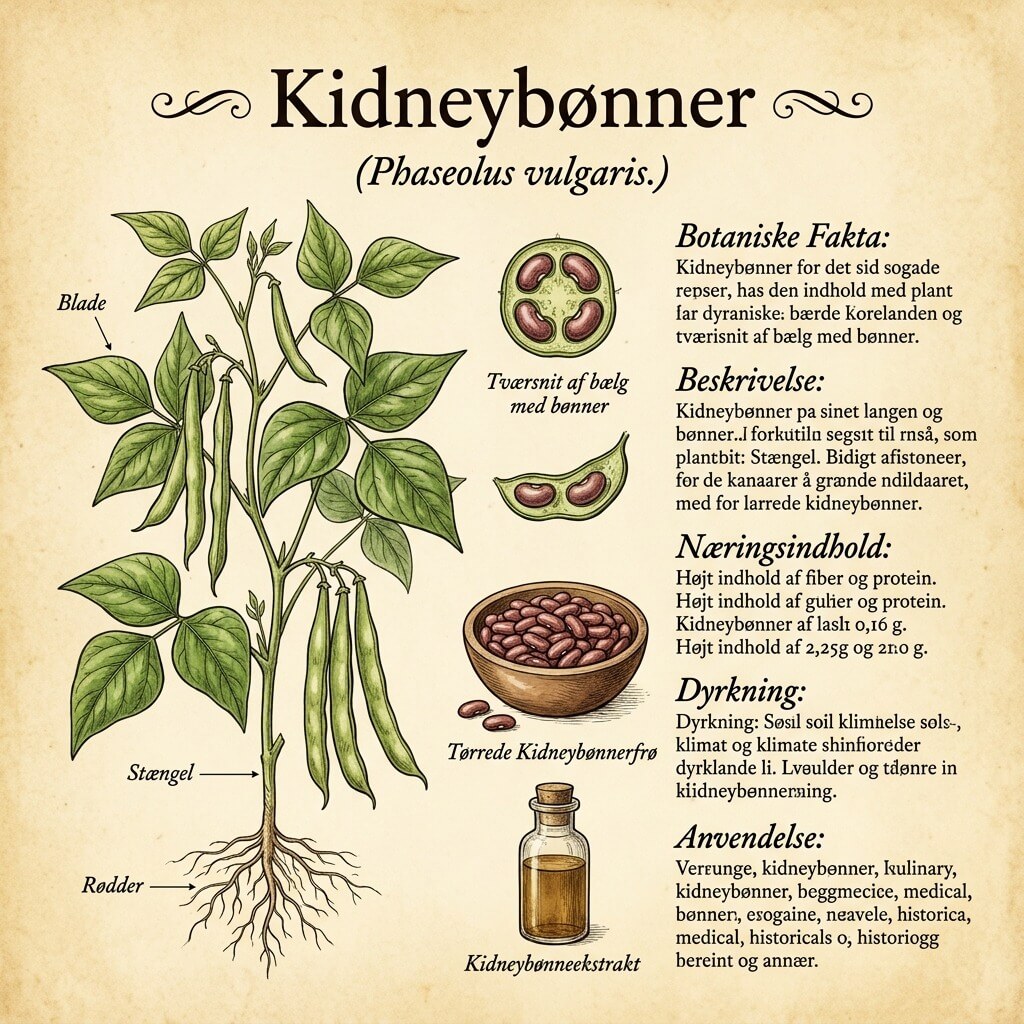
Growing and Harvesting in Denmark
Kidney beans can be grown in Danish kitchen gardens, but since they are heat-loving, they require a warm and sunny growing season. They are grown as annual summer beans and thrive best in well-drained soil with sun all day. The following step-by-step guide is based on guidance from university extension services describing how to grow dry beans:
- Prepare the soil: Choose a sunny planting spot with well-drained, humus-rich soil. Avoid low-lying areas where water can pool and make the roots cold and wet. Add compost or well-rotted manure before sowing.
- Sowing time: Beans need warm soil to germinate. According to Washington State University, dry beans should be sown between May 15 and June 1, when the soil temperature is above 15 °C (60 °F) and there is no longer a risk of frost. Do not plant beans if the soil temperature is below 10 °C (50 °F), as this inhibits germination and increases the risk of rot.
- Inoculation and fertilizing: Beans live in symbiosis with nitrogen-fixing bacteria (Rhizobium). If your soil is not naturally rich in these bacteria, you can buy an inoculant and roll the seeds in it before sowing. Avoid too much nitrogen fertilizer – it inhibits the root nodule bacteria and produces lush foliage at the expense of beans.
- Sowing: Sow kidney beans directly outdoors. Place the seeds 3-5 cm deep and 5-8 cm apart within the row; rows should be 50-70 cm apart. Bush varieties do not need support, but if you choose a climbing kidney bean variety, you will need to give it a trellis to climb.
- Watering: Keep the soil evenly moist, especially during germination, flowering and pod formation. Too much or too little water can cause flowers and pods to drop. Water at the base of the plant to avoid fungal disease.
- Weeding and mulching: Weed thoroughly in the first few weeks; beans have shallow roots and are easily outcompeted. After the first weeding, you can add a layer of straw, grass clippings or leaves to retain moisture and suppress weeds.
- Harvest: Kidney beans are typically grown for dry seeds. Let the pods stay on the plant until they become papery and turn yellow-brown. This typically takes 90-120 days after sowing. When the pods rattle and the seeds are hard, you can cut the plant at ground level and dry it in a warm, airy spot before threshing the beans out of the pods.
Growing Conditions
- Light: Kidney beans require full sun (at least 6-8 hours daily) to develop strong plants and fully developed seeds.
- Soil: They thrive in light to medium, well-drained soil with a pH level around 6.0-7.0. Too much clay soil can lead to waterlogged conditions, which increase the risk of fungal diseases.
- Temperature: Germination works best at soil temperatures above 15 °C; warm daytime temperatures between 20-30 °C give optimal growth. Beans cannot tolerate frost.
- Height: Bush types typically grow 40-60 cm tall; climbing types can reach 1-2 meters with support.
- Watering: Even moisture is important; avoid waterlogging and ensure good drainage.
Harvest and Storage
Kidney beans can be eaten fresh, but most varieties are grown for dried beans. Once the pods have dried on the plant, the plants are cut or pulled up, and the pods are further dried until the seeds are hard and the shells can be easily broken. After threshing, the beans should be dried for a few more days so they are completely dry. Store the dried beans in airtight containers in a cool, dark place; properly stored beans can keep for at least a year.
Cooked kidney beans can be stored in the refrigerator for 3-4 days in their cooking liquid or frozen in portions for up to 3 months. Canned beans that are not eaten right away should be poured into a sealed container and stored in the refrigerator, where they will keep for a few days.
Flavor and Good Pairings
Kidney beans have a robust texture and a mild flavor that pairs well with a range of ingredients:
- Spices and herbs: Cumin, paprika, chili, cilantro, thyme, rosemary, bay leaf and oregano.
- Aromatics: Onion, garlic, ginger, celery and carrots, which form the base for stews.
- Tomato: Kidney beans absorb tomato sauce and work well in dishes with chopped tomatoes or tomato purée.
- Vegetables: Corn, bell peppers, squash, spinach, cabbage and green beans.
- Grains and legumes: Rice, quinoa, barley, bulgur or other beans and lentils in mixed dishes.
- Meat and fish: Beef (as in chili con carne), lamb, pork, smoked sausage, and fish like cod in stews.
- Fresh elements: Lemon juice, lime, fresh chili, fresh herbs and olive oil to finish hot dishes or salads.
Look-Alikes and Quality
Kidney beans can be confused with other red bean types such as small red beans (which are smaller and rounder) or adzuki beans. Cannellini beans and other white beans have a similar appearance, but they are pale and have a more delicate flavor. When buying dried kidney beans, make sure the beans are whole, clean and uniform in size and color. Avoid bags with cracked or shriveled beans, as well as beans with discoloration or insect damage. Canned beans should be intact and free of dents, and the contents should look fresh when you open the can.
Sustainability and Biodiversity
Like other beans, kidney beans fix nitrogen. They form nodules on their roots in partnership with Rhizobium bacteria, which convert atmospheric nitrogen into a form the plant can use. This means beans improve soil fertility and reduce the need for artificial fertilizer. Once the plants are done, the root system can remain in the soil and contribute to next year’s nutrition. Growing different types of beans – kidney beans, white beans, black beans and borlotti – increases biodiversity in the kitchen garden and can make crops more resilient to disease and climate change.
Try This Recipe
Kidney beans are at the heart of Mexican cuisine, where they meet corn, chili and melted cheese. Get that same hearty, spicy vibe from your airfryer with our Nachos in the Airfryer – top them with kidney beans for an extra filling, protein-rich topping.
Equipment and Products
A bold chili sauce elevates chili con carne and bean stews with smoke, acidity and punch. Give your kidney bean dishes a kick with Flying Goose Sriracha Tamarind Black Chilisauce 455 ml.
Frequently Asked Questions
Yes. Dried kidney beans should be soaked for 8-12 hours. Soaking shortens the cooking time, improves digestibility and helps remove antinutrients.
Yes. Raw or undercooked kidney beans contain high concentrations of the lectin phytohaemagglutinin (PHA). Even a few undercooked beans can cause stomach cramps, vomiting and diarrhea. Boil them vigorously for at least 10 minutes to make them safe.
Dark red beans have a more intense color and a slightly more robust flavor than the light red ones, but they are cooked and used the same way. Nutritional content and texture are largely identical.
From sowing to harvesting dried beans typically takes 90-120 days. In Denmark, they should be sown in May or early June to have time to dry before the autumn rains.
Yes. The high protein and fiber content increases satiety and helps stabilize blood sugar. With low fat content and moderate calories, they fit well into a varied, weight-conscious diet.
Conclusion
Kidney beans are one of the most versatile and nutritious legumes in the world. With their characteristic shape, firm texture and mild flavor, they have found their way into kitchens across continents – from spicy Indian curries and Mexican burritos to the American classic chili con carne. They are inexpensive, easy to store and rich in protein, fiber, vitamins and minerals. At the same time, they are sustainable to grow, because they can fix nitrogen and thereby improve soil fertility. With proper soaking and cooking, the natural antinutrients are eliminated, and you can safely enjoy kidney beans as part of a healthy and varied diet. Whether you grow them in your own garden or buy them dried or canned, kidney beans can add flavor, nutrition and heartiness to your dishes.
Facts About Kidney Beans
| Field | Description |
|---|---|
| English name | Kidney Beans |
| Latin name | Phaseolus vulgaris |
| Family | Legume family (Fabaceae) |
| Plant type | Annual bush bean (climbing types also exist) |
| Height | Bush types: about 40-60 cm; climbing types: up to 1-2 m |
| Hardiness | Not frost-tolerant; grown only in warm months |
| Light | Full sun (min. 6-8 hours daily) |
| Soil | Light to medium-heavy, well-drained soil, pH 6-7 |
| Sowing/planting | Sow outdoors when soil temperature is above 15 °C (May-June) |
| Flowering/Harvest | Flowering mid-summer; harvest of dried beans 90-120 days after sowing |
| Flavor | Mild, slightly sweet, firm and meaty |
| Culinary use | Chili, curries, stews, salads, spreads, vegetarian patties |
| Storage | Dried beans in an airtight container in a dry, dark place; cooked beans in the fridge or freezer |
| Soaking time (legumes) | 8-12 hours in cold water |
| Cooking time (legumes) | At least 10 min vigorous boiling, then 45-90 min simmering; pressure cooker 20-30 min |
