

Lapsang Souchong tea is one of the most unique and recognizable black teas in the world, known for its distinctive smoky flavor. The tea originates from the Fujian province in China and stands out from other black teas because of its special production process, in which the tea leaves are roasted over pine-wood fires.

Advertisement: The page displays ads and contains advertising links (affiliate links). See our advertisers here.
This method gives Lapsang Souchong its powerful, smoky flavor and makes it a favorite among tea lovers seeking an unconventional and intense tea experience.
Estimated reading time: 4 minutes
History and Origin
Lapsang Souchong is considered one of the world’s oldest black teas and originates from the Wuyi Mountains in the Fujian province in southeastern China. According to tradition, the smoking method arose in the 1600s, when tea farmers had to dry their leaves in a hurry over pine-wood fires – and discovered that the smoky tea became a hit with European merchants. The method has been used ever since, and the name Souchong refers to the larger, coarser tea leaves traditionally used.
Flavor and Aroma
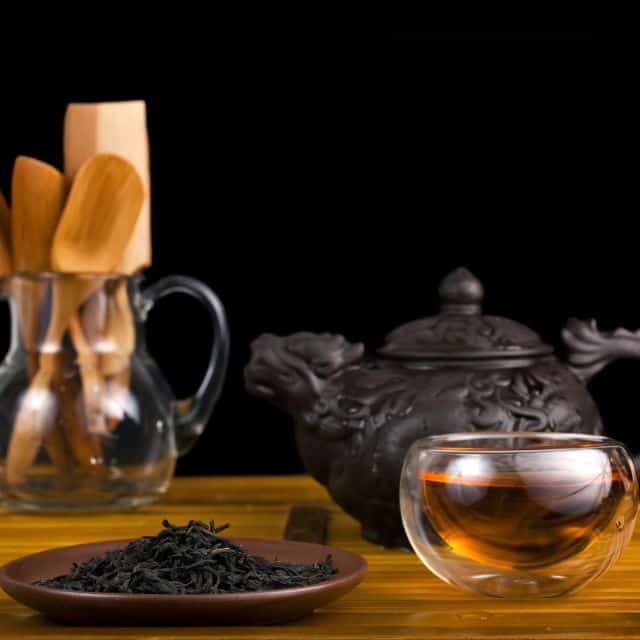
What makes Lapsang Souchong so unique is its deep, dark color and powerful, smoky flavor, reminiscent of a campfire or peat. This flavor is a direct result of the traditional production method, in which the fresh tea leaves are roasted and dried over open pine-wood fires. The process infuses the leaves with a smoky aroma that is both intense and complex.
The tea can be enjoyed on its own to experience its full flavor profile. The smoky taste is powerful yet balanced, making it a soothing drink, especially during the cold winter months. For many tea lovers, Lapsang Souchong is a tea best enjoyed slowly, so every sip can be fully appreciated.
Culinary Uses
In Cooking
Besides being enjoyed as a hot drink, Lapsang Souchong has also found its place in cooking. Its powerful smoky flavor makes it a fantastic ingredient in marinades for meat, especially in dishes that benefit from a smoky undertone – think slow-cooked beef, ribs and pulled pork. It can also be used in soups and stews to add depth and complexity.
In Cocktails
In cocktails, Lapsang Souchong can add a unique smoky note that complements spirits like whisky or bourbon. This use has made the tea popular among mixologists looking to create drinks with an unexpected twist.
A Tea for the Adventurous
Lapsang Souchong is not a tea for everyone; its smoky character can be intense and requires an openness to more unusual flavor experiences. But for those seeking something beyond the ordinary, this tea offers a truly unique experience that few other teas can match.
It is especially popular during the cold months, when its warm and smoky flavor can be incredibly comforting. The tea is also ideal for those who want to explore new flavor nuances and expand their tea repertoire with something truly different.
Health Benefits
Behind the smoky facade, Lapsang Souchong is a completely ordinary black tea with the same beneficial compounds:
- Antioxidants, especially flavonoids, which can help protect the body against free radicals
- A moderate caffeine content that provides a steady energy boost – typically a bit lower than in strong morning teas like Assam
- L-theanine, an amino acid with a calming effect that pairs well with the tea’s warm, smoky character
How to Brew Lapsang Souchong
Total time: 5-8 minutes
- Boil and cool the water
Use freshly boiled water that has cooled to around 90-95 degrees.
- Measure the tea leaves
Use about 2-3 grams of tea leaves per 200 ml of water. If you’re new to smoked tea, start on the lower end.
- Let the tea steep
Let the tea steep for 2-4 minutes. The smoky flavor develops quickly, so taste as you go, and remove the leaves before the tea becomes bitter.
- Serve
Enjoy the tea as it is – the smoke carries the flavor. A touch of honey can round off the edges, while milk rarely suits the smoky profile.
Storage
The smoky aroma is the soul of the tea, and it must be protected:
- Store the tea in an airtight container, in a dark and dry place
- Keep it separate from other teas and foods – the smoky aroma easily transfers to everything around it
- Properly stored, Lapsang Souchong stays aromatic for 1-2 years
Conclusion
Lapsang Souchong is a black tea like no other, with its deep, dark color and intense smoky flavor. This tea from China’s Fujian province is a favorite among those who love exploring new and unconventional tea experiences. Whether you drink it on its own, use it in cooking, or add it to your cocktails, Lapsang Souchong offers a flavor experience that is both memorable and complex. For the adventurous, this tea is a journey into a world of smoky aromas and powerful flavor notes.
Try This Recipe
Lapsang’s campfire-smoked notes are the perfect match for slow-cooked smoked meat – two sides of the same smoky universe. Try our Brisket in the Airfryer – Tender Smoked Beef Brisket with Crispy Bark.
Equipment and Products
If you enjoy warm, full-bodied teas during the winter months, when Lapsang Souchong is in its high season, try our Just T Baby It’s Cold Outside Loose Tea – a cozy and spiced blend for cold days.
Frequently Asked Questions
Lapsang Souchong is a smoked black tea from the Wuyi Mountains in the Fujian province of China, where the tea leaves are dried over pine-wood fires.
The tea leaves are roasted and dried over open pine-wood fires, which gives them an intense smoky aroma reminiscent of a campfire or peat.
Yes, it’s excellent in marinades for meat, soups and stews, where it adds smoky depth – and in cocktails with whisky or bourbon.
It’s typically enjoyed without milk, since the smoke carries the flavor. A touch of honey can round it off.
2-4 minutes at 90-95 degrees. The smoky flavor develops quickly, so taste as you go.
Facts About Lapsang Souchong Tea
| Field | Value |
|---|---|
| Type | Black tea (smoked) |
| Plant | Camellia sinensis |
| Origin | Wuyi Mountains, Fujian, China |
| Flavor | Smoky, pine, campfire and peat |
| Caffeine | Moderate |
| Brewing Temperature | 90-95 degrees |
| Steeping Time | 2-4 minutes |
| Storage | Airtight, dark and dry – separate from other teas |
