

Lavender is an iconic fragrant member of the mint family and one of the most versatile herbs. The roughly 30 species in the genus Lavandula originate from the sunny Mediterranean countries, but the common garden lavender (Lavandula angustifolia) has found its way into Danish gardens as an ornamental shrub, culinary herb and fragrant plant. With its blue-violet flower spikes and silvery-green leaves, it attracts bees and butterflies, spreads a lovely scent in the home and can be used in cooking. In Denmark, lavender is grown especially for its beautiful aroma and hardiness, but the plant has a fascinating history and many uses – from ancient Roman baths to modern aromatherapy.

Advertisement: The page displays ads and contains advertising links (affiliate links). See our advertisers here.
For cooking, you need genuine culinary lavender – preferably English lavender (Lavandula angustifolia), which is food-grade and unsprayed. Use it sparingly, as in large amounts the flavor quickly turns bitter and soapy. Avoid ornamental lavender and lavandin with a high camphor content, which tastes too sharp and medicinal in food.
Estimated reading time: 8 minutes
What Is Lavender?
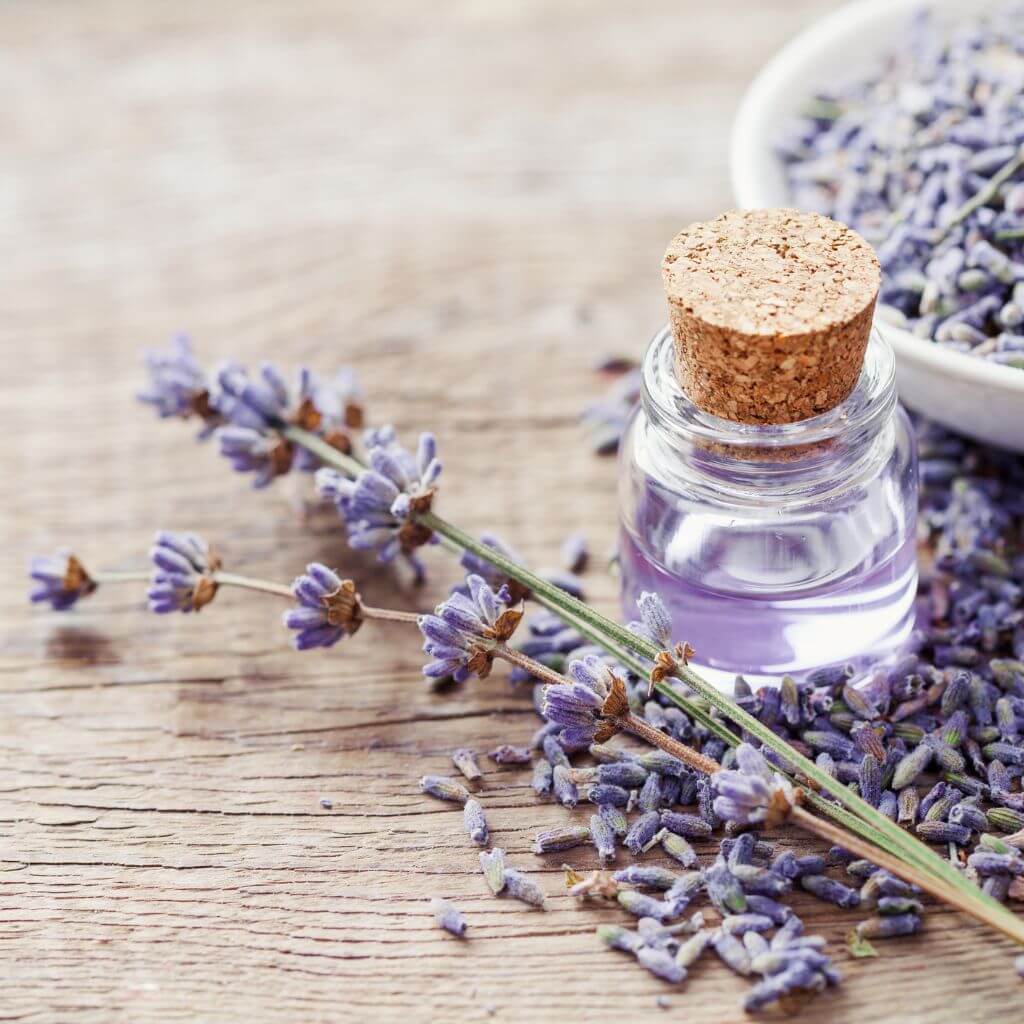
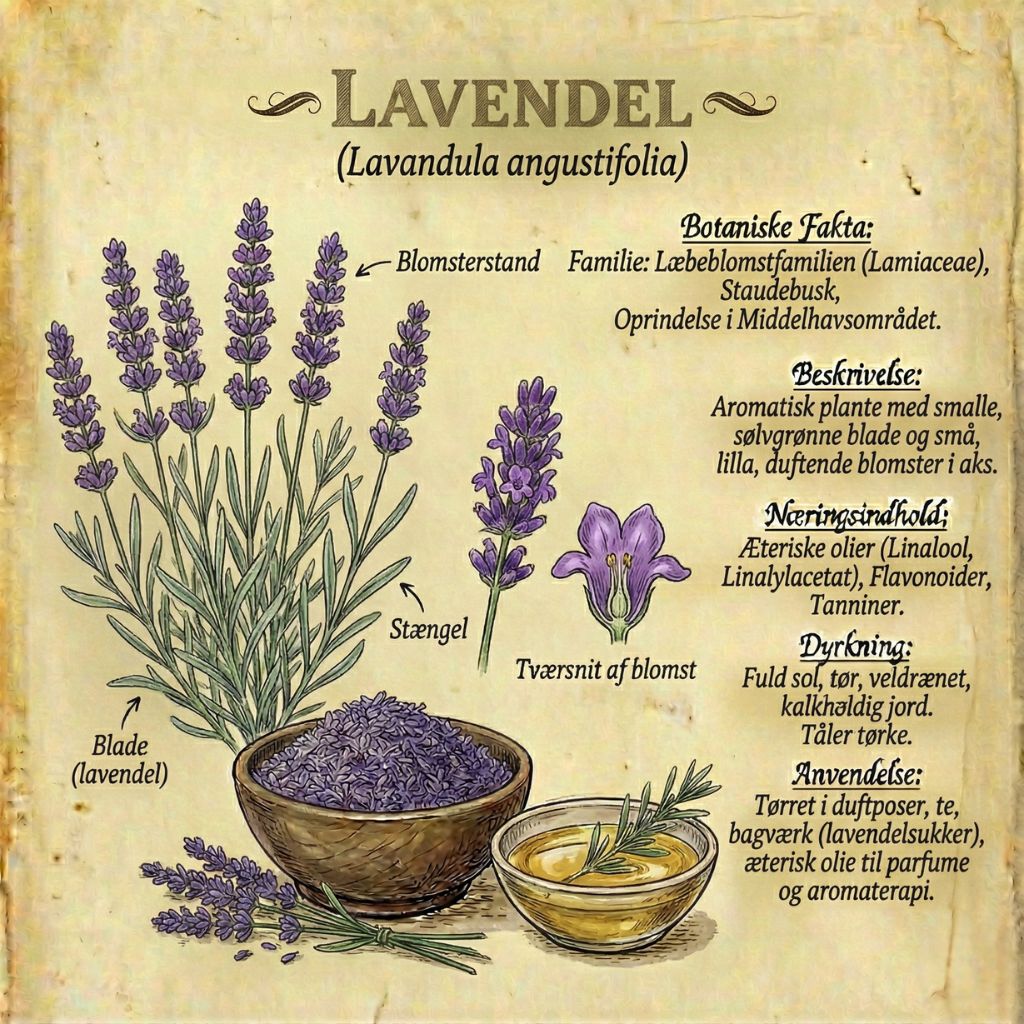
Lavender is an evergreen subshrub with grey-green, linear leaves. The flowers are purple and sit on long, bare stems, and after flowering small nutlets form as seeds. The scent comes from oil-bearing glands in the hairs on the leaves and flowers, and it is this oil that has made lavender famous in the perfume and cosmetics industry. The plant belongs to the mint family (Lamiaceae) and thrives in warm, dry climates.
In Denmark, Lavandula angustifolia (English lavender) is grown in particular, as it is the hardiest species and tolerates down to about -15 °C with light covering. French and Spanish lavenders (L. stoechas and L. dentata) have more exotic flowers but are less hardy and are poorly suited to the Danish climate outdoors.
History and Origin
From Roman Baths to Monastery Gardens
Lavender has been prized for thousands of years. The Romans added the flowers to baths and used them to scent clothing, which gave the plant its Latin name from “lavare” (to wash). In the Middle Ages, lavender was grown in monastery gardens as a medicinal herb and to keep moths away from wardrobes.
Lavender in Denmark and Provence
In Denmark, lavender was planted in manor gardens and used in flavored spirits and scented sachets. Today, lavender can be found at markets, in garden centers and in modern gastronomy. It is also a symbol of Provence, where vast purple fields dominate the landscape and attract tourists every year.
Flavor and Aroma
Lavender has a distinct, floral and slightly spicy flavor reminiscent of rosemary with a hint of camphor. Dried flowers have a more concentrated flavor than fresh ones, so use a smaller amount. Precisely because the flavor is intense, lavender should be used with a light hand – too much, and the dish quickly turns soapy. Lavender pairs well with:
- Lamb, game and poultry
- Citrus fruits such as lemon and orange
- Berries: blueberries, raspberries and strawberries
- Honey, almonds and dark chocolate
- Other herbs such as rosemary, thyme and sage
Add the flowers towards the end of cooking to preserve the aroma, and combine with fat or sugar, which rounds out the flavor and tames the bitterness.
Culinary Uses
Lavender’s flowers and leaves can be used in small amounts in cooking. Use it carefully, as it can otherwise completely dominate a dish.
In the Danish Kitchen
In Danish kitchens, lavender is most often used in sweet treats: sprinkled over fresh strawberries or baked apples, infused into honey, sugar or syrup for desserts, or stirred into creams and buttercream for cakes. Lavender flowers steeped in hot water also make a soothing tea, and lavender sugar is easy to make at home.
Internationally
Internationally, lavender is a classic part of the French spice blend herbes de Provence together with rosemary and thyme, which tastes great with grilled meat, vegetables and soups. In marinades for lamb or poultry, lavender is often combined with lemon and garlic, and in modern dessert cooking it is paired with dark chocolate on cupcakes and cookies.
Preparation Methods
- Sprinkle dried flowers over fresh strawberries or baked apples.
- Mix lavender with rosemary and thyme in an herbes de Provence blend.
- Infuse flowers in honey, sugar or syrup for desserts and cocktails.
- Make lavender tea by steeping flowers in hot water.
- Use lavender in marinades for lamb or poultry with lemon and garlic.
Health Benefits
Potential Health Aspects
Lavender oil is produced by distilling the flowers and is used in perfumes and cosmetics. According to herbal references, the oil contains compounds such as linalyl acetate, linalool, pinene and limonene. Modern sources describe that lavender oil appears to have calming effects, can relax muscles and has antibacterial and antifungal properties. People use lavender for anxiety, stress, insomnia, depression and pain, but the scientific evidence is limited. Products containing lavender oil should be used with care. Pregnant women, nursing mothers and people with allergies should consult a professional before consuming large amounts. Lavender can cause skin irritation in some people and should be tested on a small area of skin before use. This section is not medical advice.
Traditional Use
Lavender has a long tradition as a medicinal herb. In folk medicine, it has been used for headaches, sleep problems and digestive issues. In monastery gardens, lavender was made into herbal water, which was used to cleanse wounds and as a scented spray. Dried lavender flowers were sewn into sachets to keep moths away from clothes and wardrobes. In Denmark, lavender was added to spirits or mead to give a floral aroma.
Modern Uses
Today, lavender is used in aromatherapy as a scent oil for relaxation and is found in scented candles, lotions, massage oils and bath salts. Lavender flowers are also used in potpourri and as decoration in bouquets. In gastronomy, lavender is part of herbes de Provence and is sprinkled on cupcakes, cookies and desserts or combined with dark chocolate. In gardening and design, lavender is popular as a border plant in ornamental and herb beds, and its nectar-rich flowers attract pollinators such as bees and bumblebees.
Growing and Harvesting in Denmark
Lavender loves sun and well-drained soil. Avoid overwatering, and give the plant a hard pruning back after flowering.
How to Grow Lavender
Total time: 3-4 months
- Pre-germination
Lavender can be sown, but the seeds germinate slowly. Pre-sow indoors in February-March at 18-20 degrees, and cover the seeds with a thin layer of sand, as they need light. Germination time 2-4 weeks. Many propagate lavender by cuttings instead for more uniform plants.
- Pricking Out
When the seedlings have 2-3 leaves, prick them out into individual pots with sand-mixed soil. Ensure good ventilation and avoid overwatering.
- Hardening Off
Place the plants on a sheltered terrace during the day for 7-10 days so they get used to the outdoor climate. Bring them in at night if there is a risk of frost.
- Planting Out
Plant out once the risk of night frost has passed (typically late May in Denmark). Choose a sunny spot with chalky, well-drained soil, create a small mound or sand ridge to ensure drainage, and keep 30-40 cm between plants.
- Watering and Fertilizing
Water regularly the first year until the plant is established. After that, lavender needs minimal watering and tolerates drought better than moisture. Apply sparse organic fertilizer in spring; too much nutrition produces leaves instead of flowers.
- Pruning
After flowering in August-September, cut the flower stems down to just above the new shoots. Do not prune too far down into old wood, as lavender struggles to sprout from hard wood.
- Overwintering
English lavender is hardy in much of Denmark, but young and delicate plants should be covered with spruce branches. Pots are moved to a sheltered spot, and good drainage protects against winter moisture.
Growing Conditions
Lavender thrives in full sun and warm, dry air. The soil should be well-drained, chalky and preferably slightly sandy, and the pH should be neutral to slightly alkaline. In heavy clay soils, gravel or small stones can be mixed in to improve drainage. The plant prefers modest amounts of nutrients – overfertilizing reduces oil content and flower production. Lavender tolerates drought better than cold, wet winters, so give it plenty of sun and shelter from winter rain. In pots, use a mix of ordinary potting soil and gravel, and the pot must have a drainage hole in the bottom.
Storage
Harvesting and Drying
Cut the lavender stems when about half of the flowers on the spikes are open. Harvest in the morning, after the dew has evaporated, as the aroma is strongest then. Tie small bunches and hang them to dry in a dark, airy place. Once the flowers are completely dry, strip them from the stems and store them in airtight jars.
Lavender Sugar and Infused Oil
- Dried lavender flowers retain their aroma for up to a year in airtight jars away from light and heat.
- Make lavender sugar by mixing dried flowers into sugar and letting it infuse.
- Make a simple infused oil by filling a jar with dried flowers, pouring neutral oil over them, letting it infuse for 4-6 weeks, straining the oil and storing it in a dark place.
Look-Alikes and Quality
Possible Mix-Ups
Lavender is sometimes confused with other silver-leaved herbs such as rosemary (Rosmarinus officinalis) or garden hyssop (Hyssopus officinalis). These have similar leaves but different flowers and scent. Rosemary has needle-shaped leaves with a stronger, resinous aroma, while lavender leaves are broader, more grey-green and covered in fine hairs that give a silvery sheen. The small blue-violet flower spikes are a clear distinguishing feature. Spanish lavender (L. stoechas) has a characteristic “rabbit ear” on top of the flower spike, which sets it apart from English lavender.
Buying and Quality
Fresh lavender is best bought at plant nurseries in spring. Choose compact plants with many shoots and no wilted flowers, and avoid pots with wet soil, as lavender does not tolerate standing water. Dried lavender flowers can be bought at health food shops and specialty stores – look for deep purple flowers with a strong scent, as pale color or lack of aroma indicates poor quality. Organically grown lavender is recommended for culinary use, so you avoid pesticide residues.
Sustainability and Biodiversity
Lavender is a nectar-rich plant that attracts bees, butterflies and other pollinators. By growing lavender in your garden, you support local biodiversity and contribute to the food supply of pollinators. The plant requires little water once established, making it well-suited to sustainable gardens. Lavender can be grown in pots on balconies and terraces, providing scent and color without high water use. Choose varieties that are hardy in Denmark to avoid winter losses, and consider taking your own cuttings instead of buying new plants every year.
Try This Recipe
Lavender’s delicate floral notes suit tart and sweet fruit desserts beautifully, where the sugar rounds off the slightly bitter edge. Try a light sprinkle of dried culinary lavender over our Baked Rhubarb in the Air Fryer – Tangy-Sweet and Ready in 22 Minutes, where the rhubarb’s tartness meets lavender’s perfume in the most beautiful way.
Lavender and dark chocolate are also a classic combination. A fine sprinkle of dried lavender on top of a chocolate cake with buttercream adds a surprising, floral depth.

Equipment and Products
Lavender and honey are one of the most classic pairings – honey’s rich sweetness perfectly balances lavender’s floral bitterness. If you want to explore that combination in a glass, Bornholmer Honningsyp 32% – 35 cl is a delicious place to start, where the honey notes complement lavender in desserts and cookies.
Frequently Asked Questions
Yes, English lavender (Lavandula angustifolia) can overwinter outdoors, especially in mild areas. Cover the base of the plant with spruce branches or leaves to protect against frost and winter moisture. Spanish and French lavenders should be overwintered frost-free in pots.
Lavender requires full sun – at least 6-8 hours a day. In shade, the plant becomes leggy and flowering is reduced.
Yes, lavender flowers can be eaten in small amounts. Use only English lavender for food, as other species can taste too strong. Avoid overdoing it, as the flavor otherwise becomes perfumed and soapy.
Plant lavender in well-drained soil in full sun. Avoid overwatering, prune lightly after flowering, apply limited fertilizer and ensure air circulation around the plant.
Use genuine culinary lavender, preferably English lavender (Lavandula angustifolia), which is food-grade and unsprayed. Avoid ornamental lavender and lavandin with a high camphor content, as they taste too sharp and medicinal.
Facts About Lavender
| Field | Value |
|---|---|
| English name | Lavender |
| Latin name | Lavandula angustifolia |
| Family | Mint family (Lamiaceae) |
| Plant type | Evergreen subshrub |
| Height | 30-60 cm |
| Hardiness | Down to about -15 °C (varies by variety) |
| Light | Full sun |
| Soil | Well-drained, chalky, sandy mix |
| Sow/Plant | Sow indoors Feb.-Mar.; plant out in May |
| Flowering | June-August |
| Harvest | July-August, when half the flowers are open |
| Flavor | Floral, slightly spicy, camphor- and rosemary-like |
| Culinary Use | Desserts, honey, tea, herbes de Provence, lamb |
| Storage | Dried flowers in airtight jars; oil infusion in a dark glass |
