

Sage (Salvia officinalis) is a powerful herb known for its many health benefits and wide range of culinary uses. The plant has been used for thousands of years, both as an important cooking ingredient and as a natural remedy.

Advertisement: The page displays ads and contains advertising links (affiliate links). See our advertisers here.
In this article, we’ll dive into how it can enrich your everyday life, as well as how you can grow it at home in your garden.
Estimated reading time: 6 minutes
History and Origin
Sage has a long and rich history that stretches back to ancient Egypt, where it was used for medicinal purposes and as a means of extending the shelf life of food. In ancient Greece and Rome, the herb was regarded as a sacred plant and was used in religious ceremonies and to promote longevity. In the Middle Ages, sage was a staple of monastery gardens, where it was grown as a medicinal herb.
Today it’s a popular herb in many kitchens, known for its powerful flavor and its healing properties.
Flavor and Aroma
Sage has a powerful, earthy, and slightly bitter flavor with camphor-like and peppery notes. The aroma is warm and resinous, and even a few leaves can dominate an entire dish — so dose it with a light hand.
The grey-green, velvety-soft leaves are most aromatic just before flowering. Dried sage has a more concentrated and slightly dusty flavor than fresh, so the two can’t always replace each other on a one-to-one basis.
Culinary Use
Sage is a versatile herb that can be used in many ways. From its role in cooking to its use in natural medicine, the herb is a valuable resource.
In the kitchen, sage is known for its powerful, earthy flavor that pairs well with a wide range of dishes. It’s often used in stuffing, sauces, and as a seasoning for meat dishes, especially pork and poultry. The plant is also an important ingredient in many Mediterranean-inspired dishes. It adds a warm, earthy flavor that pairs perfectly with meat dishes, vegetables, and sauces, and it can also be used in marinades and as a seasoning in soups and stews.
In the Danish Kitchen
In Denmark, sage is used especially in stuffing for poultry and pork roast, in homemade sausages, and in brown butter for pasta and gnocchi. Its powerful flavor suits rich winter cooking and cuts through without disappearing.
Internationally
There are many ways to use sage in the kitchen. It can be added to a butter-based sauce to give an extra flavor dimension, or used in a classic Italian dish like saltimbocca to add depth. The plant is also excellent in homemade poultry stuffing, where it adds a subtle, spiced flavor. In American cuisine, sage is also a staple in Thanksgiving turkey stuffing.
Preparation
Sage works well with many other ingredients. It pairs especially well with garlic, onion, and lemon, as well as herbs like thyme and rosemary. The plant can also be combined with butter and olive oil to create complex flavor profiles in dishes. Unlike many delicate herbs, sage holds up well to heat — crispy pan-fried sage leaves in butter are a classic that adds both flavor and a crispy garnish.
You can use sage leaves to infuse butter or oil, adding a subtle yet aromatic flavor to your dishes.
Tips and tricks from the author: Morten Jensen
Health Benefits
Nutritional Value
Sage isn’t just known for its flavor, but also for its impressive nutritional value. The plant is rich in vitamins and minerals that can benefit your health. It contains high levels of vitamin K, which is important for bone health and blood clotting. In addition, the herb is a good source of vitamin A, which supports vision and the immune system.
Sage also contains antioxidants, which help protect the body’s cells from damage caused by free radicals. The plant is also rich in calcium, iron, and manganese, all of which play important roles in the body’s functions.
- Vitamin K: important for bone health and blood clotting
- Vitamin A: supports vision and the immune system
- Antioxidants: protect cells from free radicals
- Calcium, iron, and manganese: important minerals for the body’s functions
Antioxidant and Anti-Inflammatory Properties
Sage is rich in antioxidants, which play an important role in protecting the body’s cells from damage caused by free radicals. This damage can lead to inflammation and increase the risk of chronic diseases. The plant also has anti-inflammatory properties that can help reduce inflammation in the body and ease symptoms of conditions like arthritis.
Digestive Health and Immune Support
Sage is known for promoting healthy digestion. It can help relieve digestive discomfort and reduce bloating. The plant also has carminative properties, meaning it can reduce gas and promote more efficient digestion. The herb also strengthens the immune system and helps protect the body against infections.
Natural Medicine
Sage has long been used in natural medicine for its healing properties. The plant is known for its antibacterial and anti-inflammatory properties, making it effective at fighting infections and easing inflammation. The herb is also used to improve digestion and to relieve symptoms of colds and sore throats.
Skin and Hair Care
Sage is also used in beauty care, where its antioxidants and antibacterial properties make it an effective ingredient in skincare products. The plant can help cleanse the skin, reduce inflammation, and fight acne.
When it comes to hair care, the plant can help strengthen hair and improve scalp health. Sage oil is often used in shampoo and conditioner to promote healthy, shiny hair.
Growing
Soil and Placement
Sage thrives best in well-drained soil and full sun. The plant prefers slightly alkaline soil and can tolerate dry conditions, making it ideal for Mediterranean-style gardens. Make sure the soil is well-drained, as the herb doesn’t thrive in waterlogged soil.
Indoor and Outdoor Planting
Sage can be grown both indoors and outdoors. If you plant it indoors, make sure it gets plenty of sunlight, ideally in a south-facing window. Outdoors, the plant thrives best in a warm, sunny spot, and it can be grown in pots or directly in the ground.
Watering
Sage requires minimal watering, as the plant is drought-tolerant. Let the soil dry out between waterings, and make sure there’s good drainage to avoid root rot. Overwatering can be harmful to the plant, so it’s important to water in moderation.
Fertilizing
Sage is a low-maintenance plant when it comes to fertilizing. A light application of organic fertilizer or compost in the spring can help promote growth and health, but be careful not to over-fertilize, as this can reduce the plant’s flavor.
How to Grow Sage
Total time: 6-8 weeks
- Choose a sunny spot
Plant sage in full sun in light, well-drained, and preferably slightly chalky soil — for example in a bed with good drainage or in a pot.
- Plant in spring
Set out pre-grown plants after the last frost, or sow seeds indoors from March. Give the plants about 30 cm of spacing.
- Water sparingly
Let the soil dry out between waterings. Sage is drought-tolerant and doesn’t do well with wet roots.
- Prune and harvest
Pinch off the top shoots regularly, and prune the plant lightly each spring — this keeps it compact and aromatic for many years.
Storage
In the Fridge
To get the most out of sage, it’s important to store it correctly. Fresh sage can be stored in the refrigerator in a plastic bag or in a glass of water, where it will stay fresh for up to a week.
Drying and Freezing
If you have surplus herb, you can dry it by hanging it up in a dry, dark place. Dried herb can be stored in an airtight container for up to a year.
- Dry bundles upside down in a dark, airy spot
- Freeze whole leaves in a sealed bag, or chop them and freeze in ice cube trays with oil
- Store dried sage airtight and in the dark — this keeps the flavor for up to a year
Try This Recipe
Sage’s warm, earthy flavor is practically made for poultry and creamy sauces, where it adds depth without overpowering. Try our recipe for Chicken Pot Pie in the Airfryer – Creamy Chicken Filling Under a Crispy Pastry Lid, and add a few freshly chopped sage leaves to the filling.
Equipment and Products
Brown butter with sage is one of the simplest and best pasta sauces. If you want to give your pasta even more character, you can add Pasta & Pizza Seasoning 60g from our shop.
Frequently Asked Questions
Sage is classic with pork and poultry, in stuffing and sausages, and in brown butter for pasta and gnocchi. It pairs well with garlic, onion, lemon, thyme, and rosemary.
Both work. Dried sage has a more concentrated, slightly dusty flavor — use about 1 teaspoon dried instead of 1 tablespoon freshly chopped. For crisping in butter, the leaves should be fresh.
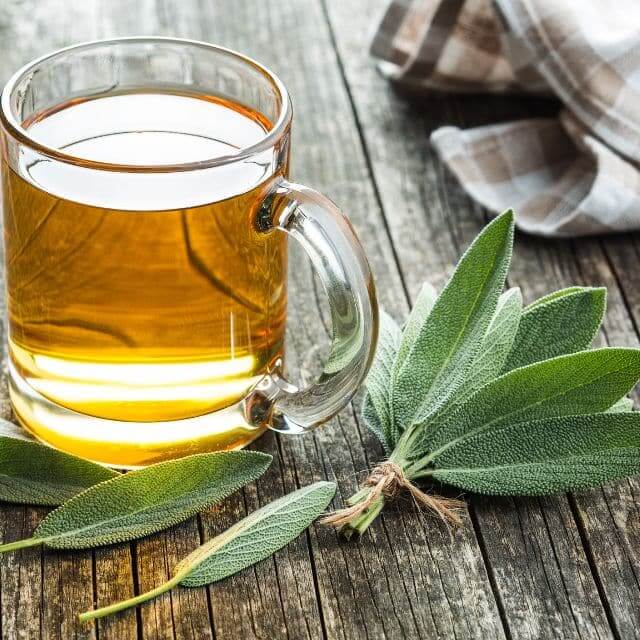
Yes, sage tea is made by steeping fresh or dried leaves in hot water for 5-10 minutes. It has traditionally been used for throat and digestive discomfort and, like other herbal teas, should be enjoyed in moderation.
Yes, sage is an evergreen semi-shrub that survives winter well in most Danish gardens. Prune it lightly each spring so it doesn’t get leggy.
Wrap the leaves loosely in slightly damp paper in a bag in the refrigerator, where they’ll keep for about a week. Sage can also be dried or frozen if you’ve harvested more than you can use in time.
Facts About Sage
| Field | Value |
|---|---|
| Danish name | Salvie (lægesalvie) |
| Latin name | Salvia officinalis |
| Family | Lamiaceae (mint family) |
| Plant type | Evergreen semi-shrub, perennial |
| Height | 30-60 cm |
| Hardiness | Hardy in Denmark, prefers a sheltered spot |
| Light | Full sun |
| Soil | Light, well-drained, and preferably chalky |
| Sow/plant | Sow indoors March-April, plant out after last frost |
| Harvest | Throughout the growing season, most aromatic before flowering |
| Flavor | Powerful, earthy, and slightly bitter with camphor-like notes |
| Culinary use | Pork, poultry, stuffing, brown butter, pasta |
| Storage | Refrigerated for about a week; can be dried or frozen |
Conclusion
Sage is a versatile herb with many health benefits and culinary uses. Whether you use the herb in your dishes, as part of your beauty routine, or as a natural remedy, sage will add value to your everyday life. With its unique flavor, easy cultivation, and beneficial properties, this herb is a valuable addition to any kitchen and garden.
