

Savoy cabbage is the crinkly winter cabbage that I always want to take home when I see it in the vegetable section with its bubbly, green leaves. In Danish it is also spelled savojkål, and beneath all those folds hides a cabbage that is milder in flavor and looser in the head than the familiar white cabbage.
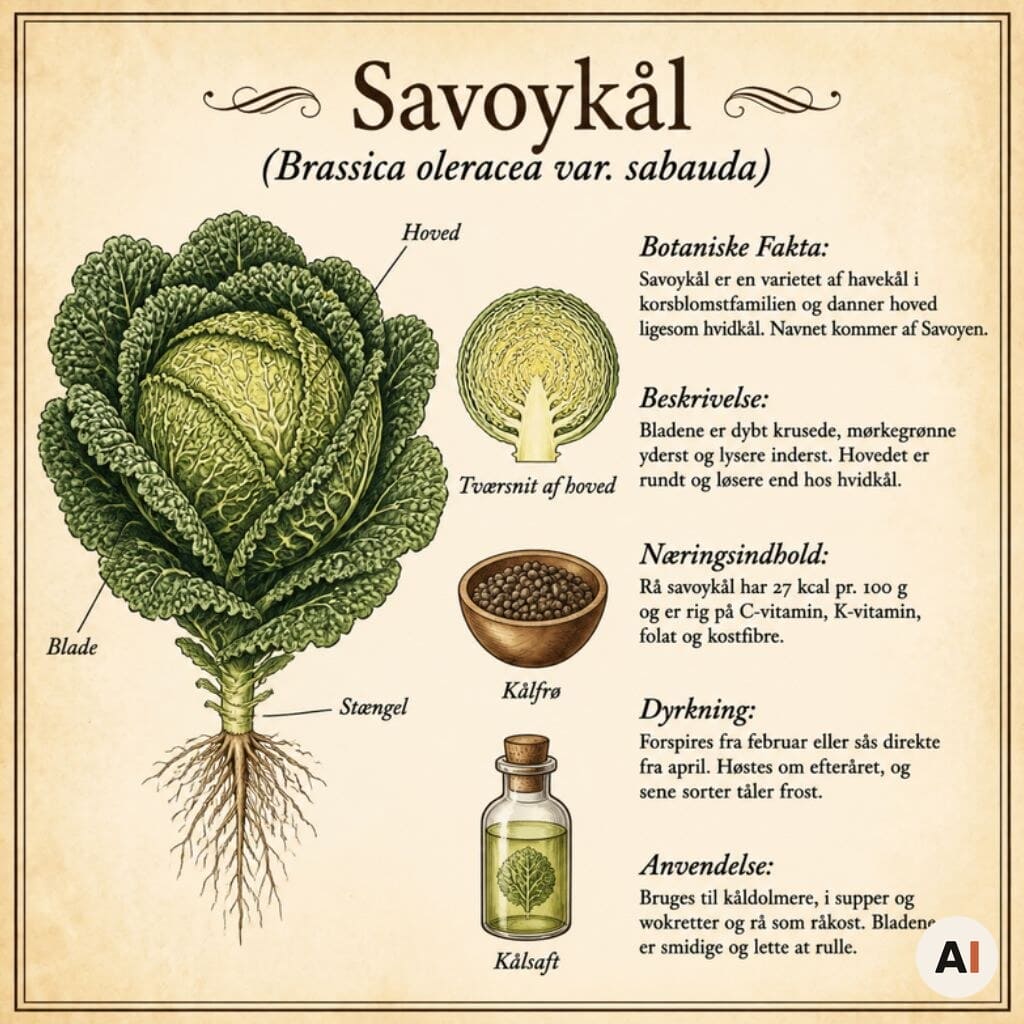
Botanically, it is called Brassica oleracea var. sabauda. It belongs to the mustard family and is the same species as white cabbage and red cabbage, among others. What makes Savoy cabbage so special in the kitchen is its pliable leaves. They can be rolled around a meat filling for cabbage rolls, finely sliced for soups and stir-fries, or cut into wedges and roasted crisp in the air fryer.
Estimated reading time: 6 minutes
History and origin
Named after Savoy
Savoy cabbage is named after the Savoy region (Savoie in French) in France. In Danish, the name is spelled both savoykål and savojkål, and both forms are in use.
In Italy, the cabbage has been named after other places. There it is called cavolo di Milano after Milan and cavolo lombardo after Lombardy, which is why you may also come across the name Milan cabbage.
One species, many cabbages
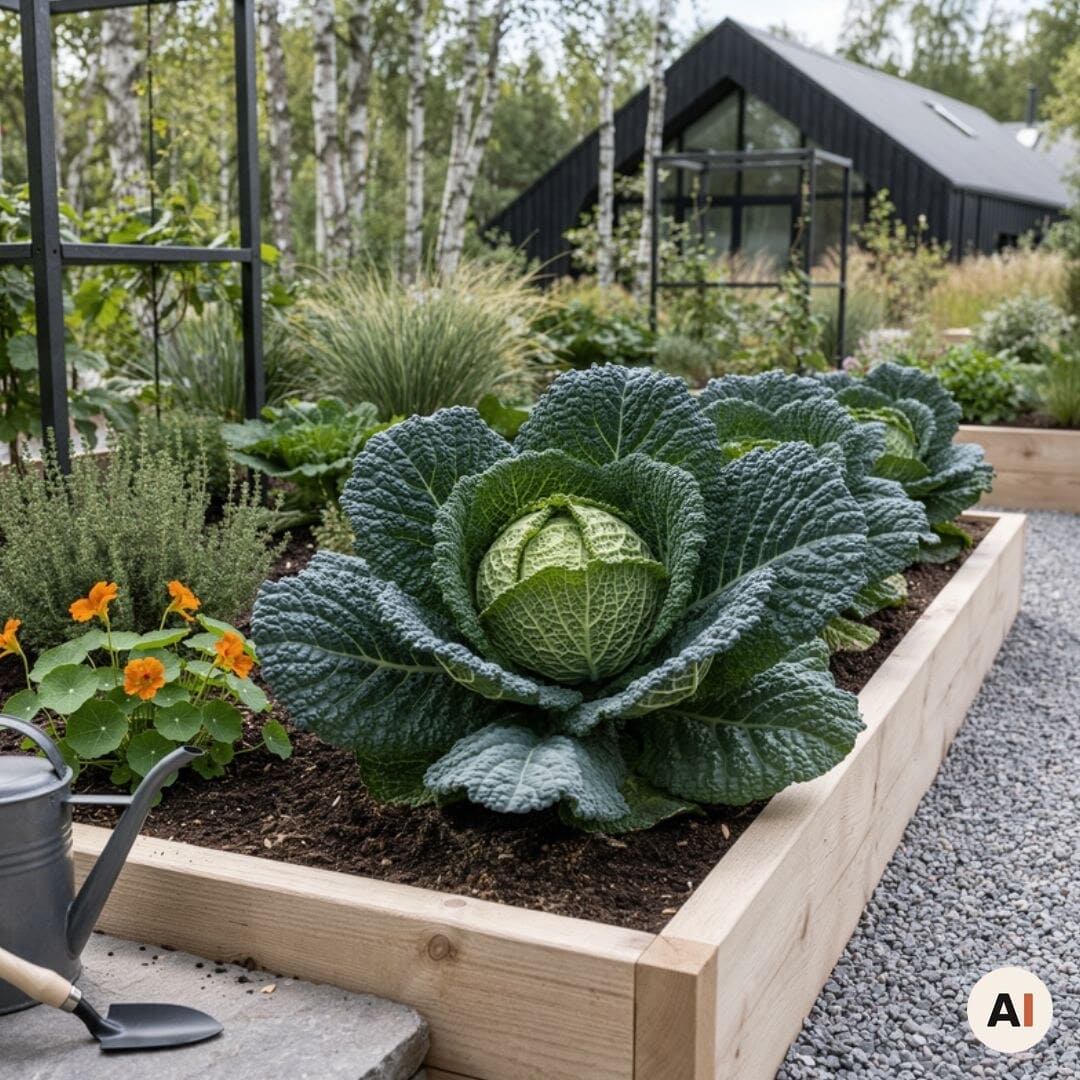
Savoy cabbage is a variety – or cultivar group – of the species Brassica oleracea. This means that Savoy cabbage, white cabbage and red cabbage are essentially the same species, selected in different directions – Savoy cabbage for its crinkly, bubbly leaves and its loose head.
Savoy cabbage is a distinctly winter cabbage with its peak season from November to April. It is winter-hardy and tolerates cold, frost and snow, which makes it an ideal vegetable in the dark winter months, when fewer fresh vegetables are available from the field.
Flavor and aroma
Mild and slightly sweet
Savoy cabbage is milder than white cabbage. Raw, it has a fresh, slightly sweet cabbage flavor with very little sharpness, and the thin, crinkly leaves are more pliable than the leaves of a dense head of cabbage.
The crinkly leaves add airiness and bite to a salad, and because the head is loose, the leaves can be peeled off whole – an advantage when they are to be rolled around a filling.
How heat changes the flavor
A short blanching makes the leaves flexible and bright green, while the flavor stays mild. If the cabbage is roasted at high heat, the edges turn golden and crisp, and the flavor takes on a nutty, lightly caramelized note. If you cook it for too long, the typical cabbage smell comes out – so it is better to give it too little time than too much.
Savoy cabbage loves butter, cream, bacon, garlic, lemon, nutmeg and caraway, and it pairs nicely with pork, sausages and potatoes.
Culinary uses
Savoy cabbage can do almost everything white cabbage can – it is just gentler in flavor and quicker to cook.
In Danish cooking
In Denmark, Savoy cabbage is best known from cabbage rolls (kåldolmere), where the blanched leaves are rolled around minced meat. It is also popular as creamed Savoy cabbage (stuvet savojkål) in white sauce or cream – a natural side dish for meat.
Internationally
In northern Italy and France too, Savoy cabbage is part of the winter cuisine. Here are the classic dishes – Danish as well as foreign – that I associate most with the cabbage:
- Cabbage rolls (kåldolmere): blanched leaves rolled around minced meat.
- Creamed Savoy cabbage (stuvet savojkål): in white sauce or cream as a side dish for meat.
- Pizzoccheri: buckwheat pasta with Savoy cabbage, potatoes and cheese from Valtellina in northern Italy.
- Cassoeula: winter stew with pork and Savoy cabbage from Milan and Lombardy.
- Chou farci: a French whole cabbage stuffed with a meat filling.
- Soups and stir-fries: finely sliced leaves that need only a short cooking time.
In the air fryer
My favorite is Savoy cabbage in wedges. I cut the cabbage through the stem so that each wedge holds together, brush it with oil and sprinkle it with salt. In the air fryer, the outer leaves turn crisp and crackly, almost like potato chips, while the core becomes tender – turn the wedges halfway through so they get color on both sides.
Sliced leaves can also be roasted into crispy strips, which are great on soups and salads. Keep an eye on them toward the end, because the thin leaves brown quickly – and do not overfill the basket, so the hot air can circulate.
Health benefits
Nutritional content per 100 g
Savoy cabbage is a light vegetable with 27 kcal per 100 g raw cabbage, and it contributes a range of vitamins and minerals. The figures below apply per 100 g raw Savoy cabbage:
- Vitamin K: 68.8 µg
- Vitamin C: 31 mg
- Folate: 80 µg
- Beta-carotene: 600 µg
- Vitamin B6: 0.19 mg
- Dietary fiber: 3.1 g
- Potassium: 230 mg
- Calcium: 35 mg
- Magnesium: 28 mg
- Protein: 2 g
How to preserve the nutrients
Vitamin C is sensitive to heat and water, so short cooking – a quick blanching, a quick stir-fry in the wok or roasting in the air fryer – preserves more than long boiling. Feel free to eat some of the cabbage raw, for example finely sliced in a salad.
Worth knowing if you take blood-thinning medication
Savoy cabbage is not among the 14 allergens that must be declared in the EU. The high vitamin K content is, however, worth knowing about if you are being treated with warfarin (Marevan). In that case, your vitamin K intake should be kept stable, so feel free to eat cabbage, but in roughly the same amount from week to week, and talk to your doctor if you want to change your diet significantly.
Cultivation
Savoy cabbage is a rewarding cabbage to grow in the vegetable garden: It needs space and good soil, but gives you fresh heads of cabbage in the cold season.
Growing conditions
- Light: a sunny spot.
- Soil: good, loamy soil with a pH of 6.5–7.5.
- Fertilizer: well-rotted compost – as much as you can hold in both hands – plus a handful of dolomite lime.
- Plant spacing: 35–60 cm.
- Hardiness: winter-hardy; tolerates cold, frost and snow.
Varieties
Well-known varieties include Savoy King, Tundra and Winter King. If you want to harvest cabbage through the winter, choose a variety intended for winter harvest, and read the seed packet before you sow.
How to grow Savoy cabbage
Total time: 6-8 months
- Sow the seeds
Sow the seeds indoors from late March to early April, or directly outdoors from mid-April.
- Prepare the soil
Choose a sunny spot with good, loamy soil with a pH of 6.5–7.5, and fertilize with well-rotted compost and a handful of dolomite lime.
- Plant out
Plant out when the plants have 3–4 true leaves – the seed leaves do not count. Leave 35–60 cm between the plants.
- Care for the plants
Keep the soil evenly moist, and cover with insect netting if you can, so the cabbage white butterflies do not lay eggs on the leaves.
- Harvest
Harvest the heads when they are plump. Savoy cabbage has its peak season from November to April and can be left standing in frost and snow.
Storage
In the fridge
Like other cabbages, a whole, fresh Savoy cabbage keeps for 1–6 weeks in the fridge, depending on type and variety. Store it unwashed and with the outer leaves on – they protect the inner leaves from drying out.
The loose head of Savoy cabbage is more delicate than a dense head of white cabbage, so I would rather use it early than late.
- Place the cabbage in the vegetable drawer.
- Rinse the leaves only right before use – moisture in the folds makes the cabbage keep for a shorter time.
- If you only need a little, you can peel off leaves from the outside and leave the rest of the head whole.
- Wrap a partly used cabbage tightly, and use it first.
In the freezer
If you want to freeze Savoy cabbage, briefly blanch the leaves or strips, cool them quickly in cold water, and freeze them in portions. After thawing they are soft, so use them in soups, stews and creamed dishes – not for crispy wedges in the air fryer.
Try this recipe
The pliable leaves of Savoy cabbage are made for cabbage rolls: They bend without breaking, and the crinkly folds hold the sauce well. Try our recipe for Ukrainian cabbage rolls in the air fryer – tender holubtsi in creamy tomato sauce. I use Savoy cabbage for the leaves when it is in season, and I trim the thick midrib a little thinner so the rolls turn out neat and even. The thin leaves only need a short blanching before they are soft enough to roll.
Frequently asked questions
Both belong to the same species, Brassica oleracea. Savoy cabbage has crinkly, bubbly leaves and a looser head, and it is milder in flavor than white cabbage. The leaves are also more pliable, so they are easier to roll for cabbage rolls.
The name comes from the Savoy region (Savoie) in France. In Danish, it is spelled both savoykål and savojkål. In Italy the cabbage is called cavolo di Milano, which is why you may also come across the name Milan cabbage.
Savoy cabbage is a winter cabbage with its peak season from November to April. It is winter-hardy and tolerates cold, frost and snow.
Yes. Cut the cabbage into wedges through the stem so they hold together, brush them with oil, and sprinkle with salt. Roast the wedges until the edges are golden and crisp, turning them halfway through. Sliced leaves can also be roasted into crispy strips.
A whole, fresh cabbage keeps for 1–6 weeks in the fridge, depending on type and variety. Store it unwashed and with the outer leaves on, and rinse the leaves only right before use.
Facts about Savoy cabbage
| Field | Value |
|---|---|
| English name | Savoy cabbage (also called Milan cabbage) |
| Latin name | Brassica oleracea var. sabauda L. |
| Family | Mustard family (Brassicaceae) |
| Plant type | Cabbage – variety of Brassica oleracea |
| Hardiness | Winter-hardy; tolerates cold, frost and snow |
| Light | Sunny spot |
| Soil | Good, loamy soil with a pH of 6.5–7.5 |
| Sowing/planting | Sow indoors from late March to early April, outdoors from mid-April; plant spacing 35–60 cm |
| Season | Peak season November–April |
| Calories per 100 g | 27 kcal (raw) |
| Flavor | Mild and slightly sweet – milder than white cabbage |
| Culinary use | Cabbage rolls, creamed Savoy cabbage, soups, stir-fries, roasted wedges, pizzoccheri, cassoeula |
| Storage | Whole and unwashed with the outer leaves on, in the fridge, 1–6 weeks |
| Varieties | Savoy King, Tundra, Winter King |
