

Sweet potatoes – also known as batata – have gone from being an exotic rarity to a regular fixture in the produce section of supermarkets. The orange tuber with its sweet, soft flavor has well and truly found its way onto the dinner table, and in my kitchen it has become just as natural a choice as regular potatoes.
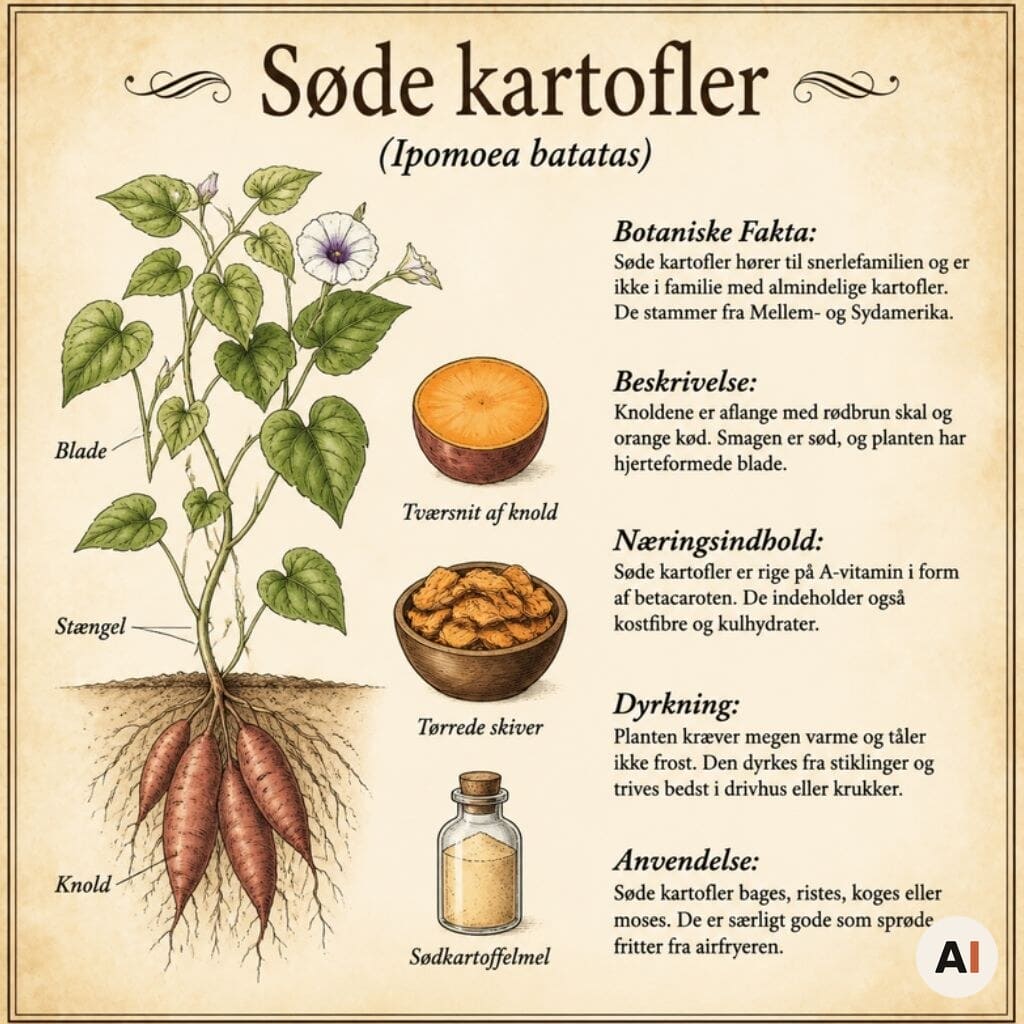
Many people are surprised to hear that the sweet potato is not related to the regular potato at all. Its Latin name is Ipomoea batatas, and it is a tuberous root from the morning glory family (Convolvulaceae), while the potato belongs to the nightshade family (Solanaceae). So the name tells you more about how we use it in the kitchen than about where it belongs botanically.
In this entry I tell you about the sweet potato’s long journey from tropical America, about the flavor and the different varieties, about the nutritional content, and about how to grow and store it properly. And of course you also get my best tips for sweet potato fries – a true air fryer classic.
Estimated reading time: 6 minutes
History and origin
From tropical America
The sweet potato is an ancient cultivated plant from tropical America. It originally comes from northwestern South America and was taken into cultivation in Central and South America long before any European had heard of it.
Sweet potatoes were being grown in Central America at least 5,000 years ago, so the tuber has been part of the diet in the tropics for a great many generations.

To Polynesia before the Europeans
One of the most fascinating details in the history of the sweet potato is that it reached Polynesia before the Europeans did. On the Cook Islands, remains of sweet potatoes have been radiocarbon dated to AD 1210–1400. So the tuber had crossed the Pacific before Columbus set sail for the Americas.
The journey to Europe
The sweet potato came to Europe through the Columbian Exchange – the great exchange of plants, animals and foods between the Americas and the rest of the world that followed Columbus’s voyages. The tuber found its way into European kitchens and appears, among other places, in the English recipe collection Elinor Fettiplace’s Receipt Book.
Today, sweet potatoes are grown in warm regions all over the world. In cooler climates they are mostly an imported product, but you can buy them all year round.
Flavor and aroma
Sweet, nutty and soft
As the name suggests, the sweet potato is noticeably sweeter than a regular potato. The flavor is mild and slightly nutty, and when the tuber is baked it takes on an almost caramel-like depth. The texture is soft and juicy – especially in the orange varieties, which become almost creamy when baked through.
Part of the explanation lies in the tuber’s own enzymes. During cooking they convert some of the starch into sugar, which is why a sweet potato that is allowed to bake slowly and undisturbed becomes extra sweet. That is also the reason it caramelizes so beautifully in the air fryer.
Varieties with their own flavors
There are many varieties, and they don’t all taste the same. Here are four that are good to know:
- Beauregard (orange): a widely grown orange variety that is juicy, sweet and soft – ideal for fries, mash and soup.
- Boniato (cream-colored flesh): drier, more floury and less sweet – it is more like a regular potato.
- Japanese sweet potato (yellow flesh): dense, sweet and nutty – perfect for baking whole.
- Okinawan sweet potato (purple flesh): mildly sweet and dense in texture, with a deep purple color that holds after cooking.
For fries I prefer the orange varieties, because they turn sweet and caramelized. The drier, paler varieties, on the other hand, crisp up more easily and are a good choice if you want a more classic fry.
Culinary uses
In everyday cooking
Sweet potatoes have truly become everyday food in many kitchens. Most people know them as fries or oven-baked wedges, but the tuber can do much more. It turns into a silky-smooth mash and a velvety soup, and it works well in both stews and warm salads. Here are the classic dishes:
- Sweet potato fries: in the oven or air fryer – crispy on the outside and soft inside.
- Oven-baked sweet potatoes: as wedges or cubes, as a side dish for meat, fish and chicken.
- Sweet potato mash: creamy and naturally sweet – e.g. with butter and a pinch of nutmeg.
- Sweet potato soup: especially good with ginger, chili and coconut milk.
Around the world
All over the world, the sweet potato has a firm place in everyday food, street food and desserts. In Asia you will find some of the most beloved classics:
- Japan: yaki-imo are roasted sweet potatoes, and daigaku-imo is a caramel-glazed dessert.
- Korea: goguma-mattang are candied sweet potatoes, and the starch from the tuber is used for glass noodles.
- The Philippines: camote cue are caramelized sweet potatoes on skewers.
In the air fryer
The air fryer is tailor-made for sweet potatoes. The dry, circulating heat gives crispy, caramelized edges while the inside stays soft. Because sweet potatoes contain more sugar than regular potatoes, they brown faster – so keep an eye on them toward the end.
My best tricks: Cut sticks or cubes the same size so they finish at the same time, and pat them dry before the oil goes on. The skin can happily stay on once the tubers have been scrubbed thoroughly – it adds extra bite.
Health benefits
Nutritional content per 100 g
Sweet potatoes consist mostly of water and carbohydrate, they contain dietary fiber, and they are especially known for their high content of beta-carotene. The figures here apply to 100 g of raw sweet potato:
- Energy: 71 kcal
- Protein: 1.3 g
- Fat: 0.3 g
- Carbohydrate (available): 14.3 g
- Dietary fiber: 2.7 g
- Water: 80.3 g
- Beta-carotene: 4,470 µg
- Vitamin A: 373 RE
- Vitamin C: 2.4 mg
- Vitamin B6: 0.178 mg
Beta-carotene gives the color
The orange color comes from beta-carotene, which the body can convert into vitamin A. Vitamin A contributes, among other things, to the maintenance of normal vision, normal skin and the normal function of the immune system. It is mainly the orange varieties that are rich in beta-carotene – the pale varieties with white or cream-colored flesh contain far less.
Beta-carotene is fat-soluble, so a little oil or butter in the dish helps the body make use of it. That fits perfectly with a portion of fries tossed in a little oil.
Good to know about the leaves
The leaves of the sweet potato can also be eaten, but they are high in oxalate – approx. 530 mg per 100 g of fresh leaves, which is about half as much as spinach. Oxalate can inhibit the body’s absorption of calcium. The tuber itself is not among the allergens that must be highlighted on food labels in the EU.
Growing
Warmth is essential
Sweet potatoes are not hardy and need a long, warm growing season – and a warmer summer than you typically get in cooler climates. That is why they do best in a greenhouse or in large pots on a sheltered patio when the summer is warm.
The plant is not propagated with seed potatoes, but with shoots (slips) from a sprouted tuber. Use an organic tuber – treated tubers often won’t sprout. The plant grows long vines, so give it plenty of room.
Growing conditions in brief:
- Light: plenty of light and warmth.
- Soil: humus-rich soil with good drainage.
- Location: a greenhouse or a sheltered patio when the summer is warm.
- Propagation: shoots from a sprouted, organic tuber.
- Harvest: after 90–120 days.
- Hardiness: not hardy – does not tolerate frost.
How to grow sweet potatoes
Total time: 3-4 months
- Let the tuber sprout
Place an organic sweet potato halfway into a glass of water or into moist soil in a warm, bright spot until it puts out strong shoots.
- Take cuttings
Break the shoots off and put them in water or moist soil until they have rooted.
- Plant out in the warmth
Plant the cuttings in humus-rich, well-drained soil in the greenhouse or in large pots once the frost is completely over. Give them plenty of light.
- Water and care
Keep the soil evenly moist, but avoid standing water. Give the vines plenty of room to spread.
- Harvest and cure
Harvest the tubers after 90–120 days. Dig carefully so the skin doesn’t get scratched, and let the tubers cure somewhere warm for a while before moving them to a cooler place.
Storage
Never in the fridge
The most important piece of advice about sweet potatoes is that they should not go in the fridge. Cold damages the tubers, so they end up with worse flavor and texture and spoil faster.
At the producers, sweet potatoes are cured after harvest: they are kept for 5–14 days at 29–32 °C and 90–95% relative humidity so that small wounds in the skin can heal. After that they can keep for up to 13 months at 13–15 °C and over 90% relative humidity. You won’t get that kind of shelf life in an ordinary kitchen, but the figures show that the tuber thrives best when it is cool – not cold.
How to store them at home
- Cool and dark: a pantry, a cool cupboard or a cellar is better than the kitchen counter.
- Well ventilated: in a basket or a paper bag – not in a closed plastic bag, where moisture collects.
- Not in the fridge: cold damages the raw tubers.
- Use damaged ones first: tubers with scratches or soft spots don’t keep as long.
- Leftovers: cooked or baked sweet potatoes should go in the fridge and be eaten within a few days – mash can also be frozen.
Try this recipe
Sweet potato fries are a true air fryer classic, and there is a good reason for that: the dry, circulating heat caramelizes the tuber’s natural sugars, so you get crispy edges and a soft, almost creamy center. Try our recipe for Sweet potato fries in the air fryer – crispy sticks in 18 minutes. I toss the sticks in a little smoked paprika along with the oil myself, because the smoky flavor goes perfectly with the sweetness. Finally, I sprinkle flaky salt over them just as they come out of the basket – that way the salt stays put.
Frequently asked questions
No. Sweet potatoes belong to the morning glory family, while the regular potato belongs to the nightshade family. They are used in many of the same ways in the kitchen, but they are not related to each other.
Yes. Batata is simply another name for the sweet potato. It should not be confused with true yams, which are a completely different tuber, even though orange sweet potatoes are often called yams in the US.
No. Cold damages the tubers, so raw sweet potatoes should be kept somewhere cool, dark and well ventilated outside the fridge, e.g. in a pantry. Cooked or baked leftovers, on the other hand, belong in the fridge.
Cut the sticks the same thickness, pat them dry, and toss them in a little cornstarch before they get the oil. Don’t overfill the basket, and shake it along the way so the hot air can circulate around all the sticks.
Yes, but they need warmth. Sweet potatoes are not hardy and need a long, warm growing season, so they do best in a greenhouse or in large pots on a sheltered patio. The tubers can be harvested after 90–120 days.
Facts about sweet potatoes
| Field | Value |
|---|---|
| English name | Sweet potato (batata) |
| Latin name | Ipomoea batatas |
| Family | Morning glory family (Convolvulaceae) |
| Origin | Tropical America (Central and South America) |
| Plant type | Vining plant with edible tuberous roots |
| Hardiness | Not hardy – needs warmth |
| Light | Plenty of light and warmth |
| Soil | Humus-rich soil with good drainage |
| Sowing/planting | Cuttings (slips) from a sprouted, organic tuber |
| Harvest | After 90–120 days |
| Calories per 100 g | 71 kcal (raw) |
| Flavor | Sweet, mild and slightly nutty |
| Varieties | Beauregard, boniato, Japanese sweet potato and Okinawan sweet potato |
| Culinary use | Fries, oven-baked wedges and cubes, mash, soup and desserts |
| Storage | Cool, dark and well ventilated – not in the fridge |
| Season | All year round (mostly imported in cooler climates) |
