

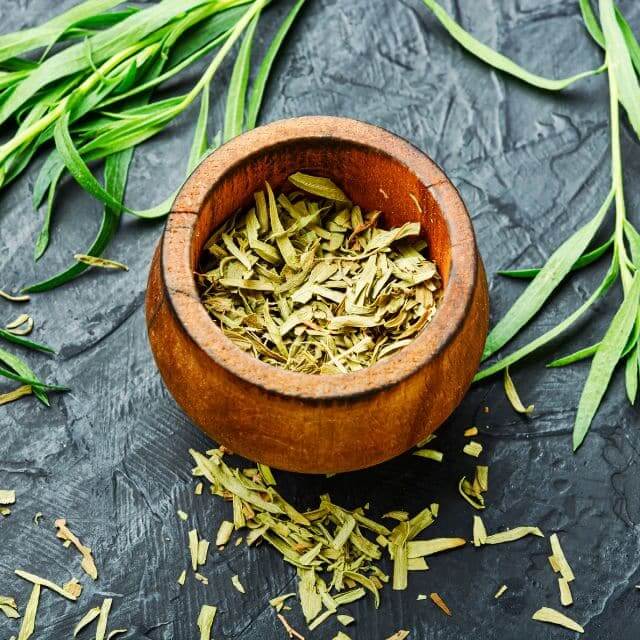
Tarragon, also known as “dragon” in Danish, is an aromatic herb valued for its unique, licorice-like flavor and its versatility in the kitchen. The herb has gained popularity around the world and is a key ingredient in many classic dishes, from French sauces to meat and fish dishes. Tarragon’s distinct anise note allows it to add an extra dimension of flavor to everything from béarnaise sauce to herb butter.

Advertisement: The page displays ads and contains advertising links (affiliate links). See our advertisers here.
Tarragon isn’t just valued for its flavor, but also for its potential health benefits. The herb contains various bioactive compounds and has traditionally been used as a digestive aid. In this article, we’ll explore tarragon’s history, flavor, culinary uses, and how to grow it in Danish conditions — and not least the difference between French and Russian tarragon.
Estimated reading time: 8 minutes
History and Origin
Tarragon originally comes from Central and Western Asia and southern Russia, from where it spread to Europe over the centuries. The herb truly entered European cuisine in the Middle Ages, and from the 1500s it became a staple of French cuisine, where it has since had its strongest culinary tradition.
French and Russian Tarragon
There are two main varieties, and it’s important to distinguish between them. French tarragon (Artemisia dracunculus var. sativa) has the finest, most anise-like and aromatic flavor and is considered the culinary standard. Russian tarragon is hardier and easier to grow from seed, but has a considerably milder, almost grassy flavor with less aroma. If you want the classic tarragon flavor, choose the French variety, which is propagated by division or cuttings.
Flavor and Aroma
Tarragon has a complex flavor profile, often described as a blend of anise, licorice, and a slight bitterness. This combination makes the herb particularly well-suited to dishes where you want a sophisticated flavor without overpowering the other ingredients.
The licorice-like note comes from estragole, a bioactive compound responsible for the herb’s characteristic aroma. Estragole occurs in higher concentrations in French tarragon than in the Russian variety, which explains the difference in flavor. Tarragon’s flavor is delicate and tends to fade when exposed to high heat for extended periods. That’s why it’s often added toward the end of cooking or used fresh in salads and dressings, where its flavor can really shine.
Culinary Uses
Tarragon is one of the classic herbs of Western European cuisine and features in some of gastronomy’s most famous sauces. Its ability to elevate flavor in both hot and cold dishes makes it a versatile herb.
In Danish Cuisine
Although tarragon hasn’t traditionally been a staple of Danish cuisine, the herb has become increasingly popular. In Denmark, it’s often used in dishes like chicken and asparagus puff pastry shells (tarteletter), where its light licorice flavor complements the mild flavors of chicken and cream sauce. Tarragon is also used in Danish fish dishes, where it pairs well with butter-based sauces — for example, in steamed cod with butter sauce, where the herb adds a delicate touch.
Internationally
In French cuisine, tarragon is a key ingredient in béarnaise sauce and in the herb blend fines herbes. Béarnaise, which is often served with steak, gets its characteristic flavor precisely from tarragon, which harmonizes with butter, egg yolks, and vinegar. The herb also features in sauce ravigote for fish and meat. In Italian cuisine, tarragon is used in dishes like pollo al dragoncello, where it’s combined with white wine and garlic, while in Russian cuisine it’s often used to season marinades and pickles.
Classic Dishes with Tarragon
- Béarnaise sauce and sauce ravigote
- Tarragon chicken (poulet à l’estragon)
- Tarragon vinegar for dressings and marinades
- Herb butter for grilled meat, fish, and vegetables
- Fines herbes with parsley, chervil, and chives
You can make tarragon butter by mixing softened butter with finely chopped fresh tarragon, a little lemon juice, and a pinch of salt. Shape the butter into a log, wrap it in plastic wrap, and refrigerate until firm. The butter is perfect melted over grilled vegetables, fish, or chicken — or spread on freshly baked bread.
Tips and tricks from the author: Morten Jensen
Health Benefits
Beyond its culinary value, tarragon has traditionally been used for its beneficial properties. The following is general nutritional information, not health advice.
Antioxidants
Tarragon contains antioxidants, including flavonoids such as quercetin and luteolin, which help neutralize free radicals in the body. Antioxidants are compounds that protect cells from oxidative stress, and they’re best consumed as a natural part of a varied diet rather than as a standalone miracle cure.
Digestion
Tarragon has traditionally been used as a natural aid to digestion. Its slightly bitter flavor stimulates the production of digestive juices, and the herb has mild antispasmodic properties. Traditionally, tarragon has been included in digestive teas alongside herbs like peppermint and fennel.
Growing
Tarragon can easily be grown in Denmark, but it requires a bit of care. French tarragon is only half-hardy and needs shelter, good drainage, and a dry winter cover to survive the cold months. The herb thrives best in warm, sunny conditions with light, well-drained soil.
French tarragon (the classic variety with an anise scent) isn’t propagated from seed — buy it as a plant or divide cuttings. Russian tarragon can be sown from seed, but has a weaker flavor.
How to Grow Tarragon
Total time: Throughout the growing season
- Choose a Variety
Choose French tarragon (Artemisia dracunculus var. sativa) for the most aroma. Avoid Russian tarragon if you want the classic flavor.
- Location and Soil
Find a spot with full sun and shelter from wind. Use light, sandy, well-drained soil (neutral to slightly alkaline). In pots: potting soil mixed with grit or perlite, with good drainage holes.
- Planting
Plant it out after the last night frost (typically mid to late May). Space 30-40 cm apart outdoors; at least 20-30 cm pot width. Water well to help the soil settle.
- Watering and Care
Keep the soil evenly moist, but never wet. Apply a sparing amount of organic fertilizer every 4-6 weeks during the growing season — too much nitrogen weakens the flavor. Pinch off the top shoots for compact, bushy growth.
- Harvest
Snip young shoots regularly from May to September, ideally just before flowering for maximum aroma. Never remove more than a third of the plant at a time.
If you want to grow Russian tarragon from seed, sow it indoors in March-April at 18-22 °C with a thin covering of soil, as light aids germination. Plant it out after the frost, but expect a milder flavor than the French variety. Alternatively, tarragon can be grown in pots, so the plant can easily be moved indoors when the temperature drops.
Storage
Tarragon is best fresh, as its delicate aroma weakens when dried. Store fresh sprigs in the refrigerator in a bag or a glass of water, where they’ll keep for a few days.
Freezing and Preserving
- Freezing preserves the flavor best: chop the leaves and freeze in small portions, ideally in ice cube trays with a little oil or water
- Dried leaves lose some of their aroma but can be used in a pinch
- Tarragon vinegar is a classic preservation method: infuse fresh leaves in white wine vinegar
Try This Recipe
Tarragon’s anise-like freshness pairs beautifully with juicy chicken and lifts a Greek-inspired marinade with its warm herbal note. Try the herb as a fresh finishing touch on our Air Fryer Souvlaki – Juicy Greek Chicken Skewers with Crispy Edges, where tarragon offers a refined counterpoint to garlic and lemon.
Equipment and Products
Tarragon and butter are a classic combination, and a good herb butter is the shortcut to tarragon’s elegant flavor on grilled meat and fish. Our Kystfisken’s Herb Butter is an obvious starting point, which you can blend with finely chopped fresh tarragon for a quick sauce or topping.
Frequently Asked Questions
French tarragon has a fine, anise-like aroma and is considered the culinary standard, but it’s only half-hardy and is propagated by division or cuttings. Russian tarragon is hardier and can be sown from seed, but has a milder, almost grassy flavor with less aroma.
Yes, but it’s only half-hardy. Give it shelter, well-drained soil, and a dry winter cover. In cold or wet areas, growing it in a pot with frost-free winter storage is safest.
No. French tarragon is effectively sterile and is propagated by division or cuttings. Seed packets sold commercially are almost always Russian tarragon, which has a weaker flavor.
Tarragon’s delicate aroma fades when exposed to high heat for extended periods. Add it toward the end of cooking, or use it fresh in salads, dressings, and sauces, where its flavor can really shine.
Freezing preserves the flavor best. Chop the leaves and freeze them in small portions, optionally in ice cube trays with a little oil or water. Dried leaves lose some of their aroma. Tarragon vinegar is also a good preservation method.
Tarragon Facts
| Field | Value |
|---|---|
| English name | Tarragon |
| Latin name | Artemisia dracunculus var. sativa |
| Family | Daisy family (Asteraceae) |
| Plant type | Perennial, half-hardy herb |
| Height | 40-80 cm |
| Hardiness | Half-hardy in Denmark; needs shelter, drainage, and possibly a winter cover |
| Light | Full sun (best) — light partial shade possible |
| Soil | Light, well-drained, neutral to slightly alkaline |
| Sow/plant | French: division/cuttings in spring. Russian: can be sown from seed |
| Flowering | Summer (French rarely flowers) |
| Harvest | May-September; young top shoots before flowering |
| Flavor | Fine anise and licorice note, warm and herbaceous |
| Culinary use | Béarnaise, chicken, fish, eggs, potatoes, herb butter, tarragon vinegar |
| Storage | Best fresh; freeze chopped leaves; make tarragon vinegar |
