

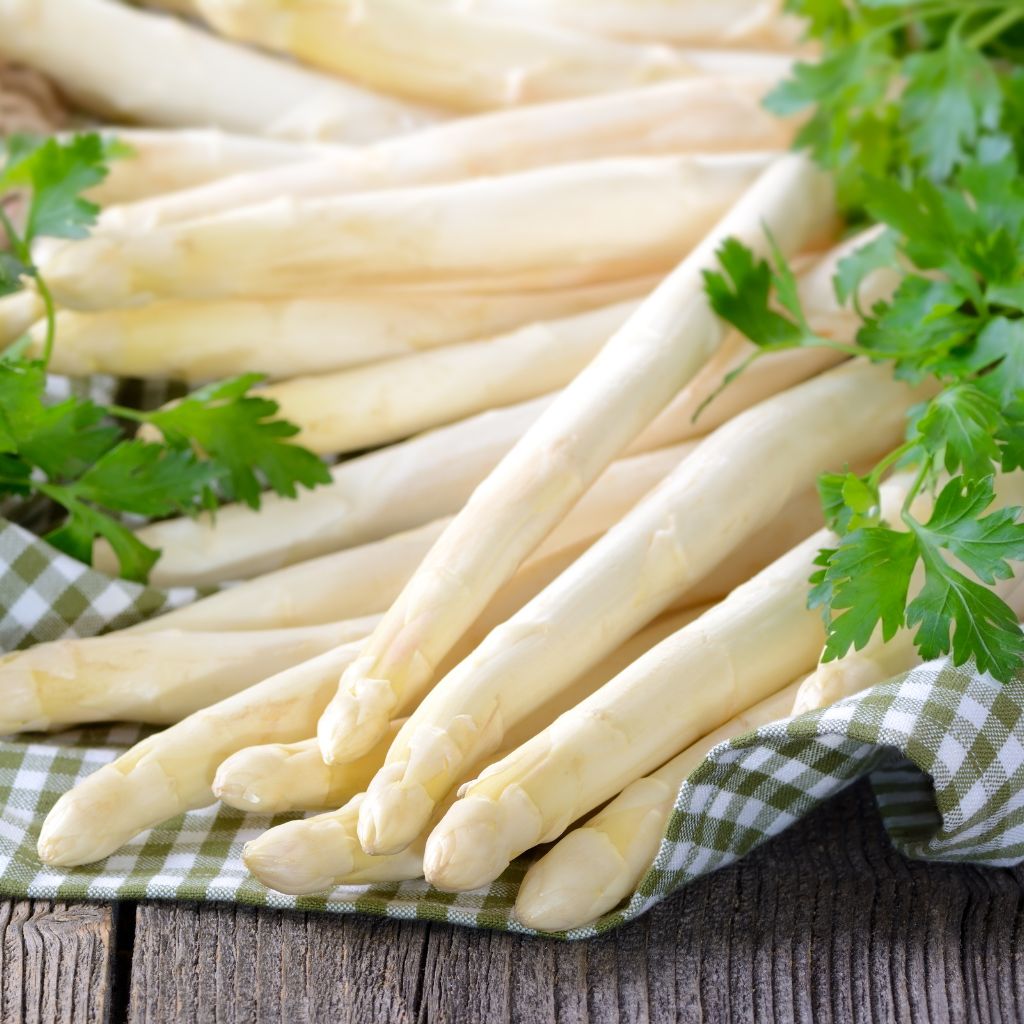
White asparagus is an exquisite spring delicacy known especially from Germany, France, and the Netherlands. Although they come from the same species as green asparagus, they stay snow-white because they’re grown without sunlight. As new shoots peek up from the ground, they’re covered with soil, sand, or dark plastic sheeting so no chlorophyll can form.

Advertisement: The page displays ads and contains advertising links (affiliate links). See our advertisers here.
The result is a thick, smooth stalk with a mild, sweet, and nutty character that makes white asparagus a sought-after addition to the menu. In Denmark, they’re sold as an imported specialty, but they can also be grown in your own garden with patience and a bit of extra soil work. Unlike the green ones, white stalks must always be peeled and cooked until tender – a Danish spring classic served with hollandaise and new potatoes.
Estimated reading time: 11 minutes
History and origin
What is white asparagus?
White asparagus is simply green asparagus that has never seen the sun. Instead of being allowed to break through the soil’s surface, the shoots are covered with soil or a dark hood throughout their growth. Without sunlight, the plant can’t form chlorophyll, and the stalks stay pale and develop a more delicate, sweeter flavor than the green ones. The same plants can, however, produce green asparagus if the shoots are allowed to reach the light.
Early history and culture
Asparagus has been cultivated for thousands of years. As far back as ancient Greece and Rome, the fresh shoots were prized both as a delicacy and as a medicinal plant. In medieval Europe, asparagus was a status symbol; King Louis XIV of France had his gardeners grow it in heated glass hotbeds to have access to it year-round.
White asparagus appeared in the Rhineland and Alsace in the 17th and 18th centuries, where farmers discovered that the stalks stayed white and more tender when covered with soil. Today, white asparagus is a national passion in Germany, where towns hold festivals with local dishes built around weißer Spargel in April and May. In France (for example, Argenteuil asparagus) and the Netherlands too, the white shoots are a special regional product.
Flavor and aroma
White asparagus has a milder and more delicate flavor than its green counterpart. It’s often described as sweet and nutty, with a creamy, buttery mouthfeel. It grows more slowly underground and therefore becomes thicker and less fibrous than green asparagus, though the outer layer can be tough.
That’s why the bottom two-thirds of the stalk are peeled before cooking. After boiling or steaming, the stalks are soft and almost melt on the tongue. Where the green ones have a grassy, herbaceous character, the white ones are more subdued and delicate in expression.
Culinary use
White asparagus is very versatile in the kitchen and suits both simple and refined dishes. Because it’s milder and more delicate than the green variety, it works best with butter-based sauces and light accompaniments that won’t overpower its sweet flavor.
In Danish cuisine
In Denmark, white asparagus is a spring classic, often served with melted butter or hollandaise, new potatoes, and a slice of boiled or smoked ham. It also appears in the classic asparagus soup and as a filling in tarts and tartlets. The season is short – typically May and June – which makes it a sought-after treat while it’s fresh.
Internationally
White asparagus is deeply rooted in German food culture especially, where Spargel season is celebrated with festivals and special menus. In France, it’s used in dishes like asperges à la sauce mousseline, and in Italy it’s paired with parmesan and poached eggs. Modern gastronomy also plays with white asparagus in sushi, ceviche, juicy tartlets, or as a garnish for fish dishes.
Serving ideas
- Classic with sauce: Serve the boiled or steamed stalks with hollandaise, butter sauce, or browned butter, optionally sprinkled with chopped herbs.
- With potatoes and ham: In Germany, white asparagus is often enjoyed with boiled potatoes, boiled or smoked ham, and a creamy sauce.
- Salads: Boiled stalks can be cut into pieces and tossed in a salad with fresh herbs, vinaigrette, and, for example, a poached egg.
- Soups and purées: Blend boiled asparagus with vegetable broth, cream, and herbs into a creamy spring soup.
- Oven-baked or grilled: Toss asparagus in oil, salt, and pepper, and bake it in the oven or on the grill until tender and lightly golden. Serve with lemon zest and parmesan.
- Pickles: White asparagus can be pickled and used as a garnish for cocktails or as a tangy accompaniment to charcuterie.
Cleaning and preparation
Choose stalks that are firm, smooth, and have closed, compact tips. Avoid limp or discolored specimens. Rinse them gently under cold water to remove soil, and, if needed, soak them for a few minutes in cold water to get the sand out of the scales. Then cut 1-2 cm off the root end and peel the bottom two-thirds of the stalk with a vegetable peeler. The skin is tough and fibrous, so thorough peeling makes the finished dish more delicate.
Boiling and steaming
White asparagus needs a longer cooking time than green. Bring a large pot of water to a boil with a pinch of salt, a teaspoon of sugar, and, if you like, a slice of lemon or a little butter to bring out the mild flavor. Add the peeled stalks to the pot and simmer gently for 10-20 minutes depending on thickness, until they’re completely tender but still whole. For serving in salads, they can be blanched for 3-5 minutes and then immediately cooled in ice water to preserve the light color and a slight crispness.
Gentle steaming brings out the sweet flavor: place the stalks in a steamer basket over lightly simmering water, cover with a lid, and steam for 12-18 minutes until tender. For oven cooking, toss the peeled asparagus in olive oil and bake at 200°C for 15-20 minutes, until soft and lightly caramelized. Remember to turn them occasionally.
Health benefits
White asparagus is mostly water (about 93%). It’s very low in calories, containing around 18-26 kcal per 100 g depending on preparation. Its low calorie content makes it well-suited for weight control, while its prebiotic fibers can support healthy gut flora.
Vitamins and minerals
- Protein and carbohydrates: About 2.5 g protein and 2.5 g carbohydrate per 100 g. Sugar content is low, and fat content is almost zero.
- Dietary fiber: 1.3-1.8 g fiber per 100 g, including inulin and fructo-oligosaccharides, which act as prebiotics and promote the growth of beneficial gut bacteria.
- Vitamins and minerals: Folate (about 67 µg per 100 g) plus small amounts of copper, iron, potassium, phosphorus, and B vitamins.
- Antioxidants: Polyphenols and saponins, which may be beneficial for heart health and liver function.
White asparagus has a somewhat lower concentration of vitamins C, E, K, and beta-carotene than the green variety, because it doesn’t form chlorophyll. Its potassium content contributes to normal blood pressure, and folate is important for cell division and especially relevant for pregnant women.
Safety
Like green asparagus, white asparagus contains asparagusic acid, which can give urine an odd smell; this is completely harmless, and some people can’t smell it at all. White asparagus also contains a small amount of vitamin K; people on blood-thinning medication should therefore eat moderate amounts and avoid large, sudden changes in intake.
Growing and harvesting in Denmark
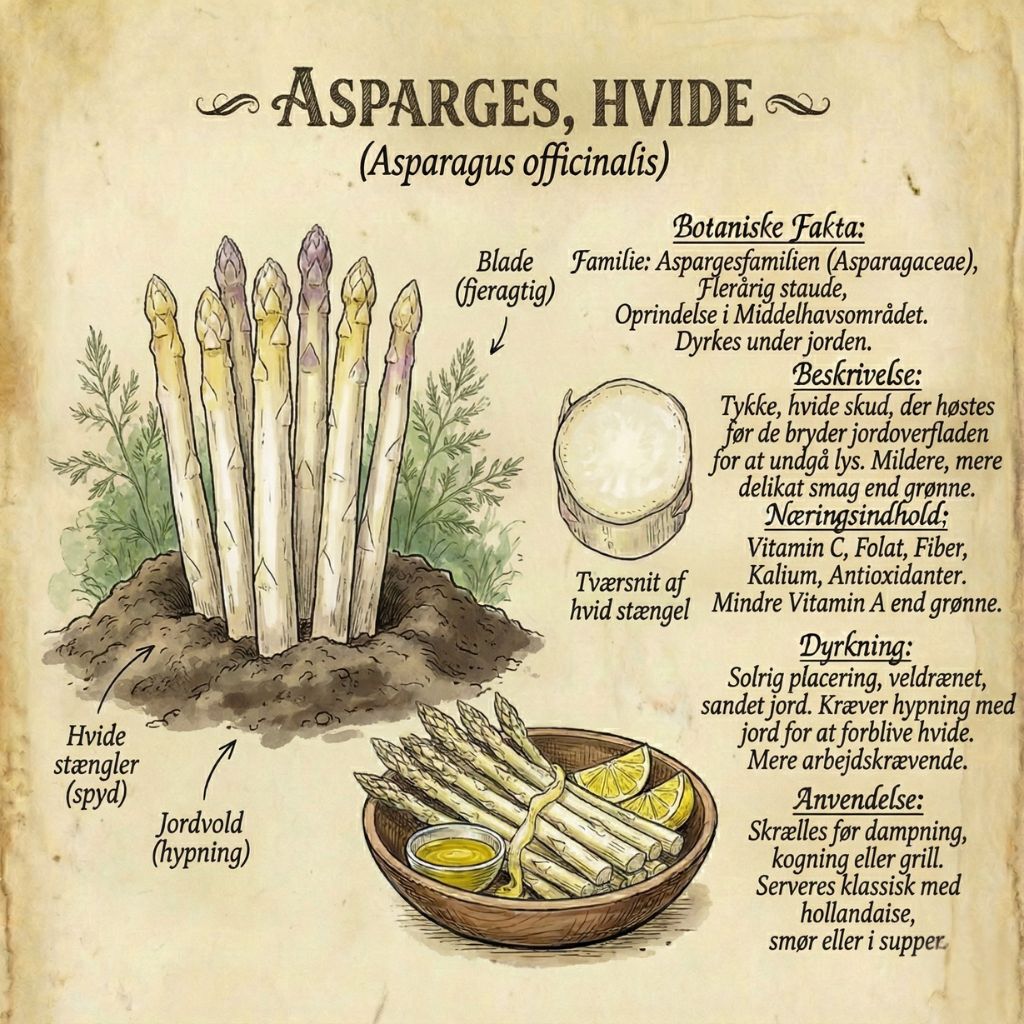
White asparagus is grown the same way as green, but with an extra layer of soil work to keep out sunlight. The plants are perennial and can yield harvests for 10-15 years. The secret is to mound soil up around the row or cover it with a dark box so the shoots stay white.
Growing conditions
- Light: The plants need full sun to build up energy reserves, but the actual sprouting of the white shoots happens underground or under cover, without light.
- Soil: Deep, sandy, nutrient-rich soil with good drainage is ideal. A pH between 6.5 and 7.5 promotes nutrient uptake.
- Watering: Keep the soil evenly moist, especially during establishment and harvest. Mulch can help retain moisture and suppress weeds.
- Temperature: Asparagus sprouts when the soil temperature reaches about 10°C. The perennial plants are hardy, but new shoots are sensitive to frost; cover the bed if there’s a risk of night frost.
- Fertilizing: Apply a balanced fertilizer focused on phosphorus and potassium at establishment and again after harvest. Avoid too much nitrogen, as it can result in weak plants.
How to grow white asparagus
Total time: 3 years to full harvest
- Prepare the bed
Choose a sunny spot with deep, well-drained soil with a pH of 6.5-7.5 and a high content of organic matter. Remove perennial weeds, loosen the soil to a depth of 30-40 cm, and work in well-rotted compost or fertilizer.
- Plant the crowns
Dig a trench 20-30 cm deep and about 30 cm wide. Lay the one-year-old asparagus crowns about 30 cm apart, spread out the roots, cover with 5 cm of soil, and water thoroughly.
- Mound up and keep out the light
As the shoots grow, gradually fill in the trench so the crowns end up 10-15 cm below the soil surface. Mound additional soil up around the row to form a ridge that shields the shoots from light. In small gardens, a dark box or bucket can also keep out the light.
- Water and maintain
Water regularly, especially during dry spells – about 25 mm per week, a little more on sandy soil. Keep the bed weed-free and avoid disturbing the roots. Let the plants form fern-like foliage after harvest so the crowns can store energy.
- Harvest
Don’t harvest in the first year. From the second year, you can take a small number of shoots over 2-3 weeks, and from the third year, you can harvest for 6-8 weeks. Cut the shoots just as they peek above the soil surface, using an asparagus knife a couple of centimeters below the tip.
Storage
White asparagus is harvested while the shoot tips are still below the soil surface. After harvesting or buying it, store it cool and moist to preserve freshness. Use it within 3-5 days for the best quality.
In the fridge
The stalks keep best if they stand upright in a glass of water or are wrapped in damp paper towel in a plastic bag. Store them in the vegetable drawer of the fridge and change the water daily if needed.
Freezing
- Peel and blanch the stalks for 2-3 minutes, then cool them quickly in ice water.
- Dry them thoroughly and freeze them in portions in airtight bags.
- Frozen shoots should be used within a year and cooked directly from frozen.
Great pairings
White asparagus tastes mild, sweet, and nutty, and pairs well with rich, mild, and tangy companions:
- Butter, hollandaise, browned butter, and vinaigrette.
- Citrus fruits like lemon and orange, which bring out the sweet flavor.
- Fresh herbs like dill, chives, tarragon, and parsley.
- Eggs – for example poached or boiled eggs, omelets, or egg muffins.
- Smoked or boiled ham, prosciutto, and cured sausages.
- Fish and shellfish such as salmon, shrimp, or cod.
- Mild cheese like feta, goat cheese, or parmesan.
- New potatoes, peas, and other spring vegetables.
- Dry white wines such as Grüner Veltliner, Riesling, or sauvignon blanc.
Look-alikes and quality
White asparagus can be mistaken for other pale root vegetables like salsify or parsnip. Genuine white asparagus has firm, cylindrical stalks with a faint pink tinge at the tip and a moist cut at the base. Avoid limp, dry, or frayed ends. Fresh stalks creak slightly when rubbed against each other. Thicker stalks are often more tender, since the plant has grown quickly under optimal conditions, while very thin stalks can be tough.
Sustainability and biodiversity
As a perennial crop with a deep root system, asparagus binds carbon in the soil and requires less tillage after establishment. By letting the plants grow freely after the harvest season, they form dense, fern-like fronds that provide habitat for insects and can act as a windbreak.
White asparagus does, however, require more manual labor and soil-moving than green, and growing it in large ridges can leave the soil bare outside the growing season. Therefore, use green cover crops and minimal tillage outside the harvest period to protect the soil structure.
Try this recipe
White asparagus and salmon are a Danish spring classic, made extra elegant with a buttery sauce. The mild, sweet asparagus balances the rich fish, while lemon and herbs tie it all together. Try our Salmon skewers in the airfryer – juicy skewers with caramelized glaze in 10 minutes and serve boiled white asparagus with hollandaise on the side.
Equipment and products
If you want to give the white asparagus a luxurious partner, cold-smoked salmon is a safe choice. The rich, smoky fish plays beautifully against the sweet mildness of the asparagus. We recommend a Tail-hung cold-smoked salmon side, whose delicate smoky flavor is ideal for a spring asparagus platter.
Frequently asked questions
Both come from the same plant species. The difference lies in the growing method. White asparagus is grown in the dark so it doesn’t form chlorophyll. It’s milder, sweeter, and more delicate, while green asparagus gets sunlight, develops a green color, and has a more herbaceous flavor as well as more vitamins.
The outer skin is tough and fibrous because the shoots grow slowly underground. Peeling the bottom two-thirds of the stalk gives it a softer texture and a more delicate eating experience.
Peel the stalks, place them in boiling water with salt, sugar, and optionally lemon, and boil for 10-20 minutes until tender. It can also be steamed, grilled, or baked. Classic accompaniments are hollandaise, butter, potatoes, and ham.
Yes, it’s low in calories and rich in water, fiber, and folate. It also contains prebiotic fiber and polyphenols, but has somewhat lower levels of certain vitamins than green asparagus. It fits well into a varied diet.
Yes. It requires a sunny bed with deep, nutrient-rich soil and patience. By mounding soil up around the row or covering it with a dark box, you exclude light so the growing shoots stay white. Harvest carefully before the tip breaks the surface.
Facts about white asparagus
| Field | Value |
|---|---|
| English name | White asparagus |
| Latin name | Asparagus officinalis |
| Family | Asparagus family (Asparagaceae) |
| Plant type | Perennial vegetable with an underground crown |
| Height | Fronds up to 1.5-2 m; edible shoots are harvested at 20-25 cm |
| Hardiness | Frost-hardy perennial (hardiness zone 5-7) |
| Light | Full sun for the plant; but shoots develop in darkness underground or under cover |
| Soil | Deep, well-drained sandy or loamy soil with pH 6.5-7.5 and high organic matter content |
| Sowing/planting | Plant one-year-old crowns in April; trenches 20-30 cm deep; about 30 cm between plants |
| Flowering/harvest | Harvest white shoots from May to June; let the plants grow freely for the rest of the season |
| Flavor | Mild, sweet, and nutty; more delicate than green asparagus |
| Culinary use | Soups, salads, classic with hollandaise, risotto, pasta, pickles |
| Storage | Refrigerator upright in water or wrapped in damp cloth; 3-5 days; can be frozen after blanching |
| Cooking time | 10-20 minutes depending on thickness; shorter time when blanching |
