

Wood sorrel is a small woodland-floor plant with a big flavour. Its pale green, clover-like leaves hide a fresh tartness that has earned the plant the nickname “the sour clover.” The high concentration of oxalic acid gives it a sharp, lemon-like taste, but it also means the herb should only be eaten in small amounts. From the forest floor to fine-dining restaurants, wood sorrel is a decorative and aromatic feature of Nordic nature and cuisine.

Advertisement: The page displays ads and contains advertising links (affiliate links). See our advertisers here.
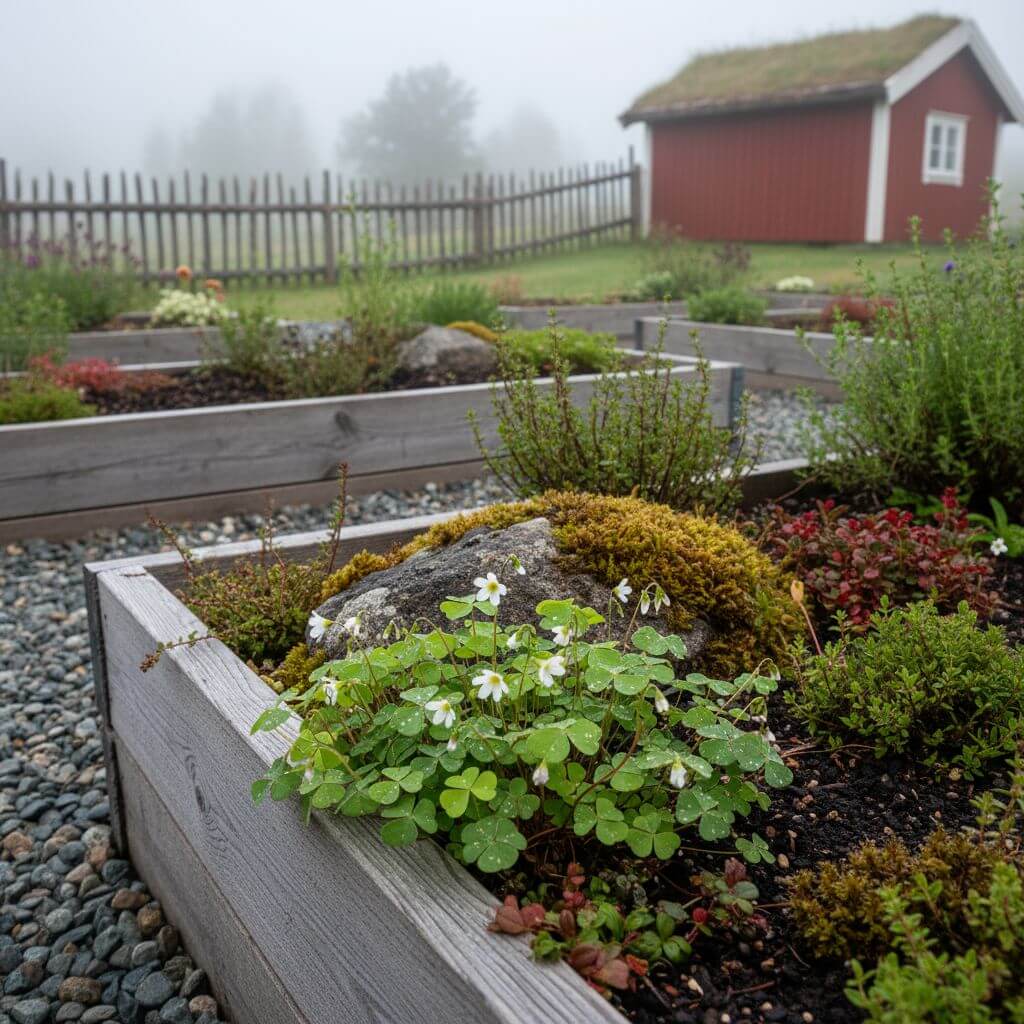
Wood sorrel belongs to the wood sorrel family (Oxalidaceae), and its Latin name is Oxalis acetosella. The plant is perennial, forms low colonies on the forest floor typically 5-15 cm tall, and carries three heart-shaped leaflets on each stalk that fold together at night or in strong sunlight. The taste resembles rhubarb and lemon, but wood sorrel should not be confused with the milder leaves of garden sorrel (Rumex acetosa) – the wild woodland herb is far more concentrated.
Estimated reading time: 7 minutes
History and Origins
Wood sorrel has been known in the Nordic region for centuries. Its English name reflects the plant’s habitat and taste: “wood” for where it grows and “sorrel” for its sour flavour. Botanically, it is a perennial herb with creeping rootstalks that spread both via rhizomes and via small seed capsules that explosively fling out the seeds. From April to June, thin flower stalks emerge bearing white petals streaked with purple veins – delicate flowers that attract early pollinators in shady deciduous and coniferous forests.
From Survival Food to Medicinal Herb
In old herbals, the plant was referred to as sour clover or cuckoo bread. It served as survival food and a source of vitamin C for forest wanderers and woodsmen, who would chew a few leaves against thirst and fatigue. In the Middle Ages, wood sorrel was used in herbal infusions against fever and scurvy. Today it is especially known from modern Nordic cuisine, where chefs use the fresh leaves and flowers to add tartness and a decorative touch to gourmet dishes.
Wood Sorrel in Denmark
The plant grows naturally throughout Denmark, except in the most wind-exposed, sandy areas of West Jutland. It’s an indicator plant for nutrient-rich, humus-rich forest floor; its presence shows that the soil is moist, slightly acidic and relatively undisturbed. Many nature guides use wood sorrel as an example of the forest’s own food source, precisely because the leaves fold up in sunlight and the plant flings its seeds away. On the island of Bornholm, it’s also called cuckoo bread – a reminder of its use as a spontaneous forest snack.
Taste and Aroma
Wood sorrel has a fresh, tart taste reminiscent of lemon or rhubarb. The tartness comes from oxalic acid, which is also found in rhubarb and spinach. The flavour works well as a contrast to rich and sweet notes, but it’s intense and should be used sparingly so it doesn’t overpower the other nuances in a dish. Pick the leaves just before serving to preserve their juiciness and colour – the herb quickly loses its crispness.
Culinary Use
Wood sorrel adds a sharp, lemony tartness to dishes that can balance richness and sweetness. Its fresh flavour makes it well suited as a topping for fish, shellfish and meat, and as a contrast in desserts. Unlike milder herbs such as parsley and chives, wood sorrel needs to be dosed with care because of its high oxalic acid content. The herb is used almost exclusively fresh – drying breaks down the volatile acids and makes the leaves tough.
In Nordic Cuisine
In the new Nordic cuisine movement, wood sorrel is used to add natural tartness and a wild touch to dishes such as butter-fried fish, pickled vegetables and desserts. The fresh leaves are sprinkled over cod or salmon, blended into a green vinaigrette for new potatoes, or stirred into herb butter. The flowers garnish a strawberry dessert, adding both visual and flavour contrast.
Internationally
Tart sorrel species have a long tradition in European cuisine, where they feature in classic sorrel soups and green sauces for fish and eggs. Wood sorrel can be used the same way as its wild-growing relative: a handful of leaves adds freshness to a cream- or butter-based sauce, just without a long cooking time.
How to Use It
- Sprinkle finely chopped wood sorrel over butter-fried cod for a fresh tartness.
- Blend a handful of leaves with oil and vinegar into a green vinaigrette for new potatoes.
- Use the leaves as a tart garnish on egg dishes or an omelette.
- Garnish a strawberry dessert with leaves and flowers.
- Stir chopped wood sorrel into herb butter or cream cheese, and serve with toasted bread.
Health Benefits
Wood sorrel contains vitamin C and antioxidants and was traditionally used against scurvy. But the very thing that gives it its characteristic taste – oxalic acid – is also the reason the herb should only be eaten in small amounts.
Oxalic Acid and Dosage
Oxalic acid can bind calcium in the body and form insoluble salts. The Danish Food Administration therefore recommends only small amounts, and excessive intake can cause discomfort, nausea and, in extreme cases, affect kidney function. Stick to the recommended limits, and use the herb as a tart accent – not as a salad green.
- At most about 14 g per day for an adult.
- At most about 2 g per day for a 10 kg child.
- Pregnant women and people with kidney problems should avoid wood sorrel.
- Never use wood sorrel as medicine without professional advice.
Growing
Wood sorrel is a robust woodland-floor plant, but it needs moisture and shade to thrive. Follow the steps below to establish it in your garden or forest garden.
Growing Conditions
Wood sorrel is shade-tolerant and grows best in partial to full shade. It prefers moist, humus-rich soil with a slightly acidic pH of 4.5-6.5. Heavy clay soil or dry, sandy soil hinders growth. The plant is frost-hardy and survives Nordic winters, but doesn’t like drought; in dry periods the leaves wilt and the rhizomes go dormant. Choose a spot under shrubs or tall trees where the soil stays moist year-round, and avoid bare soil, as wood sorrel competes poorly against aggressive weeds.
How to Grow Wood Sorrel
Total time: 1 season
- Choose the right spot
Find a shady, moist spot under shrubs or tall trees with humus-rich, slightly acidic soil (pH 4.5-6.5). Avoid bare soil and full sun.
- Sow or divide rhizomes
Sow fresh seed in late autumn and let winter stratify them, or move a small rhizome piece in March-April and plant it 10-15 cm deep. Water thoroughly.
- Water and mulch
Keep the soil constantly moist, but never waterlogged. Cover with leaves or wood chips to retain moisture. Wood sorrel thrives in poor soil and rarely needs fertiliser.
- Harvest and propagate
Cut the young leaves in early spring, leaving at least half in place. Divide the root every third year to spread the plant to new shady areas.
Storage
Wood sorrel is a fleeting pleasure that tastes best freshly picked. Harvest the leaves in early spring, when they are young and pale green, cut the stalks close to the ground with a clean pair of scissors, and rinse them lightly to remove soil and insects.
Using It Fresh
It’s best to use the leaves right away. If you want to store them for a couple of days, you can stand the stems in a glass of cold water in the fridge, or wrap them in damp kitchen paper and place them in an airtight container.
Freezing
- Freeze the leaves in ice cube trays with a little water to preserve colour and flavour.
- Use the thawed cubes in sauces or smoothies – not as a fresh garnish.
- Drying is not recommended: the leaves turn brown and lose their flavour.
Look-Alikes and Quality
Possible Look-Alikes
Wood sorrel is easily confused with white clover (Trifolium repens). Wood sorrel has three heart-shaped leaflets with a distinct central fold that close up at night, while white clover has rounder, more elliptical leaflets and round, ball-shaped flower heads. Wood sorrel’s flowers are white with purple veins. If in doubt, taste a single leaf – wood sorrel is distinctly sour.
Also be aware of the distinction between edible wood sorrel and the many ornamental oxalis species sold as houseplants and ground cover – for example purple shamrock (Oxalis triangularis), with large, triangular, dark purple leaves. These ornamental species have an even higher oxalic acid content and are not grown for eating. Stick to the wild Oxalis acetosella from the forest floor when foraging for the kitchen.
Buying and Quality
Wood sorrel is rarely found in supermarkets. You can find it as a potted plant at nurseries or from specialty growers, especially in spring. When foraging in the wild, only harvest where it’s permitted, and never pick more than a handful. Choose plants with plump, pale leaves free of brownish spots, and avoid plants in full bloom if you mainly want the leaves.
Sustainability and Biodiversity
Wood sorrel is a valuable plant in the forest ecosystem. It’s an early food source for bees, hoverflies and other pollinators that gather nectar from its delicate flowers. As ground cover, it protects the soil from erosion, retains moisture and helps build up organic matter. In forest gardens and permaculture projects, it serves as an indicator of moist, slightly acidic conditions, and its spread via rhizomes makes it resilient without being aggressive. By growing wood sorrel at home, you can reduce the need for imported herbs and boost biodiversity in your garden.
Try This Recipe
Wood sorrel’s lemony tartness is made to cut through rich fish and elevate a delicate starter. A few freshly chopped leaves sprinkled over the cod just before serving add a wild, tangy kick that plays off pesto and tomato. Try it in our Fish Parcel with Cod, Green Pesto and Tomatoes in the Air Fryer – an Elegant Starter in 15 Minutes.
Equipment and Products
For wood sorrel, you don’t need much equipment – a small, sharp pair of scissors to cut the young stems, and an airy basket or container so the leaves don’t get crushed on the way home from the forest. A salad spinner or a clean tea towel is handy for the gentle rinse, and a couple of ice cube trays make it easy to save any surplus for sauces. Wood sorrel is a foraged and garden-grown ingredient, so it isn’t sold as a ready-made product in our shop.
Frequently Asked Questions
Yes, it’s perennial and stays green through winter. The leaves can wilt in very hard winters, but the rhizome survives and sends up new shoots the following spring. A light covering of leaves during frost periods can help in exposed gardens.
Yes. Wood sorrel actually thrives in shade or partial shade. Full sun can stress the plant and cause the leaves to close up to reduce evaporation.
Only in very small amounts. The Danish Food Administration recommends at most about 14 g per day for adults and 2 g for young children. Exceeding this can put a strain on the kidneys from the oxalic acid. Pregnant women and people with kidney problems should avoid wood sorrel.
Harvest the leaves in early spring, when they’re pale green. Plants grown in slightly acidic, moist soil in the shade give the most intense tartness. Pick just before serving, and avoid storing the leaves for long.
Both taste tart, but wood sorrel (Oxalis acetosella) has three heart-shaped clover-like leaves and a markedly higher oxalic acid content, so it’s used sparingly. Garden sorrel (Rumex acetosa) has large, spear-shaped leaves and a milder tartness, and can be eaten in larger portions.
Facts About Wood Sorrel
| Field | Value |
|---|---|
| English name | Wood Sorrel |
| Latin name | Oxalis acetosella |
| Family | Wood sorrel family (Oxalidaceae) |
| Plant type | Perennial ground cover |
| Height | 5-15 cm |
| Hardiness | Frost-hardy; survives Nordic winters with covering |
| Light | Partial to full shade |
| Soil | Moist, humus-rich, slightly acidic (pH 4.5-6.5) |
| Sow/plant | Sown in autumn or planted with rhizomes in spring |
| Flowering | April-June |
| Harvest | Spring to early summer |
| Taste | Tart, lemon/rhubarb-like |
| Culinary use | Salads, garnishes, herb butter, desserts |
| Storage | Fresh in water or damp paper, frozen in ice cubes |
