

Wormwood is one of the oldest spice plants in Europe. The silvery-grey herb, with its fine, aromatic leaves, has a powerful scent, and its bitter notes make it better suited to snaps than to cooking. In Denmark, garden wormwood has been cultivated since the earliest monastery gardens, where it kept moths and pests away from delicate plants, and today it is both a decorative perennial and an ingredient in spiced snaps.

Advertisement: The page displays ads and contains advertising links (affiliate links). See our advertisers here.
This article gives you a thorough introduction to wormwood and its uses in a Nordic context, so you can grow and use it thoughtfully. Note: wormwood is a bitter and digestive herb, not a culinary herb – it should always be used in minuscule amounts.
Estimated reading time: 11 minutes
What is wormwood?
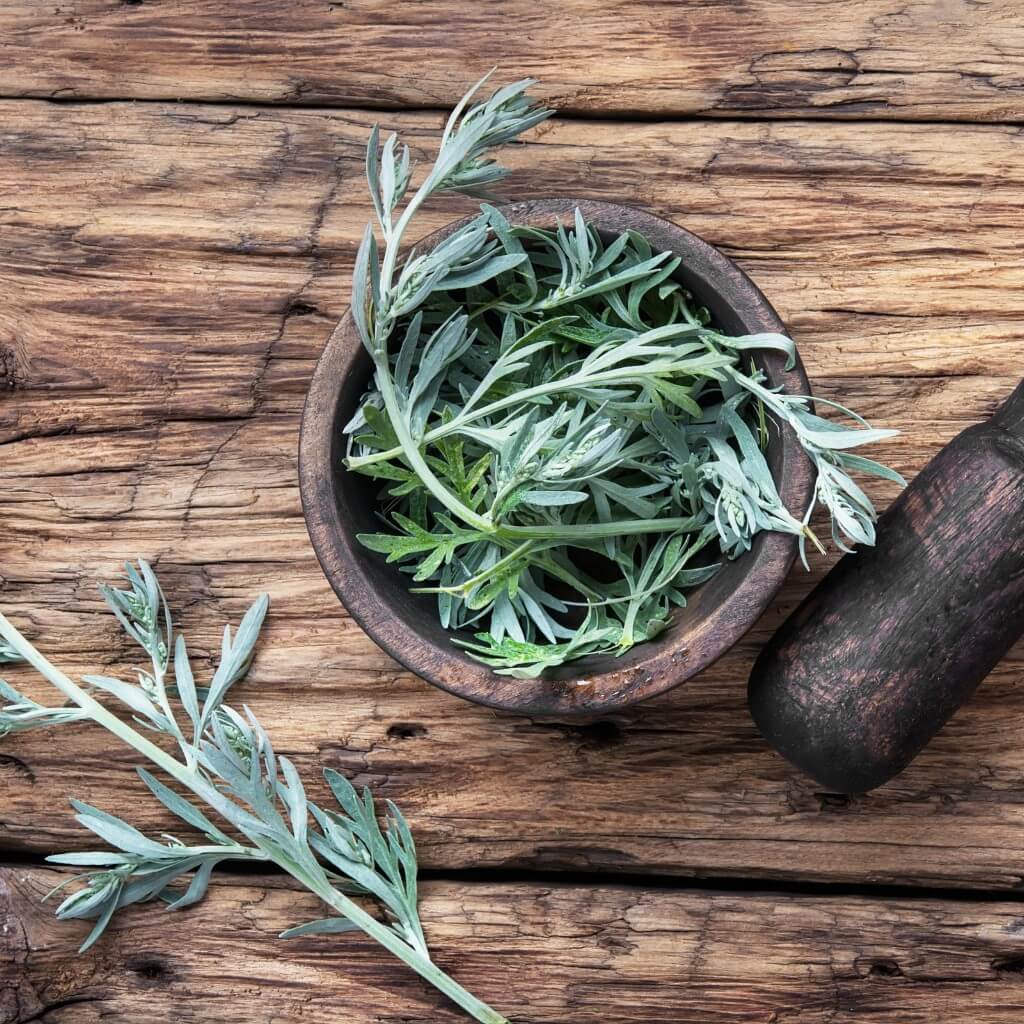
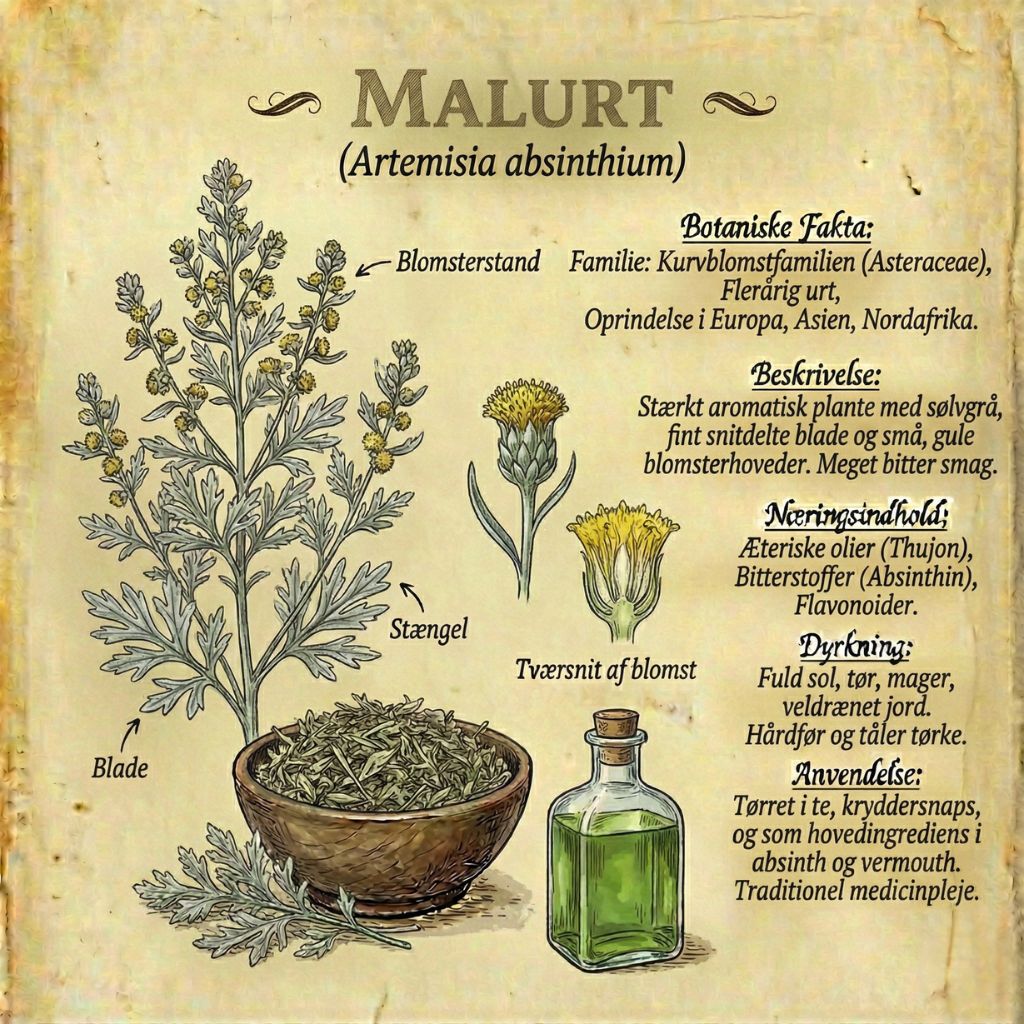
Wormwood (Artemisia absinthium) is a perennial herb in the daisy family. It forms a robust, bushy clump with stiff, ridged stems and a deep root system. The plants typically grow 60–90 cm tall, but under good conditions can reach up to 1.2 metres. The leaves are 2–3 times pinnately divided with narrow, lance-shaped segments that are densely hairy on both sides. This dense hairiness gives the plant its characteristic silvery-grey appearance, and the undersides of the leaves are almost white. From June to August, wormwood produces small, drooping flower heads with pale yellow blooms.
The whole plant is rich in essential oils, especially the bitter compound absinthin and the monoterpene thujone, giving it an intense, bitter taste and a sharp scent. Botanically, wormwood belongs to the genus Artemisia, which also includes mugwort and sea wormwood. Unlike many culinary herbs, wormwood is rarely used directly in food, as its bitterness is so pronounced. The leaves’ small oil-producing glands have made the plant of interest for folk medicine and spirits production, while also making it almost impervious to pests.
History and origin
From antiquity to the monastery gardens
Wormwood has a long cultural history in Europe and the Middle East. In ancient Greece and Rome, it was used for medicinal purposes and as a bitter spice. The Danish name “malurt” derives from an older form of “møl” (moth), since the plant was once placed among clothes as a moth repellent. In medieval monastery gardens, wormwood was a staple plant, its strong scent keeping lice, moths and other pests away from cabbages and delicate crops. Folk belief attributed magical properties to wormwood, and dried sprigs were burned to ward off evil spirits.
Snaps, absinthe and symbolism
In Denmark, wormwood has been cultivated since the Middle Ages, but it has rarely found its way to the dining table. Instead, it was used in bjesk and other spiced snaps, where its bitter flavour aids digestion. Pontic wormwood (Artemisia pontica) is a species with milder bitterness, which became the preferred ingredient in absinthe and vermouth. In folk ballads, wormwood also became a symbol of bitterness and sorrow, and in the Bible, the star “Wormwood” in the Book of Revelation is described as something that makes the water bitter. The French spirit absinthe became famous – and, due to its high thujone content, was banned in many countries in the 1900s. Production has since been regulated, and modern absinthe contains only trace amounts of thujone.
Taste and aroma
Wormwood’s flavour is intensely bitter, spicy and slightly camphor-like. Some describe it as a blend of sage, cedarwood and grapefruit. Because the flavour is so powerful, wormwood is used only in micro-doses to accentuate other elements, and it is best suited to robust dishes and drinks.
Good pairings
- Rich fish and game – mackerel, duck or lamb, where a drop of wormwood bitters adds depth.
- Sweet fruits like apple, pear or quince – a touch of wormwood in the pickling brine enhances the sweetness.
- Spices like cinnamon, cloves and star anise – in liqueurs or spiced cakes.
- Honey and dark syrup – an infusion adds contrast to strong cheese.
- Citrus and bitter orange – a couple of drops of wormwood bitters in a Negroni give it an edge.
Avoid combining wormwood with mild ingredients such as lettuce leaves, mild cheeses or light-fleshed fish; the bitterness will dominate. Always add wormwood towards the end of cooking or at the point of serving – prolonged heating can release too much bitterness and spoil the flavour.
Culinary use
Although wormwood is classed as a culinary herb, it is not an edible herb in the traditional sense. The bitter compounds absinthin and thujone give it a penetrating bitterness that can dominate any dish. For this reason, it is used only in very small amounts to add aroma to drinks and medicinal preparations. In Danish snaps culture, wormwood is used above all for bjesk – a spiced snaps enjoyed in small glasses after a heavy meal.
Snaps, bitters and bjesk
The classic recipe uses a single sprig of wormwood, steeped in Brøndum snaps for a couple of hours before the sprig is removed, so the bitterness doesn’t become overwhelming. Pontic wormwood is used in absinthe and vermouth, while garden wormwood can lend character to homemade bitters or herbal vinegar. A few ideas – all in micro-doses:
- Let a small sprig of wormwood steep in vodka or snaps for 24 hours; use a couple of drops in cocktails or as a digestive bitter after meals.
- Infuse wormwood in apple cider vinegar and use a couple of drops in a vinaigrette for robust salads.
- Add a single sprig of wormwood to the pickling brine for beetroot or pumpkin for a bittersweet note.
- Mix a touch of dried wormwood into a spice blend for game or fatty meat dishes – use very sparingly.
- Let a sprig steep in honey for a couple of days to make a contrasting topping for strong cheese, then remove it again.
Always remember that wormwood must be used in minuscule amounts. Its flavour is powerful, and its active compounds can be harmful in excessive doses.
Health and caution
Bitter compounds and traditional medicinal use
Throughout history, wormwood has been used as a medicinal herb. The plant’s bitter compounds stimulate stomach acid and bile and can boost appetite and digestion. Traditionally, wormwood has been used to expel intestinal worms, combat protozoal infections and soothe gastritis. Modern research has identified several biological activities: wormwood extracts display antifungal, antibacterial, antioxidant, anti-ulcerative and hepatoprotective properties, and there are indications that topical preparations may relieve inflammation and joint pain.
Thujone – an important warning
Despite these promising properties, wormwood must be used with great caution. The essential oil contains alpha- and beta-thujone, which in large amounts can be neurotoxic. Studies in animals show that high doses can trigger seizures, affect fertility and damage the central nervous system.
- Pregnant and breastfeeding women should avoid wormwood entirely.
- People with epilepsy and children should not consume wormwood.
- Use only small doses for short periods, and never as a substitute for medical treatment.
- There is no official guidance for a safe dosage – speak to a healthcare professional before use.
The information here is for general guidance only and does not replace professional medical advice.
Growing
Wormwood thrives best in full sun and well-drained soil. The plant is undemanding, but needs light to germinate and minimal watering once established.
Growing conditions
Wormwood grows naturally on poor, chalky slopes and roadside verges. In the garden it makes modest demands: full sun, well-drained soil and a little drought stress promote aroma production and compact growth. It thrives at pH 7–8 in light, sandy or gravelly soil. In overly rich soil or under overly damp conditions, the plant becomes leggy and develops a less intense aroma. Unlike many culinary herbs, wormwood tolerates light shade, but it then becomes less aromatic and grows more sprawling.
How to grow wormwood
Total time: 1 season (perennial)
- Pre-sprout the seeds
Sow wormwood indoors in March–April in well-drained seed compost. Press the seeds lightly onto the surface – they need light to germinate and should not be covered. Keep the soil moist, not wet, at around 18–22°C. Germination takes 10–21 days.
- Prick out and harden off
Once the seedlings have two true leaves, prick them out into small pots. Keep them somewhere bright and cool for compact growth, and harden them off outdoors in a sheltered spot for about a week before planting out.
- Plant out
Plant out once the risk of night frost has passed (late May to June), in a sunny spot in well-drained soil with a pH of 7–8. Space the plants 40 cm apart, or plant in a large pot to limit spreading and allelopathy.
- Water sparingly
Water only during prolonged drought – established plants are very drought-tolerant, and too much water can cause them to rot. Do not fertilise; too many nutrients weaken the aroma. A light liming every other year can benefit acidic soil.
- Prune and renew
Cut the withered, woody stems back to 5–10 cm in early spring, once new shoots appear. Remove flower heads before they set seed if you want to avoid self-seeding. Divide large clumps every 3–4 years to rejuvenate the plant.
Wormwood is fully winter-hardy throughout the Nordics and tolerates frost down to -15°C or lower without protection. Be mindful of the roots’ allelopathic properties; don’t grow wormwood too close to delicate plants, as it can inhibit their growth.
Storage
Harvesting and drying
Wormwood is harvested mainly for its leaves and stems, which are used for snaps, tea and medicinal extracts. The best flavour is achieved by cutting the stems at midsummer, when the plant is in full bloom. Use sharp scissors and harvest in the morning, once the dew has evaporated. Cut the stems about 5 cm above the ground so the plant can resprout. Tie the stems into bundles and hang them to dry somewhere dark, dry and airy. After 2–3 weeks the leaves will be bone-dry and can be crumbled into an airtight container.
Seeds, freezing and labelling
- Store dried wormwood cool and dark – it retains its aroma for up to a year.
- If harvesting seed, let the flower heads dry completely; cut them into a paper bag and shake the seeds loose. Seeds remain viable for up to three years.
- Fresh leaves can be frozen in small portions or infused in oil – always label clearly to avoid accidental use in cooking.
- Home-dried sprigs are lovely in flower arrangements and wreaths.
Look-alikes and quality
Possible mix-ups
Garden wormwood can be confused with other species in the genus Artemisia, in particular mugwort (A. vulgaris), western mugwort (A. ludoviciana), field wormwood (A. campestris) and sea wormwood (Seriphidium maritimum). Mugwort has green, almost smooth leaves and upright reddish stems, while wormwood’s leaves are silvery-grey, densely hairy and hang downward. Sea wormwood grows on coastlines and has sparse, greyish-white leaves and yellow flower heads; it should not be eaten because of its high thujone and santonin content. When in doubt, scent is a good clue: wormwood has an intense, bitter aroma, while mugwort smells milder and sweeter.
Buying and quality
Wormwood is rarely sold as a fresh herb in shops, but you can find seeds or plants at specialist nurseries and online retailers. Choose plants with compact growth and silvery-grey leaves free of discolouration, and avoid plants that are already flowering, as they self-seed more readily. If buying dried wormwood for snaps or medicinal use, the leaves should be whole and fragrant – store them in an airtight jar in a dark place. Pay attention to the species name: Pontic wormwood (Artemisia pontica) has a milder flavour than garden wormwood and is therefore preferable in drinks, while sea wormwood should not be used for food or drink.
Sustainability and biodiversity
Wormwood is a hardy plant that requires minimal upkeep. Its ability to thrive in dry, poor soils and manage without watering makes it well suited to sustainable gardens, and it reduces the need for pesticides, as it deters many pests. At the same time, its understated flowers attract a few pollinators, especially small bees and flies, and in the wild, wormwood serves as a host plant for certain moths.
However, wormwood can negatively affect biodiversity if it spreads unchecked. The plant produces allelopathic compounds that can inhibit the growth of nearby plants. It is therefore a good idea to grow wormwood in pots or in areas where it won’t compete with sensitive species, and to cut off the flowers before they set seed to limit self-seeding. Being perennial, wormwood can live for many years, saving the resources needed for replanting – but keep an eye on its spread.
Try this recipe
Wormwood’s bitterness is made for rich, robust meat, and lamb is one of its very best partners. A touch of wormwood in the marinade or sauce cuts through the richness and gives the dish a grown-up, herbal depth. Try it with our lamb here:

Equipment and products
For a wormwood-spiced lamb or game dish, you’ll get the most out of the meal with a full-bodied, spicy red wine that matches the bitterness. Our GlenWood Grand Duc Syrah 2022 has dark fruit and peppery notes that stand up beautifully to lamb, game and a bitter wormwood sauce.
Frequently asked questions
Wormwood is not an edible herb in the traditional sense. Its bitterness and high thujone content make it unsuitable in large amounts. Use only small amounts as a flavouring in snaps, tea or medicinal bitters, and avoid wormwood entirely if you are pregnant or breastfeeding.
Yes. Wormwood is perennial and tolerates both frost and drought. It thrives throughout the region, as long as it has good drainage and gets sun.
Absolutely. Growing it in pots is a good way to control the plant’s spread and protect other plants from its allelopathic roots. Choose a large pot with a drainage hole, fill it with well-drained soil and place it somewhere sunny. Remember to water during prolonged drought.
Harvest the stems in June–August, when the plant is flowering. Cut them a couple of centimetres above the ground in the morning, tie into small bundles and hang to dry somewhere dark and airy. For seed harvesting, wait until the flower heads are completely dry.
Absinthe and bjesk are produced under strict regulations that limit thujone content. Commercial products with a legal thujone content are safe for most adults in small amounts. Homemade snaps should only steep briefly to avoid excessive bitterness and thujone – stick to small glasses as a digestif.
Facts about wormwood
| Field | Value |
|---|---|
| English name | Wormwood |
| Latin name | Artemisia absinthium |
| Family | Daisy family (Asteraceae) |
| Plant type | Perennial (herbaceous) |
| Height | 60–120 cm |
| Hardiness | Very hardy; tolerates frost and drought |
| Light | Full sun to light shade |
| Soil | Dry to moderately moist, well-drained, sandy or slightly loamy; pH 7–8 |
| Sow/plant | Pre-sprout March–April; plant out May–June |
| Flowering | June–August |
| Harvest | June–August (leaf/stem); late summer (seed) |
| Flavour | Bitter, spicy, sage-like, camphor |
| Culinary use | Snaps, bjesk, bitters, herbal vinegar (micro-doses only) |
| Caution | Contains thujone; avoid if pregnant, breastfeeding, a child, or epileptic |
| Storage | Dried leaves in an airtight jar; oil infusions; freezing as needed |
