

Allspice, also known as Jamaican pepper, is a key spice that combines the flavor nuances of cinnamon, clove, nutmeg and black pepper. The aromatic berry from the tropical tree Pimenta dioica lends a warm, mellow-sweet note and has been used for centuries in both Caribbean jerk seasoning and European baking. In Denmark, allspice is best known in pickling brine for herring, marinades and Christmas cookies, but it holds potential for much more.

Advertisement: The page displays ads and contains advertising links (affiliate links). See our advertisers here.
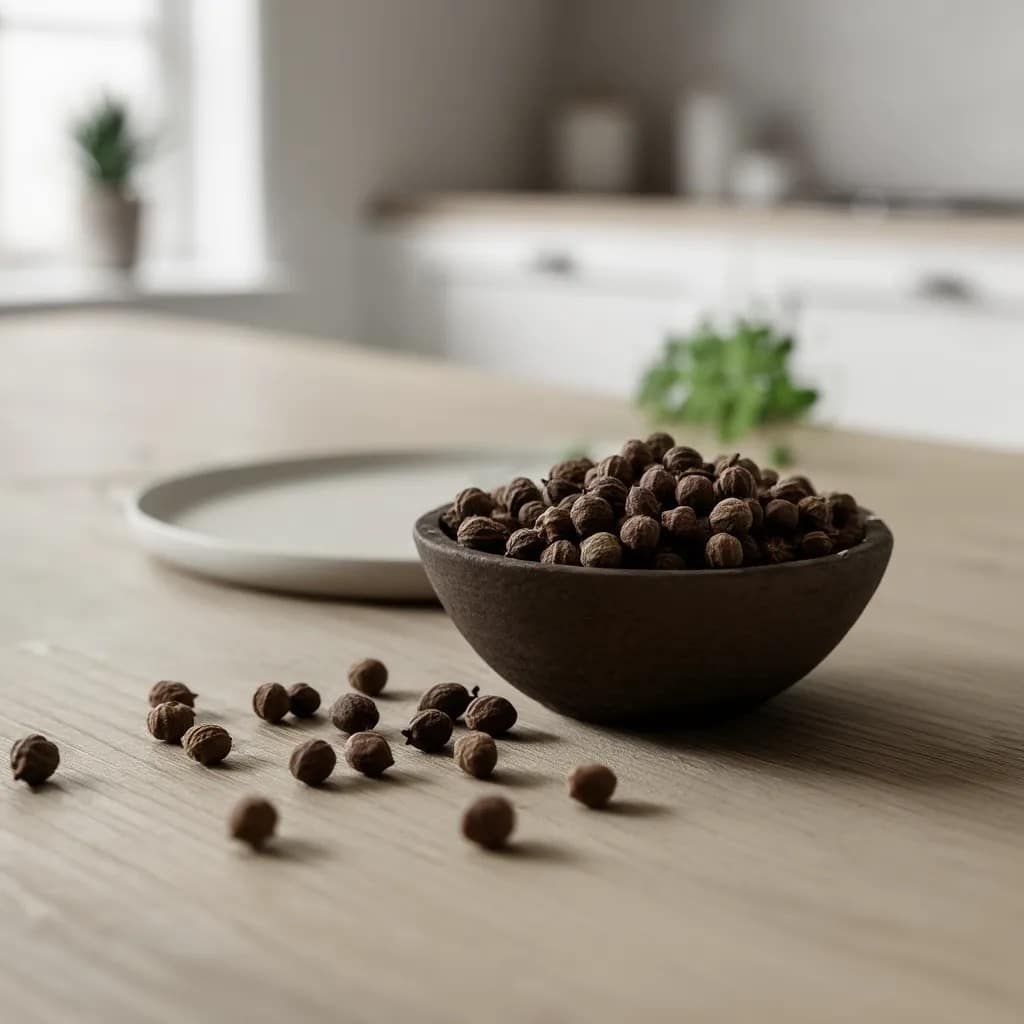
Allspice is the dried, unripe berries of the allspice tree. The name comes from the fact that the spice tastes like a blend of clove, cinnamon and nutmeg all at once. It’s a classic in Christmas baking, mulled wine, marinades, frikadeller (Danish meatballs), braised red cabbage and sausages, as well as in Caribbean jerk seasoning. This guide gives a thorough introduction to flavor, history, uses, health aspects, growing, harvesting and storage.
Estimated reading time: 8 minutes
History and origin
Allspice originates from the Caribbean and Central America, where the Maya and Aztecs used it as a spice and medicine for thousands of years. The berries were first introduced to Europe in the 1600s, when Spanish conquistadors believed it was pepper and named the tree “pimenta”.
Botany and plant
Allspice belongs to the myrtle family (Myrtaceae). It’s a tropical, evergreen tree that in its native habitat can grow up to 18 meters tall, with dark green, leathery leaves. The tree is dioecious, meaning there are both male and female plants, and pollination requires both sexes. The small white flowers grow in clusters and develop into berries that resemble small peas. The berries are harvested green and sun-dried, after which they turn brown and hard.
From the Caribbean to Europe
British traders imported allspice from Jamaica, which is still the largest producer. Jamaica is known for producing allspice with a high essential oil content — up to 4.5% — with eugenol as the main component. The spice was popular in British cuisine in the 1700s and 1800s and featured in pickling, baking and liqueurs such as “pimento dram”.
Historical use in the Nordics
In Denmark, allspice arrived via the colonial trade and became part of the Christmas spices, for example in brunkager (Danish brown spice cookies) and braised red cabbage. Some Danish dialects call the spice “kryddenellike” (literally “spice clove”) because of its clove-like scent. In the 1700s, allspice became an important spice in Scandinavian preserves — in pickles, herring, headcheese, baking and mulled wine — and in the Faroe Islands and Iceland, the berries were in some places used in cured meat for their preservative properties.
Flavor and aroma
Allspice has a complex, warm flavor reminiscent of clove, cinnamon and nutmeg, with a slightly peppery undertone and a hint of florals and bitterness. The name arose precisely because Europeans felt the spice tasted like several spices at once. The primary aroma compound is eugenol — the same compound that gives clove its characteristic scent.
Allspice pairs well with meats such as pork, lamb and game, with root vegetables like carrot and parsnip, and with fruits such as apple and pear. It suits cabbage dishes and pickled vegetables and harmonizes with ginger, chili, garlic, red wine, rum and orange liqueur. Use it sparingly — the flavor is intense and can easily overpower delicate ingredients like fish or mild vegetables.
Culinary use
Allspice can be used whole or ground, and the leaves can be used like bay leaves in stews. A small amount goes a long way.
In the Danish kitchen
In Northern Europe, allspice is popular in pickling brine for herring, mulled wine, braised red cabbage, brunkager and pepperkaker (Norwegian spiced Christmas biscuits). It’s closely tied to the spices of Christmas and is used both in sweet cakes and in savory meatballs and preserves.
- Add a few whole berries to the pickling brine for beets or herring.
- Grind allspice and mix with cinnamon, nutmeg and clove for homemade spice cookies.
- Make a jerk-inspired rub with allspice, chili, ginger and garlic for grilled chicken.
- Add a couple of whole berries to mulled wine or apple cider for extra depth.
- Use fresh allspice leaves like bay leaves in stews.
Internationally
In the Caribbean, allspice is a key spice in jerk marinades for chicken and pork. In Latin America, it’s added to mole sauce, tamales and pickles, and in the Middle East it’s used in roast lamb and rice dishes. It features in spice blends such as Jamaican jerk, Mexican mole, German Lebkuchengewürz and British mixed spice.
Preparation
Use whole berries in simmered dishes, pickling brine and mulled wine, where they can release flavor over time and be removed before serving if desired. Grind the berries just before use for rubs, marinades and baking for maximum aroma. The wood of the allspice tree is also traditionally used to smoke meat, giving smoked ham and sausages a warm, spiced tone.
Health and safety
Allspice contains bioactive compounds such as eugenol, quercetin, gallic acid and ericifolin, which in laboratory studies have shown antimicrobial, anti-inflammatory and antioxidant effects. In folk medicine, allspice tea is used against colds, stomach cramps and muscle soreness.
Bioactive compounds
- Eugenol – the primary aroma compound with antiseptic properties
- Quercetin and gallic acid – antioxidants
- Essential oil – up to 4.5% in Jamaican allspice
Safety
Culinary amounts of allspice are typically safe. Higher doses or use of concentrated essential oil can cause irritation. Pregnant women and people with liver or stomach conditions, or those undergoing medical treatment, should be aware of possible interactions. Modern research is limited, and most studies have been conducted in test tubes or on animals. This text does not replace professional health advice — always seek professional help if you’re ill.
Growing and harvesting
Allspice is a tropical tree that requires warmth, but can be grown in a greenhouse or large pots in Denmark. Follow the steps and protect the tree from frost.
Growing conditions
- Light: Full sun to partial shade, at least 6 hours of sun a day for the best flavor.
- Soil: Loose, humus-rich and slightly acidic soil (pH 6.1–7.8).
- Water: Keep the soil moist but not waterlogged; water when the top 2 cm are dry.
- Humidity: High; mist the leaves regularly during dry periods, and protect from wind and drafts.
- Temperature: Does not tolerate frost. Overwinter frost-free; bring the pot indoors below 10 °C.
How to grow allspice
Total time: Several years
- Pre-sprout the seeds
Soak the seeds for 1-2 days to soften the shell. Sow them in lightly moist, well-drained soil at 25-30 °C. Germination takes 6-8 weeks.
- Prick out the seedlings
When the seedlings have 4-5 leaves, prick them out into larger pots with nutrient-rich, well-drained potting soil and a drainage layer at the bottom.
- Harden off the plants
Before placing them outdoors in summer, gradually acclimate the plants to sun and wind over one to two weeks.
- Plant out and maintain
In summer, larger plants can stand in pots on a sunny patio or in a greenhouse with 6-8 hours of sun and light afternoon shade. Keep the soil moist and fertilize every 4-6 weeks.
- Ensure pollination and overwintering
Since the tree is dioecious, both male and female plants are needed to produce berries. Always overwinter it frost-free and in a bright spot at temperatures above 10 °C.
Storage
Berries begin to form after several years, once the tree is mature. Harvest the berries while they’re still green but fully developed; they should have a slightly glossy surface. Cut the clusters and place them on a tray in direct sun until they dry and turn dark brown.
- Store whole berries in airtight jars away from light and heat; they keep their flavor for up to two years.
- Ground allspice loses its aroma faster — so grind it as needed, just before use.
- Freezing isn’t necessary, as dried berries keep for a long time. Fresh leaves can be dried or frozen.
Mix-ups and quality
The name “allspice” can make some people think it’s a blend of several spices, but it’s actually a single spice. There are, however, other plants mistakenly called allspice: for example, Carolina allspice (Calycanthus floridus), a shrub whose bark smells spicy but which isn’t edible. Dried cloves also resemble small brown buds, but have a quite different shape, with a long stem and bud.
Buying and quality
Buy whole allspice berries where the husks are intact and dark brown, and which smell strongly of spice. Organic products are often of higher quality. Avoid powder that has been sitting around for a while — it’s better to grind it yourself just before use. Growing the plant in a greenhouse or pot in Denmark can help reduce the need for imports; otherwise, choose organically grown berries and support sustainable producers.
Try this recipe
Allspice is at the very heart of Caribbean jerk seasoning, where its warm blend of clove, cinnamon and pepper meets chili, ginger and garlic. Together they give the chicken a deep, spicy heat with a sweet touch. Try it in our Spicy Jamaican chicken in the air fryer – jerk-spiced with Caribbean fire, where allspice is a key part of the spice blend.
Equipment and products
If you want the jerk and barbecue flavor without mixing the whole rub yourself, a ready-made marinade is a great starting point, which you can round off with a little extra ground allspice. Try Barbeque Marinade Dip from Vestjyske Delikatesser as a base for grilled chicken or pork, where allspice’s warm tone fits in perfectly.
Frequently asked questions
No. Allspice is a single spice — the dried berries of Pimenta dioica. The name comes from the fact that the flavor is reminiscent of a blend of clove, cinnamon and nutmeg all at once.
In Denmark, allspice is used especially in Christmas baking like brunkager, in mulled wine, braised red cabbage, pickling brine for herring, meatballs and preserves. It’s closely tied to the spices of Christmas.
Only with some effort. The allspice tree doesn’t tolerate frost and must be overwintered frost-free. It can be grown in a greenhouse or large pots that are brought indoors at temperatures below 10 °C.
Culinary amounts are typically safe. Higher doses or use of concentrated essential oil can cause irritation. Seek medical advice if you’re ill or undergoing medical treatment.
Use whole berries and grind them just before use. Store the spice in airtight jars away from light and heat to preserve the essential oil.
Facts about allspice
| Field | Value |
|---|---|
| English name | Allspice (Jamaican pepper) |
| Latin name | Pimenta dioica |
| Family | Myrtle family (Myrtaceae) |
| Plant type | Evergreen, tropical tree |
| Origin | Caribbean and Central America |
| Height | Up to 18 m (less in a pot) |
| Hardiness | USDA zone 10–11; does not tolerate frost |
| Harvest | When the berries are ripe but still green |
| Flavor | Warm, sweet, clove-, cinnamon- and nutmeg-like |
| Culinary use | Jerk seasoning, pickling, baking, pickles, mulled wine, braised red cabbage |
| Storage | Whole berries in airtight jars; grind as needed |
