

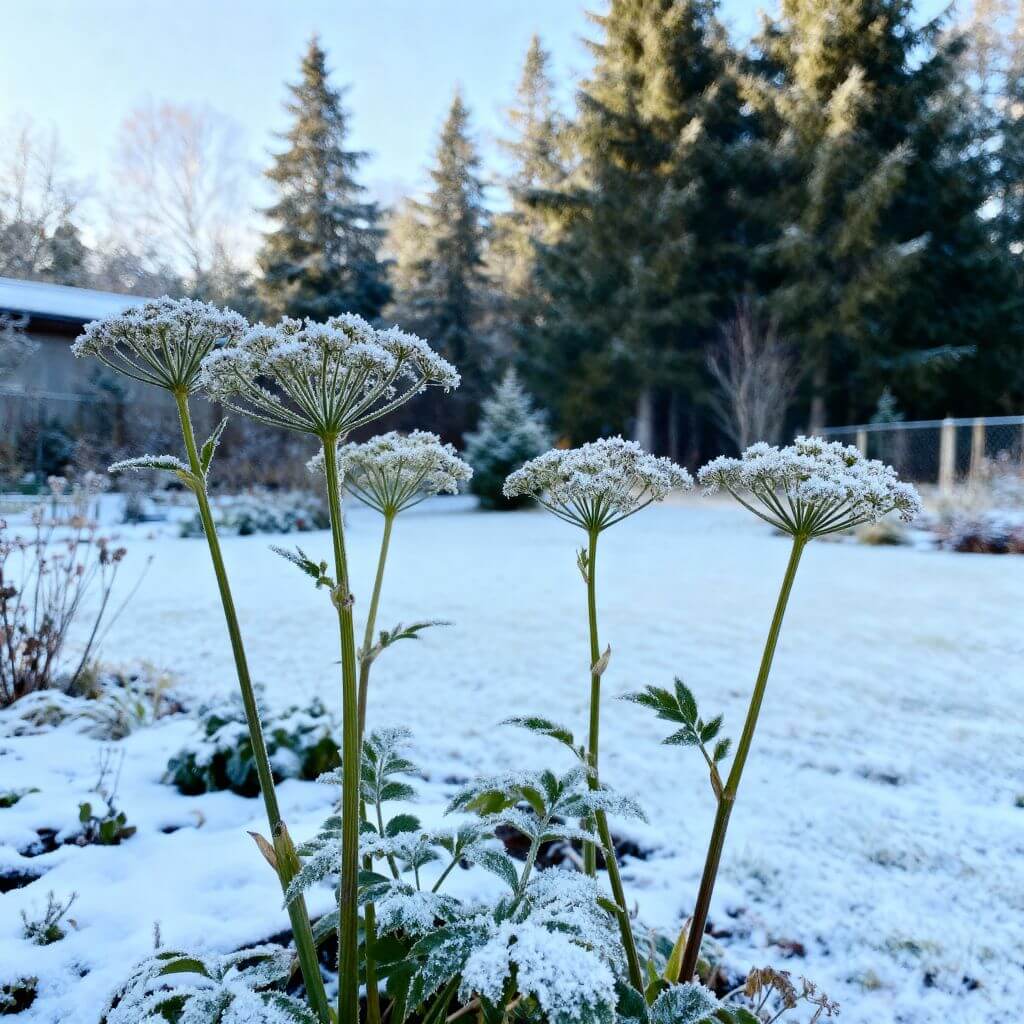
Angelica is an impressive, aromatic umbellifer that has for centuries been an important part of Nordic culinary and medicinal tradition. It grows as a biennial giant with fragrant leaves and sturdy, hollow stems that culminate in large, hemispherical clusters of yellowish-white flowers. Angelica has its roots in Scandinavia and has been cultivated in special angelica gardens since the Viking Age.

Advertisement: The page displays ads and contains advertising links (affiliate links). See our advertisers here.
Today the plant is once again gaining popularity as part of New Nordic cuisine, where every part – from leaves and stems to seeds and root – is used as a spice, in confectionery and in schnapps. Its Latin name is Angelica archangelica, and the plant is also known as Holy Ghost, garden angelica or Norwegian angelica. The flavor is intense, with notes of anise and licorice, both bitter, warm and perfumed, and is therefore used in small amounts.
Estimated reading time: 8 minutes
History and origin
The Viking Age and angelica gardens
Angelica has a long history in the Nordic region. It was cultivated in special “angelica gardens” and was an important resource for the Vikings, who brought the plant along on long sea voyages. It was believed that angelica’s high vitamin C content prevented scurvy, but a Swedish study later showed that the dried plant parts contain almost no vitamin C. The leaves stay fresh for only a short time, so the Vikings mainly ate the juicy stems.
The Archangel and the monastery gardens
The name archangelica comes from the Greek word for archangel. According to legend, the Archangel Michael appeared to a monk and revealed the plant’s healing properties against the plague. Angelica was regarded as a protective herb and featured in medieval monastery gardens and on the household herb shelf. In the Faroe Islands and Greenland it grew wild along damp coasts and in valleys, and was harvested as an early green spring shoot. Today angelica is used in New Nordic cuisine, where candied stems, spiced seeds and aromatic root lend a unique flavor to desserts, schnapps and pickling.
Flavor and aroma
Angelica has a complex flavor profile with notes of anise, licorice, celery and a spicy, warm sweetness. The aroma is warm, perfumed and slightly anise-like, and it can both lift sweet dishes and add depth to savory food. Because the flavor is intense, angelica is best used in small amounts – start cautiously and adjust to taste.
Some of the best flavor pairings with angelica are:
- Fruit and berries – Stems and seeds pair well with rhubarb, apples, gooseberries and plums.
- Spirits – Seeds and roots lend character to schnapps, gin, vermouth and bitters. Try steeping the seeds in aquavit together with dill and fennel.
- Baking – Add dried, crushed seeds to rye bread, cookies or candied stems in cakes.
- Meat and fish – A compound butter with finely chopped angelica leaves is good with salmon, trout or light meat. Also try braising root pieces together with lamb.
- Pickling and jam – Angelica stems add spice to pickled vegetables and jams.
Culinary uses
Angelica’s aroma suits both sweet and savory dishes, but should be used sparingly, as the flavor is powerful. Every part of the plant can be used: leaves and flowers fresh in salads and tea, the young stems candied or pickled, the seeds as a spice in liqueurs, and the roots in schnapps or herbal medicine.
In Danish cuisine
In Denmark, angelica is most closely associated with candied stems and with flavoring schnapps. Cut young stems into pieces, blanch them briefly and simmer them in sugar syrup; let them dry and roll them in sugar, then serve them as confectionery or as a cake decoration. The tender young leaves can be used freshly chopped in salads together with other herbs such as wood sorrel, dill and chives, and a green herb butter with angelica works well with fish.
Internationally
In French confectionery, candied angelica stems are known as “confiture d’angélique,” used as a confection and decoration on pastries. The seeds feature in classic herbal spirits such as gin, Chartreuse and vermouth, while the root lends flavor to bitter elixirs. In Iceland and the Faroe Islands, angelica has long been a wild edible plant, and in Greenlandic cuisine it remains a staple part of the Nordic foraging tradition.
Preparation
For candying, the young stems are blanched and slowly simmered in sugar syrup until fully infused. For tea, young leaves and flower umbels are dried and brewed as a bittersweet, digestive herbal tea. For schnapps and liqueur, the ripe seeds are crushed and steeped together with the root in clear spirits. Whatever the method, small amounts give the best balance, as the strong aroma otherwise easily dominates.
Health benefits
Traditional folk medicine
In folk medicine, angelica has been used as a warming and strengthening plant. Roots, seeds and stems are traditionally believed to aid digestion and act as an antispasmodic, diaphoretic and expectorant, and the plant featured in teas, decoctions, tinctures and elixirs. In the Middle Ages it was believed to protect against the plague and evil spirits, and an old-fashioned remedy for colds was to chew a piece of angelica root with honey. These uses belong to tradition and are not documented as medical treatment.
Important precautions
Angelica contains furanocoumarins, which can make the skin photosensitive. Handling fresh stems in sunlight can cause skin irritation, so it is recommended to wear gloves and avoid direct sun exposure afterward. In larger amounts, angelica can also stimulate menstruation, so pregnant women and those with heavy periods should avoid larger intakes. Use the plant as a spice in moderate amounts, and seek advice before any actual medicinal use.
Growing
Angelica prefers cool areas and moist, nutrient-rich soil. The plant grows in partial shade to full sun, but in warm areas a dappled shade position protects against drying out. It thrives in moist, slightly acidic to neutral soil with plenty of organic matter and good drainage, and it does not tolerate drought. In the first year it forms a rosette with leaves 30–90 cm tall; the following year it sends up a stem 100–200 cm tall. The flowers appear in June–July, and after setting seed the mother plant dies, but often leaves seeds behind for new plants.
How to grow angelica
Total time: 1-2 seasons
- Sow fresh seeds
Sow fresh seeds in late summer or early spring in moist, humus-rich soil. Seeds have a short shelf life, so use freshly harvested ones, and cover them only lightly with soil.
- Pre-sprout and stratify
In cold regions, the seeds can be started indoors. Give them cold stratification at about 4 °C for 4-6 weeks to break seed dormancy, then place them at 18-20 °C.
- Plant out
Plant the young plants out before they grow taller than about 10 cm, as the taproot develops quickly. Dig the soil deep and loose, and keep 60-120 cm between plants.
- Water and tend
Water regularly, especially during dry periods, but avoid waterlogging. Mulch with compost to retain moisture and add nutrients, and keep the soil free of weeds.
- Harvest
Harvest young leaves in spring, juicy stems in May-June, roots in autumn of the first year, and seeds in late summer when the umbels are ripe.
Safe identification when foraging
Angelica can be confused with other large umbellifers, some of which are extremely dangerous. Never forage angelica in the wild unless you are completely certain of the identification – if in doubt, leave the plant alone.
- Poison hemlock (Conium maculatum) is highly toxic. It has spotted, often reddish-brown stems and an unpleasant, mouse-like smell – angelica, by contrast, is aromatic and has smooth, green to purple-streaked stems.
- Fool’s parsley and other poisonous umbellifers can look similar from a distance. Angelica’s strong, sweetly bitter anise scent is an important distinguishing feature; poisonous species do not smell like that.
- Giant hogweed (Heracleum mantegazzianum) has very large, hand-shaped leaves and coarse, hairy stems, and causes severe skin rashes in sunlight.
- Wild angelica (Angelica sylvestris) is a related, harmless species, but smaller and with a darker stem.
Storage
Fresh parts
Store fresh stems in the refrigerator wrapped in damp paper for a couple of days. Young leaves keep for only a short time and are best used right away, while older leaves become coarse and bitter.
Dried and candied
- Candied stems can keep for several months in sugar syrup.
- Dried roots and seeds are stored dark and dry in airtight jars.
- Cut off ripe umbels, air-dry them, knock the seeds loose and store them in sealed containers.
Try this recipe
Angelica’s fresh, anise-like leaves work especially well with oily fish such as salmon. Finely chop a few young leaves and mix them into the mixture or into an herb butter on top – it adds an aromatic, Nordic note that balances the richness of the fish. Try them in Salmon Patties in the Air Fryer – Crispy Without Oil in 12 Minutes.
Equipment and products
If you don’t have fresh angelica on hand, a ready-made compound butter can give fish dishes a similar herbal lift. A butter with fresh herbs melts beautifully over warm salmon or trout from the air fryer and highlights the Nordic flavor profile. See Coastal Fish Herb Butter in the shop.
Frequently Asked Questions
Yes. Angelica thrives in the Nordic region’s cool climate, especially where the soil is moist and nutrient-rich. It needs partial shade and regular watering.
Angelica is biennial or short-lived perennial. It forms a rosette in the first year and flowers and sets seed in the second year. After flowering the mother plant dies, but the seeds germinate into new plants.
Yes, but in moderate amounts. Leaves, stems, seeds and roots can be eaten or used as a spice. Be aware of possible photosensitivity, and avoid larger intakes during pregnancy.
Angelica has a strong aromatic scent and smooth, green to purple-streaked stems. Poison hemlock has spotted stems and an unpleasant, mouse-like smell. If in doubt when foraging, leave the plant alone.
The plant is used in schnapps and gin, for candied stems, as a culinary herb in tea and desserts, and as an ornamental plant. It also has a place in traditional herbal medicine as a digestive and expectorant remedy.
Facts about angelica
| Field | Value |
|---|---|
| English name | Angelica |
| Latin name | Angelica archangelica |
| Family | Umbellifer family (Apiaceae) |
| Plant type | Biennial / short-lived perennial |
| Height | 90–180 cm |
| Hardiness | Hardy in the Nordic region; tolerates frost but not drought |
| Light | Partial shade to full sun |
| Soil | Moist, humus-rich, slightly acidic to neutral and well-drained |
| Sow/plant | Fresh seeds in late summer or early spring; plant out before 10 cm tall |
| Flowering | June–July |
| Harvest | Leaves: spring; stems: May–June; roots: autumn; seeds: late summer |
| Flavor | Bitter, aromatic, anise/licorice |
| Culinary use | Candied stems, tea, spice in schnapps/liqueur, herb butter, salads |
| Storage | Candied stems in sugar syrup; dried roots and seeds in sealed jars |
