

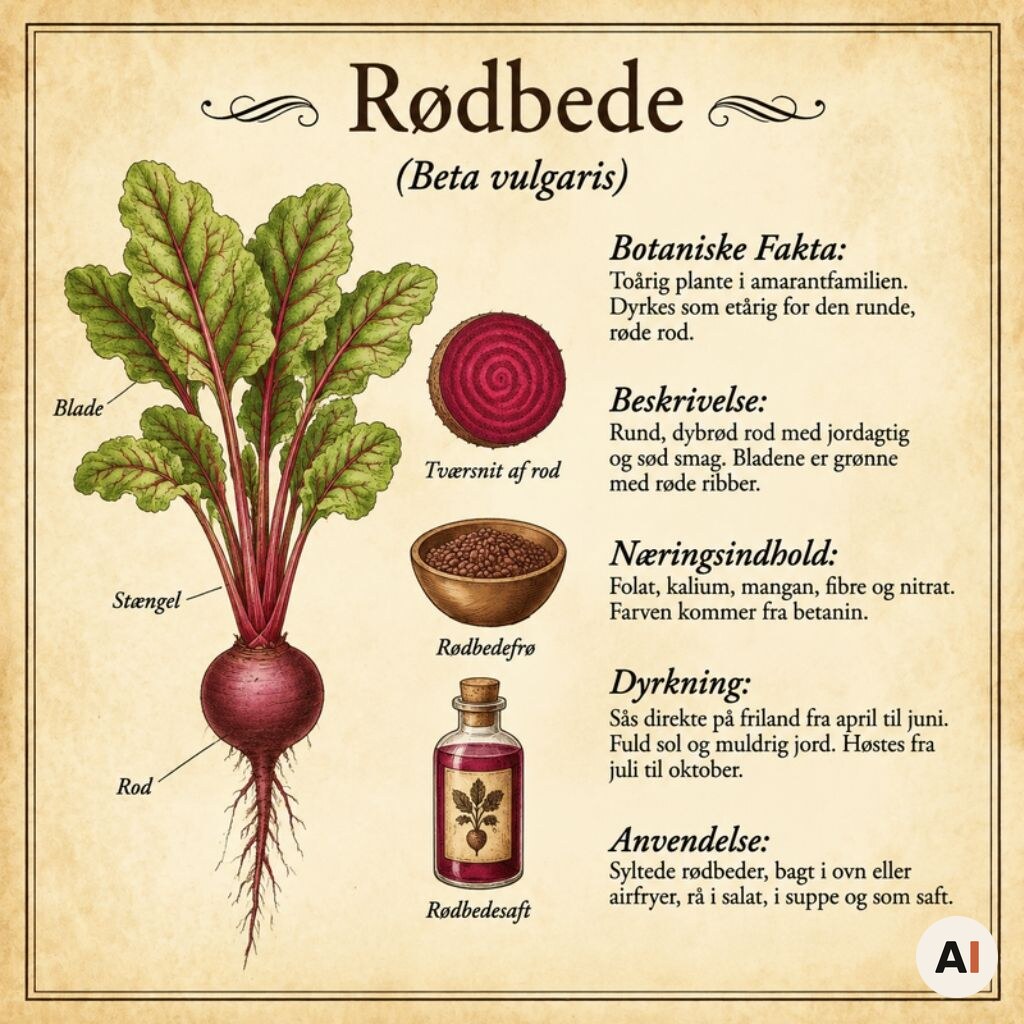
Beetroot is one of those vegetables I always keep in the fridge from late summer well into spring. It is earthy and sweet at the same time, and the deep red colour makes even an ordinary weekday meal feel a little festive. Botanically it is called Beta vulgaris subsp. vulgaris and belongs to the Conditiva group – the beets grown for their round, juicy root. It is a close relative of both sugar beet and chard.
In Denmark, most people know beetroot as a pickled side for liver pâté and frikadeller (Danish meatballs), but it can do so much more – from crisp raw salads to soft, baked pieces with an almost caramel-like sweetness. Baking is my favourite method, and this is where the air fryer is perfect: the hot air concentrates the sweetness, and I do not have to turn on the big oven.
In this Food Encyclopedia entry, I go through the history, flavour, nutritional content, growing and storage of beetroot – and share the tricks I use myself when beetroot is going into the air fryer.
Estimated reading time: 6 minutes
History and origins
From sea beet to kitchen garden
Beetroot descends from the sea beet, Beta vulgaris subsp. maritima, a wild plant that grows along the coast. It was domesticated in the ancient Middle East, and at first it was not the root that people were after at all – it was the green leaves.
The Egyptians, Greeks and Romans all grew the plant, and from Roman times it is believed to have been grown for its root as well. The plant is mentioned in Babylonian writings as early as the 8th century BC, so it has been with us for millennia.
Juice that coloured the wine
Beetroot’s strong colour has its own history, too. In the mid-1600s, the juice was often used to colour wine. I make use of that property in my own kitchen when an icing or a homemade pasta needs a natural pink colour.
Flavour and aroma
Sweet and earthy
Beetroot has a flavour you recognise straight away: sweet, earthy and with a touch of minerality. The sweetness comes from the root’s natural sugar – 6.76 g per 100 g – while the earthy note is due to a compound called geosmin. It is the same compound that gives the smell of fresh soil after a rain shower.
Raw, baked or pickled
Raw, beetroot is crisp and fresh with a distinct earthy note. Baked, it turns soft, the sweetness comes forward and the earthy taste becomes rounder. Pickled, it gets a light tang from the vinegar that balances the sweetness – which is why pickled beetroot goes so well with rich dishes like liver pâté and frikadeller.
Yellow and striped varieties
Besides the classic dark red beetroot, you can find yellow beetroot and the Italian variety Chioggia, which has pink and white rings inside. The yellow ones are milder in flavour and do not bleed colour in the same way – so they are a good choice if you want to avoid a pink dish.
Culinary uses
In the Danish kitchen
Pickled beetroot is almost indispensable on the Danish table – on rye bread with liver pâté, next to the frikadeller and on top of biksemad (a Danish hash of fried potatoes and meat). Grated raw beetroot is a fixture in råkost (Danish raw vegetable salad), and pariserbøf, the classic Danish beef patty, is traditionally served with beetroot, capers, horseradish, onion and a raw egg yolk.
Internationally
Beetroot has a central place in Eastern European cooking, but it also features in classics elsewhere. Here are some of them:
- Borscht (Ukraine): beetroot soup with a deep, ruby-red colour.
- Barszcz czerwony (Poland): Poland’s red beetroot soup.
- Biff à la Lindström (Sweden): patties with pickled beetroot and capers in the mince.
- Pyttipanna (Sweden): Swedish fried hash, served with pickled beetroot.
- Labskaus (Northern Germany): a classic sailors’ dish in which beetroot is part of the recipe.
- Burgers (Australia and New Zealand): a slice of pickled beetroot is a classic topping.
In the air fryer
In the air fryer, I bake beetroot in two ways. Whole and wrapped in aluminium foil, the roots turn juicy and tender all the way through. Peeled, cut into wedges or cubes and tossed in a little oil and salt, the pieces get a lightly caramelised surface and a soft, sweet centre.
Cut the pieces to roughly the same size so they become tender at the same time, and shake the basket a couple of times along the way. The beetroot is done when a knife slides in easily. If you are baking it together with other root vegetables, put the beetroot on one side of the basket – otherwise everything turns pink. Thin slices can also be turned into crunchy beetroot crisps.
Health benefits
Nutritional content
This is the nutritional content per 100 g of raw beetroot:
- Energy: 43 kcal
- Carbohydrate: 9.56 g (of which sugars 6.76 g)
- Dietary fibre: 2.8 g
- Protein: 1.61 g
- Fat: 0.17 g
- Folate: 109 µg
- Potassium: 325 mg
- Manganese: 0.329 mg
Betanin and nitrate
The red colour comes from betanin, a pigment of the betalain type. Beetroot also absorbs nitrate from the soil, so the content varies from root to root. Beetroot can contain a lot of nitrate, and too much nitrate is considered a health risk. That is why I enjoy it as a natural part of a varied diet – not in large amounts every single day.
When your urine turns red
If you eat a lot of beetroot, both urine and stools can take on a reddish colour. The phenomenon is called beeturia and is harmless, but it can be mistaken for blood – so it is good to know about it before you start to worry.
Growing
Beetroot is easy and rewarding to grow, even if you are new to the kitchen garden.
Growing conditions
- Soil: nutrient-rich, moist and loosened soil, preferably with compost.
- Water: keep the soil moist throughout the whole growing period.
- Light: a sunny spot.
- Soil temperature: at least 6 °C before you sow.
- Pots and raised beds: beetroot grows perfectly well in both.
- Frost: beetroot does not tolerate frost, but with a little covering it can handle a light overnight frost.
How to grow beetroot
Total time: 2-3 months
- Prepare the soil
Choose a sunny spot, loosen the soil thoroughly and mix in compost so that it is nutrient-rich and holds moisture.
- Sow the seeds
Sow outdoors from May to early July, when the soil is at least 6 °C. Place the seeds about 2-3 cm deep, with about 8 cm between them and 25-30 cm between the rows. Varieties for storing and pickling are sown in June.
- Thin out and water
Thin out the plants so the roots have room to grow, and keep the soil moist throughout the whole period.
- Harvest
Harvest from August to October, when the root is at least 4 cm thick, about 55-65 days after germination. Twist the top off instead of cutting it, and lift the beetroot before the night frosts.
My best harvesting tip
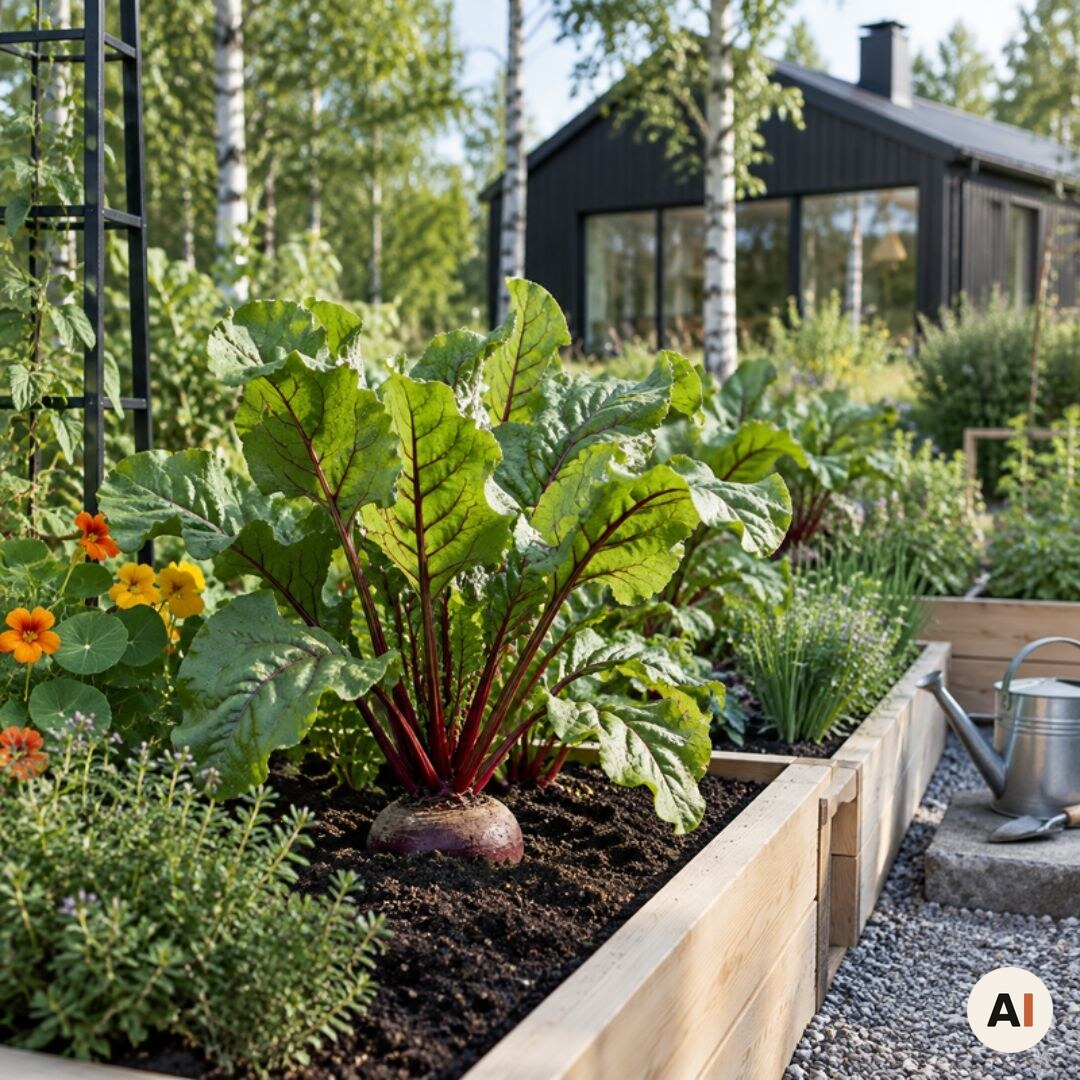
When you harvest, twist the top off instead of cutting it – that way the root does not bleed. I sow a row myself in May for the first beetroot, which I bake whole in the air fryer, and an extra row in June for storing and pickling.
Storage
In the fridge
Fresh beetroot keeps for a couple of weeks in the fridge in a plastic bag with holes. Twist the tops off before it goes into the fridge, so the leaves do not draw moisture out of the root.
Long-term storage and freezer
If you have plenty of beetroot from the garden, it can be stored for six months or more – well into spring. This requires a dark, cool and frost-free place with a little ventilation. Here are the options:
- Sand: place the beetroot in sand at about 0–2 °C.
- One layer: lay them loosely in a single layer so that air can circulate.
- Earth clamp: the old-fashioned solution – a covered mound of earth – if you have room in the garden.
- Freezer: peel the beetroot, cut it into slices and freeze it.
Try this recipe
Beetroot’s natural sweetness comes out best of all when it is baked, and the air fryer’s dry, circulating heat is made for the job. Try our recipe for Baked beetroot in the air fryer – the beetroot turns tender and sweet without you having to turn on the oven. I top mine with a sprinkle of crumbled feta, toasted walnuts and a little fresh thyme just before serving. That gives you a warm side dish that goes equally well with chicken, fish and a green salad.
Frequently asked questions
It is up to you. If you bake the beetroot whole in aluminium foil, the skin rubs off easily afterwards. If it is going to be cut into wedges or cubes, I peel it first. Wearing gloves is a good idea, as the colour sticks to your fingers.
It is called beeturia and is caused by the red pigment in beetroot. It is harmless, but it can be mistaken for blood. If you notice reddish urine without having eaten beetroot, you should talk to your doctor.
Fresh beetroot keeps for a couple of weeks in the fridge in a plastic bag with holes. Stored in sand in a dark, cool and frost-free place at about 0-2 °C, it can keep for six months or more. It can also be frozen, peeled and cut into slices.
Danish beetroot is harvested from August to October. Because it can be stored for six months or more, you can find Danish beetroot well into spring.
Yes. Grated raw beetroot is crisp and fresh and works well in slaws and salads. The flavour is earthier than in baked beetroot, where the sweetness comes through more clearly.
Facts about beetroot
| Field | Value |
|---|---|
| English name | Beetroot (called beet or red beet in North America) |
| Latin name | Beta vulgaris subsp. vulgaris (Conditiva group) |
| Family | Amaranthaceae (amaranth family) |
| Plant type | Root vegetable |
| Hardiness | Does not tolerate frost; with a little covering it handles a light overnight frost |
| Light | Sunny; can be grown in pots and raised beds |
| Soil | Nutrient-rich, moist and loosened, preferably with compost |
| Sowing/planting | Outdoors May–early July, when the soil is at least 6 °C; storage beetroot in June |
| Harvest | August–October, when the root is at least 4 cm thick |
| Calories per 100 g | 43 kcal |
| Flavour | Sweet and earthy |
| Culinary use | Pickled side dish, raw salads, pariserbøf, borscht and baked in the air fryer |
| Storage | Fridge for a couple of weeks; in sand at about 0–2 °C for six months or more; can be frozen in slices |
