

Celery, also known as stalk celery or pascal celery, is the crisp, juicy stalks of Apium graveolens (the carrot family). It’s related to parsley and carrots, and is used both raw and cooked in everything from snacks and salads to soups and stews. Celery is especially valued for its crisp texture, high water and fiber content, and its low calorie count.

Advertisement: The page displays ads and contains advertising links (affiliate links). See our advertisers here.
Estimated reading time: 6 minutes
- History and Origin
- Flavor and Aroma
- Culinary Uses
- Try This Recipe
- Preparation and Cooking
- Health Benefits
- Safety and Nutritional Considerations
- Traditional and Modern Use
- Growing
- Harvesting and Storage
- Flavor and Pairings
- Look-Alikes and Quality
- Sustainability and Biodiversity
- Equipment and Products
- Frequently Asked Questions
- Celery Facts
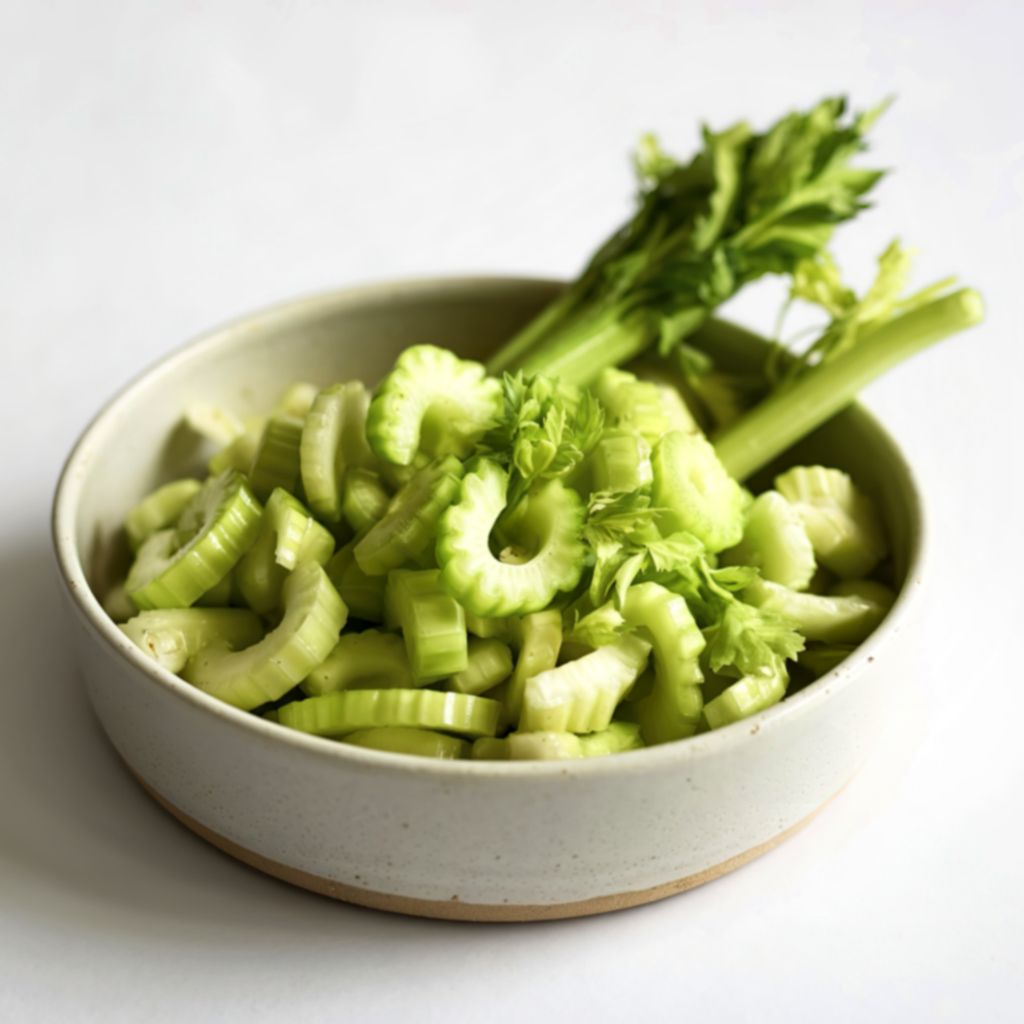
History and Origin
What Is Celery?
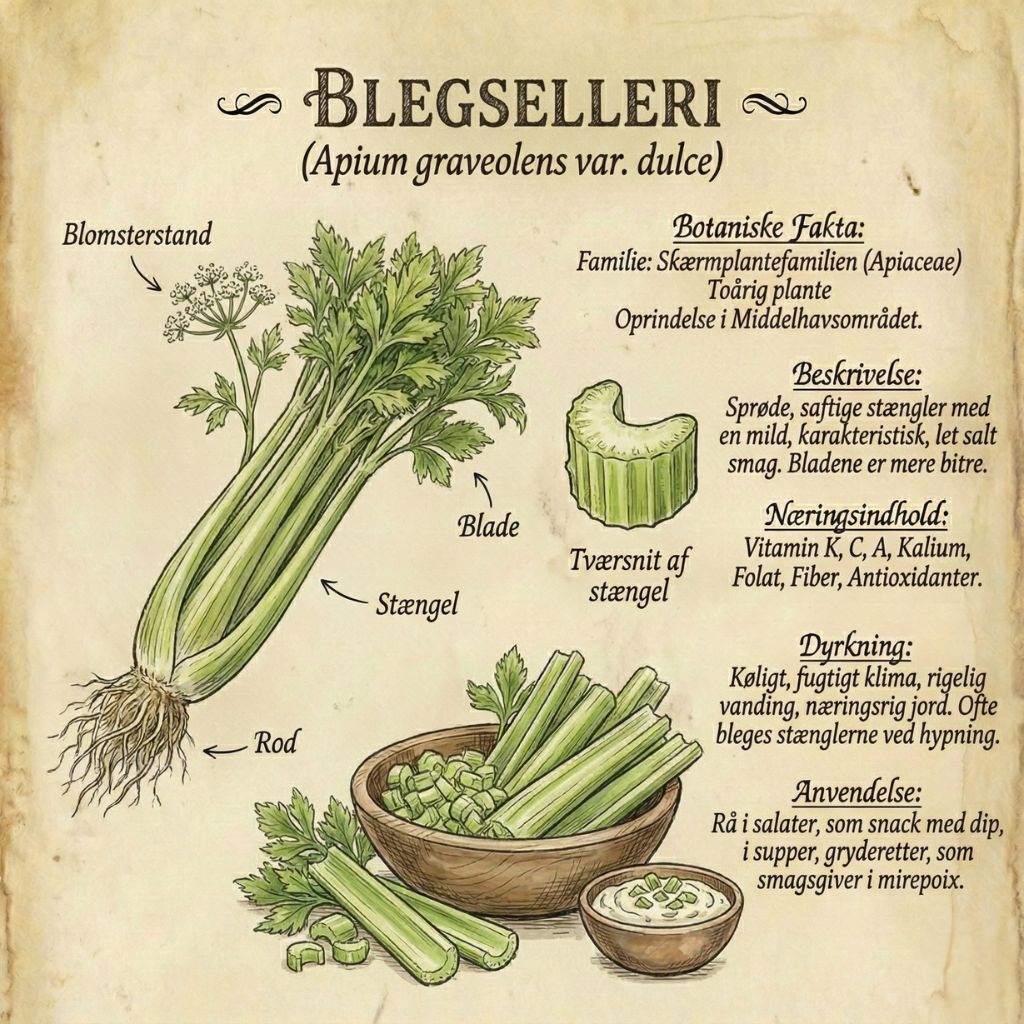
Celery is the part of the plant that’s grown for its thick, crunchy stalks. The plant is actually biennial, but it’s typically grown as an annual, since the stalks are harvested before it flowers.
History and Culture
Celery has been known for thousands of years and originates from areas around the Mediterranean, where wild celery grew in damp, marshy environments. Over time, milder and juicier varieties were bred, and today celery is a common vegetable throughout much of the world.
Flavor and Aroma
Celery has a fresh, lightly herbal flavor with subtle notes of parsley and anise. The crisp “crunch” comes from the structure of the stalks and their high water content. The inner stalks are often milder and sweeter, while the outer stalks can be more fibrous.
Culinary Uses
Celery can be used both raw and cooked. It adds crispness to cold dishes in particular, and depth to hot dishes, where it serves as an aromatic base alongside onion and carrot.
Ideas for Use
- Raw snack: Eat stalks with a dip like hummus, yogurt dip, or nut butter.
- Base for soup and broth: Use with onion and carrot as an aromatic base for soups and sauces.
- Salads and slaw: Slice thinly and use in chicken salad, tuna salad, coleslaw, or grain salads.
- Stir-frying and sautéing: Cook briefly with other vegetables so the celery keeps some bite.
- Stuffed stalks: Fill with cream cheese, tuna spread, or nut butter as a snack or appetizer.
- Leaves as a seasoning: Use the leaves as a garnish or in pesto, salsa verde, and green dressings.
- Juice and smoothies: Use as a fresh, green base in vegetable juice and smoothies.
In the Air Fryer
Celery works well in the air fryer. Cut the stalks into pieces, toss them in a little oil, and roast until tender with lightly golden edges — the heat tames the herbal bitterness and brings out a mild sweetness. Roasted or braised celery pieces make a great side for poultry and fish, and blanched pieces straight from the freezer can go directly into hot air-fryer dishes.
Try This Recipe
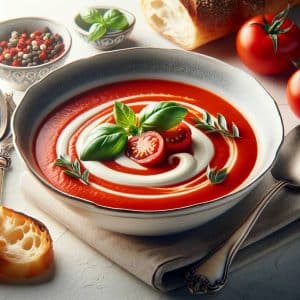
Celery belongs in the aromatic base that gives stews depth. Try it in our Air Fryer Pork Tenderloin Stew – Easy and Delicious Everyday Food — or in the tomato soup below, where it gives the soup a whole new flavor character.
Preparation and Cooking
Selection and Storage
- Choose: Firm, crisp stalks with fresh, green leaves. Avoid limp stalks and brown spots.
- Store: In the refrigerator in a bag or container. Rinse just before use.
- Shelf life: Typically 1 to 2 weeks if stored cold and at high humidity.
Cleaning
- Trim: Cut off the base and any dry tops.
- Rinse: Rinse thoroughly under running water, especially in the grooves.
- Remove strings: Pull off woody fibers from the outer stalks as needed, especially if they’ll be eaten raw.
Cooking
- Raw: Cut into sticks or slices and use in salads and snacks.
- Steaming: Gives a milder flavor and softer texture, while still keeping some bite.
- Quick sautéing: Cook for 2 to 5 minutes, so the celery stays lightly crisp.
- For freezing: Cut into pieces and blanch for about 1 minute, cool, and freeze in portions.
Health Benefits
Celery is low in calories and consists largely of water. It contributes dietary fiber and small amounts of vitamins and minerals, including vitamin K and potassium. That makes it a great crisp vegetable for everyday use, especially if you want to eat more vegetables without adding many calories.
Key Nutrients
- Water: makes up around 95 percent of the stalks
- Calories: only about 14 kcal per 100 g
- Dietary fiber: contributes to fullness and good digestion
- Potassium and vitamin K: in smaller but useful amounts
Safety and Nutritional Considerations
- Allergy: Celery is a known allergen for some people and can cause reactions, especially through cross-reactivity with pollen.
- Vitamin K and medication: Celery contains vitamin K. If you take blood-thinning medication, keeping your intake consistent may be relevant.
- Oxalates: Celery can contain oxalates. People prone to kidney stones may want to keep their intake moderate.
Traditional and Modern Use
Celery is a classic vegetable in many cuisines. In classic French cooking it’s a staple part of a mirepoix alongside onion and carrot, and in Italian cooking it plays the same role in a soffritto. It’s used as an aromatic base in soups and sauces, for crispness in salads, and in modern cooking also in juices and smoothies. Some Asian dishes use especially aromatic varieties that are thinner and more intensely flavored.
Growing
Celery requires a long growing season and consistent moisture. It can be grown in Denmark, but does best with careful attention and nutrient-rich soil.
How to Grow Celery
Total time: 4-6 months
- Start seeds
Start seeds indoors 10 to 12 weeks before the last frost. Press the seeds lightly into moist seed-starting soil.
- Transplant
Transplant once the soil is warm enough and the nights aren’t too cold. Water thoroughly.
- Water evenly
The soil must not dry out, as this can cause tough or bitter stalks.
- Feed lightly
Compost and a mild organic fertilizer throughout the season produce sturdier stalks.
- Blanch if needed
Cover the stalks for the last few weeks before harvest if you want lighter, milder stalks.
- Harvest
Harvest the outer stalks first, or cut the whole plant at the base once the stalks are large enough.
Growing Conditions
- Light: Full sun to light partial shade.
- Temperature: Does best in cool to mild weather. Very hot weather can cause tough stalks.
- Soil: Moisture-retentive, nutrient-rich soil with good structure.
- Watering: Consistent moisture is essential. Water regularly and use mulch if possible.
- Fertilizing: Compost before planting and light supplemental fertilizer throughout the season.
Harvesting and Storage
Harvest celery once the stalks are sturdy and at least about 20 cm long. The stalks are best while they’re still juicy and crisp.
- Refrigerator: Store in a bag or container for 1 to 2 weeks.
- Freezing: Cut into pieces, blanch briefly, and freeze for soups and stews.
Flavor and Pairings
Celery pairs well with ingredients that highlight its fresh, herbal profile.
- Herbs: Parsley, dill, cilantro, and thyme.
- Fruit and nuts: Apples, grapes, walnuts, and almonds.
- Spices: Black pepper, garlic, ginger, and chili.
- Protein: Fish, chicken, turkey, and legumes.
- Cheese: Parmesan, feta, and blue cheese.
Look-Alikes and Quality
Celery can be confused with leaf celery, which has thinner stalks and more aromatic leaves, or with celeriac, which is grown for its root. Choose celery with firm, crisp stalks that snap cleanly. Avoid limp stalks, brown spots, and wilted leaves.
Sustainability and Biodiversity
Celery requires a fair amount of water, but can be grown more sustainably with mulch and efficient watering. In the kitchen garden, you can use crop rotation and choose sturdy varieties to reduce the need for pesticides. The root end can sometimes be placed in water to regrow new leaves, which can help cut down on food waste.
Equipment and Products
Crisp celery sticks and a good dip are a classic on the snack table. Fill the stalks, or dip them straight into Waikiki dip Vestjyske Delikatesser, where the sweet, spiced dip meets celery’s fresh crunch.
Frequently Asked Questions
Celery is very low in calories, but there’s no solid evidence that the body burns more calories digesting it than it actually contains.
Yes. Blanch slices or pieces briefly, cool, and freeze. It loses some crispness, but works well in hot dishes.
Celery (stalk celery) is grown for its thick, juicy stalks. Leaf celery has thinner stalks and is used mainly for its aromatic leaves.
Yes. Cut the stalks into pieces, toss them in a little oil, and roast until tender with golden edges. The heat tames the bitterness and brings out a mild sweetness, and roasted celery makes a great side for both poultry and fish.
It’s not necessary, but the outer stalks can have tough strings, which are best pulled off with a small knife or vegetable peeler — especially if the stalks are going to be eaten raw.
Celery is a crisp, fresh vegetable that can be used in both cold and hot dishes. It’s low in calories and easy to work into everyday meals, whether as a snack, in salads, or as a base for soups and sauces. With good storage and quick cooking, you can preserve both flavor and texture.
Celery Facts
| Field | Description |
|---|---|
| English name | Celery, stalk celery |
| Latin name | Apium graveolens var. dulce |
| Family | Carrot family (Apiaceae) |
| Plant type | Biennial herb grown as an annual |
| Height | About 60 to 90 cm |
| Hardiness | Tolerates light frost, but not hard frost |
| Light | Full sun to light partial shade |
| Soil | Moisture-retentive, nutrient-rich soil, pH about 5.8 to 6.8 |
| Sowing/planting | Start seeds indoors 10 to 12 weeks before the last frost; transplant once temperatures are stable |
| Flowering/harvest | Typically harvested July to October |
| Flavor | Fresh, lightly herbal, mildly salty with a subtle anise note |
| Calories per 100 g | About 14 kcal |
| Culinary use | Snacks, salads, soups, stews, base for sauces, juice, and dips |
| Storage | 1 to 2 weeks in the refrigerator; can be blanched and frozen |
| Blanching | Not necessary for everyday use, but recommended before freezing |
| Cooking time | Short cooking time of 2 to 5 minutes when steaming or sautéing; longer in soup |
