

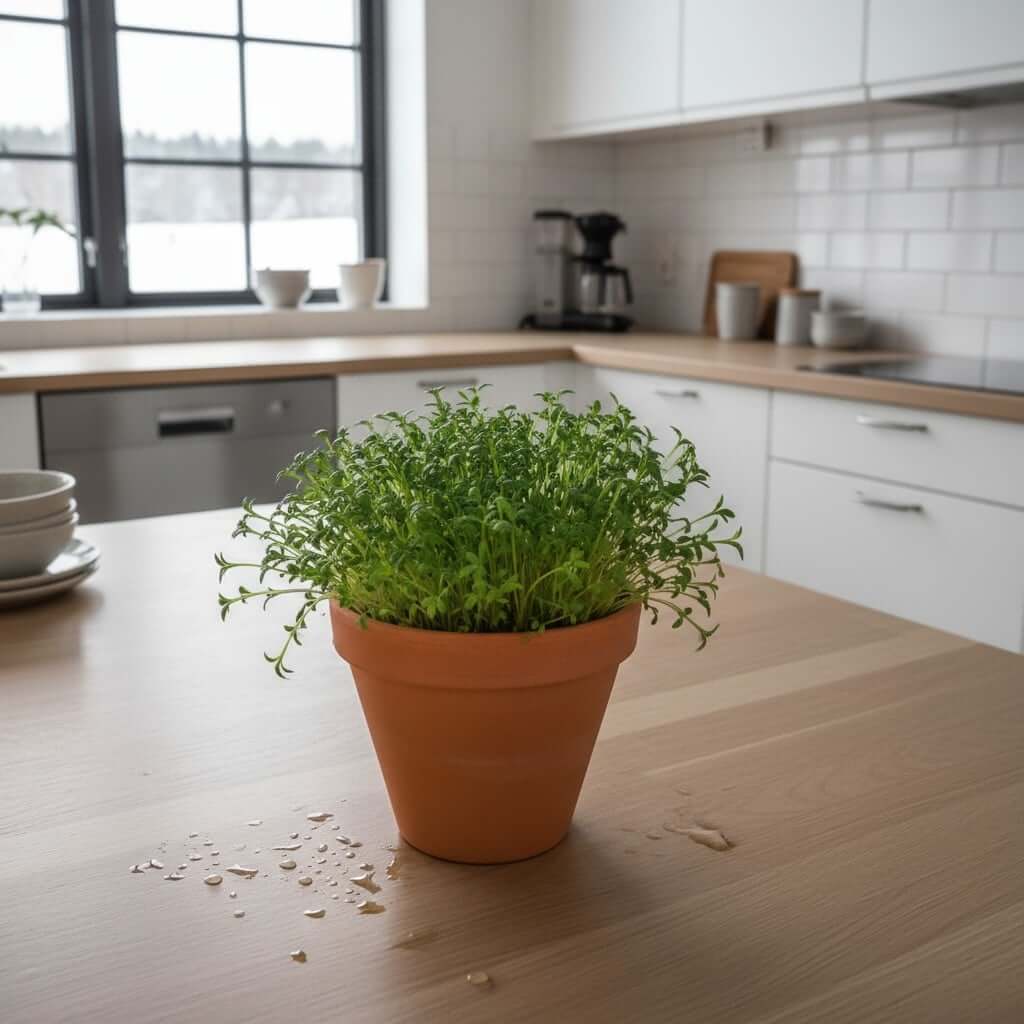
Cress is one of the most rewarding herbs you can grow. The small, green sprouts appear almost without any effort and give a mustardy, peppery flavor that can elevate everything from egg sandwiches to fish. Its Latin name is Lepidium sativum, and as a member of the mustard family, cress is related to mustard and watercress, which is why it carries that characteristic sharp aroma.

Advertisement: The page displays ads and contains advertising links (affiliate links). See our advertisers here.
Cress is most often grown as a microgreen on the windowsill, though the plant can also grow knee-high in the garden and flower in small white or rosy-pink clusters. This entry covers everything about garden cress — from history and culture to flavor, culinary uses, growing, harvesting, and storage.
Estimated reading time: 9 minutes
History and Origins
Garden cress has been cultivated for millennia. Even the ancient Egyptians prized the plant for its sharp flavor, and the Romans carried it with them across the rest of Europe. In medieval monastery gardens, cress was among the most important kitchen herbs because it was easy to grow all year round. In Denmark, cress likely arrived through Viking trade connections and quickly became popular as a fresh, green seasoning in an otherwise meat- and grain-based cuisine.
Cress in Danish Homes
In the countryside, it was especially common to sow cress on the windowsill in winter, so there was always a fresh green sprinkle for the rye bread. Sowing cress before Easter remains a firm tradition in many Danish homes and daycare institutions: the seeds are placed on damp cotton wool, and children follow day by day as they sprout — an easy way to introduce kids to how plants grow.
Cress has also had a place in folk medicine. In the Middle Ages, both seeds and leaves were used as a remedy against scurvy and as a cleansing remedy. In India and the Middle East, the seeds (called chandrashoor or habba al hamra) are still used in Ayurvedic blends and as a topping for hot drinks.
Flavor and Aroma
Cress has an intense but fleeting flavor. It’s often described as mustardy, peppery, and slightly bitter, and it’s reminiscent of arugula, only milder and juicier. That’s why cress should be used thoughtfully — a small amount goes a long way, while too much can easily dominate a dish. The texture is juicy and crisp when the sprouts are about 5–7 cm tall.
The flavor pairs especially well with:
- Eggs, mayonnaise, and crème fraîche
- Smoked fish, shellfish, and herring dishes
- Potatoes, root vegetables, and cabbage
- Avocado, tomato, and cucumber
- Butter, yogurt, and cream cheese
Culinary Uses
The peppery, mustardy flavor makes cress a fresh touch in the kitchen. The small sprouts have a juicy texture and work best as a raw garnish or as an ingredient added at the very end of cooking.
In Danish Cuisine
Cress pairs especially well with eggs, fish, shellfish, and smoked products, and it’s a classic on the smørrebrød table. It adds crunch and flavor to salads, soups, and the classic egg or liver pâté smørrebrød.
- Sprinkle a generous handful of fresh cress over egg sandwiches, smørrebrød with liver pâté, or avocado toast
- Mix finely chopped cress into crème fraîche or skyr as a topping for smoked salmon or herring platters
- Fold cress into potato salad or cold pasta salads for a mustardy kick
- Make a quick herb butter by stirring cress and lemon zest into softened butter for new potatoes
- Blend cress with parsley, sunflower seeds, and oil for a mild pesto
International and Modern Cuisine
Today, cress is used primarily as a microgreen. Gastronomically, the sprouts appear in smørrebrød, bowls, wraps, and as a garnish for meat and fish, and in fine dining, larger plants with leaves and flowers can be used in salads and as decoration. Cress works well in Nordic dishes with potatoes, vegetables, fish, and dairy products, but also in international cuisines, where it can replace or complement mustard and arugula.
How to Use Cress
Avoid cooking cress in stews or adding it while frying — high heat removes the fresh aroma. Always add the sprouts at the very end, or use them raw. You can sprinkle them over hot dishes like pumpkin or potato soup just before serving to preserve the flavor.
Health Benefits
Cress is a nutrient-rich microherb. The following is general nutritional information, not medical advice.
Nutrients
According to nutritional data, raw cress contains significant amounts of vitamins A, C, and K, as well as minerals such as manganese and potassium. Its high vitamin C content helped make cress popular as a remedy against scurvy, and in modern nutrition, sprouts and microgreens are seen as concentrated sources of antioxidants.
- Vitamins A, C, and K
- Manganese and potassium
- Antioxidants from the mustard family
Traditional Use and Precautions
In traditional herbal medicine, cress seeds were used against coughs and digestive problems and to stimulate the appetite, while cress juice was used to cleanse wounds. However, there is limited scientific evidence for these uses, and larger amounts of seeds can cause stomach upset. Eat cress in culinary amounts and think of it first and foremost as a nutrient-rich seasoning. Pregnant women and people with thyroid conditions should be cautious with high intakes of the mustard family and should always seek medical advice.
Growing
Cress is an incredibly easy plant to grow at home. It sprouts quickly in a moist environment and needs neither much soil nor fertilizer, because the seeds themselves contain all the nutrients needed for early growth. The plants need moisture, light, and regular harvesting to stay crisp and aromatic.
Growing Conditions
- Light: place the seeds somewhere bright, but avoid direct, scorching summer sun; the flavor becomes strongest with plenty of light
- Temperature: should be between 15 and 22 °C
- Growing medium: cotton wool or paper towel is the easiest and cleanest option; in soil, the plants grow larger and can form flowers
- Soil: light and well-drained; avoid waterlogged soil, as the seeds can rot
- Season: sow indoors all year round; outdoors from April to August, since cress isn’t frost-tolerant
How to Sow and Grow Cress
Total time: 5-14 days
- Prepare the seeds
Soak the cress seeds in a little water for 30 minutes to start moisture absorption. This step is optional, but it can reduce the number of seed husks that cling to the plants.
- Prepare the growing medium
Moisten a piece of cotton wool or paper towel and place it in a bowl, saucer, or plastic container. It should be damp, but not soaking wet, so the seeds don’t wash away.
- Sow the seeds
Spread the seeds evenly over the damp surface. They can lie close together, but need room to sprout. You can cover them with a clear lid or plastic wrap for the first few days to retain moisture.
- Light and temperature
Place the container in a bright window without direct midday sun. The temperature should be around 18–22 °C. Keep the surface moist by spraying lightly with water daily.
- Transplanting (if desired)
If you want larger plants, the sprouts can be transplanted into pots or the garden after about two weeks. Plant in light, nutrient-rich soil with 10–15 cm spacing in a sunny spot, and water regularly.
- Watering and fertilizing
Water regularly but sparingly, so the seeds and roots don’t dry out. In soil, cress only needs a light organic fertilizer every 3–4 weeks.
- Harvest
Snip the sprouts off at the base when they’re 5–7 cm tall. Plants grown in soil can be harvested multiple times, while microgreens on cotton wool need to be resown after harvesting.
Storage
The best flavor comes from harvesting cress while the sprouts are young and crisp. Cut them when they have two green seed leaves and a height of 5–7 cm. Use clean scissors and cut just above the cotton wool or soil surface. Harvest preferably in the morning, once the dew has dried, as the sprouts then have the highest content of essential oils.
Fresh, Chilled, and Frozen
- Fresh cress tastes best right away
- Cut sprouts can be sealed airtight and stored in the refrigerator for 2–3 days
- Cress can be frozen chopped in small portions in ice cube trays with a little water or oil
- Drying isn’t recommended, as it significantly reduces the aroma
- Cress seeds can be stored dry and cool for the next sowing
Look-Alikes and Quality
Possible Mix-Ups
Cress is often confused with watercress (Nasturtium officinale) and the stronger clasping pepperweed (Lepidium perfoliatum). Watercress is a perennial water plant with round leaves that’s grown in running water; its flavor is milder and juicier. Clasping pepperweed has larger, more serrated leaves and a stronger mustard flavor. Garden cress has small, feathery leaves and is grown mainly as a microgreen. Another mix-up occurs with radish sprouts, which also have a peppery flavor but have distinctly reddish stems.
Buying and Quality
Fresh cress is sold in small trays at supermarkets, but it’s often grown at home. When buying cress, the sprouts should be fresh, plump, and fully green, with no limp or yellow leaves. Avoid trays where seed husks are stuck to the leaves — that can indicate the sprouts have been too dry. Cress should be used quickly after purchase; otherwise, it’s better to grow your own over a few days. Seeds can be bought organic at most garden centers and online — choose seeds with a clear harvest and best-before date, and store them dry and dark.
Sustainability and Biodiversity
Growing cress at home is a sustainable choice. The plant needs very little soil, water, and energy, and it can be grown indoors all year round. Microgreens are grown on cotton wool, which can be composted, and the production reduces the need for imported herbs. If you let cress flower in the garden, it becomes a good source of nectar for bees and other pollinators during the summer months.
Local growing reduces the climate footprint of transport, and the seeds can be saved and used season after season, which cuts down on waste. By growing your own cress, you also avoid plastic trays and packaging from the supermarket. Feel free to use rainwater for watering, and avoid peat-heavy soil mixes.
Try This Recipe
Cress’s peppery, mustardy freshness seems tailor-made for eggs — a generous sprinkle lifts both flavor and color. Scatter freshly cut cress over our Scrambled Eggs in the Air Fryer – Creamy, Soft Eggs in Minutes just before serving, so the sprouts’ fresh bite stands out sharply against the creamy eggs.
Equipment and Products
Cress belongs on the smørrebrød table, where its sharp bite cuts through rich toppings and creamy spreads. For a Danish delicatessen platter, you can pair it with our Jægermix Vestjyske Delikatesser, where cress’s fresh peppery bite provides a welcome contrast to the rich, salty flavors.
Frequently Asked Questions
Cress isn’t hardy and is normally grown as an annual. Outdoors in the garden, the plants flower in summer and die before winter.
Cress can grow in partial shade, but the sprouts will become long and pale. For the best flavor, plenty of light is needed.
Yes, cress is safe in culinary amounts. However, eat it in moderation if you have a sensitive stomach, and avoid large doses of seeds or supplements.
Give the plants light and a lightly, evenly moist growing medium, and harvest while the sprouts are young. Growing in soil in a sunny, warm environment develops a stronger mustard flavor.
Cress is lightning-fast: the first sprouts can be harvested after just five to seven days, once they’re 5–7 cm tall with two green seed leaves. That makes it one of the most rewarding herbs to grow on the windowsill all year round.
Facts About Cress
| Field | Value |
|---|---|
| English name | Cress |
| Latin name | Lepidium sativum |
| Family | Mustard family (Brassicaceae) |
| Plant type | Annual / microgreen |
| Height | 5–60 cm |
| Hardiness | Not frost-hardy; grown indoors or as a summer sprout |
| Light | Bright spot, ideally indirect sun |
| Soil | Moist cotton wool or light, well-drained soil, neutral pH |
| Sow/plant | Indoors all year round; outdoors April–August |
| Flowering | May–August (if the plant is allowed to grow) |
| Harvest | After 5–7 days as sprouts; larger plants in summer |
| Flavor | Peppery, mustardy, fresh |
| Culinary use | Eggs, smørrebrød, salads, soups, pesto |
| Storage | Fresh in the refrigerator 2–3 days; seeds can be stored dry |
