

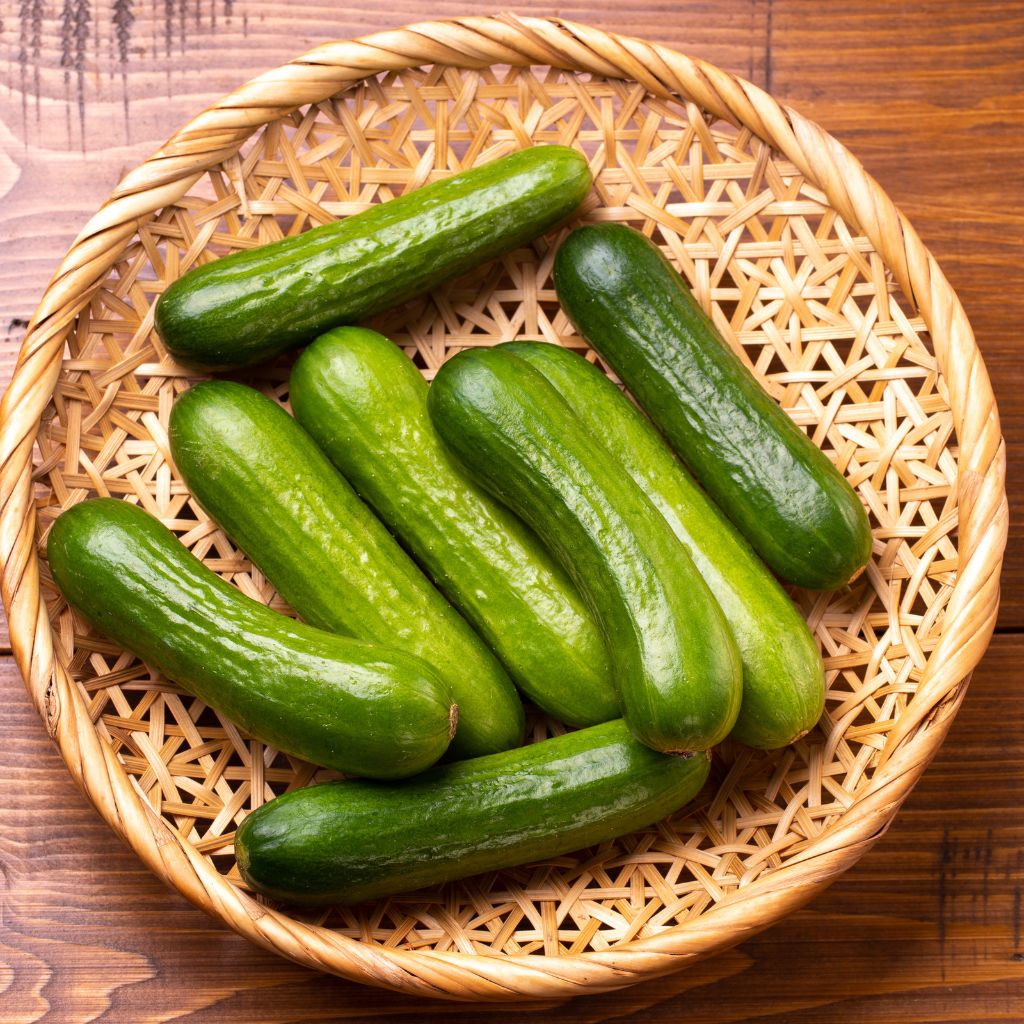
The cucumber (Cucumis sativus) is one of the world’s most widely grown vegetables – or fruits, to be precise, since botanically speaking, the cucumber is a berry. With its crisp texture, mild flavor and a water content of around 95%, the cucumber has become synonymous with refreshment and lightness.

Advertisement: The page displays ads and contains advertising links (affiliate links). See our advertisers here.
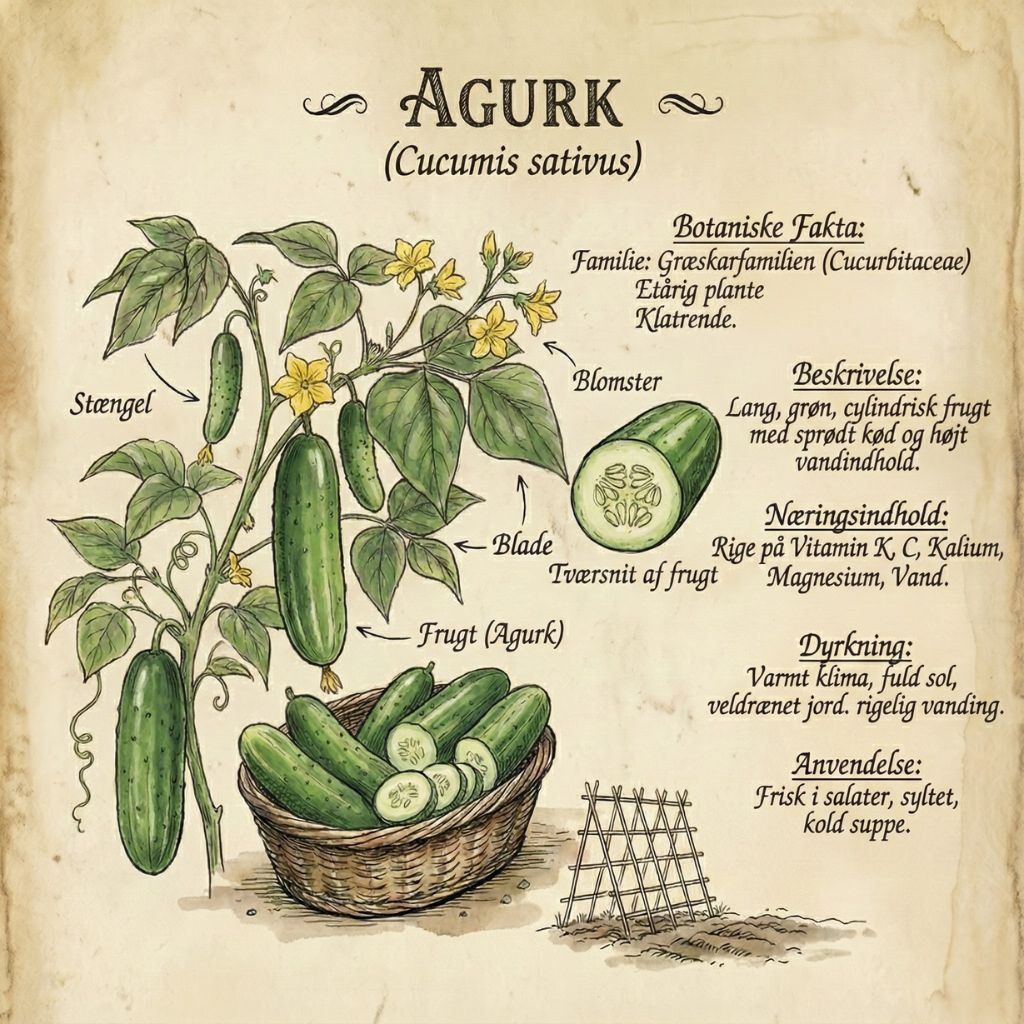
It belongs to the gourd family Cucurbitaceae, which also includes squash, melons and pumpkins. Even though it’s technically a fruit, the cucumber is treated as a vegetable everywhere: its neutral flesh makes it ideal in salads, sandwiches, pickles and cold soups, and its crunch adds texture to raw dishes. Here, I’ll guide you through the cucumber’s history, culinary uses, nutrition, cultivation and storage.
Estimated reading time: 11 minutes
History and Origin
From the Himalayas to the Mediterranean
The cucumber’s history stretches back at least 3,000 years to northern India, where it originally grew as a wild climbing plant at the foot of the Himalayas. It was cultivated early on and spread via trade routes to ancient Egypt, Greece and the Roman Empire. In Egypt, cucumbers were prized for their cooling properties in the desert heat. The Romans even grew cucumbers year-round for Emperor Tiberius’ table by moving planting boxes in and out of the sun – an early form of greenhouse cultivation.
Spread and Breeding
During the Middle Ages, cucumbers spread throughout Europe and became especially popular in Italy and France. Columbus and other explorers brought them to the New World. Over the centuries, growers have selected for less bitterness and thinner skin. The bitterness mainly comes from cucurbitacins – bitter compounds that protect the plant against pests. Modern varieties such as “burpless” or snake cucumbers contain fewer cucurbitacins and are therefore milder and less likely to cause digestive discomfort.
Flavor and Aroma
Fresh cucumbers have a crisp, juicy texture that snaps easily between the teeth. The flavor is mild, slightly sweet and a touch herbaceous. The skin can range from thin and delicate to rough and bumpy; in some varieties it can be bitter, while thin-skinned greenhouse cucumbers are typically mild and edible without peeling. Bitterness is concentrated at the stem end – cutting this part away reduces bitterness.
Snake Cucumber, Grape Cucumber and Pickling Cucumber
There’s a huge variety of types with different colors, shapes and flavor nuances. The long, thin-skinned snake cucumber (English or greenhouse cucumber) is the most common in Danish supermarkets and is eaten raw. The smaller, firmer kirby and grape/pickling cucumbers have denser flesh that retains its crunch after pickling. There are also lemon-yellow lemon cucumbers, slender Japanese and Armenian cucumbers, and small, round Mexican sour gherkins. Cucumbers left to grow too long turn yellow and spongy, with large seeds and a less appealing flavor.
Culinary Uses
The neutral flavor and high water content make cucumbers incredibly versatile in the kitchen. They can be enjoyed raw, pickled, as juice, or even briefly cooked in hot dishes.
In Danish Cuisine
In Denmark, cucumber is a staple on smørrebrød (open-faced sandwiches) and in the classic cucumber salad, where thin slices steep in a light vinegar brine with sugar and dill. Cucumber slices also add crunch to sandwiches and rye bread with salmon or egg salad, and pickled cucumbers go into remoulade and on burgers.
Internationally
Internationally, the cucumber plays a starring role in Greek tzatziki and salads, Indian raita, Middle Eastern salads such as shirazi and fattoush, and cold Spanish soups like gazpacho. In Asian dishes, cucumber is briefly sautéed or stir-fried with, for example, shrimp or tofu and added last so it keeps its crunch. Cucumber water, cucumber sorbet and cucumber in cocktails like gin & tonic are modern favorites.
Preparation Ideas
- Cut cucumber into slices or cubes for a Greek salad with tomato, onion, feta and olives.
- Coarsely grate cucumber, squeeze out the liquid, and mix it with yogurt, garlic and mint or dill to make tzatziki or raita.
- Blend cucumber with yogurt, avocado and herbs for a cold soup, or add it to green smoothies.
- Pickle small crunchy cucumbers in a vinegar brine with dill, garlic and mustard seeds.
- Place cucumber slices in cold water for a mild, refreshing drink.
Preparation and Pickling
Cucumbers require minimal preparation. Always rinse them under cold water to remove dirt and any edible wax coating. It’s a good idea to keep the skin on for fiber and beta-carotene, and only partially peel it if the skin is very rough. For dips, salt is sprinkled over grated cucumber, which is left to sit for 10-15 minutes, after which the liquid is squeezed out so the dish doesn’t become watery. For pickles, a brine of vinegar, water, salt and spices is boiled, while classic “dill pickles” are made in a salt brine, where the cucumbers ferment with lactic acid bacteria.
Nutritional Content and Health
Cucumbers are famous for their low calorie content – 100 g of raw, unpeeled cucumber contains around 16 kcal and less than 0.2 g of fat. They’re made up of about 95% water, which makes them a hydrating snack that helps meet the body’s fluid needs in warm weather.
Vitamins, Minerals and Fiber
- Vitamins: small amounts of vitamin C and K; the skin contains beta-carotene, which the body can convert into vitamin A.
- Minerals: potassium and magnesium contribute to electrolyte balance, while manganese, phosphorus and calcium occur in smaller amounts.
- Dietary fiber: the dark green skin and seeds are rich in fiber and promote healthy digestion.
- Phytonutrients: flavonoids, lignans and triterpenes with antioxidant and anti-inflammatory potential, concentrated in the skin.
Good to Know
Cucumbers contain small amounts of cucurbitacins, which in large doses can be bitter and unpleasant, but modern eating varieties contain only trace amounts. People on blood-thinning medication should be mindful of the moderate vitamin K content and avoid large fluctuations in intake. Allergic reactions are rare but can occur in people with pollen allergies. As with all raw vegetables, thorough washing is important.
Growing in Denmark
Cucumbers are heat-loving plants, but with protection they also thrive in Denmark. They’re grown in greenhouses or outdoors once the risk of frost has passed.
Growing Conditions
- Light: full sun, at least 6-8 hours daily, ensures lush growth and heavy fruit production.
- Temperature: optimal daytime temperature is 18-30°C; frost kills the plants.
- Soil: loose, humus-rich, slightly acidic to neutral soil (pH 6-7) with good drainage.
- Water: even moisture is essential – water deeply, but avoid wetting the leaves to prevent powdery mildew.
How to Grow Cucumbers
Total time: 50-65 days
- Choose a Variety
Choose a variety that suits your needs: greenhouse cucumbers, hardy outdoor varieties, pickling varieties or bush types for pots. The seeds can be soaked in lukewarm water for 12 hours for faster germination.
- Sow the Seeds
Sow the seeds indoors 2-3 weeks before the last frost (around mid-April), 1-2 cm deep in nutrient-rich seed compost at 22-25°C. Keep the soil lightly moist.
- Transplant and Support
Once the plants have 2-3 leaves and nighttime temperatures are stably above 10°C, transplant them into the greenhouse or outdoors in nutrient-rich soil with pH 6-7. Give climbing varieties a trellis, string or netting to climb.
- Water and Feed
Water regularly to keep the soil evenly moist, especially during flowering and fruit set. Give liquid fertilizer rich in nitrogen and potassium every other week, or top-dress with compost.
- Harvest
Harvest 50-65 days after germination. Pick outdoor cucumbers at 15-20 cm and pickling varieties at 5-10 cm. Harvest often – at least every other day – and cut the fruit off with a sharp knife.
Harvesting and Storage
Cucumbers should be harvested at the right time for the best flavor. Overripe cucumbers turn yellow and woody with large seeds. Harvest them when they’re firm and dark green, and cut the fruit off with a sharp knife rather than pulling it.
Refrigeration and Preservation
- Store fresh cucumbers at 10-12°C with high humidity; in the refrigerator they keep for 4-7 days.
- Storage that’s too cold (below 4°C) can cause chilling injury and soft spots.
- Avoid storing cucumbers together with ethylene-producing fruits like apples and bananas, as this makes them turn yellow.
- For longer shelf life, cucumbers can be pickled or lacto-fermented, which gives a complex flavor and beneficial probiotics.
Look-Alikes and Quality
Cucumbers belong to the same family as squash, zucchini (courgette) and melons, and can easily be confused with zucchini in its mature stages. Zucchini, however, has firmer flesh, a duller skin, and is more commonly used in hot dishes. Gherkins (cornichons) are small pickling varieties with an uneven surface, while English or greenhouse cucumbers are long and smooth with almost no seeds. Choose cucumbers that are firm, evenly green and free of soft spots; avoid ones with wrinkled ends or yellow patches, as they may be overripe.
Sustainability and Biodiversity
Cucumbers grow quickly and can produce high yields in a small area, especially when grown vertically on a trellis. As a member of the gourd family, they require insect pollination and thus support local biodiversity by attracting bees and other pollinators. There are numerous heirloom varieties with unique colors and shapes that are worth growing to preserve genetic diversity. However, cucumbers have a high water requirement, so drip irrigation and mulch around the plants can minimize waste. By growing your own cucumbers, you avoid packaging waste and reduce your carbon footprint.
Try This Recipe
The cucumber’s crunch and fresh, mild flavor make it the perfect counterpart in an Asian-style salad, where it balances marinade, sesame and tangy dressing. Thin cucumber strips add crunch and cooling freshness. Try adding it to our Air Fryer Tofu – Crispy Asian Salad with Marinated Tofu for extra texture and freshness.
Equipment and Products
Grated cucumber is the key ingredient in a classic tzatziki, where it’s mixed with yogurt, garlic and mint to make a cooling dip. If you don’t have time to make it from scratch, our Tzatziki Vestjyske Delikatesser gives you the same fresh flavor as an accompaniment to vegetable sticks and grilled dishes. Also check out our jarred vegetables and cucumbers.
Frequently Asked Questions
Botanically speaking, the cucumber is a berry because it develops seeds inside a soft flesh. In culinary use, it’s considered a vegetable due to its mild flavor and use in savory dishes.
It depends on the variety and preference. The thin skin on greenhouse cucumbers and small pickling cucumbers is edible and contains fiber and antioxidants. Rougher skin can be removed fully or partially. Always rinse the skin thoroughly.
Bitterness often comes from the stem end. Cut off the end and taste; you can also remove a strip of skin to reduce bitterness. Choose burpless or English varieties, which are bred to be less bitter.
Cucumbers have a high water content and lose their texture when frozen. They can be frozen in cubes for smoothies or soups, but become mushy when thawed. Pickles hold their texture better.
Yes, cucumber seeds are edible and contain fiber and minerals. They’re often removed to avoid a watery texture in salads, but they aren’t toxic.
Facts About Cucumber
| Field | Value |
|---|---|
| English Name | Cucumber |
| Latin Name | Cucumis sativus |
| Family | Cucurbitaceae (gourd family) |
| Plant Type | Annual climbing plant |
| Height/Spread | Vining types 1-3 m; bush types 40-60 cm |
| Hardiness | Frost-sensitive; grown in warm season or greenhouse |
| Light | Full sun (min. 6-8 hours/day) |
| Soil | Light, humus-rich and well-drained with pH 6-7 |
| Sow/Plant | Pre-sprouting 2-3 weeks before last frost; transplant when soil is above 15°C |
| Flowering/Harvest | Flowering 6-8 weeks after germination; harvest June-September |
| Calories per 100g | About 16 kcal |
| Key Nutrients | Water, vitamin C and K, potassium, beta-carotene (in skin) |
| Flavor | Mild, fresh, slightly sweet; juicy with crisp texture |
| Culinary Use | Salads, pickles, smoothies, soups, dips, sandwiches |
| Storage | Cool (10-12°C) with high humidity; 4-7 days; longer when pickled |
