

Curry is an aromatic spice blend and the name for the dishes it’s used in. The word comes from the Tamil kari, meaning sauce or dish, and today curry is used in kitchens all over the world – typically together with meat, fish or vegetables.

Advertisement: The page displays ads and contains advertising links (affiliate links). See our advertisers here.
The flavor is complex, spicy and warm, and versatility is precisely curry’s strength: it can be mild and creamy, fresh and green, or fiery hot, depending on which spices and ingredients are included.
Estimated reading time: 7 minutes
History and Origin
Curry has roots in Indian cuisine and dates back thousands of years. Spices like turmeric, ginger and garlic were already being used in the Bronze Age.
During the colonial era, the British brought curry to Europe, where the dish was adapted to local tastes. The ready-mixed curry powder we know today is actually a British invention – in India, the spices are traditionally blended fresh for each individual dish.
Cultural Significance
Curry is an important part of many cultures:
- India: everyday food and hospitality
- Thailand: balance between sweet, sour and spicy
- Caribbean: a fusion of several cultures
From India to Denmark
In Denmark too, curry became a household staple during the 20th century. The mild, yellow curry powder found its way into classics like boller i karry (meatballs in curry sauce), høns i karry (chicken in curry sauce) and karrysild (curried herring), and today curry is among the most widely used spice blends in Danish kitchens.
Types of Curry
There are countless curry variations around the world, and each region has its own expression. Here are the main groups:
Indian Curries
Indian curries are built on freshly blended spices and vary enormously from region to region:
- Korma – mild and creamy
- Vindaloo – hot and spicy
- Masala – classic and rich
Thai Curries
In Thailand, curry paste is used instead of powder, and coconut milk gives the dishes their characteristic creamy body:
- Green curry – fresh and hot
- Red curry – deep and spicy
- Panang – creamy and nutty
Other Variants
Curry has traveled the world and picked up local influences along the way:
- Caribbean curry – spicy and hot
- African curry – bold and rich
- British curry – milder and creamy
Flavor and Aroma
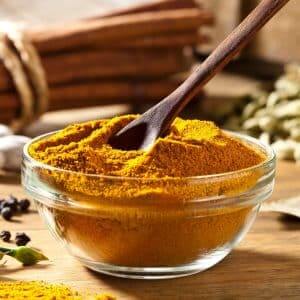
Curry’s flavor ranges from mild and mellow to blazing hot. Turmeric gives it the characteristic yellow color and a mild bitterness, cumin contributes an earthy depth, while chili determines the heat. The aroma is warm and slightly sweet, with notes of both citrus and toasted spices.
There’s a big difference between curry powder and curry paste. The powder is made of dried, ground spices with a warm, dusty aroma, while the paste is fresher and more intense, because it also contains fresh ingredients like chili, lemongrass and galangal root.
Key Ingredients in Curry
Although the composition varies, a handful of spices appear again and again in almost all curry blends:
- Turmeric – color and mild bitterness
- Cumin – earthy flavor
- Coriander – fresh and citrusy
- Chili – heat
- Ginger and garlic – depth
Culinary Uses
In the Danish Kitchen
Here in Denmark, curry is best known from the classics: boller i karry (meatballs in curry sauce) with rice, høns i karry (chicken in curry sauce) and the beloved karrysild (curried herring) on the lunch table. The mild yellow curry powder is also used in dressings, egg salad and soups, where it adds warmth without dominating.
Internationally
Internationally, curry is central to everything from Indian stews and Thai coconut curries to Japanese katsu curry and Caribbean specialties. What they all have in common is slow simmering, which lets the spices meld together.
In the Airfryer
Curry is also perfect for the airfryer. Curry-spiced potatoes, chicken thighs tossed in curry and oil, or cauliflower with curry all get roasted, aromatic edges from the dry heat. Indian-inspired snacks like Samosa in the Airfryer also get a new lease of life without a deep fryer.
How to Make Curry
A good curry dish is built on a few basic techniques that apply whether you’re making Indian, Thai or Danish curry:
Total time: 45 minutes
- Toast the spices
Toast the spices briefly in a dry pan or in fat to release the aromas.
- Fry the base
Fry the onion, garlic and ginger until soft – they form the base of almost any curry.
- Add the main ingredients
Add meat, fish or vegetables along with the liquid, e.g. coconut milk, tomato or yogurt.
- Let the dish simmer
Let the dish simmer over low heat until the flavor is deep and rounded – the longer, the better.
Typical Ingredients
- Meat: chicken, lamb, fish
- Vegetables: potatoes, eggplant, cauliflower
- Liquids: coconut milk, tomato, yogurt
Heat curry powder in fat before use – it significantly enhances the flavor.
Tips and tricks from the author
Health Benefits
Many of curry’s spices have been used in traditional medicine for centuries, and several are credited with health-promoting properties:
- Anti-inflammatory properties (turmeric)
- Good for digestion (cumin)
- Boosts the immune system (ginger and garlic)
- Rich in antioxidants
Storage
Curry spices lose aroma over time, so proper storage makes a noticeable difference to the flavor:
- Store curry powder in a dark, airtight container – this keeps the aroma for 6-12 months
- Opened curry paste should be refrigerated and typically keeps for 3-4 weeks
- Finished curry dishes can be frozen for up to 3 months – the flavor often gets better the next day
Conclusion
Curry is a versatile and global dish with deep roots in Indian cuisine. With its complex flavor and many variations, it has become a fixture in kitchens all over the world.
Try This Recipe
If you want to taste what curry’s spices can do when they get to play together with butter, tomato and cream, butter chicken is the perfect place to start. The dish is creamy, mild and full of depth – and the airfryer gives the chicken the roasted edges that normally require a tandoor oven. Try our Butter Chicken in the Airfryer: A New Take on a Classic Dish.
Equipment and Products
In Danish cuisine, karrysild (curried herring) is perhaps the finest example of how curry’s warm spicing elevates something as Nordic as marinated herring. It belongs on every lunch table. Try our Kystfiskens Curry Herring 375 G.
Frequently Asked Questions
Curry consists of a blend of spices such as turmeric, cumin and coriander.
It depends on the type – some are mild, others very spicy.
Curry originates from India.
Yes, many of the spices have health-promoting properties.
Yes, curry is perfect for chicken, potatoes and vegetables in the airfryer, where the dry heat brings out the roasted aromas.
Facts About Curry
| Field | Value |
|---|---|
| English name | Curry |
| Origin | India |
| Type | Spice blend / dish |
| Main spices | Turmeric, cumin, coriander, chili |
| Flavor | Spicy, warm, aromatic |
| Color | Yellow to red depending on type |
| Heat | Mild to hot |
| Culinary use | Stews, soups, sauces |
| Typical ingredients | Meat, vegetables, coconut milk, tomato |
| Storage | Dark and airtight, paste refrigerated |
| Health | Rich in antioxidants and anti-inflammatory compounds |
