

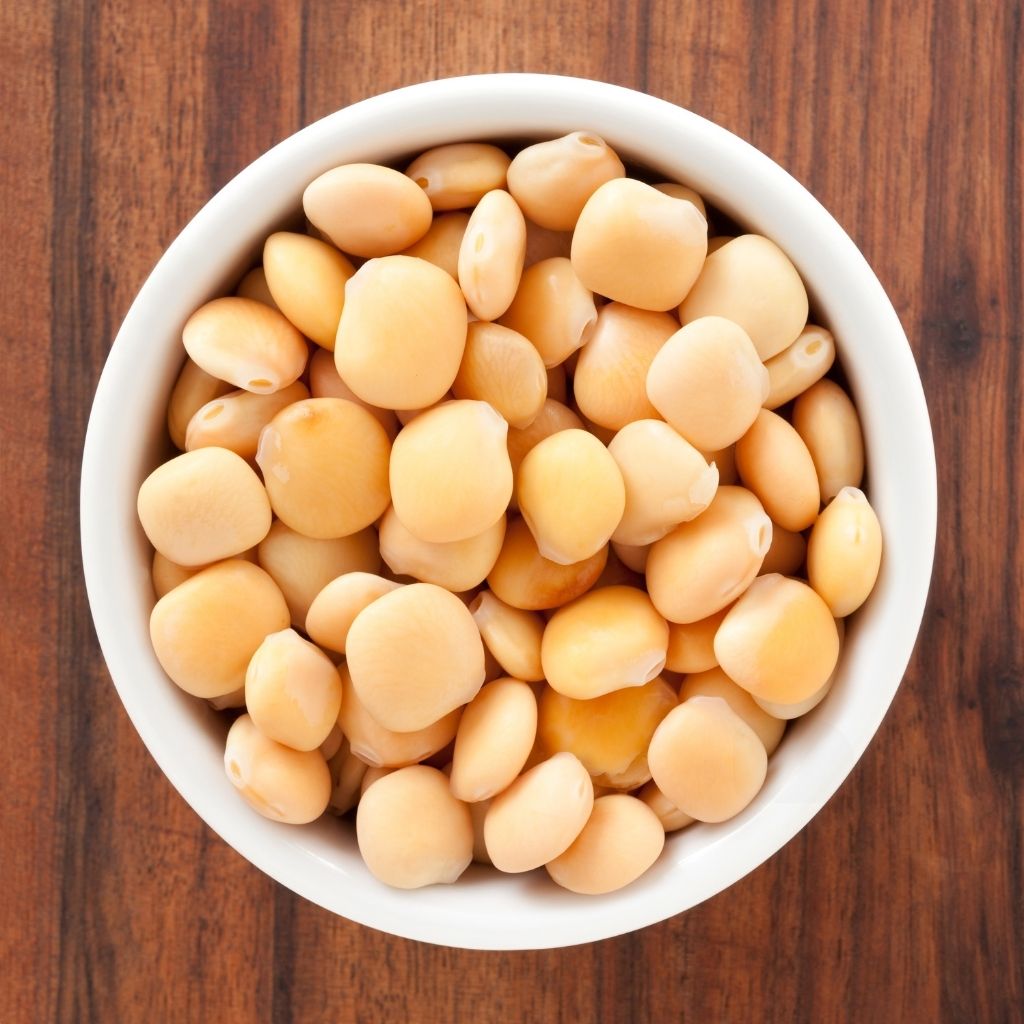
Lupin beans, also known as lupini, are golden-yellow seeds from various species in the genus Lupinus (the pea family). They are larger and flatter than many other legumes and are characterized by a thick skin and a firm, creamy interior.

Advertisement: The page displays ads and contains advertising links (affiliate links). See our advertisers here.
Lupin beans have a long culinary history in the Mediterranean region and the Andes, and today they’re used both as a brined snack, as an ingredient in cooking, and as flour in gluten-free baking. They’re among the most protein-rich legumes of all, and the sweet, pre-cooked lupini in jars are ready to use straight from the brine.
Important: Many lupins require soaking, debittering and cooking to remove bitter alkaloids. Never eat bitter lupin beans raw, and always follow a safe preparation method. Lupin is also a declarable allergen in the EU.
Estimated reading time: 7 minutes
History and Origin
What Are Lupin Beans?
Lupin beans are the mature seeds of lupin plants. For food use, the most common species are Lupinus albus (white lupin), Lupinus angustifolius (blue or narrow-leaved lupin) and Lupinus mutabilis (Andean lupin). The seeds are typically 1 to 2 cm in diameter, flat and golden, and are often served whole, in salads or as a snack.
Early History and Spread
Lupins have been eaten since antiquity, particularly around the Mediterranean, where they were traditionally debittered in water. In the Andes region, Andean lupin (tarwi or chocho) has been an important protein source for centuries. In more recent times, sweet lupin varieties with a lower content of bitter compounds have become more widespread, making lupin more accessible as a food.
Taste and Aroma
When lupin beans are properly soaked and cooked, they have a mild, nutty flavor and a firm, almost meaty texture. In brine, they retain a crisp bite that can be reminiscent of olives or edamame. If they haven’t been properly debittered, they can taste distinctly bitter, which is a sure sign that they need more soaking.
Lupin beans readily absorb flavor from spices, oil and acid, which is exactly why they work so well in marinades and brine. Their mild base flavor makes them a grateful canvas for lemon, garlic and herbs.
Culinary Uses
Lupin beans can be used whole, chopped or as flour, and they work well in both classic Mediterranean dishes and modern plant-based cooking. I especially love them as a protein-rich snack, but they’re just as good in filling salads and bowls.
In the Danish Kitchen
In Danish kitchens, lupin beans are still a somewhat overlooked ingredient, but they’re gaining ground alongside the growing interest in plant-based protein. Ready-to-eat lupini from a jar make an easy tapas snack to go with a glass of wine, and lupin flour is used to boost the protein and fiber content of bread, rolls and pancakes. They can also be mashed and mixed with spices into small plant-based patties.
Internationally
In Mediterranean countries, lupin beans are often sold ready-to-eat in brine as a snack, particularly in Portugal (tremoços) and Italy (lupini). In Latin America, Andean lupin is used in street food and traditional dishes. In the food industry, lupin is also used as flour in gluten-free products and in plant-based alternatives, where its protein content and texture are an advantage.
Preparation Methods
How you use lupin beans depends on whether you start with dry seeds or ready-to-eat beans from a jar. The ready-to-eat ones just need a quick rinse and can optionally be tossed in oil and acid, while dry seeds need to be soaked, debittered and cooked first.
- Brined snack: Serve lupin beans with lemon and herbs as a snack with drinks.
- Salads and bowls: Toss the beans into salads or bowls with greens, herbs and a tangy dressing.
- Stews and soups: Use lupin beans as a protein-rich filling in tomato-based dishes.
- Dips and spreads: Blend into a creamy dip with garlic, lemon and olive oil.
- Plant-based patties: Mash the beans and mix them with spices and greens into small patties.
- Baking and pasta: Use lupin flour to boost protein and fiber in bread, rolls, pancakes and gluten-free dough.
Nutrition and Health
Lupin beans are known for their high protein and dietary fiber content and a relatively low content of easily digestible carbohydrates. That makes them appealing in meals where you want more satiety and a good plant-based protein source.
Protein, Fiber and Minerals per 100 g
Cooked and drained lupini are among the most protein-rich legumes you can find. The exact figures vary by variety and preparation, but as a rough guide, cooked lupin beans typically contain:
- Protein: around 15 to 16 g per 100 g (cooked, drained)
- Dietary fiber: about 2 to 3 g per 100 g (dry seeds contain significantly more)
- Minerals: contributes manganese, iron, magnesium, copper and potassium
- Carbohydrates: low content of easily digestible carbohydrates
Satiety and Plant Protein
The combination of protein and fiber contributes to a good feeling of fullness, which is why lupin has become popular in plant-based alternatives and protein-enriched products. Do keep in mind, though, that jarred lupini can have a high salt content, so a quick rinse before use is a good habit.
Preparation and Debittering
Lupin beans need to be handled correctly. Sweet varieties and pre-cooked jarred lupini require little to no debittering, while bitter lupins require a longer leaching process over several days to remove bitter alkaloids such as lupanine. Always follow the instructions for the type you have, and taste as you go.
How to Debitter Bitter Lupin Beans
Total time: 3-7 days
- Soak
Sort and rinse the seeds thoroughly in cold water, and soak them in plenty of water for 12 to 24 hours, until fully plumped up.
- Debitter and leach
Place the soaked beans in cold water and change the water 2 to 3 times a day for 3 to 7 days. This repeated soaking draws out the bitter alkaloids.
- Cook
Cook the beans in fresh water for 1 to 2 hours, until tender. Discard the cooking water afterward.
- Taste
Taste a single bean. If it’s still bitter, continue leaching for a few more days. The beans are ready once the bitterness is gone, and can then be stored in brine in the fridge.
Sweet Lupini and Shortcuts
If you have sweet lupin varieties, you can get by with soaking for 24 to 48 hours followed by cooking for one and a half to two hours, tasting as you go. The easiest shortcut, though, is pre-cooked jarred lupini, which are ready to use straight from the brine; just rinse them briefly to reduce the salt content.
- Never eat raw bitter lupin beans: Raw seeds can contain undesirable substances and taste bitter.
- Rinse pickled lupins: Ready-to-eat beans in brine can be salty; rinse briefly before use.
- Avoid low heat as the only method: Preparing at too low a temperature is not a safe debittering method for bitter varieties.
Growing
For edible production in Denmark, blue lupin (Lupinus angustifolius) and white lupin (Lupinus albus) are especially relevant. Lupins thrive in sun and well-drained soil and can also improve the soil through nitrogen fixation.
Growing Conditions
- Light: Full sun.
- Temperature: Thrives in a temperate climate. Blue lupin tolerates cooler summers better than white lupin.
- Soil: Well-drained, not overly chalky soil. A neutral to slightly acidic pH is usually best.
- Watering: Even moisture during establishment, but avoid overwatering.
- Height: Typically 40 to 60 cm depending on the variety.
How to Grow Lupin Beans Step by Step
Total time: 4-5 months
- Choose a location
Choose a spot in full sun with well-drained soil with a neutral to slightly acidic pH.
- Sow the seeds
Sow directly in spring, once the soil is warm enough for germination.
- Water and tend
Keep the soil evenly moist, especially during germination and flowering, but avoid waterlogged soil. Weed regularly and watch out for slugs and aphids.
- Harvest
Harvest once the pods are dry and the seeds rattle. Dry further and thresh the seeds.
Lupins contribute positively to cultivation because they form nitrogen-fixing root nodules and can thereby improve soil fertility. They can be grown in cooler climates where other protein crops can be harder to succeed with, and they fit well into a varied crop rotation.
Storage
Storage depends on whether you have dry seeds or pre-soaked beans. Dry seeds keep for a long time, while prepared beans are perishable and need to be refrigerated.
Dry Seeds
Once the pods are dry, the seeds can be harvested, dried further, and stored cool and dark in airtight containers. Dry seeds keep for months when kept free of moisture.
Soaked Beans and Brine
- Pre-soaked lupin beans should be stored in the fridge, preferably in brine.
- Eat them within a short period, typically a few days.
- Opened jars of lupini should be kept refrigerated and sealed tightly between uses.
Safety and Allergy
Lupin is one of the allergens that must be declared on food products in the EU. Some people with a peanut allergy may experience a cross-reaction to lupin, so extra caution is advised if you have a known legume or peanut allergy.
- Alkaloids: Bitter lupins can contain high amounts of bitter alkaloids and require thorough leaching.
- Allergy: Lupin is a declarable allergen and can cross-react with peanut allergy in some people.
- Salt: Lupin beans in brine can have a high salt content. Rinse them to reduce the salt amount.
- Ornamental lupins: Ornamental lupins from the garden can have a very high alkaloid content and should not be eaten. Always choose products labeled for food use.
Try This Recipe
Lupin beans belong on a Mediterranean-style tapas spread, where their nutty bite plays off salt, acid and crisp accompaniments. Serve them alongside crispy Air Fryer Patatas Bravas for a classic tapas meal, where the beans’ firmness balances the soft potatoes and the spicy sauce.

Equipment and Products
The easiest route to lupin beans is through ready-made jarred products. You’ll find a selection of legumes and vegetables in our category Vegetables in Jars and Cans, where pre-cooked lupini and other snack beans are ready to be rinsed and tossed in oil, lemon and herbs.
Frequently Asked Questions
No, but some varieties are bitter and require a long leaching process to become safe and mild. Always follow proper preparation, and never eat raw bitter beans. Sweet, pre-cooked jarred lupini are ready to use.
This is usually because the leaching wasn’t long enough. Change the water frequently and continue debittering for up to a week, until the bitterness is gone.
Some people with a peanut allergy may get a cross-reaction to lupin. Lupin is a declarable allergen, so if you have a peanut allergy, you should be extra cautious or consult a healthcare professional.
Cooked and drained lupin beans are among the most protein-rich legumes and typically contain around 15 to 16 g of protein per 100 g. Dry seeds contain even more per 100 g.
Yes. Sweet, pre-cooked jarred lupini are debittered and ready to use straight from the brine. Rinse them briefly to reduce the salt content before tossing them in oil and herbs.
Facts About Lupin Beans
| Field | Value |
|---|---|
| English name | Lupin beans, lupini |
| Latin name | Lupinus spp. (incl. L. albus, L. angustifolius, L. mutabilis) |
| Family | Pea family (Fabaceae) |
| Plant type | Annual or perennial herb depending on species |
| Height | Typically 40 to 60 cm (some varieties taller) |
| Origin | The Mediterranean region and the Andes |
| Light | Full sun |
| Soil | Well-drained soil, neutral to slightly acidic pH; avoid heavily chalky soil |
| Sowing/planting | Direct sowing in spring, once the soil is warm enough |
| Flowering/Harvest | Harvest in late summer, when the pods are dry |
| Protein per 100 g | Approx. 15 to 16 g (cooked, drained) |
| Key nutrients | Protein, dietary fiber, manganese, iron, magnesium |
| Taste | Mild, nutty; bitter if not properly leached |
| Culinary use | Brined snack, salads, stews, dips, flour for baking and pasta |
| Soaking time | Sweet varieties 24 to 48 hours; bitter varieties require longer leaching |
| Cooking time | Typically 1 to 2 hours (depends on type and size) |
| Storage | Dry seeds in airtight containers; soaked beans in brine, refrigerated |
