

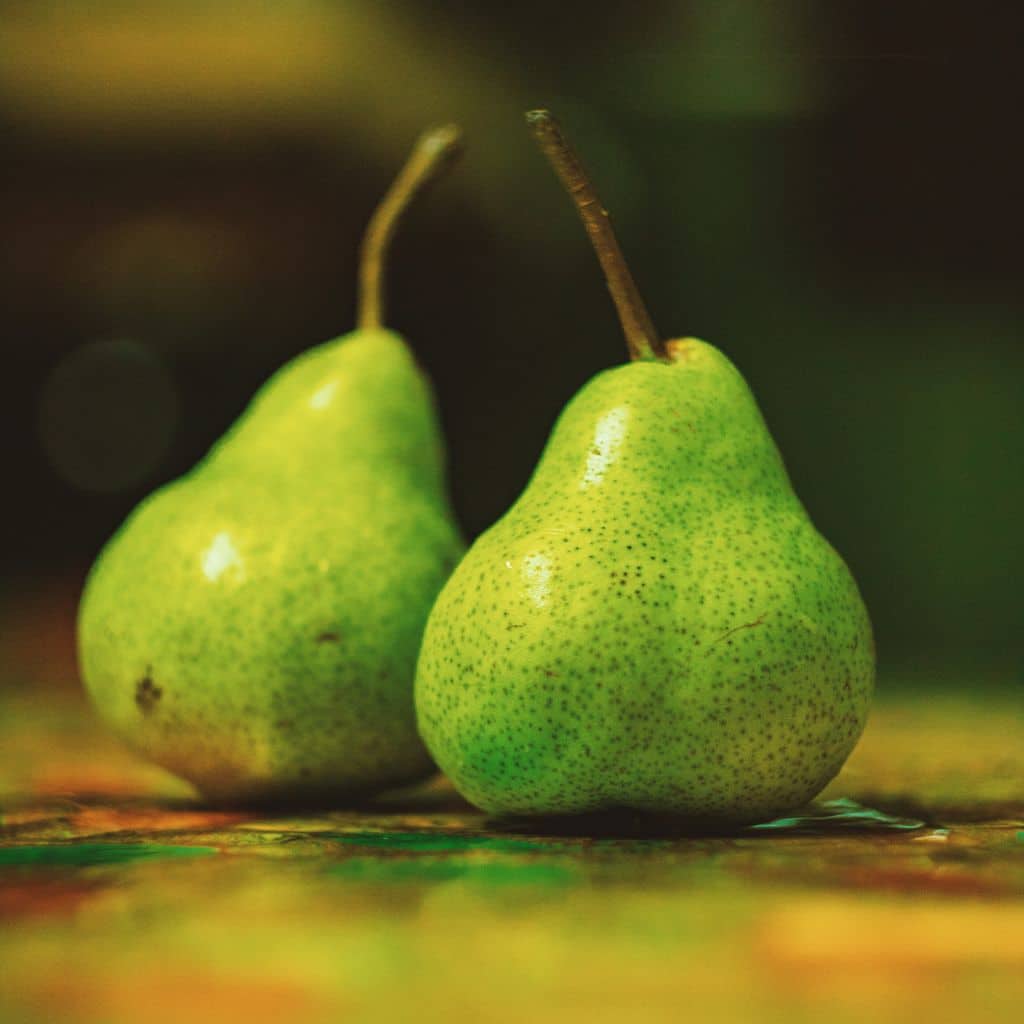
The pear (Pyrus communis) is a versatile and delicious fruit known for its sweet flavor and juicy texture. This fruit, which originates from the temperate regions of Europe and Asia, has been cultivated for thousands of years.

Advertisement: The page displays ads and contains advertising links (affiliate links). See our advertisers here.
Pears come in many different varieties, each with its own unique flavor, texture and use. Beyond their culinary uses, pears are also known for their health benefits, as they are rich in dietary fiber, vitamins and antioxidants.
Estimated reading time: 10 minutes
History and Origin
The pear has accompanied humankind for more than 3,000 years. It was cultivated early on in western Asia, and both the Greeks and the Romans refined the varieties and carried the pear tree with them across Europe, where it quickly became a fixture of monastery gardens and manor gardens.
In Denmark, the pear has a long tradition, and several of our most beloved varieties have deep roots here. Grevinde, for example, was bred as early as the 1700s, and Danish favorites like Clara Friis followed later.
The Many Varieties of Pears
Common Danish Pear Types
There are several Danish pear varieties known for their flavor and suitability for the Danish climate. Here are some of the most common Danish pear varieties:
- Clara Friis: A popular Danish pear variety known for its sweet, juicy flavor and fine texture. The pear is small to medium-sized and has a greenish-yellow color with a slightly reddish blush when ripe.
- Greve Moltke: A Danish variety named after Count Moltke. This pear has a firm texture and a sweet, slightly spicy flavor. It is typically yellow with a reddish blush when ripe.
- Doyenné du Comice: Originally a French variety, but it is also grown in Denmark. The pear is large, juicy and very sweet, which makes it popular as an eating or dessert pear.
- Grevinde: A Danish variety bred in the 1700s. It has a sweet, slightly spicy flavor, and the fruit is often yellow with red stripes or specks.
- Conference: Although this variety originally comes from England, it has become very widespread in Denmark. It is popular for its sweet flavor and juicy texture.
- Williams: This variety is also known as Bartlett and is one of the most widely grown pears in Denmark. It is very juicy and sweet, making it ideal for both eating fresh and cooking.
These varieties are well known in Denmark and are grown both commercially and in private gardens. Most of them are well suited to the Danish climate and can be used for a wide range of culinary purposes.
Exotic and Rare Pear Varieties
Besides the common varieties, there are also some more exotic and rare pear types:
- Comice: Known as the Christmas pear for its sweet, creamy texture. It is perfect for desserts.
- Seckel: A small but very sweet pear, often used in preserves and as a snack.
- Forelle: A small, colorful pear with red specks that has a crisp texture and a spicy flavor.
- Asian pear: Also known as the apple pear for its crisp texture and apple-like shape. It is very juicy and sweet.
Flavor and Aroma
Pears taste sweet and juicy with a mild, floral aroma. The sweetness is more subdued than in many other fruits, which makes the pear well suited to both sweet and savory dishes.
The texture varies markedly from variety to variety, from the buttery-soft, almost creamy Doyenné du Comice to the crisp, apple-like Asian pear. What they all have in common is that the flavor only fully unfolds once the fruit is ripe.
Culinary Uses of Pears
Sweet and Savory Pear Recipes
Pears can be used in a wealth of recipes, both sweet and savory. Some popular uses include:
- Pear tart: A classic dessert where pears are combined with a sweet dough and baked to perfection. Try our Pear Tart in the Airfryer.
- Pear salad: A fresh salad with sliced pears, blue cheese, walnuts and a honey vinaigrette.
- Pear marmalade: Perfect for breakfast or as part of a cheese board.
Pears with Other Ingredients
Pears can also be paired with a range of other ingredients to create delicious flavor combinations:
- Cheese: Pears go well with soft cheeses like brie or sharp cheeses like blue cheese.
- Nuts: Walnuts and almonds complement the sweetness of pears.
- Wine: White wine and champagne are ideal partners for pears in both savory and sweet dishes.
In the Airfryer
Pears are perfect for the airfryer. At around 180 degrees, the natural sugars caramelize and the flesh becomes soft and intensely flavored. This makes the pear perfect for everything from baked pears and tarts to our popular Pear Cake in the Airfryer.
Blend ripe pear into a purée and use it as a natural sweetener in sauces, dressings or marinades. Pear adds both sweetness and a subtle fruity flavor without overpowering the dish.
Tips and tricks from the author: Morten Jensen
Health Benefits
Pears are not only delicious, but also incredibly healthy.
Fiber and Digestion
Pears are an excellent source of dietary fiber, which is important for healthy digestion. A single pear can contain up to 6 grams of fiber, which helps maintain healthy gut function and prevent constipation.
Vitamins and Antioxidants
Pears also contain vitamin C, which is essential for immune system function, and copper, which helps form red blood cells. In addition, pears are rich in antioxidants, which fight free radicals in the body and can help reduce the risk of chronic disease.
Nutritional Value of an Average Pear
An average pear (approx. 178 grams) contains the following nutritional values:
- Calories: 101 kcal
- Protein: 1 gram
- Fat: 0.3 grams
- Carbohydrates: 27 grams, of which 6 grams are dietary fiber and 17 grams are sugar
- Vitamin C: 7 mg (approx. 8% of the daily recommended value)
- Vitamin K: 8 µg (approx. 10% of the daily recommended value)
- Potassium: 206 mg (approx. 6% of the daily recommended value)
Pears are also a good source of antioxidants, and they contain small amounts of other vitamins and minerals such as copper and folate. The high fiber content in pears makes them especially beneficial for digestion.

Growing
Growing your own pears can be a rewarding experience. Here are the most important prerequisites for success:
- Climate: Pears thrive best in temperate climates with cold winters and warm summers.
- Soil: They prefer well-drained soil with a pH value between 6 and 7.
- Pruning: Regular pruning helps promote air circulation and sunlight, which improves the quality of the fruit.
- Pollination: Many pear varieties require cross-pollination, so plant several varieties close together to ensure a good harvest.
How to Grow Pears
Total time: 3-5 years to first harvest
- Choose variety and location
Choose a variety suited to the Danish climate, and give the tree a sunny, sheltered spot.
- Plant the tree
Plant in well-drained soil with a pH value between 6 and 7, preferably in autumn or early spring.
- Prune and maintain
Prune annually to promote air circulation and sunlight, and ensure cross-pollination with another variety nearby.
- Harvest
Harvest from August to October, when the fruit releases from the branch with a gentle twist.
Season in Denmark
In Denmark, the season for pears is typically from August to October. This is the period when most Danish pear varieties ripen and are ready for harvest. Some varieties, such as Clara Friis, ripen earlier in August, while others like Conference and Grevinde may not be ready until later in September and October. Pears can often be stored for a longer period after harvest, which makes them available in stores for a few months after the main season.
Selection and Storage
When choosing pears, look for fruit that is firm but yields slightly to gentle pressure. Avoid pears with soft spots or damage.
- Let unripe pears ripen at room temperature
- Place the pears in a paper bag together with a banana or an apple to speed up ripening. The fruit releases ethylene, which promotes ripening
- Store ripe pears in the refrigerator to extend their shelf life
Conclusion
Pears are an incredibly versatile and healthy fruit that deserve a place in every diet. With their many varieties, health benefits and culinary uses, pears are a true treasure from nature. Whether you enjoy them fresh, in recipes, or grow your own, pears offer a unique flavor experience and a range of health benefits.
With this guide, we hope you have gained a deeper understanding of pears and their many benefits. Whether you are a passionate gardener, a health-conscious consumer or a food enthusiast, pears are a fruit that can enrich your life in many ways.
Try This Recipe
The pear’s mild sweetness only becomes more intense from the heat in the airfryer, where the flesh caramelizes lightly and turns completely tender. It’s the simplest way to transform a couple of ripe pears into an elegant dessert. Try our Baked Pears in the Airfryer.
Equipment and Products
The pear’s sweetness is fantastic for preserving and marmalade, where the flavor is concentrated and can be enjoyed all year round. It’s perfect for the breakfast table or with a good cheese. Try our Pear Marmalade La Fageda.
Frequently Asked Questions
The season typically runs from August to October, and many varieties can be stored so they remain available for several months after harvest.
Place them in a paper bag together with a banana or an apple. The fruit releases ethylene, which speeds up ripening.
An average pear contains up to 6 grams of dietary fiber, making it one of the most fiber-rich fruits.
Doyenné du Comice is known as one of the finest dessert pears thanks to its large, juicy and very sweet fruit.
Yes, pears are perfect for the airfryer, where the natural sugar caramelizes. It’s ideal for baked pears, cakes and tarts.
Facts About Pears
| Field | Value |
|---|---|
| Latin name | Pyrus communis |
| Family | Rosaceae (Rose family) |
| Origin | Temperate Europe and Asia |
| Season in DK | August-October |
| Calories per 100 g | Approx. 57 kcal |
| Key nutrients | Dietary fiber, vitamin C, vitamin K, potassium, copper |
| Storage | Ripens at room temperature, then refrigerate |
