

Peas are one of the vegetables I always keep in the freezer. A bag of frozen peas can save a quick everyday dish, a green soup or a bowl of crispy snacks from the air fryer. And when fresh local peas are in season in summer, I like to eat them raw, straight from the pod.
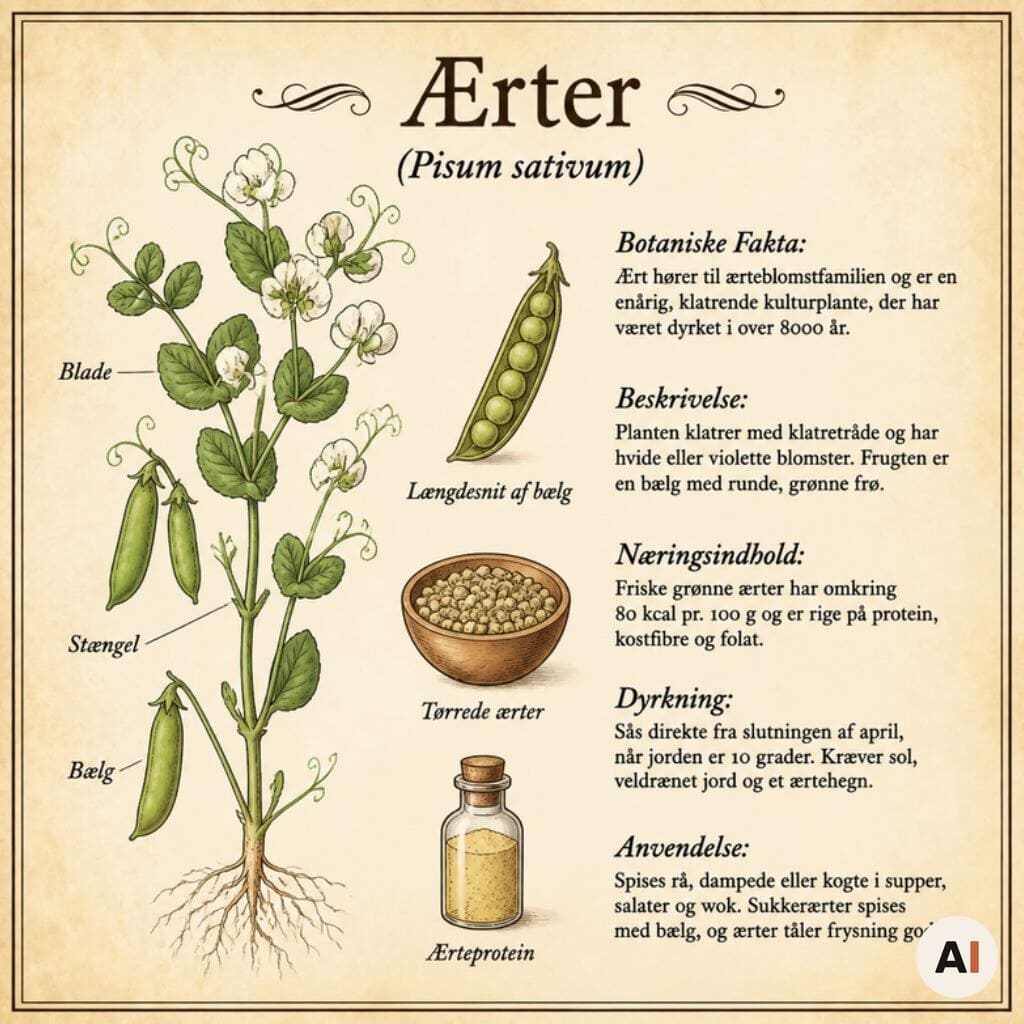
The pea, Pisum sativum, is a legume from the pea family, but in the kitchen we use it as a vegetable. The name peas covers both the small green peas that are shelled from the pod and the snow peas (mangetout) and sugar snap peas, where the whole pod is eaten. Chickpeas (Cicer arietinum), on the other hand, are an entirely different species, even though the name sounds similar.
Estimated reading time: 6 minutes
History and origin
One of the world’s oldest cultivated plants
The pea is one of the oldest plants humans have cultivated. It has been a cultivated plant for 8,000–9,000 years and originates in the area from the Mediterranean to Iran.
In Denmark, peas are mentioned in herbals from the 15th century, and dried peas have long been hearty everyday fare in the winter months – a tradition that lives on in gule ærter, the Danish yellow pea soup.
From dried staple to sweet garden peas
An important milestone came in the 18th century, when the Englishman Thomas Knight bred the sweet marrow pea. The marrow pea has wrinkled seeds with more sugar than the smooth-seeded shelling peas, and it is the foundation of many of the sweet garden peas we know today.
Then came preserving. Canned peas appeared in the second half of the 19th century, and frozen peas arrived in the 1950s. Since then, peas have been a vegetable you can get all year round.
Peas and the science of heredity
Peas also have a place in the history of science. The monk Gregor Mendel used peas in his experiments on heredity – among other things by crossing plants with smooth and wrinkled seeds – and thereby laid the foundation for modern genetics.
Flavour and aroma
Sweetness that fades quickly
Fresh green peas taste sweet, fresh and slightly grassy. The sweetness comes from the sugar in the peas, but it starts turning into starch as soon as they are harvested. That is why freshly picked peas taste far sweeter than peas that have been lying around for a while.
This also explains why frozen peas can taste better than fresh peas that have spent a long time on their way to the shop: they are blanched and frozen shortly after harvest.
Differences between the types
Shelling peas have smooth seeds with more starch and quickly turn mealy if they are allowed to grow large. Marrow peas (wrinkled peas) are sweeter and more tender. Snow peas have flat, crisp pods with a mild flavour, while sugar snap peas have thick, juicy pods that crunch and taste sweet.
Dried peas – for example yellow split peas – have a more earthy and full-bodied flavour and turn creamy when they are cooked down.
Culinary uses
Peas are incredibly versatile: they can be eaten raw, boiled, mashed, blended into soup, stirred into fillings and roasted crisp in the air fryer.
In Danish cuisine
In Denmark, peas are part of classic home cooking – as a main course, a side dish and a sandwich topping:
- Gule ærter (yellow pea soup): soup made from dried, split yellow peas with salted pork and sausage.
- Stuvede ærter og gulerødder: peas and carrots in white sauce, served as a side dish with, for example, frikadeller (Danish meatballs).
- Italiensk salat (“Italian salad”): peas, carrots and asparagus in mayonnaise – a classic topping on smørrebrød (Danish open sandwiches).
Around the world
Out in the wider world, peas have at least as many classics:
- Petits pois à la française (France): peas braised with lettuce, small onions and butter.
- Mushy peas (UK): dried marrowfat peas, cooked and mashed – the standard side dish with fish and chips.
- Risi e bisi (Italy, Venice): rice with fresh peas.
- Samosa (India): crisp pastry pockets with a spiced filling of potatoes and peas.
In the air fryer
My favourite way to use peas in the air fryer is as crispy roasted peas. I let frozen green peas thaw completely, pat them thoroughly dry with a clean tea towel and toss them in a little oil, salt and smoked paprika. Then I roast them in a single layer in the basket until they are golden and crisp.
Shake the basket a couple of times along the way, and let the peas cool – they get crispier once they have stood for a while. Snow peas and sugar snap peas are good as a quick side dish: toss them with oil, salt and a little garlic, and give them only a short time so they still keep their crunch.
Remember that dried peas must always be boiled before use – they cannot be roasted straight from the bag.
Health benefits
Nutritional content
For a vegetable, peas contain a lot of protein and plenty of dietary fibre. Per 100 g of raw green peas you get 70 kcal and, among other things:
- Protein: 5.9 g
- Dietary fibre: 5.9 g
- Carbohydrate: 12.9 g
- Fat: 0.7 g
- Vitamin C: 43 mg
- Thiamin (vitamin B1): 0.31 mg
- Potassium: 300 mg
- Phosphorus: 130 mg
- Iron: 1.8 mg
What does it mean on your plate?
Protein and fibre make peas filling, and peas are also a source of thiamin, which contributes to normal energy-yielding metabolism. Vitamin C is sensitive to heat, so give the peas only a short cooking time if you want to preserve as much of it as possible.
Allergy
Pea allergy does occur, and there can be cross-reactivity with other legumes such as peanuts, lentils and chickpeas. Peas are not among the allergens that must be declared under EU rules, so read the ingredient list carefully if you react to legumes – pea protein is used in many processed foods.
Growing peas
Peas are easy to grow in the kitchen garden. The plant is an annual that tolerates cold, withstands light frost and can be sown early in spring. As a legume, the pea fixes nitrogen from the air with the help of bacteria in its root nodules, so it should not be given nitrogen – but it does need phosphorus and potassium, among other things.
Growing conditions
- Soil: humus-rich clay loam or sandy loam with a pH of 6.5–7.5.
- Light: a sunny, open spot.
- Sowing time: shelling peas from late March; marrow peas, sugar snap peas and snow peas after mid-April. Peas can be sown until 15 June.
- Height: 40–300 cm depending on the variety.
- Crop rotation: peas are sensitive to repeated cultivation, so do not grow them in the same spot year after year.
How to sow and harvest peas
Here is how I go from sowing to harvest:
Total time: 2-3 months
- Prepare the soil
Choose a sunny, open spot with humus-rich clay loam or sandy loam and a pH of 6.5–7.5. Do not add nitrogen, but make sure the soil has phosphorus and potassium.
- Sow the peas
The earliest sowings go into drills 3 cm deep. Shelling peas can be sown from late March and the other types after mid-April. All peas can be sown until 15 June.
- Provide support and care
Put up pea sticks, netting or canes so the tall varieties have something to climb. Water evenly and keep the bed free of weeds.
- Harvest
Harvest the peas before they get too big and coarse. Snow peas are harvested before the seeds develop. Eat or freeze the peas soon after harvest so they keep their sweetness.
Varieties for the kitchen garden
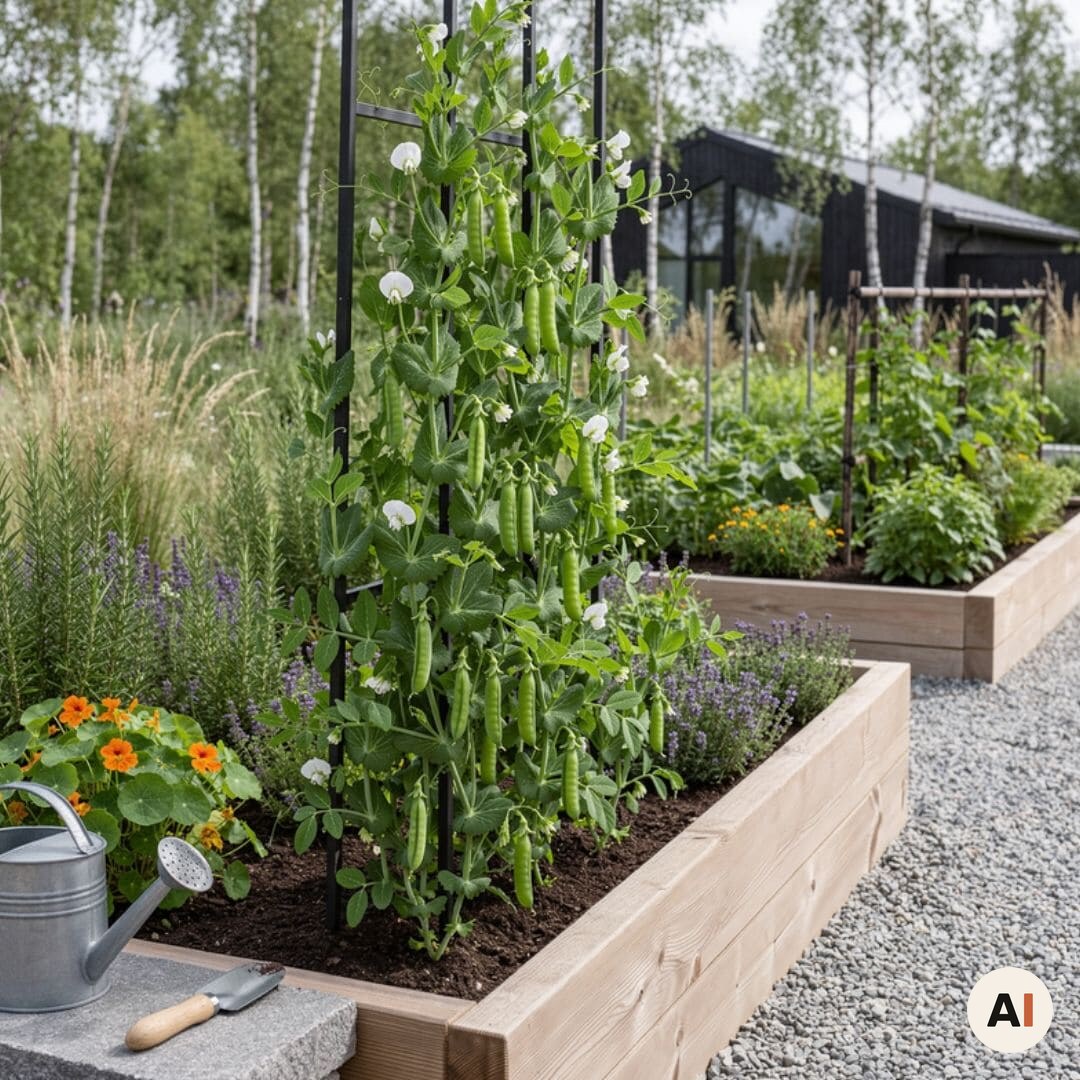
Fenomen is a low-growing shelling pea of 45 cm, and Alderman is a marrow pea. Marrow peas, sugar snap peas and snow peas grow to 40–200 cm depending on the variety, while tall varieties such as Blauschokkers can reach 200–300 cm and need solid support. Field peas are grown in the field, among other things for dried peas.
Watch out for the look-alike
The ornamental sweet pea (Lathyrus odoratus) is poisonous. It resembles the pea plant but does not belong in the kitchen – so keep the two apart if you grow both.
Storage
Fresh peas
Fresh peas should be stored cold in the fridge and used quickly. The sweetness fades as the sugar turns into starch after harvest – so the sooner you eat them, the sweeter they are.
Freeze them yourself
If you want to save the summer’s peas, blanch them briefly, cool them quickly in cold water and freeze them. That way they keep far longer and retain both colour and sweetness.
How to keep peas at their best
- In the pod: shell the peas just before use.
- Frozen peas: use them straight from the freezer in soups, stews and fillings.
- Canned peas: can be kept in the cupboard and are a classic preserved food.
- Dried peas: store dry and must always be boiled before use.
Try this recipe
Potatoes and peas are the classic combination in Indian samosas, where the sweet peas bring a fresh touch to the spiced filling. Try our recipe for Samosas in the air fryer – crispy Indian triangle rolls in 12 minutes. I stir frozen green peas into the filling right at the end so they keep their shape and fresh green colour. The air fryer gives the samosas a crisp shell without any deep-frying.
Frequently asked questions
Snow peas have flat pods and are harvested before the seeds develop. Sugar snap peas have thick, round, juicy pods with small peas inside. Both are eaten pod and all and need only a short time in the pan or the air fryer.
No. Peas (Pisum sativum) and chickpeas (Cicer arietinum) are two different species. Both are legumes from the pea family, but they taste different and are used in different ways in the kitchen.
Yes. Fresh green peas, snow peas and sugar snap peas can be eaten raw. Dried peas, on the other hand, must always be boiled before eating.
Let frozen green peas thaw completely, pat them thoroughly dry and toss them in a little oil, salt and spices. Roast them in a single layer in the basket, shake it a couple of times along the way, and let the peas cool so they become extra crisp.
Yes. Blanch the peas briefly, cool them quickly in cold water and freeze them. That way they keep far longer than in the fridge, where the sweetness fades quickly.
Facts about peas
| Fact | Value |
|---|---|
| English name | Peas (singular: pea) |
| Latin name | Pisum sativum |
| Family | Pea family (Fabaceae) |
| Plant type | Annual, cold-tolerant legume |
| Height | 40–300 cm depending on the variety |
| Hardiness | Tolerates light frost and can be sown in early spring |
| Light | Sunny, open spot |
| Soil | Humus-rich clay loam or sandy loam, pH 6.5–7.5 |
| Sow/plant | Shelling peas from late March; marrow peas, sugar snap peas and snow peas after mid-April; no later than 15 June |
| Harvest | In summer, before the peas get too big and coarse |
| Season | Fresh local peas in summer; frozen and canned peas all year round |
| Calories per 100 g | 70 kcal (raw green peas) |
| Flavour | Sweet, fresh and slightly grassy |
| Types | Shelling pea, marrow pea, snow pea, sugar snap pea and field pea |
| Culinary uses | Yellow pea soup (gule ærter), peas and carrots in white sauce, Danish “Italian salad”, risi e bisi, mushy peas, samosas and crispy roasted peas |
| Storage | Cold in the fridge and used quickly; blanched and frozen for longer shelf life |
