

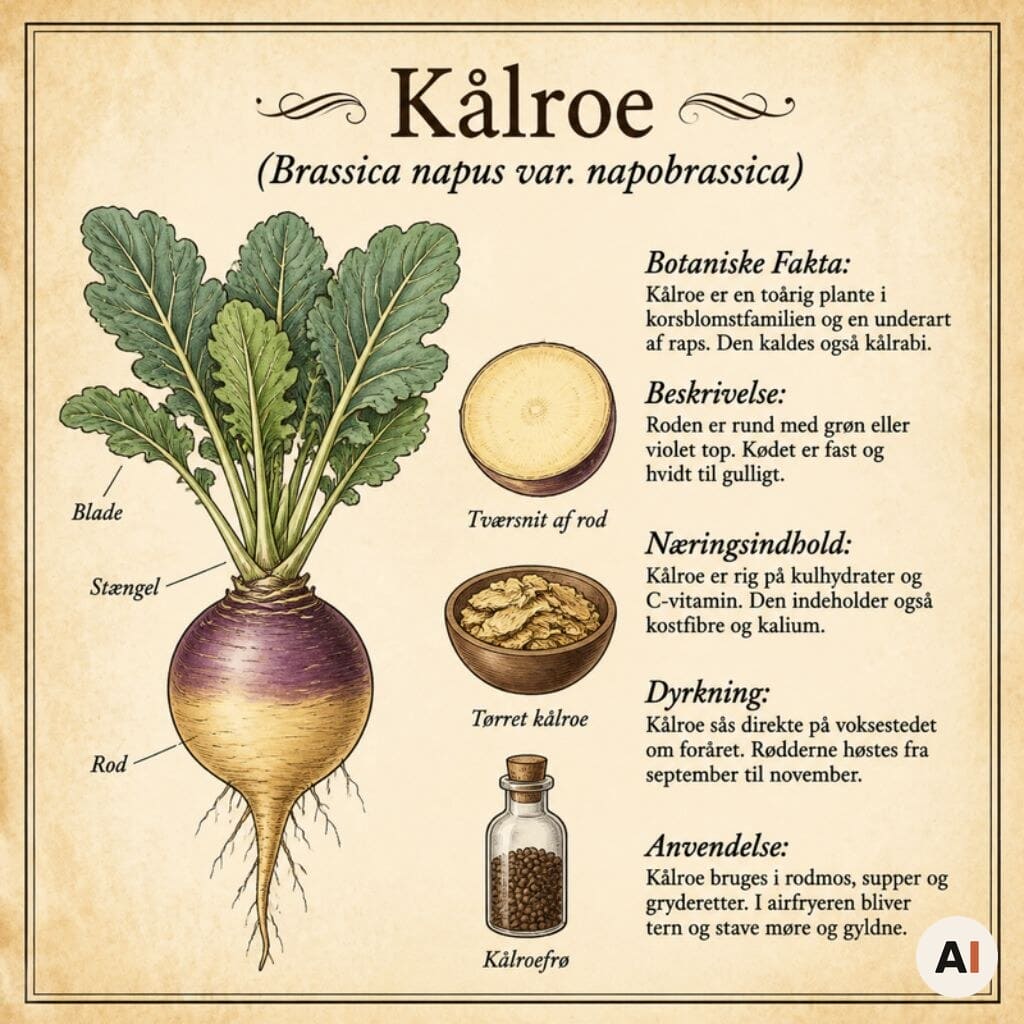
Swede (also called rutabaga) is one of the most overlooked root vegetables in everyday cooking – and that is a shame. Beneath its purple and yellowish skin lies firm, yellow flesh with a mild sweetness that becomes round and deep when the swede is roasted. Botanically, it is called Brassica napus var. napobrassica, and it belongs to the cruciferous family along with cabbage and turnip.
I love swede because it is so versatile. It can be mashed, creamed, added to soups and turned into crispy fries in the air fryer, and it keeps through the winter, so you have a locally grown vegetable at hand when the choice is otherwise limited. In everyday Danish, many people call it kålrabi, but be careful: that name is also used for kohlrabi, which is a completely different vegetable.
In this entry you will find the story behind the Nordic lemon, a guide to flavour and cooking, nutritional content, growing in the vegetable garden and my best storage tips.
Estimated reading time: 6 minutes
History and origin
A cross between cabbage and turnip
Swede is not a wild plant but a cultivated one that arose from a cross between cabbage and turnip. Both parents belong to the cruciferous family, and you can still detect the heritage in the flavour, which has both the sweetness of the turnip and a slight cabbage-like note.
Swede was mentioned in Sweden as early as 1683, and since then it has earned a firm place across the Nordic countries, where it has been valued as a solid vegetable that tolerates light frost and keeps through the winter.
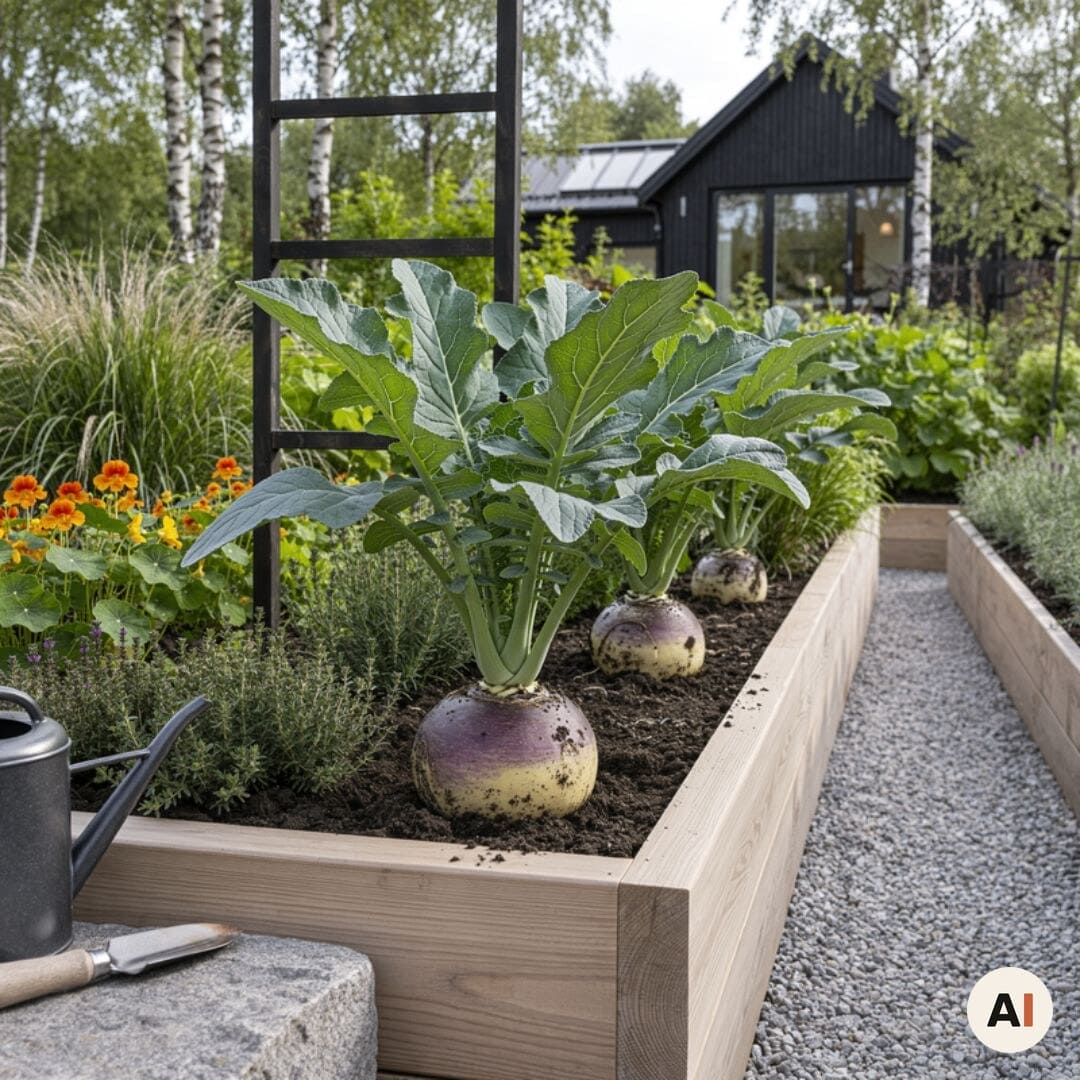
Swede or kohlrabi?
The name confusion is old. Many Danes say kålrabi when they mean swede, but the same name is also used for kohlrabi, which is called knudekål or glaskål in Danish. As early as 1876, the seed company Fritz Jensen used the name kålrabi for two different plants in its price list. When I write swede, I always mean the large root vegetable with yellow flesh – not the pale green or purple kohlrabi that grows above the ground.
The Nordic lemon
Swede is jokingly called the Nordic lemon, and the nickname is well deserved. Raw swede contains 41 mg of vitamin C per 100 g, and because it keeps through the winter, it has been a welcome vegetable during the dark winter months.
Flavour and aroma
Raw swede
Raw swede is crisp and juicy with a fresh, slightly sweet flavour and a subtle, cabbage-like sharpness. Finely grated in a salad with apple or carrot, it adds bite and freshness, and cut into thin sticks it is a good alternative to carrots on a vegetable platter.
Cooked swede
Cooked, swede turns soft and mild, and the cabbage-like note fades into the background. That is why it works so well in mash and soups, where it gives a round, mildly sweet flavour and a beautiful golden colour.
Roasted swede
Roasted in the oven or air fryer, something else entirely happens. The dry heat caramelises the surface, so the edges turn golden and nutty while the inside stays soft and creamy. I think swede is one of the root vegetables that gains the most from being roasted.
Culinary uses
Swede is a classic Nordic root vegetable that can do much more than most people think. It can be used raw, boiled, mashed and roasted, and it pairs well with butter, cream, thyme, parsley and smoked meat.
In the Danish kitchen
In traditional Danish cooking, swede has mostly been served creamed in a milk sauce with parsley, as a side for meat and pork, and as a hearty addition to soup. Creamed swede is pure everyday comfort, and in a hearty vegetable soup, cubes of swede add both substance and sweetness. Mashed with potatoes and a generous knob of butter, it is an obvious side for fried pork belly or frikadeller (Danish meatballs).
Internationally
Outside Denmark, swede is especially loved in the rest of the Nordic countries and in the British Isles, where it features in several classic dishes:
- Kålrotstappe (Norway): creamy swede mash that goes with pinnekjøtt (cured lamb ribs) on the Christmas table.
- Rotmos (Sweden): a root mash of swede and potatoes, classically served with boiled, salted pork hock.
- Lanttulaatikko (Finland): a baked dish of mashed swede that is a fixture on the Finnish Christmas table.
- Neeps and tatties (Scotland): mashed swede and potatoes, served with haggis.
- Cornish pasty (England): a half-moon-shaped pastry filled with beef, potatoes, onion and swede.
In the air fryer
The air fryer is made for swede. The hot, circulating air gives crispy, caramelised edges, and you only need a little oil. Swede fries are a fantastic alternative to French fries and go with everything from burgers to meatballs.
My best trick is to cut the swede into even sticks or cubes, toss them in a little oil, salt and a sprinkle of smoked paprika or thyme, and cook them in a single layer. Shake the basket a few times along the way, and do not overfill it – the sticks need air around them to turn crispy instead of steamed. Feel free to mix the swede with carrot, parsnip and red onion for a colourful mix of roasted root vegetables.
Health benefits
Swede is a light vegetable with only 34 kcal per 100 g, and it provides vitamin C, dietary fibre and potassium. Here are the most important nutrients in raw swede.
Nutritional content per 100 g raw swede
- Vitamin C: 41 mg
- Dietary fibre: 2.9 g
- Potassium: 392 mg
- Folate: 27 µg
- Niacin: 1.8 mg
- Vitamin B6: 0.12 mg
- Calcium: 47.4 mg
- Magnesium: 14 mg
- Iron: 0.25 mg
- Protein: 1 g
How to get the most out of swede
Vitamin C is water-soluble and sensitive to heat, so some of it ends up in the cooking water. If you want to keep as much as possible, eat the swede raw, roast it in the air fryer, or use it in a soup where the cooking liquid is eaten too.
The dietary fibre helps make swede filling, and with its low calorie content it is a good choice when you want more vegetables on your plate.
Growing
Swede is an easy, rewarding crop in the vegetable garden, as long as it gets enough water and good, nutrient-rich soil. It tolerates light frost, so you can safely leave the roots in the bed when the first light frosty nights arrive.
Growing conditions
Water is the most important thing. If swede lacks water, it turns woody, so keep the soil evenly moist and spread mulch around the plants. The soil should be humus-rich and preferably fertilised with compost the year before.
- Soil: humus-rich and compost-fertilised, preferably fertilised the year before.
- pH: 6.5–7.5. A high pH reduces the risk of clubroot.
- Water: even moisture and mulch, so the roots do not turn woody.
- Germination: the seeds germinate at temperatures as low as 5 °C.
- Spacing: 40–50 cm between the rows and 10–20 cm between the plants.
- Hardiness: tolerates light frost.
Varieties
Among the varieties you will find, for example, Marian, Bangholm, Wilhelmsburger and Magres Pajbjerg. Feel free to try a few different ones – that is part of the charm of growing your own.
How to grow swede
Here are the four steps from seed to full-grown swede. You can even sow in June in beds where you have harvested early crops.
Total time: 3-4 months
- Prepare the soil
Choose a bed with humus-rich soil, preferably fertilised with compost the year before. A pH of 6.5–7.5 reduces the risk of clubroot.
- Sow the seeds
Sow the seeds 1–2 cm deep with 40–50 cm between the rows. The seeds germinate at temperatures as low as 5 °C.
- Thin out and water
Thin the seedlings so there are 10–20 cm between the plants in the row. Keep the soil evenly moist and spread mulch so the roots do not turn woody.
- Harvest
Swede is fully grown after 3–4 months, but you can use it as soon as it is 4–5 cm across. It tolerates light frost and keeps well through the winter.
Storage
Swede can be stored over the winter, and with a little care you can have it in your kitchen long into the cold months.
Whole swedes
Whole, unwashed swedes keep best in a cool, dark place, ideally in the vegetable drawer of the fridge or in a cool cellar. If you have grown them yourself, cut off the tops before putting them into storage.
Cut and cooked swede
A partly used swede should be wrapped so the cut surface does not dry out, and it should be used soon. Cooked swede and swede mash freeze well, and blanched cubes are handy to have in the freezer for soups and stews.
- Cool and dark: whole swedes keep best at a low temperature and without light.
- Unwashed: only wash the swede when you are about to use it.
- Wrap the cut surface: wrap a partly used swede and put it in the fridge.
- Freeze it cooked: blanch cubes or make mash before the swede goes into the freezer.
Try this recipe
The mild sweetness of swede goes perfectly with sausages and beans, and it gives the mashed potato a warm, yellow colour and a fresh, slightly cabbage-like note. Try our recipe for Cowboy pie in the air fryer – sausages, beans and creamy mashed potato in 45 minutes. I swap part of the potatoes in the mash for swede, so the topping tastes a little like Swedish rotmos. Boil the swede and potatoes separately until completely tender before mashing them together – that way both get the right consistency, and the hot air of the air fryer gives the mash a golden top.
Frequently asked questions
In Danish, kålrabi is a common everyday name for swede, but the name is also used for kohlrabi (knudekål or glaskål). Swede is a large root vegetable with yellow flesh, while kohlrabi is a thickened stem that grows above the ground. They are two different vegetables.
Yes. Raw swede is crisp and fresh and can be finely grated into salads or cut into thin sticks for dipping. Raw, it also contains the most vitamin C, namely 41 mg per 100 g.
The nickname is a playful reference to its high vitamin C content: raw swede contains 41 mg per 100 g. It also keeps through the winter, so it has put vitamin C on the table during the dark months.
Swede is an autumn and winter vegetable. It needs 3–4 months to develop, and because it keeps through the winter, you can find it well into the winter months.
Peel the swede, cut it into even sticks and toss them in a little oil and salt. Air fry the sticks in a single layer, shaking the basket a few times along the way, until the edges are golden and crispy.
Facts about swede
| Fact | Details |
|---|---|
| English name | Swede (also called rutabaga) |
| Latin name | Brassica napus var. napobrassica |
| Family | Cruciferous family (Brassicaceae) |
| Plant type | Root vegetable, arising from a cross between cabbage and turnip |
| Hardiness | Tolerates light frost |
| Soil | Humus-rich and compost-fertilised, pH 6.5–7.5, evenly moist |
| Sowing/planting | 1–2 cm deep, 40–50 cm between the rows and 10–20 cm in the row; germinates from 5 °C |
| Harvest | After 3–4 months; can be used from 4–5 cm |
| Season | Autumn and winter |
| Varieties | Marian, Bangholm, Wilhelmsburger, Magres Pajbjerg |
| Calories per 100 g | 34 kcal (raw) |
| Vitamin C per 100 g | 41 mg (raw) |
| Flavour | Mild and slightly sweet with a hint of cabbage |
| Culinary use | Mash, creamed dishes, soup, fries and roasted root vegetables |
| Storage | Cool and dark; can be stored through the winter |
