

Thyme (Thymus vulgaris) is a beloved herb known for its distinctive flavor and many health benefits. The herb has been used for thousands of years, both as a seasoning in cooking and as an important ingredient in traditional medicine.

Advertisement: The page displays ads and contains advertising links (affiliate links). See our advertisers here.
Now we’ll dive into how thyme can be used in everyday cooking, as well as how you can grow it at home.
Estimated reading time: 6 minutes
History and Origin
Thyme has a long history, stretching back to ancient Egypt, where it was used in embalming. In ancient Greece and Rome, the herb was used as incense in temples and as a seasoning in dishes. It was also used as a symbol of courage and strength, and soldiers often carried it with them as an amulet.
In the Middle Ages, the herb was grown in monastery gardens and used for medicinal purposes, including the treatment of respiratory illnesses and infections. Today, the plant remains an important ingredient in many cuisines and a valued herb in natural medicine.
Nutritional Value
Thyme isn’t just known for its flavor, but also for its nutritional value. It contains a range of important vitamins and minerals that can contribute to good health. The plant is rich in vitamin C, which is essential for a strong immune system, and vitamin A, which is important for eyesight and skin health.
In addition, the herb is a good source of iron, which plays an important role in oxygen transport in the blood. It also contains manganese, which is necessary for enzymatic processes in the body. Thyme is also rich in antioxidants, which help protect the body’s cells from damage caused by free radicals.
Flavor and Aroma
Thyme has a warm, earthy flavor with a hint of mint and pepper and a slight bitterness in the aftertaste. The aroma is strong and slightly resinous, and it comes from the plant’s content of thymol, an essential oil that also gives the herb its antiseptic properties.
Unlike many other leafy herbs, thyme can withstand long cooking without losing its character. In fact, it releases its flavor best when allowed to simmer in the dish, which is why it’s ideal in soups, stews and slow-roasted dishes. Dried thyme retains much of its aroma and is one of the few spices where the dried version works almost as well as the fresh one.
Culinary Uses
Thyme is a versatile herb that can be used in many different dishes. It adds a warm, earthy flavor that goes perfectly with meat dishes, vegetables and baked goods. The plant can also be used in marinades and as a seasoning in soups and stews.
Place a few sprigs of fresh thyme in the bottom of a pan or baking dish, then place the meat or fish on top. Cover the pan or dish with a lid or foil, and let it cook. The thyme releases its aroma during steaming, infusing the meat or fish with a subtle, earthy flavor.
Tips and tricks from the author: Morten Jensen
In Danish Cuisine
In Danish cuisine, thyme is a staple in many classic dishes. It’s found in brown gravies, stews and oven-roasted root vegetables, and it’s used liberally with roast pork, lamb and game. A couple of sprigs of thyme in the roasting pan together with potatoes and onions gives a deep, aromatic background flavor that elevates even the simplest everyday dishes.
Internationally
Thyme is a cornerstone of French cuisine, where it’s part of both bouquet garni and the herb blend herbes de Provence. In Mediterranean cooking, it’s used for grilled meat, tomato dishes and olive oil-based marinades, and in the Middle East it’s part of the za’atar spice blend. Everywhere, thyme is valued for its ability to bind a dish’s flavors together.
Preparation and Good Pairings
Thyme works well together with many other ingredients. It pairs especially well with garlic, onion and lemon, as well as with herbs like rosemary and oregano. The plant can also be combined with wine and vinegar to create complex flavor profiles. Typical uses include:
- Chicken marinades with garlic, lemon and olive oil
- Classic French stock and bouquet garni
- Oven-roasted root vegetables, potatoes and mushrooms
- Bread and baked goods with a subtle, spiced note
Health Benefits
Beyond its flavor, thyme has traditionally been valued for a range of beneficial properties when it’s part of a varied diet.
Antioxidants and Anti-Inflammatory Properties
Thyme is rich in antioxidants, which play an important role in protecting the body’s cells from damage caused by free radicals. The plant also has anti-inflammatory properties that can help reduce inflammation in the body. Among the most important nutrients are:
- Vitamin C — supports the immune system
- Vitamin A — important for eyesight and skin
- Iron — contributes to oxygen transport in the blood
- Manganese — involved in the body’s enzymatic processes
Digestion and Airways
Thyme is known for promoting healthy digestion and has carminative properties that can help reduce bloating. The plant also has a long tradition as a home remedy for coughs and colds, where thyme tea has been used to relieve the airways. Its antiseptic and antibacterial properties make it a valued herb in natural medicine.
Cultivation and Growing Conditions
Thyme is a robust, drought-tolerant plant that’s easy to grow both in the garden and in pots. As a true Mediterranean plant, it needs sun and warmth to develop its full aroma.
Growing Conditions
Thyme thrives best in well-drained soil and full sun. The plant prefers slightly alkaline soil and can tolerate dry conditions, making it ideal for Mediterranean gardens and rock gardens. Make sure the soil is well-drained, as the herb doesn’t thrive in waterlogged soil. As a perennial, thyme comes back year after year if it’s planted in a sheltered spot.
How to Grow Thyme
Total time: 8-10 weeks
- Choose a Spot and Soil
Choose a sunny, sheltered spot with well-drained, preferably slightly chalky soil. Thyme also works well in pots and rock gardens.
- Sow or Plant
Sow the seeds shallowly from April, or plant a ready-grown potted plant after the last frost. Seeds germinate slowly, so patience is required.
- Water in Moderation
Water sparingly and let the soil dry out between waterings. Thyme is drought-tolerant and doesn’t like wet feet, so avoid overwatering.
- Harvest and Prune
Harvest sprigs as needed throughout summer. Trim the plant back lightly after flowering to keep it compact and lush.
Watering and Fertilizing
Thyme requires minimal watering, as the plant is drought-tolerant. Let the soil dry out between waterings, and ensure good drainage to avoid root rot. When it comes to fertilizing, thyme is undemanding. A light application of organic fertilizer or compost in spring can encourage growth, but be careful not to over-fertilize, as this can reduce the plant’s flavor.
Storage
To get the most out of thyme, it’s important to store it correctly. Unlike many leafy herbs, thyme dries very well, which makes it easy to keep on hand year-round.
In the Fridge
Fresh thyme can be stored in the refrigerator in a plastic bag or in a glass of water, where it will stay fresh for up to a week. Wrap the sprigs loosely in a bit of damp paper towel to extend their shelf life.
Drying and Freezing
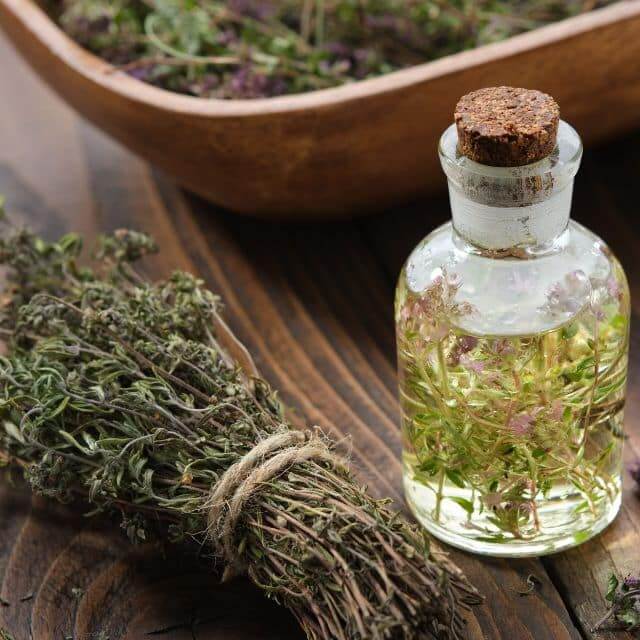
- Hang the sprigs in a dry, dark place, and store the dried thyme in an airtight container for up to a year
- Freeze whole sprigs in freezer bags, so you can quickly toss them into the pot
- Mix chopped thyme with oil in ice cube trays for easy portioning
Try This Recipe
Thyme’s warm, earthy flavor is practically made for poultry, where it ties the other spices together and adds depth. It works especially well with creamy mushroom fillings, where the herb’s aroma balances the rich sauce. Try it in our Baked Chicken in the Airfryer – Crispy Puff Pastry with Creamy Mushroom Filling, where a couple of sprigs of thyme elevate the filling.
Equipment and Products
If you want thyme’s flavor right at hand without chopping fresh sprigs, Thyme Salt is an easy shortcut. It delivers both the herb’s aroma and a touch of salt in one go and is perfect for oven-roasted root vegetables, meat and potatoes.
Frequently Asked Questions
Thyme goes well with meat dishes, poultry, stews, soups, oven-roasted root vegetables and baked goods. It’s also a regular part of bouquet garni and the herb blend herbes de Provence.
Yes. Thyme is one of the few herbs where the dried version works almost as well as the fresh one. Use about a third as much dried thyme, since the flavor is more concentrated.
Unlike delicate herbs, thyme can withstand long cooking. Add it early so it can simmer along and release its flavor into the whole dish.
Yes. Thyme is a robust, drought-tolerant Mediterranean plant that thrives in full sun and well-drained soil. As a perennial, it comes back year after year in a sheltered spot.
Thyme pairs well with rosemary, oregano and bay leaves, as well as with garlic, onion and lemon. The combination is classic in both French and Mediterranean-inspired cooking.
Facts About Thyme
| Field | Value |
|---|---|
| Latin name | Thymus vulgaris |
| Family | Mint family (Lamiaceae) |
| Plant type | Perennial, woody herb |
| Origin | Mediterranean region |
| Light | Full sun |
| Soil | Well-drained, slightly alkaline |
| Sow/Plant | April to May |
| Harvest | Throughout the growing season, especially summer |
| Flavor | Warm, earthy, slightly peppery |
| Culinary use | Meat, poultry, stews, soups, baked goods |
| Storage | Refrigerated, dried or frozen |
