

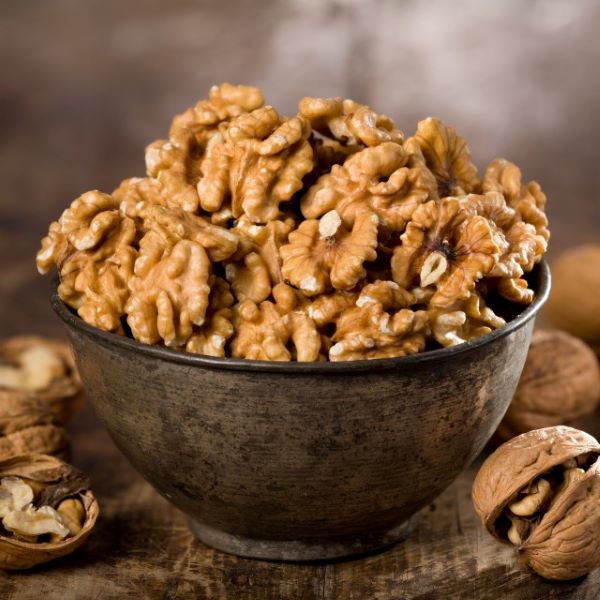
Walnuts are among the most nutrient-rich nuts we know, and they have been used in cooking for thousands of years. The characteristic, brain-shaped kernel hides behind a hard shell and offers a rich, slightly bitter flavour with creamy undertones.

Advertisement: The page displays ads and contains advertising links (affiliate links). See our advertisers here.
The nuts grow on the walnut tree (Juglans regia), which can grow both large and old, and which also thrives in Danish gardens. Walnuts stand out from other nuts due to their unusually high content of plant-based omega-3 fatty acids.
Estimated reading time: 5 minutes
History and Origin
The walnut originates from Persia and Central Asia, which is why it’s also called the Persian walnut. Via the Silk Road, it spread both east and west, and the Romans brought the tree to large parts of Europe. The Latin name Juglans means Jupiter’s acorn – testament to how highly the Romans valued the nut.
In Denmark, walnut trees have graced farmyards and gardens for centuries, and old trees can still yield abundant harvests in September and October. Today, most of the world’s walnuts come from China, the USA and Iran.
Flavour and Aroma
Walnuts have a rich, creamy flavour with a characteristic bitterness that comes from the tannins in the thin skin around the kernel. Freshly harvested walnuts are mild and almost milky, while older nuts develop a stronger flavour. A light roasting brings out the sweetness and gives the nuts more depth and crunch.
Culinary Uses
Baking and Desserts
- Buns and baked goods
- Brownies, tarts and cakes
- Topping on desserts and ice cream
Savoury Dishes
- Classic Waldorf salad with apple and celery
- Pesto, where walnuts replace pine nuts
- Pasta and rice dishes
- Together with blue cheese and honey
Snacks and Toppings
Walnuts are eaten raw as a snack, roasted for salads, or blended into walnut butter. They also work well at breakfast, adding crunch and satiety to yoghurt, porridge and smoothies.
Roast walnuts with a little sugar and salt for the perfect balance between sweet and salty.
Tips and tricks from the author
Health Benefits
Walnuts are particularly known for their high content of the plant-based omega-3 fatty acid ALA – the highest among all common nuts. With around 650 calories per 100 grams, they’re energy-dense, but the fat is predominantly polyunsaturated and benefits the heart and circulation:
- Omega-3 fatty acids – heart, circulation and brain
- Vitamin E – an antioxidant that protects the cells
- Folate – cell division and blood production
- Magnesium – muscles and bones
- Copper – immune system and connective tissue
Studies link regular walnut consumption with lower LDL cholesterol, higher HDL cholesterol, less inflammation and better blood circulation. A small handful a day is enough to enjoy the benefits.
How to Roast Walnuts
Total time: 10 minutes
- Preheat the airfryer
Set the airfryer to 160°C, or use a dry pan over medium heat.
- Spread out the nuts
Place the walnut kernels in a single layer in the basket, so the heat distributes evenly.
- Roast until golden
Roast the nuts for 5-6 minutes, shaking the basket halfway through. Keep an eye on them towards the end – walnuts burn easily due to their high fat content.
- Cool completely
Let the nuts cool completely before using or storing them – this is what makes them crisp and crunchy.
Can Walnuts Be Grown in Denmark?
Yes, walnuts can be grown in Denmark if you choose hardy varieties bred for the Nordic climate. The trees need full sun, good drainage and shelter from wind, and late spring night frosts are the biggest threat to the blossoms. Grafted varieties typically bear nuts after four to five years, while trees grown from seed can take ten years or more to get going. In return, an established tree will reward you with annual harvests for decades.
Storage
The high content of polyunsaturated fat makes walnuts one of the nuts that turns rancid fastest. So store them properly:
- In the shell: a cool, dry place for several months
- Shelled: an airtight container in the fridge
- Freezer: for larger quantities – extends shelf life to over a year
- Avoid heat and direct light, which cause the fat to turn rancid
Conclusion
Walnuts are a healthy and versatile ingredient that combines rich flavour with an outstanding nutrient content. With their high content of omega-3 fatty acids, vitamins and minerals, they’re among the best choices in a varied diet – and with a walnut tree in the garden, you can even harvest them yourself. Use them in baking, salads and snacks, and lightly roast them when you want to get the most out of the flavour.
Try This Recipe
If you want to bake with walnuts, try our Walnut Buns in the Airfryer – light, airy buns with crunchy walnuts that are ready in record time.
Equipment and Products
If you want to experience the walnut’s deep aroma in a glass, try our Walnut Liqueur 100ml – a rich liqueur that’s perfect for desserts or as a finish to a good meal.
Frequently Asked Questions
Yes, they’re rich in omega-3 fatty acids, vitamin E, folate and antioxidants, which benefit the heart and circulation, among other things.
In an airtight container in a cool place or in the fridge. The high fat content makes them sensitive to heat and light.
Yes, freezing extends their shelf life to over a year, and the nuts can be used directly in cooking.
Yes, with hardy, grafted varieties, full sun, good drainage and shelter from wind, the trees typically bear nuts after four to five years.
The bitterness comes from tannins in the thin skin around the kernel. Fresh nuts and light roasting give a milder, sweeter flavour.
Facts About Walnuts
| Field | Description |
|---|---|
| English name | Walnut |
| Latin name | Juglans regia |
| Type | Nut |
| Origin | Persia and Central Asia |
| Flavour | Rich, creamy, slightly bitter |
| Calories | Approx. 650 kcal per 100 g |
| Nutrients | Omega-3, vitamin E, folate, magnesium |
| Health | Good for the heart and circulation |
| Culinary use | Baking, salads, pesto, snacks |
| Harvest (DK) | September – October |
| Storage | Cool, dry, or in the fridge |
| Shelf life | Several months with proper storage |
