

Winter savory has a spicy, warm scent and stays evergreen throughout winter. With its small, blue-white flowers and compact growth, it’s both decorative and useful. The flavor is often described as a blend of pepper, thyme, and oregano, and in Danish cuisine, winter savory is especially used in heartier winter dishes with beans, vegetables, fish, and rich meat dishes. Unlike summer savory, which is an annual, winter savory is a perennial dwarf shrub that thrives in the dry, rocky soils found along the Mediterranean coast. In this entry in our Food Encyclopedia, we gather everything about the plant – from botany and history to growing, harvesting, and uses in Denmark.

Advertisement: The page displays ads and contains advertising links (affiliate links). See our advertisers here.
Estimated reading time: 9 minutes
History and origin
What is winter savory?
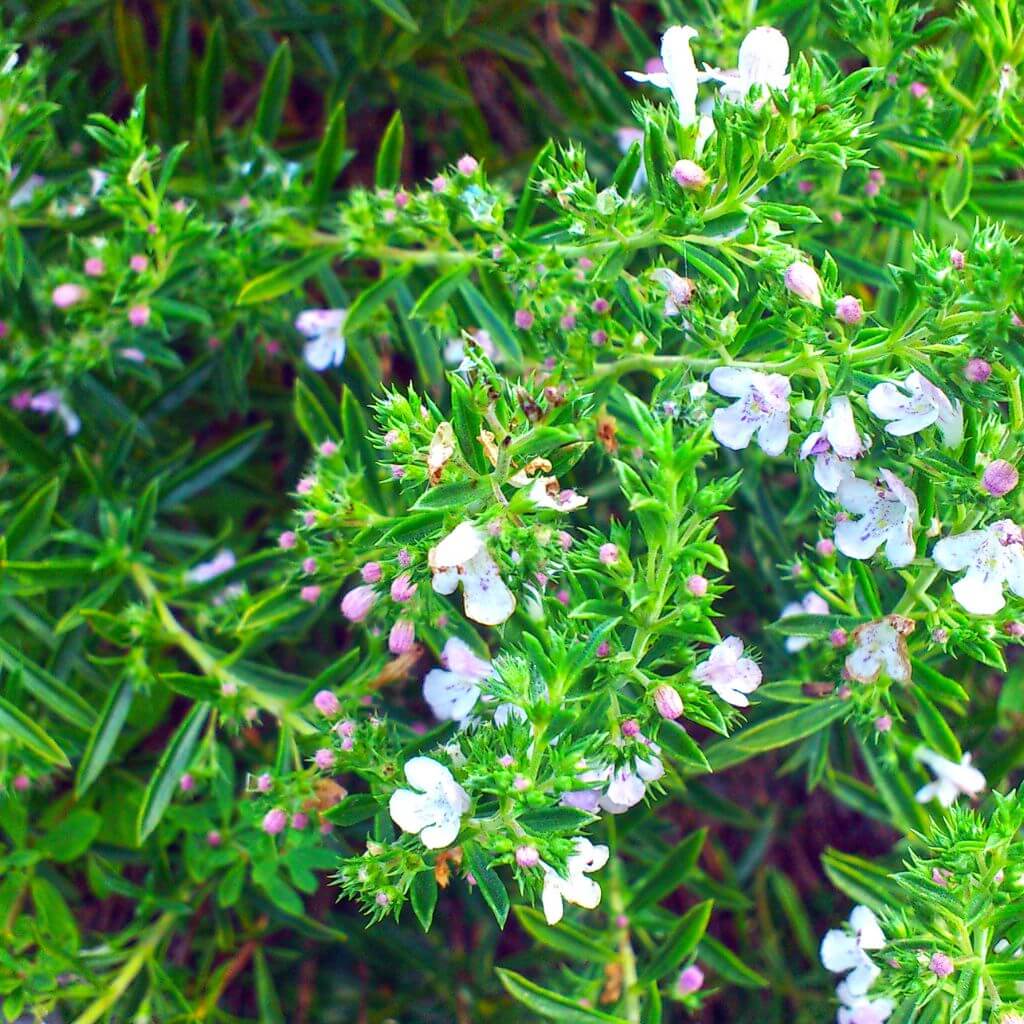
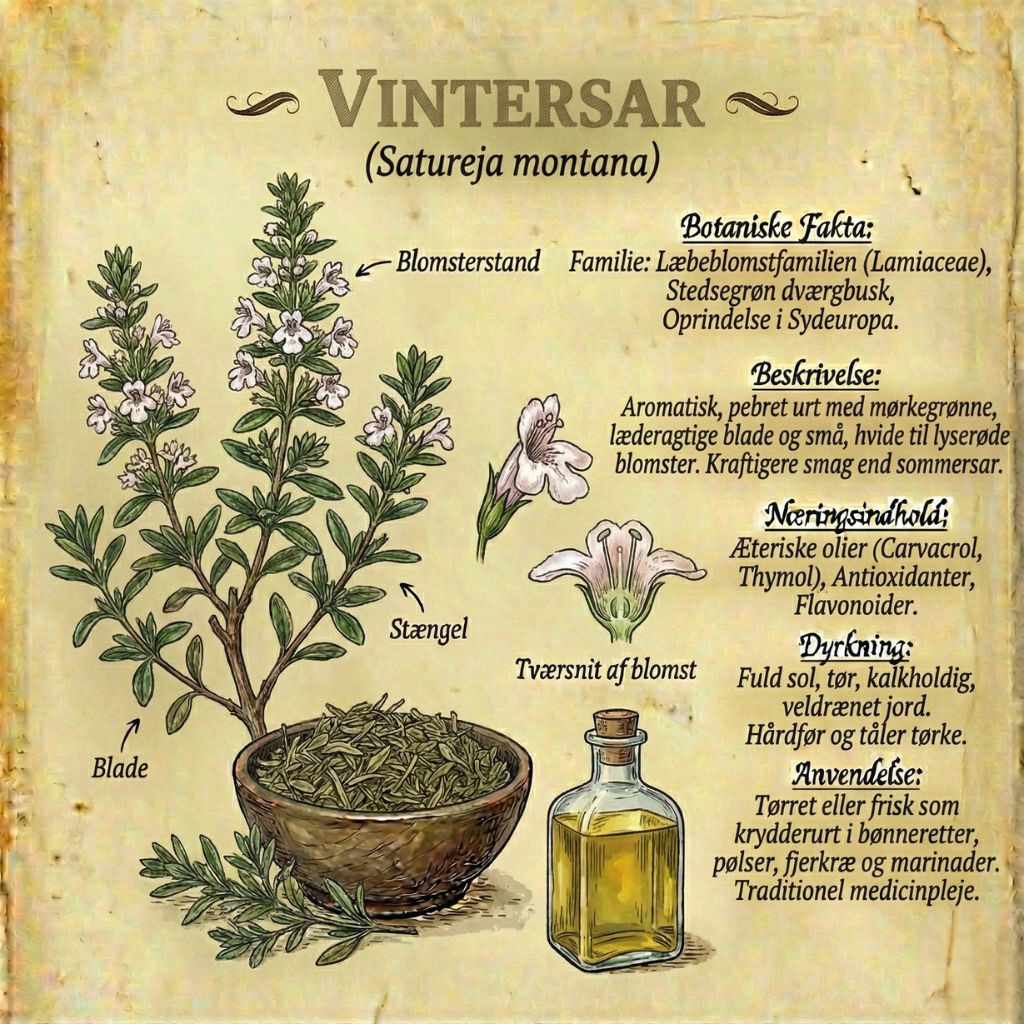
Winter savory (Satureja montana) is a low, evergreen dwarf shrub in the mint family (Lamiaceae). The plant has an irregular, upright growth habit with narrow, leathery leaves that are covered in glands and give off a distinctive, pleasant scent. The small flowers are pale blue or white-pink and appear in small clusters at the leaf axils. Both the leaves and flowers are edible. The shrub usually grows 15–45 cm tall and 30–45 cm wide; the stems are hard and woody at the base, while the new shoots are soft and green. Winter savory is often confused with summer savory (Satureja hortensis), but the differences are clear: summer savory is an annual herb with a soft, green stem and softer leaves, while winter savory is perennial, more compact, and hardy.
Winter savory is native to the windswept, chalky slopes along the Mediterranean coast and the dry mountain regions of Southern and Southeastern Europe. In gravelly soils with very little water, the plant thrives alongside other drought-tolerant species. It’s one of the few herbs that flowers in the late autumn and winter months, to the delight of both bees and gardeners. The plant is fully hardy in Denmark, especially in a sunny spot with well-drained soil.
From Roman kitchens to herbes de Provence
Winter savory has been used as a spice and medicinal plant in the Mediterranean region since antiquity. The Romans used it to season rich meat dishes and bean dishes, and the name Satureja is thought to derive from Latin, meaning “to satiate” – a reference to the herb’s role in making heavy dishes easier to digest. The species name montana means “from the mountains” and refers to the plant’s natural range in mountainous regions. In the Middle Ages, winter savory was grown in monastery gardens alongside other medicinal herbs and used against stomach trouble, coughs, and infections.
Winter savory didn’t really arrive in Northern Europe until the herb wave of the 20th century, but it quickly gained popularity thanks to its frost hardiness and aromatic flavor. Today, winter savory is part of a number of classic herb blends – including the southern French “herbes de Provence” – and in Denmark it’s used especially in winter stews, bean dishes, and rich fish dishes.
Flavor and aroma
The flavor of winter savory is intense – a sharp, warm combination of pepper, thyme, and oregano with a hint of bitterness. The aroma comes from the plant’s essential oils, especially carvacrol and thymol, which are also found in thyme and oregano. Fresh leaves and flowers are mild and fresh-tasting, while dried leaves become more concentrated and intense. The herb pairs especially well with:
- Legumes: Beans, lentils, and chickpeas, where the herb lightens the heaviness and helps reduce bloating.
- Fatty meats: Pork, duck, and lamb – in roasts, sausages, and ragouts alike.
- Fish and shellfish: Especially fatty fish like mackerel, herring, and salmon, but also in fish cakes and fish soups.
- Root vegetables and cabbage: Jerusalem artichokes, parsnips, carrots, Brussels sprouts, and kale in baked dishes or casseroles.
- Cheese and eggs: Winter savory pairs surprisingly well with soft cheeses, omelets, and vegetable frittatas.
Avoid adding the herb too early in cooking; intense heat reduces the flavor compounds. Add fresh or dried winter savory toward the end of a simmered dish, or sprinkle it over the finished dish instead. If you’re using dried leaves, use about half the amount you would use fresh.
Culinary uses
Winter savory is especially known for making beans and legumes easier to digest – it’s traditionally used in French cassoulet, Italian fagioli, and English bean stews. In Bavarian cuisine it’s used with pork, sausages, and sauerkraut, and in the Balkans it appears in spiced cheeses and charcuterie. Here’s how you can use it:
- Sprinkle it over cooked green beans, lentils, or chickpeas to add depth and help ease stomach discomfort.
- Infuse it in olive oil or vinegar to make herb oil and vinegar for marinades and dressings.
- Mix it into an herb blend with thyme, rosemary, and sage for rubs on pork, lamb, or poultry.
- Add it to soups and stews with root vegetables, tomato, or cabbage for a warm, aromatic note.
- Stir chopped leaves into butter or herb vinegar, and use it for fish dishes.
- Sprinkle the small flowers over summer and autumn salads for color and a delicate peppery flavor.
- Crumble it into freshly baked bread or focaccia along with sea salt and olive oil.
Health benefits
Winter savory has traditionally been used as a medicinal plant, especially for digestion. Its essential oils, including carvacrol and thymol, have documented antibacterial and antifungal properties that can inhibit the growth of certain bacteria and fungi. In folk medicine, the tea was used to relieve stomach cramps, bloating, and poor digestion, and a warm infusion was used as a mild expectorant against colds and coughs during the winter months.
The herb is also believed to have antioxidant properties due to its content of phenolic compounds, and it contributes small amounts of vitamin C and B vitamins as well as minerals such as iron, calcium, and magnesium – though only in small quantities when used as a spice. Always use winter savory in moderate, culinary amounts, and remember that it cannot replace medical treatment. Historically, the plant was also considered both an aphrodisiac herb and a wound-healing remedy, and in Southern Europe it was planted around cabbage and bean beds because its scent was thought to keep pests away.
Growing and harvesting
Winter savory is surprisingly easy to grow in Denmark if you give it the right conditions. It thrives in sunny, chalky spots and tolerates dry periods far better than most other herbs. Follow these steps:
1 sæson
- Så frø eller tag stiklinger
Start frø indendørs i March–April ved 18–20 °C. Frøene er lyskrævende, så tryk dem kun let ned, og hold jorden fugtig. Alternativt kan du tage stiklinger fra nye skud i May–June; de rodslår nemt i fugtig jord eller et glas vand.
- Prikl og afhærd
Når frøplanterne har 2–3 par blade, prikles de i individuelle potter med sandet jord. Sæt planterne ud i solen i 7–10 dage for at afhærde dem, inden de kommer i haven.
- Plant ud efter sidste frost
Plant ud i May på en solrig, beskyttet plads med veldrænet jord. Grav hullet ca. 20 cm dybt, bland grus eller sand i for dræn, og sæt planterne med 30–40 cm afstand.
- Vand og gød sparsomt
Vand moderat de første uger, indtil planterne er etableret. Derefter tåler de tørke, og for meget vand giver svag smag og risiko for råd. Giv kun let organisk gødning tidligt i sæsonen – for meget kvælstof giver kraftig bladmasse med kedelig aroma.
- Beskær og forny
Klip planten tilbage i April, når væksten starter, og fjern visne blomsterstande i sensommeren. Et hårdt tilbageklip efter blomstring holder busken kompakt. Da vintersar bliver træagtig efter 3–4 år, erstattes ældre planter med nye stiklinger.
Growing conditions
Winter savory prefers gravelly, chalky soil with good drainage and a sheltered, sunny spot. It tolerates wind but not standing water, and is fully hardy through Danish winters – though in very cold areas it can benefit from light winter protection. Full sun gives the most intense aroma, but the plant tolerates light partial shade. The soil pH should be neutral to slightly alkaline, and the nutrient level moderate, since over-fertilizing results in a duller flavor and too much leaf growth. In pots, use well-drained soil mixed with a little sand or grit, and make sure the pot has a drainage hole.
Storage
Harvest leaves and shoots continuously from June to September. The best time is just before flowering, when the concentration of essential oils is highest. Snip the tops with sharp scissors, and leave at least a third of the plant standing so it can keep growing. Flowering shoots have a milder flavor, but the white and pink flowers are decorative and edible. Here’s how to store your harvest:
- Drying: Tie whole shoots into small bunches and hang them flowers-down in a dark, airy spot. Once the leaves crackle easily, store them in airtight jars away from light and heat.
- Freezing: Chop the leaves and freeze them in ice cube trays with a little olive oil.
- Fresh year-round: In mild winters, you can harvest fresh shoots all year, especially if the plant is sheltered from wind and frost.
Look-alikes and quality
Winter savory is most often confused with summer savory (Satureja hortensis) and, to some extent, with thyme and rosemary. The easiest way to tell them apart is by growth habit and leaves: winter savory is a perennial dwarf shrub with hard, woody branches and narrow, leathery leaves, while summer savory is an annual herb with soft stems and broader leaves. Thyme has very small, oval leaves and a more creeping growth pattern, while rosemary has long, needle-shaped leaves and grows considerably taller.
When buying or planting winter savory, choose fresh plants with healthy, dark green leaves and compact growth. Avoid plants that are already woody or have yellowing leaves, as these often have a weaker aroma. Seeds should come from reliable seed suppliers, and cuttings should be taken from healthy parent plants.
Sustainability and biodiversity
Winter savory is a sustainable herb for the garden: it requires minimal watering, thrives in poor soil, and copes well with dry spells. As an evergreen plant, it provides structure in the garden year-round, and the small blue-white flowers produce nectar and attract bees and other pollinators during the summer months. As ground cover, winter savory reduces weed pressure and protects the soil from erosion.
At the same time, its strong scent deters insects such as cabbage white butterflies, bean aphids, and ants, making it a good choice for permaculture and organic gardens. Plant winter savory alongside beans, peas, onions, and rosemary to boost biodiversity and create a healthy microclimate in the kitchen garden.
Try this recipe
Winter savory works beautifully in airy bread, where its spicy, peppery note gets room to shine. Try it in our delicious focaccia – the herb adds a fresh twist to the bread.

Equipment and products
For winter savory, the most useful equipment is simple: sharp herb scissors for harvesting, a few small bundling ties, and a dark, airy spot for drying. Airtight jars keep the dried leaves aromatic through the winter, and an ice cube tray is perfect for freezing chopped leaves in olive oil. If you want to use the herb in classic style, add it to your own herbes de Provence along with thyme, rosemary, and lavender – giving you a spiced base note ready for winter stews and grill marinades.
Frequently asked questions
Yes. Winter savory is a perennial dwarf shrub that’s fully hardy in Danish conditions, especially in a sunny spot with well-drained, gravelly soil. Protect the plant with light winter cover in very cold areas.
Yes. Use a large pot with a drainage hole and potting soil mixed with sand. Place the pot in full sun and water sparingly. The pot can be brought indoors during frost periods to protect the roots.
You can start harvesting shoots and leaves from summer in the first year, once the plants are well established. You’ll get the best aroma just before flowering in June–August. Harvest about a third of the plant at a time so it can regenerate.
Winter savory is generally safe to eat in culinary amounts, but its essential oils are strong. Use it as a spice – not as a vegetable. Pregnant women and people with sensitive stomachs should use it in moderate amounts and consult a healthcare professional if in doubt.
Winter savory (Satureja montana) is perennial and evergreen, with woody branches and narrow, leathery leaves. Summer savory (Satureja hortensis) is annual, with soft, green stems and a milder flavor. Summer savory is used mainly in light summer dishes, while winter savory offers a stronger flavor and tolerates winter cold.
Facts about winter savory
| Field | Value |
|---|---|
| English name | Winter savory |
| Latin name | Satureja montana |
| Family | Mint family (Lamiaceae) |
| Plant type | Perennial, evergreen dwarf shrub |
| Height | 15–45 cm |
| Hardiness | Fully hardy in Denmark; tolerates frost, but prefers well-drained soil and sun |
| Light | Full sun to light partial shade |
| Soil | Gravelly, chalky, well-drained; neutral to slightly alkaline pH |
| Sow/plant | Sow seeds indoors March–April or plant cuttings in May; plant out after the last frost, spacing 30–40 cm apart |
| Flowering | June–August; small pale blue, white, or pink flowers |
| Harvest | June–September; pick shoots before flowering for the most aroma |
| Flavor | Spicy, peppery, reminiscent of thyme and oregano |
| Culinary use | Beans, lentils, meat dishes, fish, soups, sauces, herb oil |
| Storage | Dried leaves in airtight jars; freeze chopped leaves in olive oil; harvest fresh shoots year-round in mild winters |
