

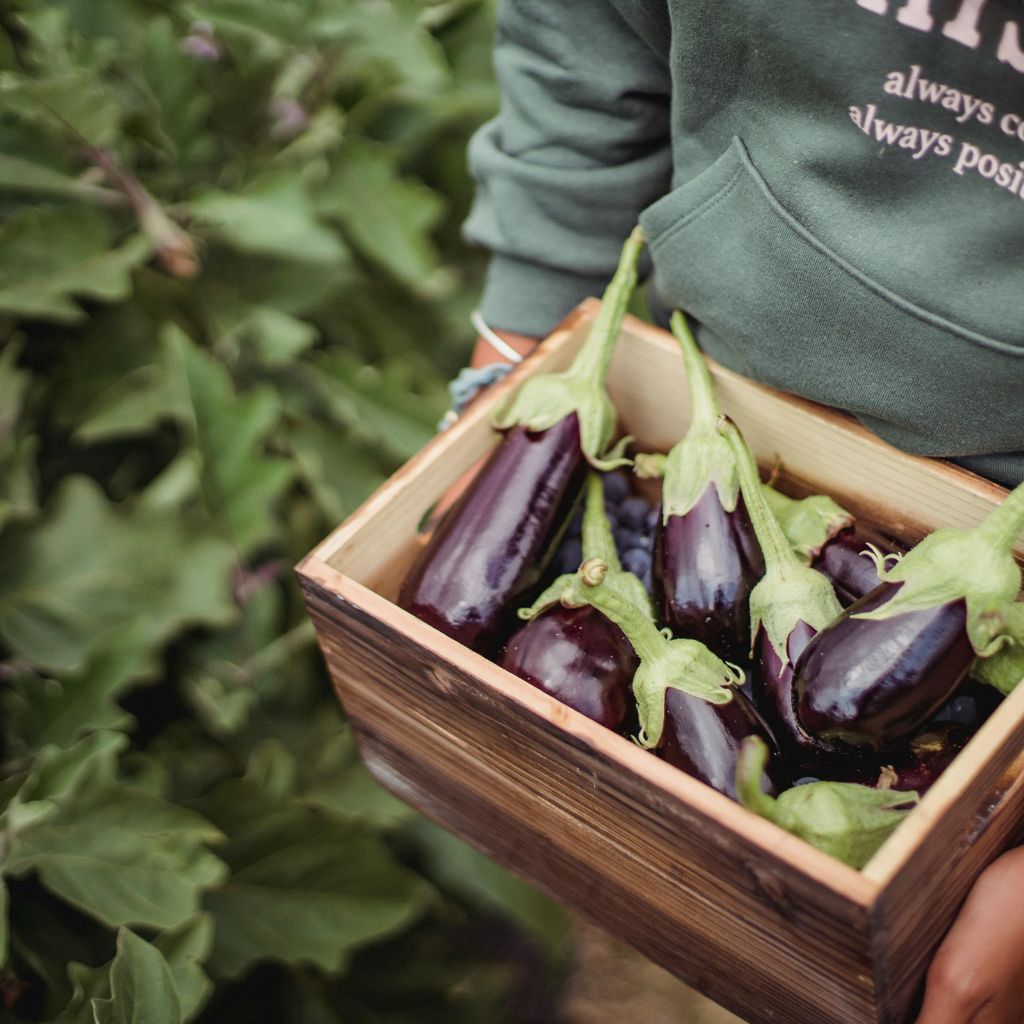
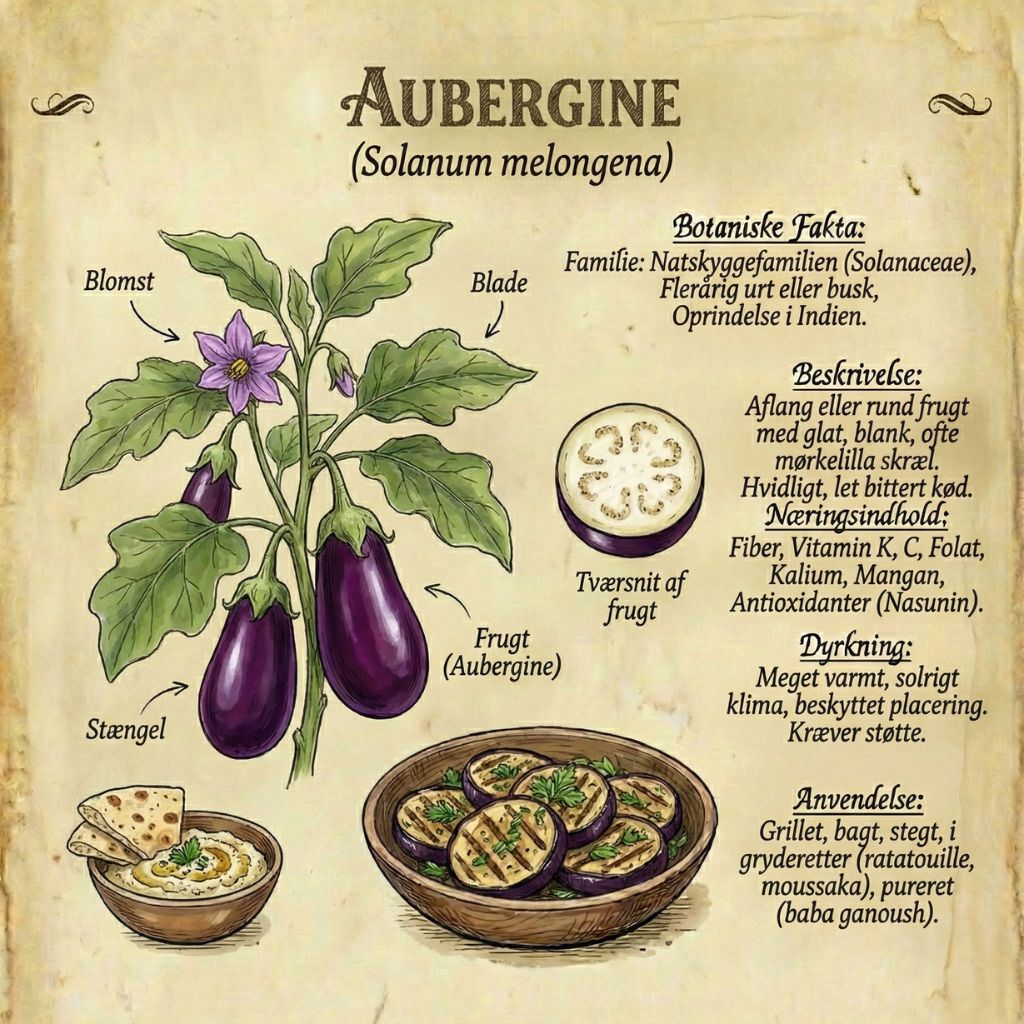
Aubergine – also known as eggplant, brinjal or melanzana – is a fruit from the nightshade family, though it’s used as a vegetable in the kitchen. The juicy, spongy fruit has a characteristic glossy dark-purple skin (though varieties also come in white, striped and green), a soft, creamy flesh and a slightly bitter edge that gives dishes a meaty depth. The plant belongs to the extensive genus Solanum, which also includes potatoes, tomatoes and peppers, and it originates from tropical and subtropical regions of Asia.

Advertisement: The page displays ads and contains advertising links (affiliate links). See our advertisers here.
In English, it’s most commonly called either “aubergine” – from the French word – or “eggplant”, a name that comes from the early white, egg-shaped varieties. Today, aubergines are grown all over the world and feature in a huge range of dishes from the Mediterranean to Asia. This guide gives you an overview of the aubergine’s history, flavour, preparation, cultivation and nutrition – plus the small kitchen tricks that bring out the best in it.
Estimated reading time: 8 minutes
History and origin
From Asia to the Mediterranean
The aubergine has a long history of cultivation. DNA analysis and historical sources suggest that its wild ancestors are found in Africa, but domestication itself took place in Asia, most likely in India and China. Chinese texts from the 1st century BCE already describe the cultivation and selection of aubergines, with agronomists working to make the fruit larger, less bitter and free of thorns. The earliest forms were small and green with a bitter edge, while today’s varieties range from long, slender Japanese types to round, striped ones. Aubergine was originally used mainly for medicinal purposes – it’s mentioned in Indian Ayurvedic texts – but spread via the Silk Road to the Middle East and the Mediterranean, where Arab traders introduced it in the 7th century.
From “mad apple” to European cuisine
In Europe, the plant was long seen as exotic; the British called it the “mad apple” and associated it with insanity, while the Italians named it melanzana (literally “insane apple”). It wasn’t until the 18th century that aubergine became widespread in European kitchens, and today it’s a staple in many classic dishes such as ratatouille, moussaka and baba ganoush.
Flavour and aroma
Aubergine has a mild, slightly bitter flavour and a spongy, meaty texture that soaks up flavour from spices and fats. The skin is thin and smooth in most varieties and edible after cooking, though it can turn tough in older fruit. The flesh is creamy and practically melts together when fried or baked, which makes aubergine well suited as a vegetarian substitute for meat. The eggplant contains many small, edible seeds; if the fruit is left to ripen too long on the plant, the seeds become large and hard, and the flesh can turn more bitter. Generally, small to medium aubergines are more delicate and have fewer seeds.
Aubergine’s mild, slightly nutty and faintly bitter flavour pairs well with many ingredients. Good matches include:
- Olive oil and lemon: Highlights the mild flavour and makes it fresher.
- Garlic and herbs: Such as parsley, thyme or oregano.
- Tomato and warm spices: Perfect in Mediterranean food and slow-cooked dishes.
- Curries and stews: Aubergine soaks up flavour and gives a creamy texture.
- Tahini and yoghurt: Classic in dips and sauces.
Culinary uses
Aubergine is extremely versatile in the kitchen. It can be grilled, baked, deep-fried, sautéed, steamed or pickled, and its meaty texture makes it well suited as “meat” in vegetarian and vegan dishes.
In the Danish kitchen
In the Danish kitchen, aubergine has become a regular in vegetarian oven dishes and on the grill. Cut it into slices or wedges, brush with oil, salt and spices, and grill or fry until golden; serve with yoghurt, herbs or a spicy dressing. Roast small aubergine cubes in the oven and toss them into salads, or use thin slices as a sandwich filling with hummus, feta and tomatoes. Modern cooking also uses aubergine in the airfryer for a lower-fat result.
Internationally
Aubergine is central to many culinary traditions. In the Middle East, aubergines are grilled over an open flame to give a smoky flavour to dips such as baba ganoush or mutabal. In India and Bangladesh, aubergine is used in baingan bharta, a spiced mash, and in stuffed curry dishes. Italians use aubergine in parmigiana and caponata, a sweet-and-sour vegetable stew with capers and olives. In China and Southeast Asia, aubergine is stir-fried quickly with garlic, ginger, soy sauce and chilli, and in Japan it’s marinated in miso or fried as tempura.
Classic dishes
- Lasagne or moussaka: Layer aubergine slices with tomato sauce, spiced minced meat (or lentils) and béchamel for a Greek/Italian-inspired bake.
- Ratatouille: Combine aubergine with tomatoes, courgettes, peppers, garlic and herbs for a southern French vegetable stew.
- Baba ganoush: Bake or grill whole aubergines, scoop out the smoky flesh and blend with tahini, lemon juice, garlic and spices into a creamy dip.
- Parmigiana di melanzane: Bread and deep-fry or oven-bake slices of aubergine, then layer them with tomato sauce and mozzarella or parmesan.
- Stuffed aubergines: Hollow out the fruit and fill with spiced rice, quinoa, nuts, vegetables or meat, then bake until tender.
Preparation and cooking
To get the best out of aubergines, proper preparation is important. Aubergine should always be cooked – it belongs to the nightshade family and contains solanine, which breaks down with heat. A brief salting (sweating) draws out bitterness and reduces how much oil the fruit soaks up during frying. Follow the steps below.
Total time: 40 minutes
- Choose quality
Pick fruit that feels heavy for its size, with smooth, shiny skin and a green, fresh stem. Avoid wrinkled, brown or soft patches. Smaller fruits are often sweeter and have fewer bitter seeds.
- Clean and cut
Rinse the aubergine, pat it dry and cut off the stem and blossom end. Most varieties can be cooked with the skin on, but very large or tough skins can be peeled. Cut into slices, cubes or wedges depending on the dish.
- Salt and sweat
If the aubergine seems bitter or is going to be deep-fried, sprinkle it with salt and let it sit for 30 minutes so some of the liquid draws out. Then rinse off the salt and dry thoroughly. This reduces bitterness and oil absorption.
- Cook
Fry or grill in oil over moderate heat, bake at 180-200 °C, steam or sauté. Avoid overcrowding the pan so the fruit can develop a golden surface. When baking whole aubergines, prick them first with a fork so steam can escape.
Health benefits
Nutritional content
Aubergine is low in calories and rich in nutrients. One cup of raw aubergine (about 80 g) contains roughly 20 kcal, 0.8 g protein, 4.8 g carbohydrate, 2.4 g dietary fibre and only 0.1 g fat. It’s a good source of manganese and contains smaller amounts of potassium (about 188 mg), vitamin K, vitamin C, vitamin B6, niacin, copper and magnesium. Most of the calories come from complex carbohydrates and fibre, and aubergine has a low glycaemic index.
- About 20 kcal per cup (80 g) – very low energy density
- 2.4 g dietary fibre, which promotes fullness and digestion
- Manganese, potassium, vitamin K, C, B6 and niacin
- Anthocyanins (including nasunin) in the deep purple skin
Antioxidants and fibre
Aubergine’s phytochemicals act as antioxidants that can help prevent oxidative damage in cells. The deep purple colour comes from anthocyanins, especially nasunin. The fruit also contains chlorogenic acid and other polyphenols, which act as antioxidants and have anti-inflammatory properties. Together with fibre, these compounds can help lower LDL cholesterol and stabilise blood sugar, while the total amount of dietary fibre (about 3 g per 100 g) promotes good digestion and supports gut microbiota.
When aubergine is fried or baked in larger amounts of oil, it can absorb a lot of fat, which significantly increases the calorie content. So use moderate amounts of oil, or prepare the fruit using the salting method to reduce oil absorption. Aubergine itself contains practically no cholesterol or saturated fat, and as with many vegetables, its overall health effect is best as part of a varied diet.
Solanine and nightshades
Aubergine belongs to the nightshade family and contains small amounts of solanine, a bitter compound that can be toxic in large doses. Under normal cooking, solanine levels are harmless, but raw or undercooked aubergine can irritate the stomach. Some people with sensitivity to nightshades or with arthritis experience a worsening of symptoms after eating aubergine; take note of how your body reacts. In rare cases, allergic reactions such as rash, itching or swelling can occur.
Growing in Denmark
Aubergine is a heat-loving plant, but with the right preparation it can be grown in Danish gardens and greenhouses. It requires a long, warm growing season, so start seedlings indoors and transplant them outside once all risk of frost has passed.
Starting seeds and transplanting
- Starting seeds: Sow seeds in small pots or trays 8 weeks before transplanting. Use sterile seed compost and cover the seeds with about 0.5 cm of soil. Keep the pots warm (25-30 °C) and ensure light. Seeds germinate in 5-14 days.
- Harden off: Once the plants have 3-4 true leaves, harden them off by placing them outside for a few hours a day in a sheltered, sunny spot, gradually increasing over a week. Don’t transplant until night temperatures are consistently above 10-12 °C.
- Soil preparation: Choose a sunny spot where nightshade vegetables haven’t grown in the past 3 years. Loosen the soil to a depth of 30 cm and mix in 5-10 cm of compost. Aubergine thrives in well-drained, humus-rich soil with a pH of 5.5-7.5. Avoid too much nitrogen, which produces lush plants with few fruits.
- Transplanting: Plant out once the soil is at least 15 °C and nights are above 12 °C. Space plants 45-60 cm apart and rows 75-90 cm apart. Set the plant at the same depth as in the pot, firm the soil and water thoroughly.
- Support: Install stakes, cages or twine at planting time to support the plants once they become heavy with fruit.
Growing conditions
- Light: Full sun – at least 6 hours of direct sunlight daily to develop flowers and fruit.
- Soil: Well-drained, light sandy to loamy soil with high organic matter and a pH of 5.5-7.5. Avoid soil where tomatoes, potatoes or other nightshades have grown in the past three years.
- Temperature: Best at 20-30 °C during the day and 15-20 °C at night. The plant dies in frost and struggles below 10 °C or above 35 °C.
- Watering: Even moisture is essential. Water deeply about once a week (more during hot spells) so the soil is soaked to at least 20 cm. Water at the base and avoid wetting the leaves.
- Feeding: Work well-rotted compost into the soil before transplanting, and add organic fertiliser at planting time and again once the fruit sets.
Garden care
- Mulching: Lay black plastic or organic mulch around the plants to warm the soil, retain moisture and limit weeds. Apply mulch once the soil is warm.
- Watering: Keep the soil evenly moist; irregular watering can cause bitter fruit and lower yields. Aim for about 2.5 cm of water per week.
- Care: Keep the bed weed-free with light hand-weeding, but avoid disturbing the roots.
Storage
Harvest aubergines once they’ve reached full size and still have glossy, firm skin. The fruit should give slight, springy resistance when pressed with a finger. Small, pale seeds mean the fruit is perfect; large, dark seeds can be a sign of overripeness. Cut the fruit off with part of the stem attached so the plant isn’t damaged, and harvest regularly to encourage new flowers.
- Store aubergines unwashed in the fridge’s vegetable drawer or a cool, dark place at 10-13 °C.
- They keep for 5-7 days, but flavour is best in the first couple of days. Avoid temperatures below 5 °C, as chilling injury can occur.
- Keep them separate from fruit that releases ethylene (such as tomatoes and apples), as ethylene speeds up ageing and browning.
- Only cut the fruit right before use to prevent browning. Aubergines aren’t suitable for freezing raw – cook them first (e.g. oven-baked slices) and freeze afterwards.
Try this recipe
Aubergine’s meaty texture makes it the heart of a classic moussaka, where the tender slices, layer after layer, soak up the flavour of tomato, meat and béchamel. Try it in our delicious, original moussaka:
Equipment and products
Aubergine really comes into its own with a few good kitchen tools: a sharp knife for even slices, a colander for salting, and an airfryer or baking tray for a lower-fat, golden result. Want to boost the flavour with a ready-made product? Bell Pepper Tapenade with Aubergine is an easy shortcut to an aromatic dip or spread that pairs nicely with grilled aubergine.

Frequently asked questions
It isn’t always necessary with modern varieties, but salting for 30 minutes draws out bitterness and reduces how much oil the fruit soaks up during frying. Rinse off the salt and dry the fruit thoroughly afterwards.
No, aubergine should always be cooked. It belongs to the nightshade family and contains solanine, which breaks down with heat. Raw or undercooked aubergine can irritate the stomach.
Aubergine’s spongy flesh is full of tiny air pockets that absorb fat. Salt the fruit first, or bake it in the oven or airfryer with a little oil to keep the fat content down.
Store aubergines unwashed in a cool place at 10-13 °C, ideally in the vegetable drawer. They keep for 5-7 days. Avoid temperatures below 5 °C and keep them separate from apples and tomatoes, which release ethylene.
Yes, but it needs warmth. Start seeds indoors 8 weeks before transplanting, and set the plants out in a greenhouse or a sunny, sheltered spot once nights are consistently above 12 °C.
Facts about aubergine
| Field | Value |
|---|---|
| English name | Aubergine (eggplant) |
| Latin name | Solanum melongena |
| Family | Nightshade family (Solanaceae) |
| Plant type | Heat-loving annual fruit-vegetable |
| Origin | Tropical/subtropical Asia (India and China) |
| Light | Full sun (min. 6 hours daily) |
| Soil | Well-drained, humus-rich soil, pH 5.5-7.5 |
| Temperature | Best 20-30 °C; sensitive to frost |
| Sow/plant | Start seeds 8 weeks before; transplant once nights are above 12 °C |
| Calories | About 20 kcal per cup (80 g) raw |
| Key nutrients | Manganese, potassium, vitamin K, C, B6; anthocyanins |
| Flavour | Mild, slightly bitter, spongy and meaty |
| Culinary uses | Moussaka, parmigiana, ratatouille, baba ganoush, grilling |
| Storage | 5-7 days at 10-13 °C; doesn’t tolerate frost raw |
