

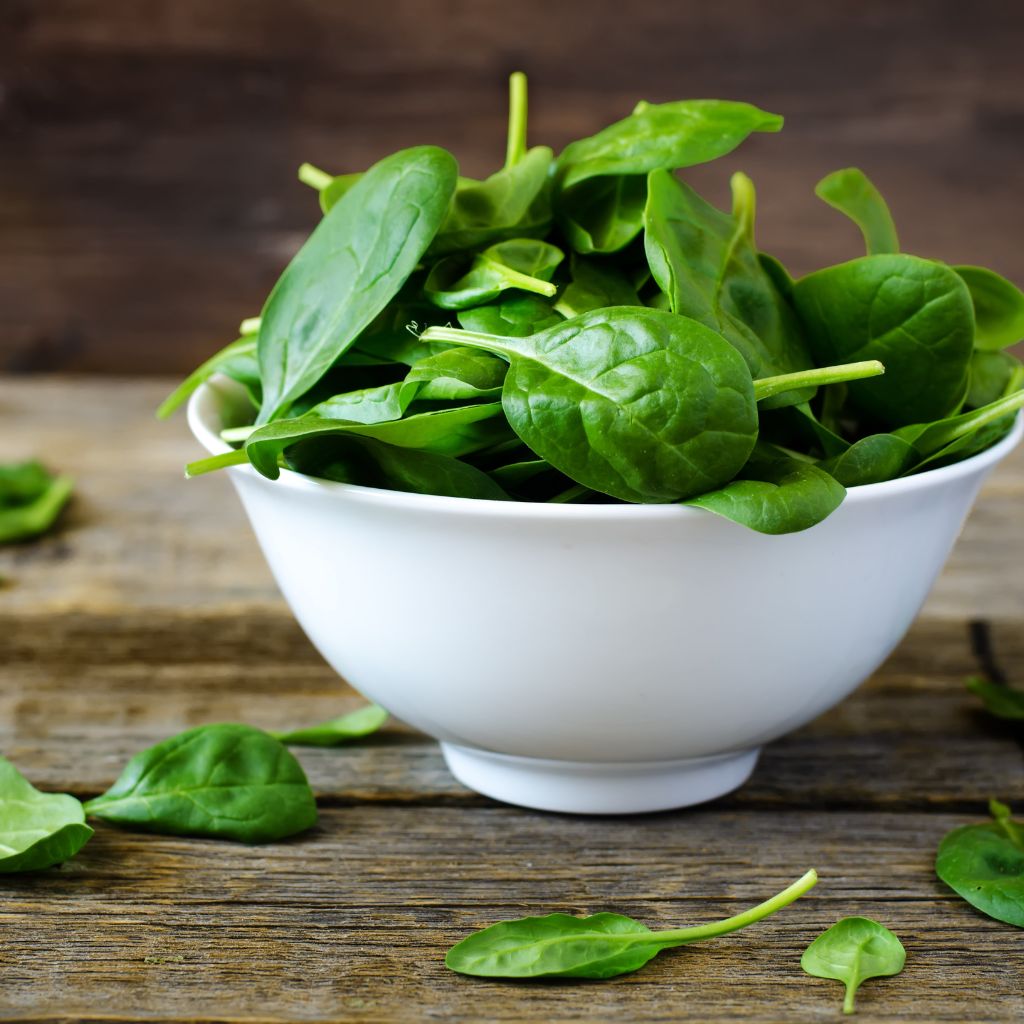
Baby spinach is the young, tender green leaves of the spinach plant Spinacia oleracea. The leaves are harvested early, while they are still small, thin and extra mild. The flavor is lightly sweet with a subtle nutty note, and the texture is crisp and juicy, which makes baby spinach ideal in fresh salads, smoothies and as a green garnish on hot dishes.

Advertisement: The page displays ads and contains advertising links (affiliate links). See our advertisers here.
Baby spinach isn’t a separate variety, but young spinach leaves. The difference from “regular” spinach is mainly about texture and use: baby spinach is more tender and is best enjoyed raw or only very briefly cooked, while larger leaves typically hold up better to heat.
Estimated reading time: 6 minutes
- History and Origin
- Flavor and Aroma
- Culinary Use
- Try This Recipe
- Preparation and Cooking
- Health Benefits
- Safety and Nutritional Considerations
- Traditional and Modern Use
- Growing
- Harvest and Storage
- Flavor and Pairings
- Look-Alikes and Quality
- Sustainability and Biodiversity
- Equipment and Products
- Frequently Asked Questions
- Facts About Baby Spinach
History and Origin
What Is Baby Spinach?
Baby spinach consists of young spinach leaves, harvested before the plant develops larger and coarser leaves. This gives it a milder flavor and a more delicate texture.
Where Does Spinach Come From?
Spinach is believed to originate from Persia and was later spread to the Mediterranean region and Europe via trade routes. Today, spinach is grown in large parts of the world, especially in temperate climates.
Flavor and Aroma
Baby spinach has a mild, fresh flavor with a lightly sweet and nutty note. The leaves are thin and juicy without the more pronounced, earthy taste that larger spinach leaves can have. When heated, baby spinach wilts quickly and can turn soft, so it works best raw or only very briefly cooked.
Culinary Use
The mild flavor and tender structure make baby spinach versatile in the kitchen. It can be used both raw and cooked, but cooking should typically be brief to preserve color and freshness.
Ideas for Use
- Salads: Use baby spinach as a base and add fruit, nuts and cheese for a balance of sweet, crunchy and creamy.
- Sandwiches and wraps: Add a couple of handfuls of leaves to sandwiches, pita or wraps as a fresh green element.
- Smoothies: Blend baby spinach with fruit and yogurt or plant-based milk for a green smoothie with a mild flavor.
- Quick sautéing: Toss the leaves for 1 to 2 minutes in a hot pan with oil, garlic and a splash of lemon.
- Filling: Use in omelets, frittatas, tarts, lasagna or as a pasta filling.
- Soups and stews: Stir the leaves in just before serving, so they only wilt lightly.
- Pesto and dips: Blend baby spinach into pesto or use it in a green dip for a mild vegetable flavor.
In the Airfryer
Baby spinach wilts quickly with heat, and that’s exactly why the airfryer is such a fun tool: at low temperature, the leaves can be dried into crispy spinach chips in just a few minutes. Toss the leaves in a little oil and salt, and keep an eye on them as they go — they turn from crispy to burnt quickly. You can also use baby spinach as a filling in egg muffins or tarts finished off in the airfryer.
Try This Recipe
Baby spinach’s mild flavor makes it perfect together with salty feta and crispy phyllo dough. Try our recipe for Spanakopita in the Airfryer – Crispy Greek Spinach Pie with Feta — or the salmon tart below, where the tender leaves give the rich salmon a fresh contrast.

Preparation and Cooking
Selection and Storage
- Choose: Dark green, crisp leaves without yellow spots, sliminess or a lot of condensation in the bag.
- Store: In the fridge in a bag or container. Add a dry piece of paper towel to the container to absorb excess moisture.
- Shelf life: Typically 3 to 7 days depending on freshness and storage.
Rinsing
If baby spinach is labeled “ready to use,” you can often use it directly. If it hasn’t been pre-washed, rinse the leaves in cold water and dry them thoroughly so they don’t become wet and limp in salads.
Quick Cooking
- Sautéing: Heat a pan, add a little oil or butter, and toss baby spinach for 1 to 2 minutes, until the leaves just wilt.
- Blanching: Dip the leaves briefly in boiling water for about 30 seconds and cool immediately in ice water to preserve the color.
- For freezing: Blanch for about 2 minutes, drain well and freeze in portions.
Health Benefits
Baby spinach is low in energy and contributes dietary fiber as well as vitamins and minerals. It’s especially known for its content of vitamin K, folate and various plant compounds, which make it a nutrient-dense choice for everyday meals.
Key Nutrients
- Calories: only about 23 kcal per 100 g
- Iron: about 2.7 mg per 100 g
- Folate: about 190 µg per 100 g
- Vitamin K: about 480 µg per 100 g — important for the blood’s ability to clot
Safety and Nutritional Considerations
- Oxalates: Spinach contains oxalic acid. If you’re prone to kidney stones, it may be worth keeping intake moderate and combining spinach with calcium-rich foods.
- Nitrates: Green leafy vegetables can contain nitrates. Young children should avoid very large amounts in a single day.
- Vitamin K and medication: Spinach is rich in vitamin K. If you’re on blood-thinning medication, a stable intake is often more important than large fluctuations.
- Hygiene: Use clean hands and utensils. If the leaves aren’t pre-washed, rinse thoroughly and store chilled.
Traditional and Modern Use
Spinach has long been used in many cuisines, including in tarts, stews and hot dishes. Baby spinach in particular has become popular in modern cooking because it’s mild, easy to use and works well in salads, bowls, wraps and smoothies.
Growing
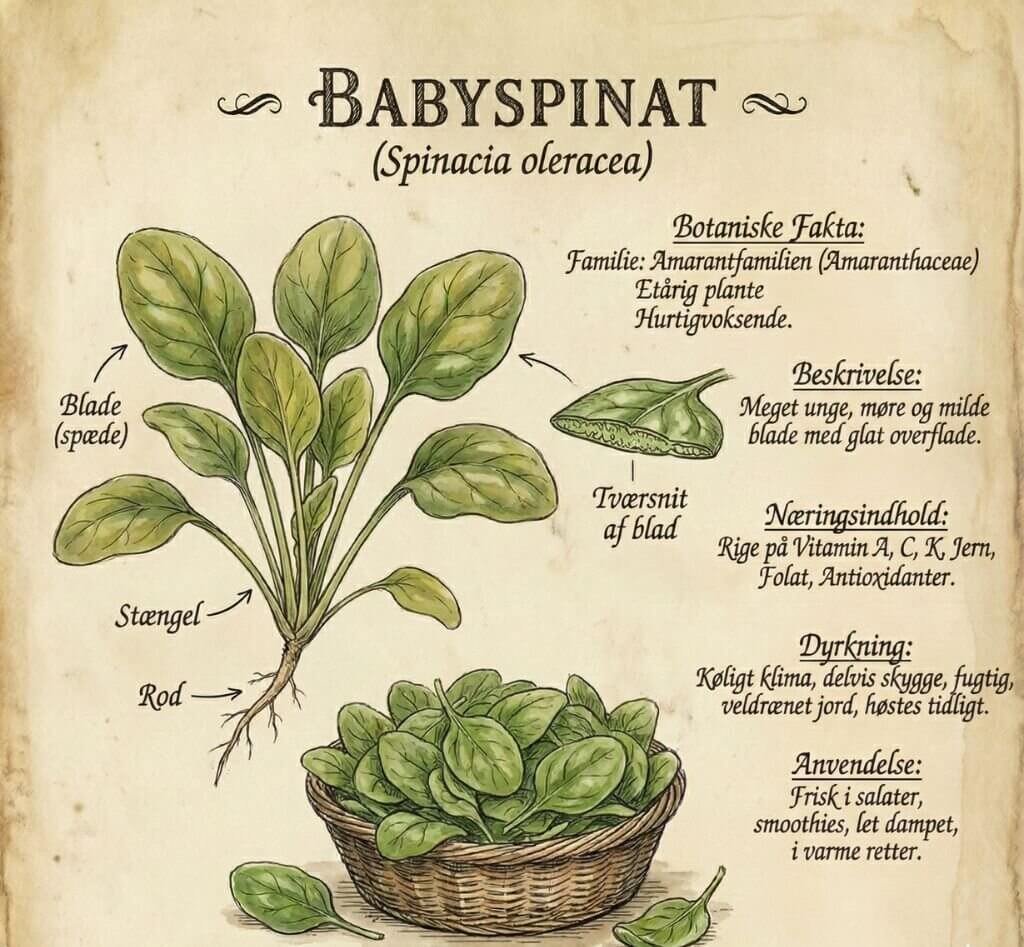
Baby spinach thrives best in cool weather and can be sown both in spring and late summer in Denmark. It grows quickly, and you can harvest small leaves continuously if you leave the center of the plant intact.
How to Grow Baby Spinach
Total time: 4-5 weeks
- Prepare the soil
Choose a spot with full sun to light shade and loosen the soil. Add compost for better structure and nutrition.
- Sow the seeds
Sow about 1 cm deep in rows spaced 15 to 30 cm apart. Water gently.
- Keep the soil moist
Spinach has a shallow root system and needs consistent moisture to develop tender leaves.
- Thin out the seedlings
When the plants are 5 cm tall, thin them out so there’s about 4 to 6 cm between plants.
- Protect from heat
During hot spells, light shade can extend the harvest season and reduce the risk of the plant bolting.
- Harvest continuously
Pick the outer leaves when they’re 5 to 10 cm long, and leave the heart intact so the plant keeps producing new leaves.
Growing Conditions
- Light: Full sun to light shade. Partial shade can extend the season during hot periods.
- Soil: Well-drained, humus-rich soil with a pH of about 6.0 to 7.0.
- Watering: Consistent moisture, but avoid waterlogged soil. Water at soil level.
- Temperature: Thrives best at about 10 to 20 °C. Very high heat can cause the plant to bolt.
- Fertilizing: Compost before sowing is often enough. Fertilize lightly if needed, if growth seems weak.
Harvest and Storage
Harvest baby spinach by picking or cutting the outer leaves once they’ve reached the desired size. Avoid removing the entire center of the plant so it can keep producing new leaves.
- Refrigerator: Store in a closed bag or container for 3 to 5 days, ideally with dry paper towel to absorb moisture.
- Freezing: Blanch, cool, drain and freeze in portions. Thawed spinach is best suited for hot dishes.
Flavor and Pairings
Baby spinach pairs especially well with ingredients that add acidity, richness, crunch or umami.
- Acidity: Lemon, orange, vinegar and berries.
- Richness: Avocado, olive oil, nuts, seeds and creamy cheeses.
- Protein: Eggs, chicken, fish and legumes such as chickpeas and lentils.
- Cheese: Feta, goat cheese, mozzarella and parmesan.
- Spices and herbs: Garlic, pepper, nutmeg, dill and parsley.
Look-Alikes and Quality
Baby spinach can be confused with other small leafy greens such as lamb’s lettuce, baby beet greens or baby kale. Baby spinach typically has smooth, pointed leaves and a mild flavor. Choose bags without sliminess, large amounts of condensation or many yellow leaves, as this often indicates lower freshness.
Sustainability and Biodiversity
Spinach grows quickly and can be grown in several batches throughout the season. In the vegetable garden, you can sow a little at a time for a continuous harvest, and you can use crop rotation to keep the soil healthy. If you grow your own, you can also reduce packaging from bags and trays.
Equipment and Products
A bowl of baby spinach with feta, olives and a good drizzle of olive oil is almost a meal in itself. If you want to give the salad a touch of the Mediterranean, Green Olive Tapenade is the perfect salty, intense counterpart to the mild leaves.
Frequently Asked Questions
The nutritional content is very similar. The difference is mainly about texture and flavor, as well as how it’s used in the kitchen.
If it’s pre-washed and labeled ready to use, it can often be used directly. If it hasn’t been pre-washed, it should be rinsed thoroughly and dried.
Yes, baby spinach works really well raw in salads, wraps and smoothies. Make sure it’s clean and fresh.
Yes. At low temperature, the leaves can be dried into crispy spinach chips in just a few minutes, and baby spinach also works well as a filling in egg muffins and tarts baked in the airfryer. Keep an eye on it, as the thin leaves brown quickly.
The leaves consist mostly of water. When heated, the cell walls break down and the water is released, causing the volume to drop significantly. A large bag of baby spinach therefore often becomes a small portion once cooked.
Baby spinach is a mild, tender and versatile leafy green that works in both cold and hot dishes. Use it raw for maximum crunch, or cook it very briefly so color and freshness are preserved. With proper storage and a little care, baby spinach is an easy green choice for everyday meals.
Facts About Baby Spinach
| Field | Description |
|---|---|
| English name | Baby Spinach |
| Latin name | Spinacia oleracea |
| Family | Amaranth family (Amaranthaceae) |
| Plant type | Annual leafy vegetable |
| Height | About 20 to 30 cm |
| Hardiness | Tolerates light frost and thrives in cool weather |
| Light | Full sun to light shade |
| Soil | Well-drained, humus-rich soil, pH 6.0 to 7.0 |
| Sow/plant | Sow in spring or late summer in successive batches for continuous harvest |
| Flowering/Harvest | Harvest baby leaves about 25 to 35 days after sowing |
| Flavor | Mild, lightly sweet and subtly nutty |
| Calories per 100 g | About 23 kcal |
| Culinary use | Salads, smoothies, wraps, quick sautéing, fillings, soups and pesto |
| Storage | Fresh, chilled for 3 to 5 days; can be frozen after blanching |
