

Butternut squash is one of the winter squashes I most often have lying around in my kitchen when fall arrives. This pear-shaped squash with its smooth, beige skin hides dense, orange flesh with a sweet, nutty flavor – and it is far easier to tackle than many people think.
Butternut is a moschata squash (Cucurbita moschata) and belongs to the winter squashes. That means it is harvested ripe with a hard skin and can be stored for several months – perfect when you want locally grown vegetables on the table well into winter.
In this entry, I go through the history of butternut squash, its flavor, nutritional content, growing and storage. And of course you get my best tips for the air fryer, where the edges turn caramelized while the flesh becomes soft and creamy.
Estimated reading time: 7 minutes
History and origin
An American variety from 1944
Butternut squash is a relatively young variety. It was developed in the United States by Charles Leggett in Stow, Massachusetts, who in 1944 crossed a gooseneck squash with another squash variety. The result was the pear-shaped squash with the sweet, orange flesh that we know today.
The species itself, on the other hand, is much older. Moschata squash, Cucurbita moschata, was already widespread across North America before the Europeans arrived on the continent. Butternut is thus a modern variety of an ancient cultivated plant.
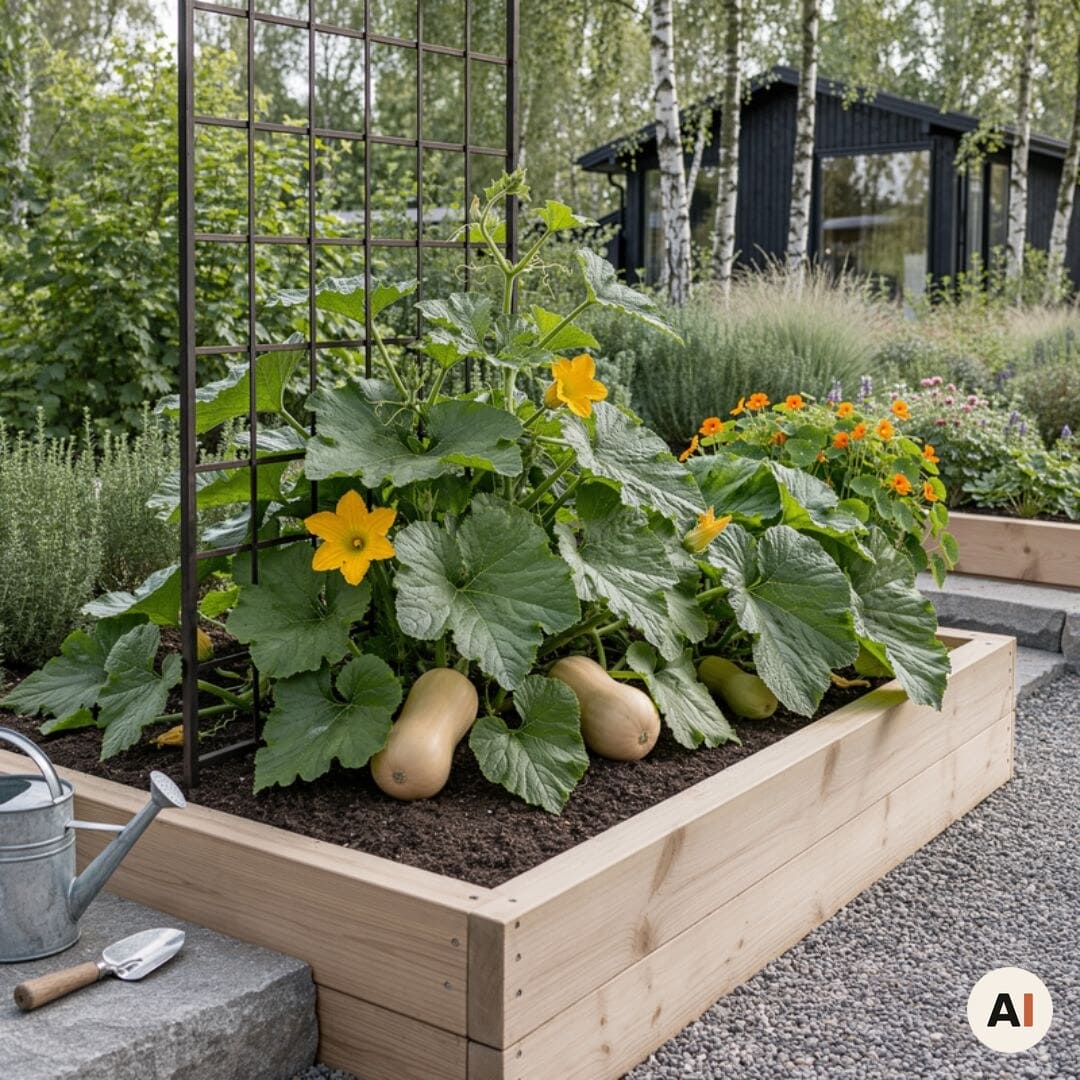
Butternut squash, summer squash and pumpkin – what’s the difference?
The names often get mixed up. Squash is the umbrella term for the whole family, but in everyday cooking the word is often used for summer squash like zucchini, which are harvested young with a soft skin and should be eaten quickly. Pumpkin is used especially for the ripe fruits with a hard rind – from Hokkaido (red kuri) to the big Halloween pumpkins.
Butternut squash belongs to the latter group: it is a winter squash, harvested ripe with a hard skin and able to be stored for months. In the kitchen it therefore behaves like a pumpkin – not like a zucchini, even though the name says squash. Botanically, by the way, it is a fruit, more precisely a berry, but we use it as a vegetable.
Flavor and aroma
Sweet, nutty and creamy
It is the sweetness that makes butternut squash so popular. The flesh is orange, dense and almost buttery, and the flavor is reminiscent of a blend of sweet potatoes and nuts. It is far less watery than zucchini and therefore holds its shape well when roasted.
When butternut is roasted, the sugars really come into their own. The surface caramelizes, and the flavor becomes deeper and nuttier. That is why it works equally well with sweet spices like cinnamon and nutmeg and with savory flavors like sage, thyme, garlic and chili.
Seed cavity, skin and seeds
The seed cavity sits together in the round end, while the long neck is solid and seedless. That makes butternut easy to cut into neat cubes or wedges, and there is not much waste.
The skin turns soft when butternut is roasted in wedges, and it can easily be eaten along with the flesh. You can rinse, dry and roast the seeds just like pumpkin seeds – they make a crunchy snack with a mild nutty flavor.
Culinary use
Butternut squash is one of the most versatile vegetables in the winter kitchen. It can be roasted, mashed, blended into soup or used in baking, and it suits both sweet and savory dishes.
In the home kitchen
At home, we most often meet butternut as soup or as a roasted side dish. A creamy butternut soup with ginger or chili is a fall classic, and roasted cubes or wedges are a natural match for chicken, roast pork or a vegetarian dinner. I also use it in risotto and stews, where it adds color and sweetness.
Around the world
Worldwide, oven roasting is one of the most common ways to prepare butternut. It is also puréed into soup, sautéed in a pan, or mashed and used in baked dishes, bread, muffins and pies. In South Africa, it is often made into soup or grilled whole.
Classic ways to use butternut squash:
- Soup: creamy butternut soup with ginger, chili or coconut milk.
- Roasted side dish: cubes or wedges tossed in oil, salt and herbs.
- Mash: mashed butternut as an alternative to mashed potatoes.
- Baked goods: bread, muffins and pies made with mashed butternut.
- Grilled: whole butternut on the grill, as is often done in South Africa.
In the air fryer
In my opinion, the air fryer is the best way to roast butternut. The circulating hot air gives you caramelized edges in no time, without having to turn on the big oven. Cut the squash into evenly sized cubes or wedges, toss them in a little oil and spices, and shake the basket partway through so the pieces turn an even golden color.
Don’t overfill the basket. The pieces should preferably sit in a single layer, otherwise they steam instead of turning golden and crisp at the edges.
Health benefits
Nutrition per 100 g
Butternut squash is a light vegetable with a low calorie content and a high water content. The figures below apply to raw butternut squash per 100 g.
- Energy: 44 kcal (184 kJ)
- Water: 88 g
- Protein: 0.8 g
- Fat: 0.2 g
- Carbohydrates: 8.2 g, of which 4.9 g sugars and 3.2 g starch
- Dietary fiber: 3.0 g
- Beta-carotene: 1250 µg
Beta-carotene gives the color
The deep orange color comes from beta-carotene, which the body can convert into vitamin A. Butternut is therefore an easy way to add more color to your plate in the winter months, when the selection of fresh vegetables is smaller.
Dietary fiber and a varied diet
With 3.0 g of dietary fiber per 100 g, butternut also contributes to your daily fiber intake. Like all vegetables, it is a good part of a varied diet – but no miracle cure.
Growing
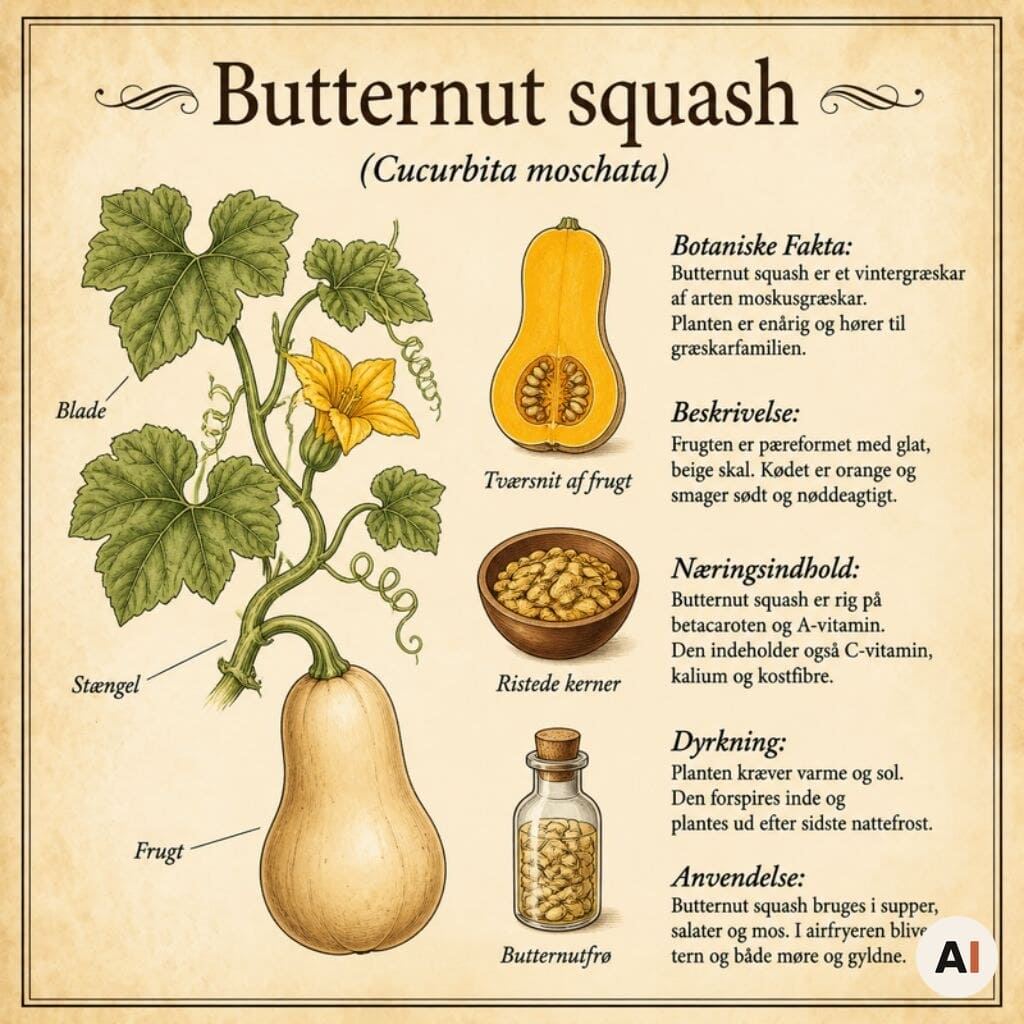
Butternut squash can easily be grown in a home vegetable garden, even in a cool northern climate, but it is heat-loving and frost-tender and therefore needs a little care. In return, you get a store of squash that can keep well into winter.
Growing conditions
- Soil: good soil enriched with compost.
- Location: a warm, sheltered spot – the plants are more sensitive to wind than to cold.
- Hardiness: not hardy; the plants must be protected from night frost.
- Harvest: around October, when the skin is completely hard – and always before frost.
Sowing and harvest
Butternut needs a long season to ripen, so I start it indoors in late March or early April. Winter squash should stay on the plant until the skin is completely hard, and be brought in before frost. If frost comes early, butternut can be harvested while it is still greenish and left to ripen further indoors.
Here’s how to grow butternut squash step by step:
Total time: 6-7 months
- Start the seeds indoors
Sow the seeds indoors in 12–13 cm pots in late March or early April.
- Plant out after frost
Plant out in good soil enriched with compost, in a warm, sheltered spot, once the risk of night frost has passed.
- Water and care
Keep the soil evenly moist, and protect the plants from wind and cold nights.
- Harvest and ripen
Harvest around October, when the skin is completely hard, and let the squash ripen further at about 25 °C for 10 days.
Storage
One of the big advantages of butternut squash is its keeping quality. As a winter squash, it can be stored for several months if it is handled correctly after harvest.
Whole squash
After harvest, the squash should dry and ripen further in a warm place. Then store it dry and cool – but never below 10 °C, so a cool utility room or an unheated room is better than the fridge. Butternut actually doesn’t get any worse from being stored: the best eating period is 3–6 months after harvest.
Cut and cooked
Once the squash has been cut open, it only keeps for a few days in the fridge, so wrap it well. Roasted cubes and mash can be frozen in portions, so you always have some butternut ready for a soup.
Storage tips
- Post-harvest ripening: about 25 °C for 10 days right after harvest.
- Whole squash: dry at 10–15 °C and never below 10 °C.
- Humidity: around 50%.
- Check regularly: use squash with soft spots first.
- Cut: covered in the fridge and used within a few days.
Try this recipe
The sweetness and nutty flavor of butternut squash get an extra lift from the air fryer’s dry, circulating heat, which caramelizes the surface without drying out the flesh. Try our recipe for Butternut Squash in the Air Fryer – Butter-Roasted with Cinnamon and Glossy Maple Glaze. The cinnamon and the glossy glaze really bring out the squash’s natural sweetness, and I like to sprinkle a little flaky salt and a pinch of chili flakes over it at the end, so the sweetness gets a little contrast.
Frequently asked questions
Butternut squash is a winter squash, harvested ripe with a hard skin and able to be stored for several months. Summer squash, such as zucchini, are harvested young with a soft skin and should be eaten quickly. Pumpkin is mostly used for large, ripe fruits with a hard rind. In the kitchen, butternut therefore behaves like a pumpkin, not like a zucchini.
Yes, the air fryer is a natural fit for butternut. Cut it into evenly sized cubes or wedges, toss them in a little oil and spices, and shake the basket partway through so the edges caramelize.
Yes, the skin turns soft when butternut is roasted in wedges or cubes, and it can easily be eaten along with the flesh. For soup and mash, most people peel it off first.
A whole squash is stored dry at 10–15 °C and never below 10 °C, so a cool utility room is better than the fridge. That way it can keep for several months. Cut pieces belong in the fridge and should be used within a few days.
Raw butternut squash contains 44 kcal per 100 g. It consists mostly of water and has 3.0 g of dietary fiber per 100 g.
Facts about butternut squash
| Fact | Value |
|---|---|
| English name | Butternut squash (a type of moschata squash) |
| Latin name | Cucurbita moschata |
| Family | Gourd family (Cucurbitaceae) |
| Plant type | Winter squash – botanically the fruit is a berry |
| Hardiness | Not hardy – frost-tender and heat-loving |
| Location | Warm, sheltered spot |
| Soil | Good soil enriched with compost |
| Sow/plant | Started indoors in late March or early April; planted out once night frost is over |
| Harvest | Around October, before frost |
| Season | Fall and winter |
| Calories per 100 g | 44 kcal (raw) |
| Flavor | Sweet and nutty |
| Culinary use | Roasted as cubes or wedges, soup, mash and baked goods |
| Storage | Post-harvest ripening at about 25 °C for 10 days; then dry at 10–15 °C for several months |
