

Caraway has a long history in Denmark and the rest of the Nordic region. The distinctive seeds smell of anise and fennel and give a warm, spicy character to bread, cheese, and aquavit. Caraway’s undemanding nature makes it easy to grow in our climate, and its two-year cycle produces lush foliage first, followed by a cloud of white umbels full of aromatic seeds.

Advertisement: The page displays ads and contains advertising links (affiliate links). See our advertisers here.
This article gives a thorough introduction to the plant and guides you through growing, uses, and sustainability in a Danish context. We also look at why caraway is often confused with cumin – and how to tell the difference.
Estimated reading time: 9 minutes
What Is Caraway?
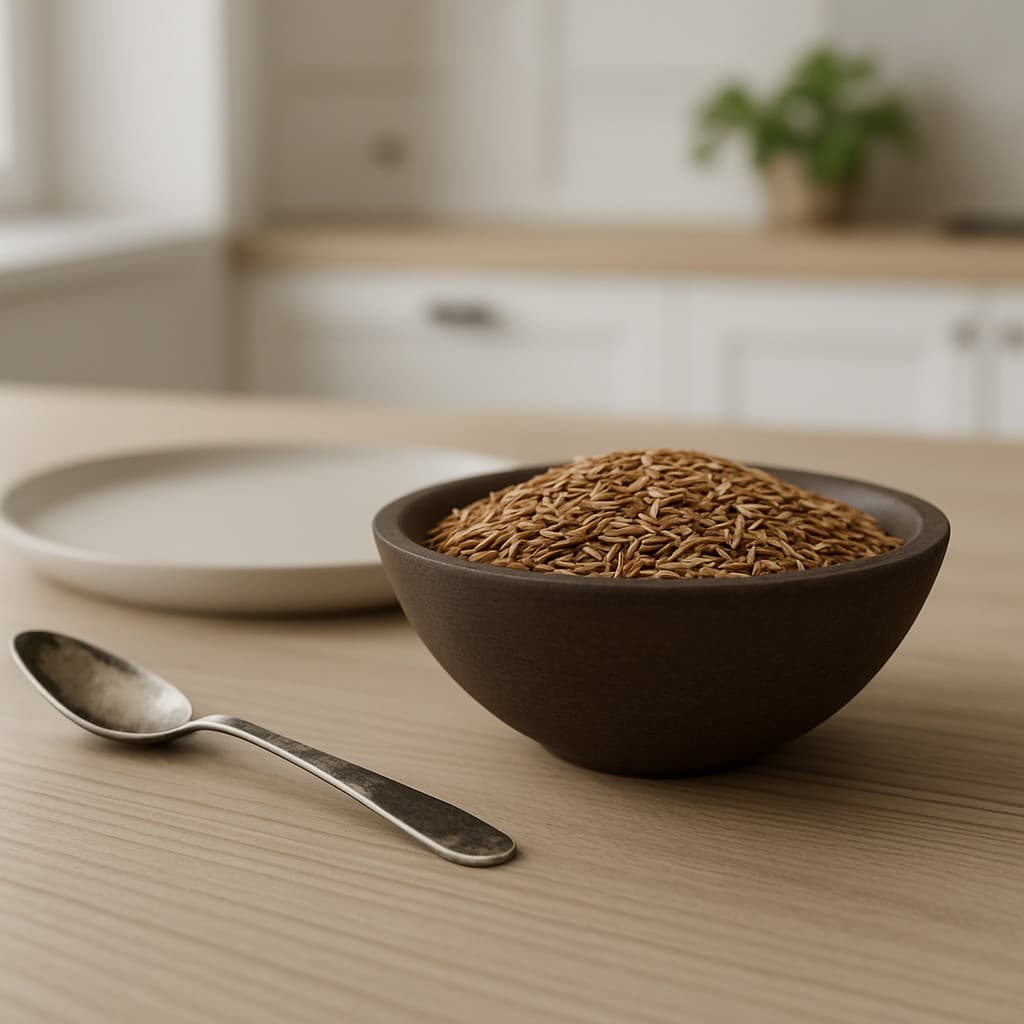
Caraway is a biennial herb in the carrot family (Apiaceae). Its Latin name is Carum carvi, and in Danish the seeds are also called “karvefrø.” In its first year, the plant forms a rosette of finely divided, dark green leaves that are 2-3 times pinnately divided and resemble carrot leaves. In the second year, the plant sends up a stem 25-60 cm tall with white to pink-tinged umbels. The flowers are pollinated by insects in May-June and develop small brown fruits (called seeds) with five longitudinal ribs. When the fruits are dried, they release an intense aroma that makes caraway one of the oldest spices in Europe. Caraway is closely related to other umbellifers such as carrot, parsley, and dill.
The plant thrives in temperate regions and is winter-hardy. It occurs in the wild in grazed meadows, roadsides, and heathland across Europe and Western Asia. The name “Carum” comes from the ancient kingdom of Caria in Turkey, where the herb was likely used as a spice as far back as antiquity.
History and Origin
From the Bronze Age to the Middle Ages
Caraway has been part of Danish food culture since the Middle Ages. Seeds have been found in archaeological finds from the Bronze Age and were likely used both as a spice and as medicine. The plant was introduced to Europe from the Middle East and North Africa and spread quickly via trade routes. In Denmark, caraway is mentioned in medical and herbal books from the 1200s. In the Middle Ages, people believed caraway could protect against evil spirits and witchcraft, and seeds were sewn into children’s clothing as an amulet.
Bread, Cheese, and Snaps in the Nordic Region
For centuries, the seeds have been an important ingredient in Nordic breads, especially rye bread, and in aged cheeses such as havarti. Caraway oil has been used to flavor aquavit and schnapps throughout Scandinavia. In Germany and Austria, “Kümmel” is a steadfast companion to sauerkraut and potato dishes. The seeds were also used as a tea for stomach cramps and colic and were included in postpartum soup to stimulate milk production in nursing mothers. Today, caraway is experiencing a renaissance in New Nordic cuisine, where it adds depth to fermented vegetables and beer.
Flavor and Aroma
The flavor of caraway is intense, slightly sweet, and sharp at the same time. It can be reminiscent of anise, fennel, and dill, but has a more earthy character. The seeds should be used whole or lightly crushed to release the oils, and they can be lightly toasted in a dry pan to bring out the aroma. Ground caraway quickly loses its flavor, so grind only small amounts at a time.
Good Pairings
- Rye bread, sourdough bread, and crispbread
- Cabbage varieties: sauerkraut, red cabbage, white cabbage, and pointed cabbage
- Root vegetables: carrot, parsnip, parsley root, and celeriac
- Pork and lamb dishes, as well as sausages
- Cheese: havarti, caraway cheese, and fresh goat cheeses
- Pickled vegetables and kimchi
- Legumes: lentils, chickpeas, and beans
Caraway doesn’t pair well with very dominant spices like hot chili and cumin, as it’s easily overpowered. Add the seeds early in the cooking process when making bread or cabbage dishes, so they have time to infuse and release their flavor.
Culinary Use
Caraway has a warm, slightly sweet, and lightly bitter flavor that pairs well with rich, heavy dishes, where it aids digestion, and with mild breads, where it adds character.
In Danish Cuisine
- Stir whole seeds into rye bread dough along with malt and sourdough starter.
- Sprinkle over oven-roasted root vegetables such as carrot and parsnip.
- Add caraway to cabbage dishes such as sauerkraut, braised pointed cabbage, or red cabbage.
- Make a spiced butter by mixing softened butter with ground caraway, salt, and chopped chives.
- Use seeds in cucumber or beetroot pickles for a Nordic touch.
Internationally
In German and Austrian cuisine, caraway is essential in sauerkraut, potato dishes, and sausages. Chefs’ growing interest in fermented vegetables has given caraway a renaissance; the seeds add aroma and promote lactic acid fermentation in sauerkraut and kimchi. In beverages, caraway is found in schnapps, gin, and spiced beers. It also pairs well with orange and honey in baked goods, such as carrot cake, or you can infuse clear schnapps with whole seeds for 3-4 days to make a homemade caraway aquavit.
Preparation
The seeds should be used whole or lightly crushed to release the essential oils. Toast them briefly in a dry pan until fragrant if you want a deeper, nuttier aroma. The plant’s fine, carrot-like leaves are mild and can be used fresh in salads or as a green garnish on soups. Always add the seeds early to bread and cabbage dishes so the flavor has time to develop.
Health Benefits
Fiber, Minerals, and Essential Oils
Caraway seeds are rich in fiber and essential nutrients. 100 g of seeds contains approx. 333 kcal, 49.9 g carbohydrate, 19.8 g protein, and 14.6 g fat, as well as a full 38 g of dietary fiber. They are a good source of several minerals and vitamins:
- Iron (approx. 16 mg per 100 g) and calcium (approx. 689 mg)
- Potassium (approx. 1351 mg), copper, manganese, and zinc
- Vitamin A, C, E, and B-complex
- Essential oils, especially carvone and limonene
Digestion and Caution
The essential oils have antioxidant, antibacterial, and digestion-promoting properties, and in traditional herbal medicine, caraway water is used to relieve stomach cramps, bloating, and colic. Despite the potential benefits, the seeds should be used in moderation: the sharp oils can irritate mucous membranes in large amounts, and people with allergies to umbellifers should be cautious. Pregnant and breastfeeding women can use caraway as a spice in normal amounts but should avoid high doses of concentrated oil without medical advice. The information here is for general guidance and does not replace medical advice.
Growing
Follow these steps if you want to grow your own caraway – it’s easy and yields aromatic seeds for the kitchen.
Growing Conditions
Caraway thrives in full sun but tolerates light partial shade. The soil should be nutrient-rich, well-drained, and preferably slightly clayey, with a pH close to neutral (6.0-7.0). The plant dislikes waterlogged soil but needs consistent moisture to form strong rosette leaves in the first year. Choose a sheltered spot with deep soil, as the roots go down far. Caraway is winter-hardy and survives ordinary Danish frost, and once established, it can self-seed and reappear for many years.
How to Grow Caraway
Total time: 1-2 years
- Prepare the Soil
Choose a sunny spot in the kitchen garden or a perennial bed. Prepare the soil in the fall by loosening it to a depth of 20-25 cm and removing weeds.
- Sow the Seeds
Sow the seeds in early spring (April-May) or in early fall, 1-2 cm deep in rows spaced 30 cm apart. Sow the seeds thinly, as they germinate readily, and cover lightly with soil.
- Water and Germinate
Water evenly after sowing. Seedlings emerge after 10-14 days at 10-15 degrees. Keep the soil moist but not wet.
- Thin and Tend
When the plants are 5-8 cm tall, thin them to 10-15 cm apart. Remove weeds and add compost a couple of times during the first growing season.
- Overwinter
In winter, the above-ground part withers. Cover the bed with a thin layer of leaves or straw in cold areas. In spring, new shoots and flower stems grow forth.
- Harvest and Clean
When the seeds change color from green to light brown (July-August), cut the stems. Hang them upside down in a dry spot with a cloth underneath so the seeds fall down. Finally, rub the umbels and store the cleaned seeds in a dark, dry place.
Storage
Drying and Harvest Time
The best time to harvest caraway is just before the seeds fall off on their own. They should be light brown but still attached – if you wait too long, the seeds will scatter and be lost. Tie the plants in bundles and hang them upside down in a spot with good ventilation, preferably with a cloth or paper bag underneath. Turn and shake the bags daily until the seeds are dry and loose.
Storage and Shelf Life
- Store the seeds in airtight jars or tins to preserve the aroma.
- Avoid plastic bags, as essential oils can react with plastic.
- Dried seeds stay aromatic for 2-3 years in a cool, dark place.
- Seeds and fresh rosette leaves can be frozen in small portions for long-term storage.
Mix-Ups and Quality
Caraway Is Not Cumin
Caraway is often confused with cumin (Cuminum cyminum) and black cumin (Nigella sativa). Although the names resemble each other, the plants are botanically different. Cumin has long, narrow, lighter seeds without the pronounced ribs and a warm, earthy flavor with smoky notes – it’s central to Indian and Middle Eastern cuisine. Black cumin has small, triangular, black seeds with an onion-like scent. Caraway’s (Carum carvi) seeds are curved, brown, and have five distinct ribs; when crushed, they smell sweet and anise-like. If you mix up the two in a recipe, you’ll change the flavor significantly: caraway is sweet and Nordic, cumin is warm and Middle Eastern.
Buying and Quality
Caraway seeds can be bought whole or ground in supermarkets and health food stores. Choose whole seeds for the longest shelf life and strongest aroma, and check the harvest and packaging date, as older seeds lose potency. When buying seeds, make sure they are clean, dry, and free of pests. Organic seeds ensure they were grown without pesticides. Fresh rosette leaves are rarely sold in stores but can sometimes be found at markets in spring.
Sustainability and Biodiversity
Caraway is a perennial, partly wild plant in Denmark and doesn’t need to be imported from distant countries. By growing it locally, you reduce CO2 emissions from transport. The plants flower in early summer and attract pollinating insects such as bees and hoverflies, which supports biodiversity. As part of a perennial bed, caraway helps loosen the soil with its deep roots. Growing without pesticides is important to preserve the essential oils and protect the soil’s microorganisms. Cover the soil with compost and use rainwater for watering, and let a few plants go to seed and self-sow – it provides food for birds and future generations.
Try This Recipe
Caraway belongs in a good, tangy bread, where the aromatic seeds get room to unfold in the airy crumb. Stir a few whole seeds into the dough next time you bake our Pane pugliese in the airfryer – crispy Italian country bread with a tangy crumb, and you’ll get a Nordic-Italian country bread with a warm, spicy aroma.
Equipment and Products
Caraway is classic in sausages and spiced charcuterie, where the slightly sweet seeds balance the rich meat. If you want to taste that combination without making sausages yourself, our Turkey Chorizo is a great place to start – serve it with a caraway-sprinkled bread or a cabbage salad with whole seeds.
Frequently Asked Questions
Yes. Caraway is biennial and winter-hardy. It survives frost and returns the following spring to flower and produce seeds.
No. Cumin (Cuminum cyminum) is a heat-loving annual from the Middle East with an earthy, smoky flavor. Caraway (Carum carvi) thrives in cool climates and has a sweeter, anise-like aroma. The two cannot simply replace each other.
Yes. You can grow caraway in deep pots with at least 25 cm of soil depth and good drainage. However, it will be smaller than when grown in open ground.
The seeds are harvested when they turn light brown, just before they fall off the plant, typically in July-August.
Store dried seeds in airtight jars or tins in a cool, dark place. They stay aromatic for 2-3 years.
Facts About Caraway
| Field | Value |
|---|---|
| English name | Caraway |
| Latin name | Carum carvi |
| Family | Carrot family (Apiaceae) |
| Plant type | Biennial herb |
| Height | 25-60 cm |
| Hardiness | Winter-hardy in Denmark |
| Light | Full sun to light partial shade |
| Soil | Nutrient-rich, well-drained, slightly clayey; pH 6-7 |
| Sow/plant | Sown April-May, 1-2 cm deep; thinned to 10-15 cm |
| Flowering | May-June in the second year |
| Harvest | July-August (seeds); leaves on an ongoing basis |
| Calories per 100g | Approx. 333 kcal (seeds) |
| Key nutrients | Dietary fiber, iron, calcium, potassium, carvone |
| Flavor | Aromatic, anise- and fennel-like, lightly bitter |
| Culinary use | Rye bread, cheese, cabbage dishes, schnapps, pickles, spice blends |
| Storage | Dried seeds in airtight containers; freeze for long-term storage |
